Palmyra in Wayne County, New York — The American Northeast (Mid-Atlantic)
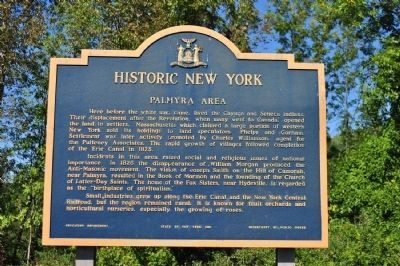
Palmyra Area
Historic New York
Photographed by Yugoboy, September 1, 2012
1. Palmyra Area Marker
Erected 1961 by State Education Department.
Topics. This
this page online
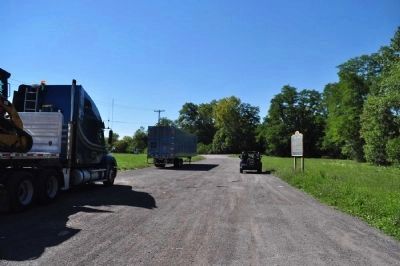
Location. Marker has been reported missing. It was located near 43° 3.933′ N, 77° 10.829′ W. Marker was in Palmyra, New York, in Wayne County. It was at the intersection of Palmyra-Newark Road (New York State Route 31) and Galloway Road, on the right when traveling west on Palmyra-Newark Road. The marker is at an intersection, set back from the road on the far side of the parking area. Touch for map. Marker was in this post office area: Palmyra NY 14522, United States of America. Touch for directions.

Regionally, this marker was in Upstate New York, specifically in Western New York, in the Finger Lakes, and in the Rochester Metropolitan Area. It was also in the American Northeast and in the Mid-Atlantic. Globally, it was in North America, on the Great Lakes, in the Western Hemisphere, in the Western World, and in the Anglosphere. Historically, it found itself in what was once the Haudenosaunee (Iroquois) Confederacy,
Photographed by Yugoboy, September 1, 2012
2. Palmyra Area Marker as seen facing West
Other nearby markers. At least 8 other markers are within 3 miles of this location, measured as the crow flies: A Memorial to All (approx. 0.6 miles away); This Tank (approx. 0.6 miles away); Rope Walk (approx. 1.2 miles away); Pioneer Home (approx. 1.3 miles away); East Palmyra Cemetery War Memorial (approx. 2 miles away); Patriots Burials (approx. 2 miles away); East Palmyra Church (approx. 2.1 miles away); Sampson House (approx. 2.3 miles away). Touch for a list and map of all markers in Palmyra.
Photographed by Yugoboy, September 1, 2012
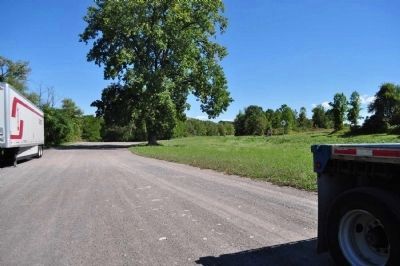
3. Palmyra Area Marker as seen facing East
Credits. This page was last revised on September 18, 2025. It was originally submitted on December 23, 2012, by Yugoboy of Rochester, New York. This page has been viewed 827 times since then and 84 times this year. Last updated on September 14, 2025, by Susan A. Dalaba of Cortland, New York. Photos: 1, 2, 3. submitted on December 23, 2012, by Yugoboy of Rochester, New York. • Michael Herrick was the editor who published this page.
