Roma in Città metropolitana di Roma Capitale, Latium, Rome, Italy — Central Italy (Tyrrhenian Coast)
Basilica di Massenzio (o di Constantino)
⎯⎯⎯
Basilica of Maxentius (or of Constantine)

Photographed by Sean P. Flynn, August 4, 2025
1. Basilica di Massenzio (o di Constantino) / Basilica of Maxentius (or of Constantine) Marker
Also known as the Basilica Nova, this is one of Rome's most imposing buildings (about 6000 sq m), modelled on the huge rooms of the imperial baths. With three halls, construction was begun by Maxentius (306-312 AD) and finished by Constantine (306-337 AD), with some alterations to the project: a second porticoed entrance from the Via Sacra was added to the original entrance by the Colosseum. An exedra was inserted into the NE back wall, originally straight, separated by a high transept. The base of the seat where the emperor presided over legal hearings
this page online
Topics. This historical marker is listed in these topic lists: Anthropology & Archaeology • Architecture. A significant historical year for this entry is 306 CE.
Location. 41° 53.483′ N, 12° 29.309′ E. Marker is in Roma, Lazio (Latium, Rome), in Città metropolitana di Roma Capitale. It is on Piazza di Santa Francesca Romana. The marker is near the basilica, which is on the northern end of the Roman Forum park site. Touch for map. Marker is at or near this postal address: Piazza di Santa Francesca Romana 4, Roma, Lazio 00186, Italy. Touch for directions.

Regionally, it is in Europe, the European Union, the Schengen Area, a coastal Mediterranean country, and the Western World. Historically, it finds itself in what was once the Roman Empire.
Other nearby markers. At least 8 other markers are within walking distance of this marker: A different marker also named Basilica di Massenzio (o di Constantino) / Basilica of Maxentius (or of Constantine) (here, next to this marker); Casa Aurea di Nerone / Nero's Golden House (here, next to this marker); Neronian Foundations / Fondazioni Neroniane (within shouting distance
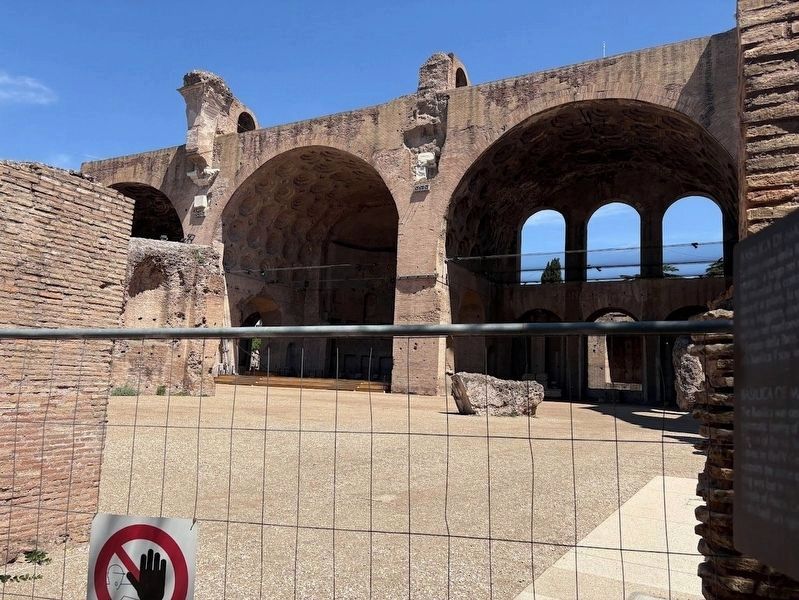
Photographed by Sean P. Flynn, August 4, 2025
2. Basilica di Massenzio
More about this marker. Another marker about the basilica with the same name but different text can be found nearby.
Regarding Basilica di Massenzio (o di Constantino) / Basilica of Maxentius (or of Constantine). Constantine defeated Maxentius in the Battle of Milvian Bridge on October 28, 312, a success that gave him control of the Western Roman Empire. Some accounts of the battle also say that Constantine pledged to fight for the Christian God, and that the victory there was a key step toward the Edict of Milan a year later in 313, which made Christianity the official religion of the Roman Empire.

Photographed by Sean P. Flynn, March 29, 2010
3. Basilica di Massenzio
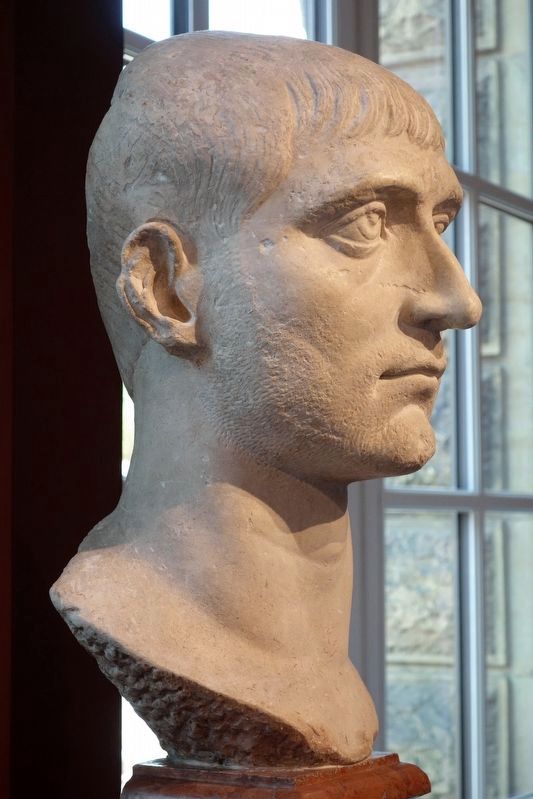
Photographed by Mark Landon (CC BY 4.0), via Wikimedia Commons, July 22, 2023
4. Bust of Maxentius from Dresden (Germany) State Collection
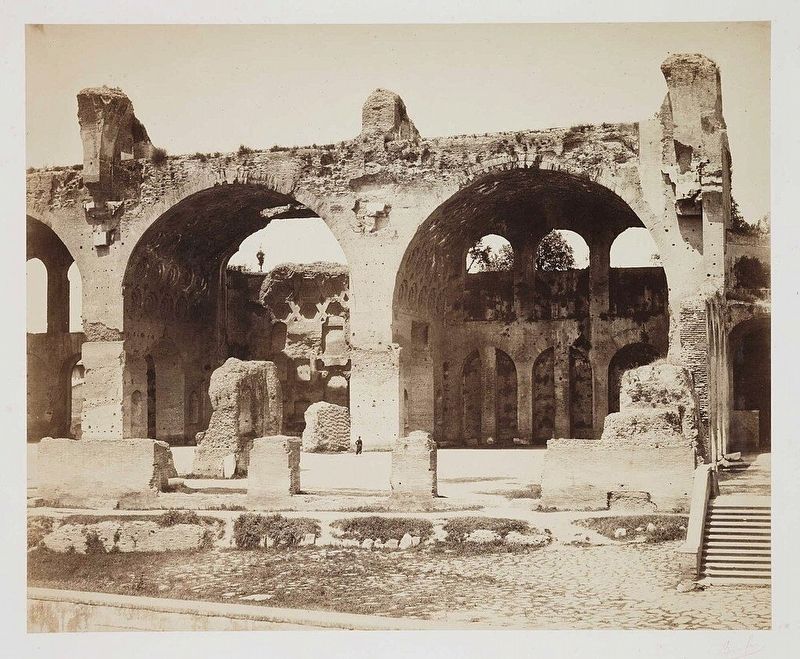
Courtesy of National Media Museum (UK); via Wikimedia Commons, circa 1860
5. Basilica di Massenzio
Credits. This page was last revised on September 17, 2025. It was originally submitted on September 17, 2025, by Sean P. Flynn of Oak Park, Illinois. This page has been viewed 69 times since then and 28 times this year. Photos: 1, 2, 3, 4, 5. submitted on September 17, 2025, by Sean P. Flynn of Oak Park, Illinois.
