Iola in Waupaca County, Wisconsin — The American Midwest (Great Lakes)
Iola’s Native American Heritage
Photographed by Paul Fehrenbach, August 24, 2025
1. Iola’s Native American Heritage Marker
Side 1
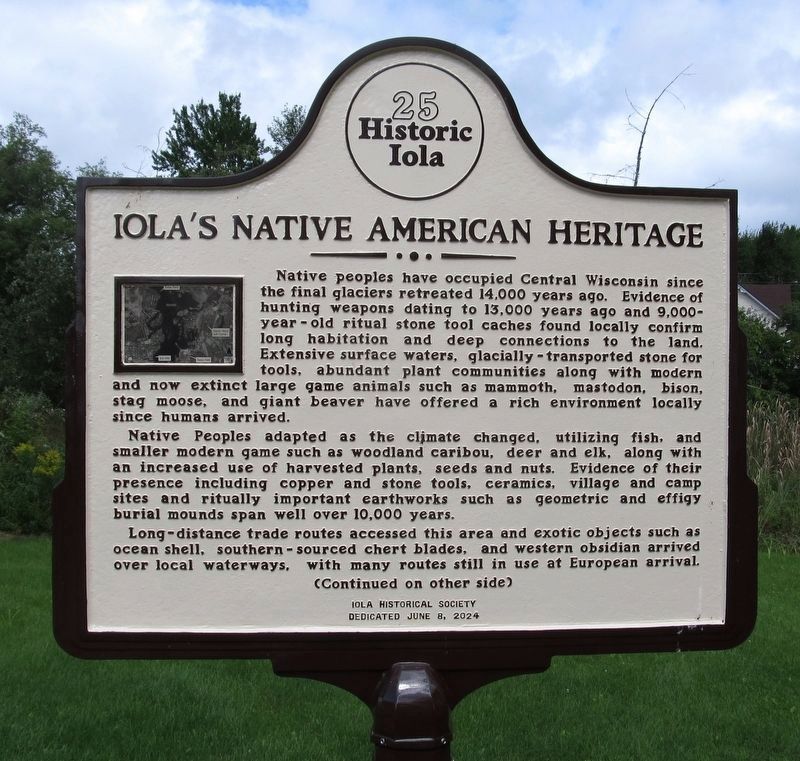
Native peoples have occupied Central Wisconsin since the final glaciers retreated 14,000 years ago. Evidence of the hunting weapons dating to 13,000 years ago and 9,000-year-old ritual stone tool caches found locally confirm long habitation and deep connections to the land. Extensive surface waters, glacially-transported stone for tools, abundant plant communities along with modern and now extinct large game animals such as mammoth, mastodon, bison, stag moose, and giant beaver have offered a rich environment locally since humans arrived.
Native Peoples adapted as the climate changed, utilizing fish, and smaller modern game such as woodland caribou, deer and elk, along with an increased use of harvested plants, seeds and nuts. Evidence of their presence including copper and stone tools, ceramics, village and camp sites and ritually important earthworks such as geometric and effigy burial mounds span well over 10,000 years.
Long-distance trade routes accessed this area and exotic objects such as ocean shell, southern-sourced chert blades, and western obsidian arrived over local waterways, with many routes still
this page online
(Continued on other side)
Side 2
(Continued from other side)
In the post-contact period Native populations occupied the area seasonally, returning for ceremonial purposes and to bury and honor the dead within traditional lands.
As early as the 17th century, inter-tribal conflict, Euro-American settlement, forced land cessions, and resulting military actions displaced many Wisconsin tribes. Among the historic Native Tribes continuing to call Waupaca County home are the Oneida, Stockbridge, Sauk, Ho-Chunk, Menominee and Ojibwe. From late prehistoric time, Iola and Waupaca County were considered traditional Menominee territory, although Ho-Chunk, Potawatomi, and Ojibwe peoples also resided here. Waupaca translates in Menominee as “Wapahkoh” or “Place of Tomorrow Seen Clearing” and the Chain of Lakes area is known as “Sisepikamiw” or “Sprawling Water, Like an Animal Basking in the Sun.” These names speak to both ancient and modern ties to place.
A tongue of land in upper Lake Iola is known locally as “Indian Point,” a name likely derived from the fact that in the late 19th and early 20th century Native

Photographed by Paul Fehrenbach, August 24, 2025
2. Iola’s Native American Heritage Marker
Side 2
Erected 2024 by Iola Historical Society. (Marker Number 25.)
Topics. This historical marker is listed in this topic list: Indigenous Peoples and Communities.
Location. 44° 30.56′ N, 89° 7.896′ W. Marker is in Iola, Wisconsin, in Waupaca County. It can be reached from North Main Street 0.2 miles south of Mill Street (Wisconsin Route 161), on the right when traveling south. Address is approximately 250 N. Main St., west of the covered bridge at the river. Touch for map. Marker is at or near this postal address: 250 N Main Street, Iola WI 54945, United States of America. Touch for directions.

Regionally, this marker is in Northern Wisconsin. It is also in the American Midwest and in the Corn Belt. Globally, it is in North America, the Western Hemisphere, the Western World, and the Anglosphere. Historically, it finds itself in what was once the territory of the Mississippian Culture
Photographed by Paul Fehrenbach, August 24, 2025
3. Iola’s Native American Heritage Marker
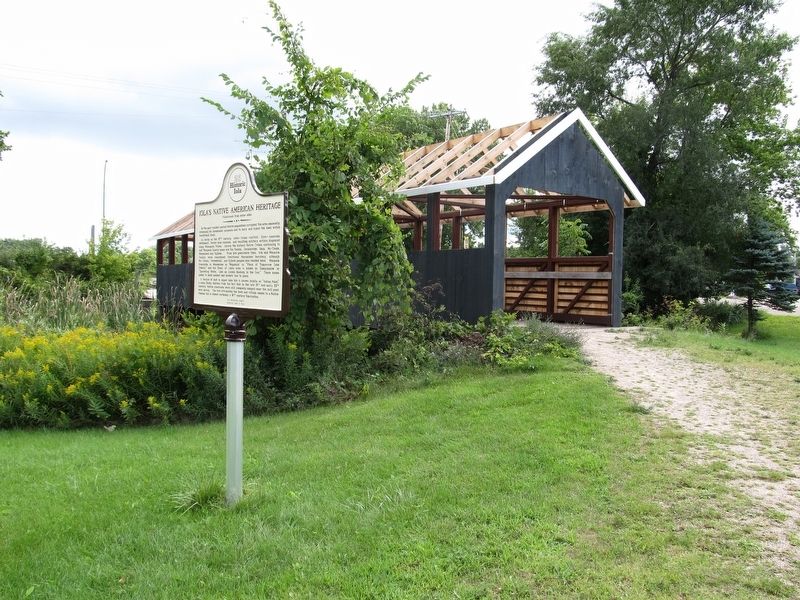
Covered bridge in background
Other nearby markers. At least 8 other markers are within walking distance of this marker: Buttolph Memorial Bridge 2020 / Little Wolf First Bridged c. 1853 (within shouting distance of this marker); Iola Veterans Memorial (about 300 feet away, measured in a direct line); Iola Mills (about 300 feet away); The “Spud Alley” Era (about 300 feet away); 1999 Father's Day Fire (about 700 feet away); Clifford Marshall Thompson (about 700 feet away); Krause Publications (about 700 feet away); "I’m Chet" / Some Chet Krause Lifetime Highlights (about 800 feet away). Touch for a list and map of all markers in Iola.
Photographed by Paul Fehrenbach, August 24, 2025
4. Iola’s Native American Heritage Marker
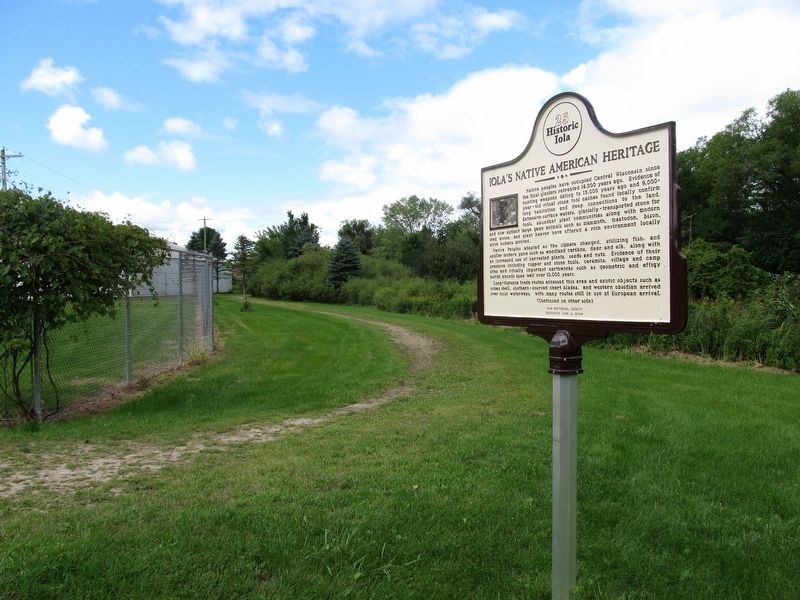
looking toward west

5. Iola’s Native American Heritage Marker
Close-up of inset map
Credits. This page was last revised on September 18, 2025. It was originally submitted on September 17, 2025, by Paul Fehrenbach of Richfield, Wisconsin. This page has been viewed 114 times since then and 53 times this year. Photos: 1, 2, 3, 4, 5. submitted on September 17, 2025, by Paul Fehrenbach of Richfield, Wisconsin. • Andrew Ruppenstein was the editor who published this page.
