Central Oklahoma City in Oklahoma County, Oklahoma — The American South (West South Central)
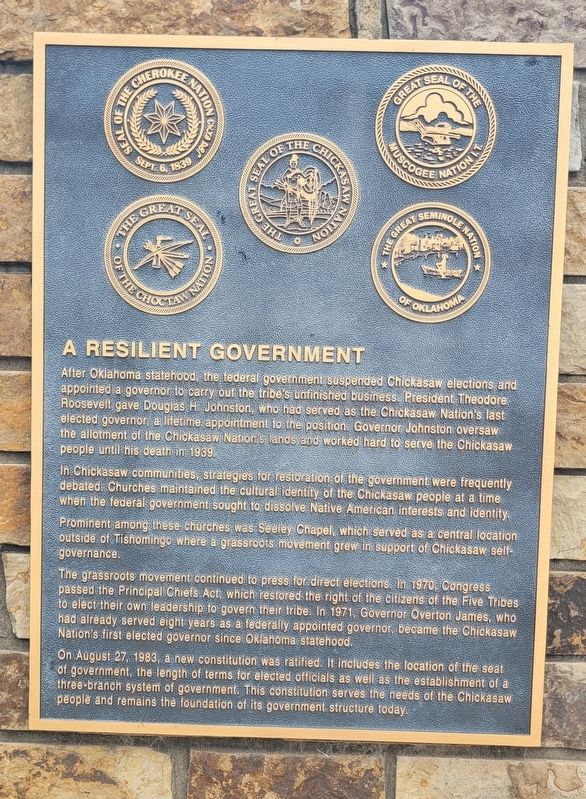
A Resilient Government
Photographed by James Hulse, September 18, 2025
1. A Resilient Government Marker
In Chickasaw communities, strategies for restoration of the government were frequently debated. Churches maintained the cultural identity of the Chickasaw people at a time when the federal government sought to dissolve Native American interests and identity.
Prominent among these churches was Seeley Chapel, which served as a central location outside of Tishomingo where a grassroots movement grew in support of Chickasaw self-governance.
The grassroots movement continued to press for direct elections. In 1970, Congress passed the Principal Chiefs Act, which restored the right of the citizens of the Five Tribes to elect their own leadership to govern their tribe. In 1971,
this page online
On August 27, 1983, a new constitution was ratified. It includes the location of the seat of government, the length of terms for elected officials as well as the establishment of a three-branch system of government. This constitution serves the needs of the Chickasaw people and remains the foundation of its government structure today.
Topics. This historical marker is listed in this topic list: Indigenous Peoples and Communities. A significant historical date for this entry is August 27, 1983.
Location. 35° 27.774′ N, 97° 30.314′ W. Marker is in Oklahoma City, Oklahoma, in Oklahoma County. It is in Central Oklahoma City. It is on Centennial Drive south of E Reno Ave. The marker is located at the Chickasaw Plaza along Bricktown River Walk. Touch for map. Marker is in this post office area: Oklahoma City OK 73104, United States of America. Touch for directions.

Regionally, this marker is in Central Oklahoma—Frontier Country. It is also in the American South, specifically
Photographed by James Hulse, September 18, 2025
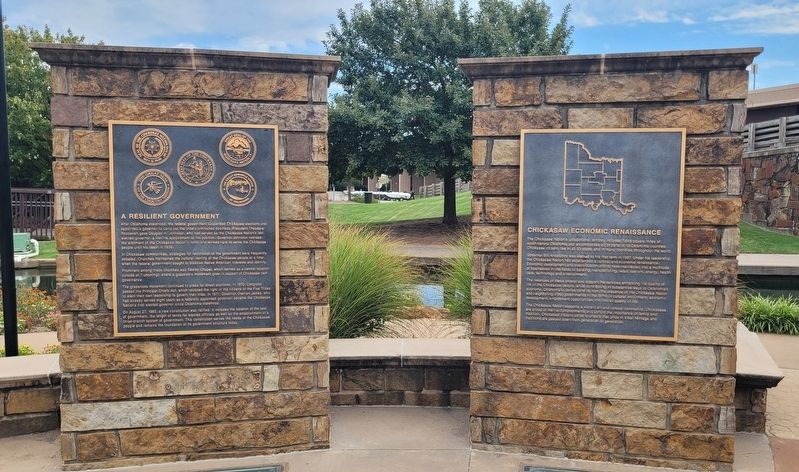
2. A Resilient Government Marker (left marker)
Other nearby markers. At least 8 other markers are within walking distance of this marker: Chickasaw Economic Renaissance (here, next to this marker); Ancient Mississippian Symbols (here, next to this marker); Tribes in Oklahoma (here, next to this marker); Oklahoma Statehood (a few steps from this marker); Chickasaw Warrior Statue (a few steps from this marker); Unconquered and Unconquerable (a few steps from this marker); Chickasaw Cultural Renaissance (a few steps from this marker); Life in the Southeast: Traditional Chickasaw Government (a few steps from this marker). Touch for a list and map of all markers in Oklahoma City.
Also see . . . Chickasaw Nation. Wikipedia (Submitted on September 23, 2025, by James Hulse of Medina, Texas.)
Photographed by James Hulse, September 18, 2025
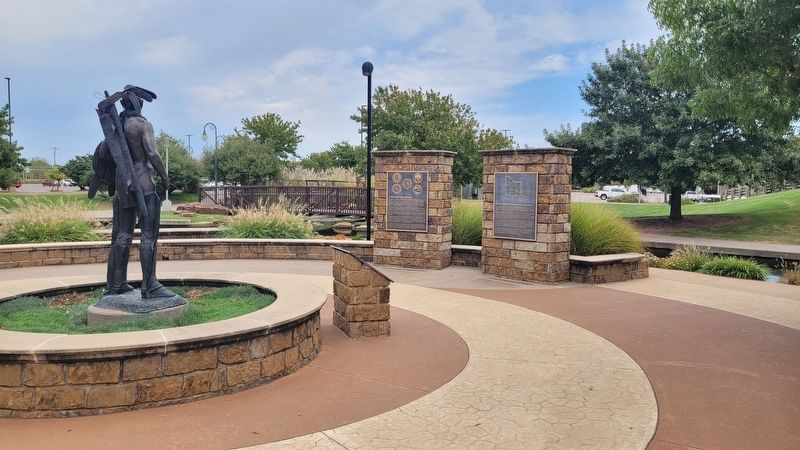
3. The view of the marker along the trail
Credits. This page was last revised on September 23, 2025. It was originally submitted on September 23, 2025, by James Hulse of Medina, Texas. This page has been viewed 48 times since then and 15 times this year. Photos: 1, 2, 3. submitted on September 23, 2025, by James Hulse of Medina, Texas.
