Central Oklahoma City in Oklahoma County, Oklahoma — The American South (West South Central)
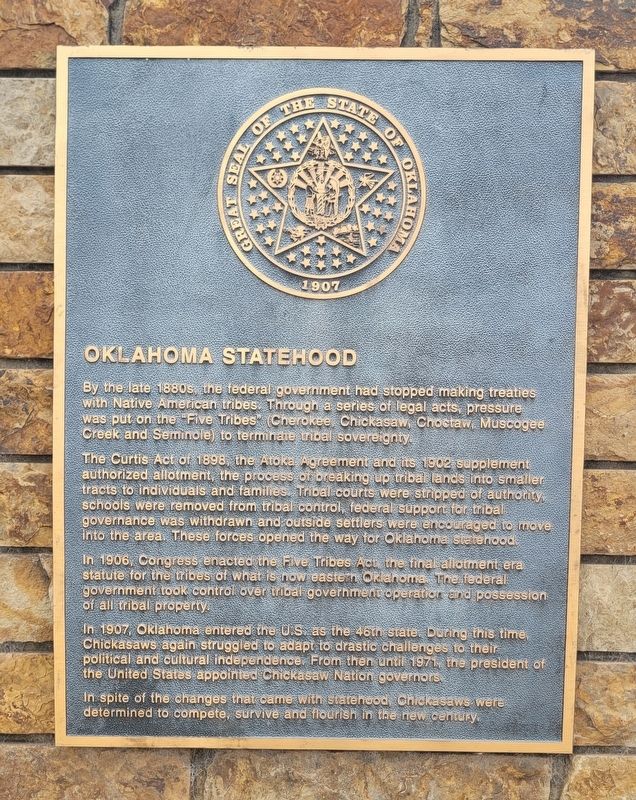
Oklahoma Statehood
Photographed by James Hulse, September 18, 2025
1. Oklahoma Statehood Marker
The Curtis Act of 1898, the Atoka Agreement and its 1902 supplement authorized allotment, the process of breaking up tribal lands into smaller tracts to individuals and families. Tribal courts were stripped of authority, schools were removed from tribal control, federal support for tribal governance was withdrawn and outside settlers were encouraged to move into the area. These forces opened the way for Oklahoma statehood.
In 1906, Congress enacted the Five Tribes Act the final allotment era statute for the tribes of what is now eastern Oklahoma The federal government took control over tribal government operation and possession of all tribal property.
In 1907, Oklahoma entered the U.S. as the 46th state. During this time, Chickasaws again struggled to adapt to drastic challenges to their political and cultural independence. From then until 1971, the president
this page online
In spite of the changes that came with statehood, Chickasaws were determined to compete, survive and flourish in the new century.
Topics. This historical marker is listed in this topic list: Indigenous Peoples and Communities. A significant historical year for this entry is 1898.
Location. 35° 27.778′ N, 97° 30.318′ W. Marker is in Oklahoma City, Oklahoma, in Oklahoma County. It is in Central Oklahoma City. It is on Centennial Drive south of E Reno Ave. The marker is located at the Chickasaw Plaza along Bricktown River Walk. Touch for map. Marker is in this post office area: Oklahoma City OK 73104, United States of America. Touch for directions.

Regionally, this marker is in Central Oklahoma—Frontier Country. It is also in the American South, specifically on the prairies, and on the Southern Plains. Globally, it is in North America, the Western Hemisphere, the Western World, and the Anglosphere. Historically, it finds itself in what was once the territory of the Mississippian Culture and also the Louisiana Purchase.
Other nearby markers. At least 8 other markers
Photographed by James Hulse, September 18, 2025
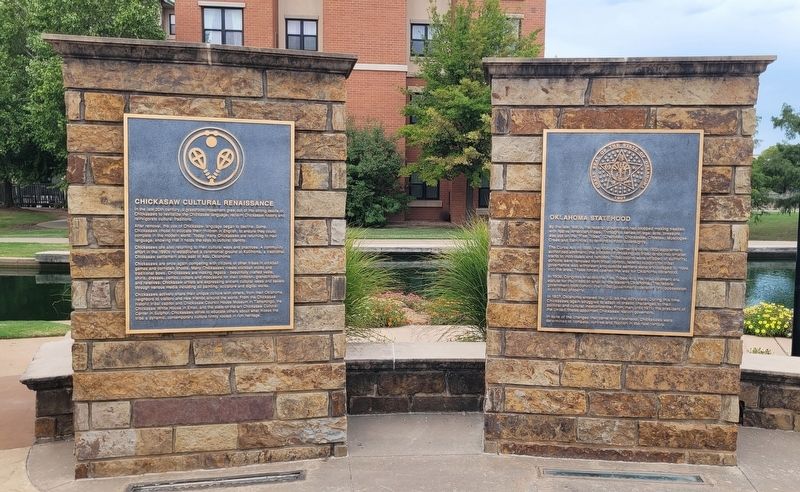
2. Oklahoma Statehood Marker (right marker)
Also see . . . Chickasaw Nation. Wikipedia (Submitted on September 24, 2025, by James Hulse of Medina, Texas.)
Photographed by James Hulse, September 18, 2025
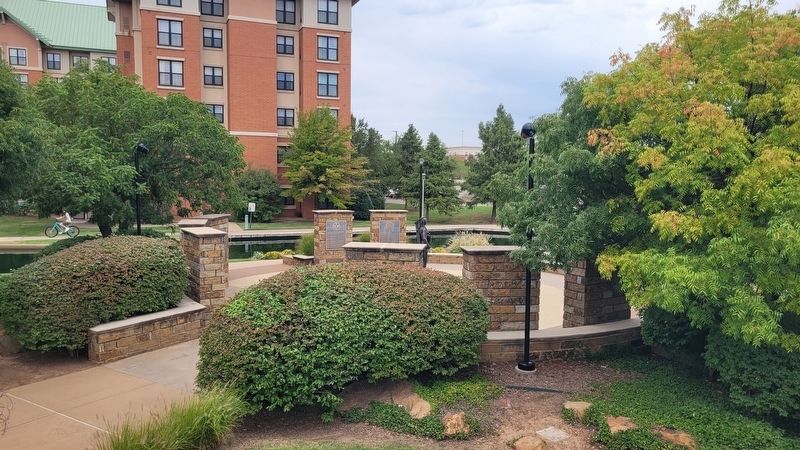
3. The view of the markers along the trail
Credits. This page was last revised on September 25, 2025. It was originally submitted on September 24, 2025, by James Hulse of Medina, Texas. This page has been viewed 62 times since then and 16 times this year. Photos: 1, 2, 3. submitted on September 25, 2025, by James Hulse of Medina, Texas.
