Sedalia in Pettis County, Missouri — The American Midwest (Upper Plains)
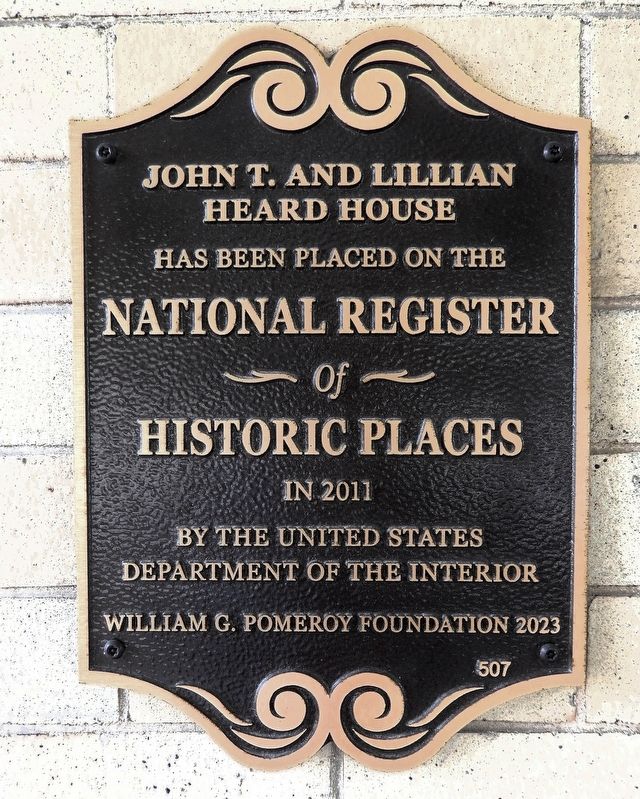
John T. and Lillian Heard House
Photographed by Cosmos Mariner, September 24, 2025
1. John T. and Lillian Heard House Marker
Has been placed on the
National Register of Historic Places
in 2011 by the United States Department of the Interior
Erected 2023 by William G. Pomeroy Foundation. (Marker Number 507.)
Topics and series. This historical marker is listed in these topic lists: Architecture • Fraternal or Sororal Organizations • Notable Buildings • Women. In addition, it is included in the National Register of Historic Places (NRHP), and the William G. Pomeroy Foundation series lists. A significant historical year for this entry is 1906.
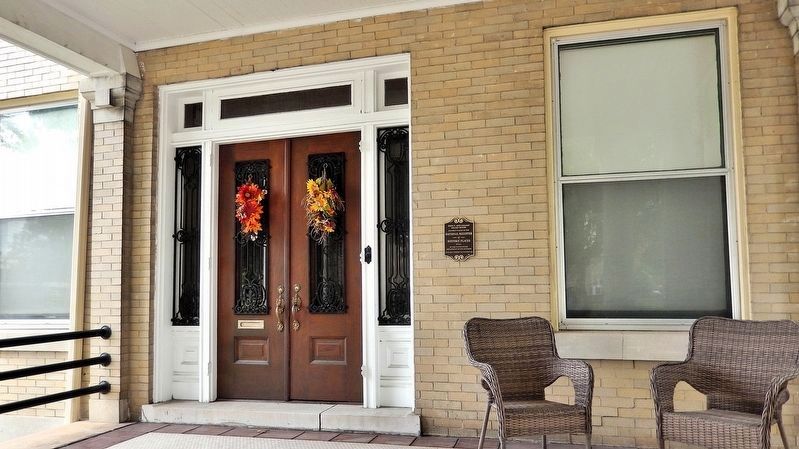
Location. 38° 42.271′ N, 93° 13.783′ W. Marker is in Sedalia, Missouri, in Pettis County. It is at the intersection of West Broadway Boulevard (U.S. 50) and South Osage Avenue, on the right when traveling west on West Broadway Boulevard. The marker is mounted at eye-level, directly on the subject building, on the right side of the front/south entrance. Touch for map. Marker is at or near this postal address: 200 West Broadway Boulevard, Sedalia MO 65301, United States of America. Touch for directions.

Regionally, this marker is in the Missouri River Corridor. It is also in the American Midwest,
this page online
Other nearby markers. At least 8 other markers are within walking distance of this marker: Hoffman Building (approx. 0.2 miles away); John Stark & Son Music Co. (approx. 0.2 miles away); War Dogs Memorial (approx. 0.2 miles away); Pettis County Courthouse Memorial (approx. 0.2 miles away); Vietnam War Memorial (approx. 0.2 miles away); Pettis County Veterans Memorial (approx. 0.2 miles away); Veterans Memorial (approx. 0.2 miles away); World War I Memorial (approx. 0.2 miles away). Touch for a list and map of all markers in Sedalia.
Regarding John T. and Lillian Heard House. National Register of Historic Places № 11000187.
From the National Register Nomination prepared by Rhonda Chalfant, Ph.D., 11/30/2010:
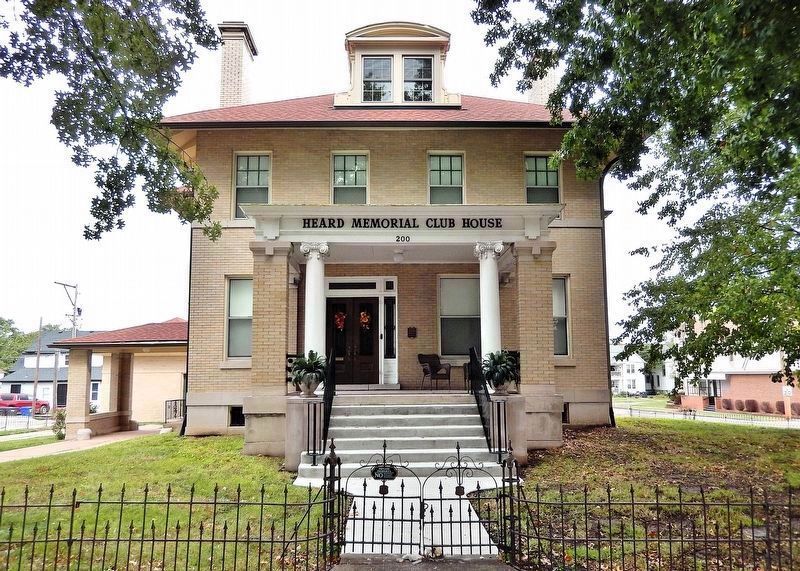
A two-story, buff brick. Classical Revival house with “eclectic Italian Renaissance” accents.The house sits on a raised basement and has a large, unfinished attic under a hipped roof. The roof line is marked by several dormers in a variety of sizes and styles. The primary facade has a partial width porch with square brick and Classical wood columns. Additional significant features include a round-arched Venetian-stained glass window above the porte cochere on the side elevation. The contributing carriage house sits to the north and west of the house. The lot is surrounded on three sides by an iron fence that is considered a contributing structure. Built in 1906 as the residence of Senator and Mrs. John Heard, the house and its furnishings were given by Mrs. Heard in 1935 to the Sorosis Club and the Helen G. Steele Music Clubs. The interior is furnished with Mrs. Heard's furniture and artwork. The house looks much as it did at the time of construction and later donation for use by the clubs.Photographed by Cosmos Mariner, September 24, 20252. John T. and Lillian Heard House MarkerThe marker is mounted on the right side of the front/south entrance.The Heard house appears, in many ways, to be “frozen in time,” a reflection of the life of a well-to-do family during the early years of the turn of the century. That the house, which is used regularly, still maintains its original appearance
is a tribute to the clubwomen who preserve it.Photographed by Cosmos Mariner, September 24, 20253. John T. and Lillian Heard House (south/front elevation)From the National Register Nomination: The front facade features a partial width porch with brick columns at either corner and unfluted columns with Roman Ionic capitals on either side of the brick columns. The house sits on a raised basement, and the front porch is high, reached by steep steps. Across the architrave are the words “Heard Memorial Club House”. The first story is asymmetrically arranged with an offset front door opening onto a shallow vestibule. The door is oak with beveled glass above wooden panels and is flanked by sidelights and transoms. The roof has wide overhanging eaves with exposed decorative cut rafter tails. The roof was originally red tile and had finials at the peaks, but this roof was replaced with asphalt shingles after 1985.
Also see . . . John T. and Lillian Heard House (Wikipedia).
Excerpt: Historic home and clubhouse built as the residence of Senator and Mrs. John T. Heard, later given by Mrs. Heard in 1935 to the Sorosis Club and the Helen G. Steele Music Clubs.(Submitted on September 30, 2025, by Cosmos Mariner of Cape Canaveral, Florida.)
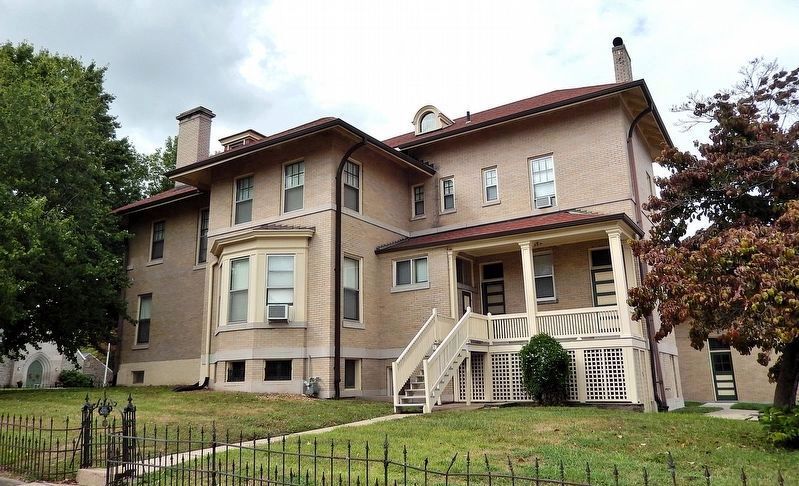
Photographed by Cosmos Mariner, September 24, 2025
4. John T. and Lillian Heard House (northeast elevation)
From the National Register Nomination: The east facade reveals the alignment of the three rectangles that make up the footprint of the house. The house originally had a porch on the south end. This porch was badly damaged by a windstorm in 1948, and although it was repaired, by 1956 the porch had deteriorated so badly that it was removed. The projecting center bay has a three paneled bay window marking the original dining room. The north (service) wing houses the kitchen. A hipped roof porch with square columns shelters the kitchen entrance. The attic of the east facade has one hipped roof dormer and a small segmental arched dormer.
Photographed by Cosmos Mariner, September 24, 2025
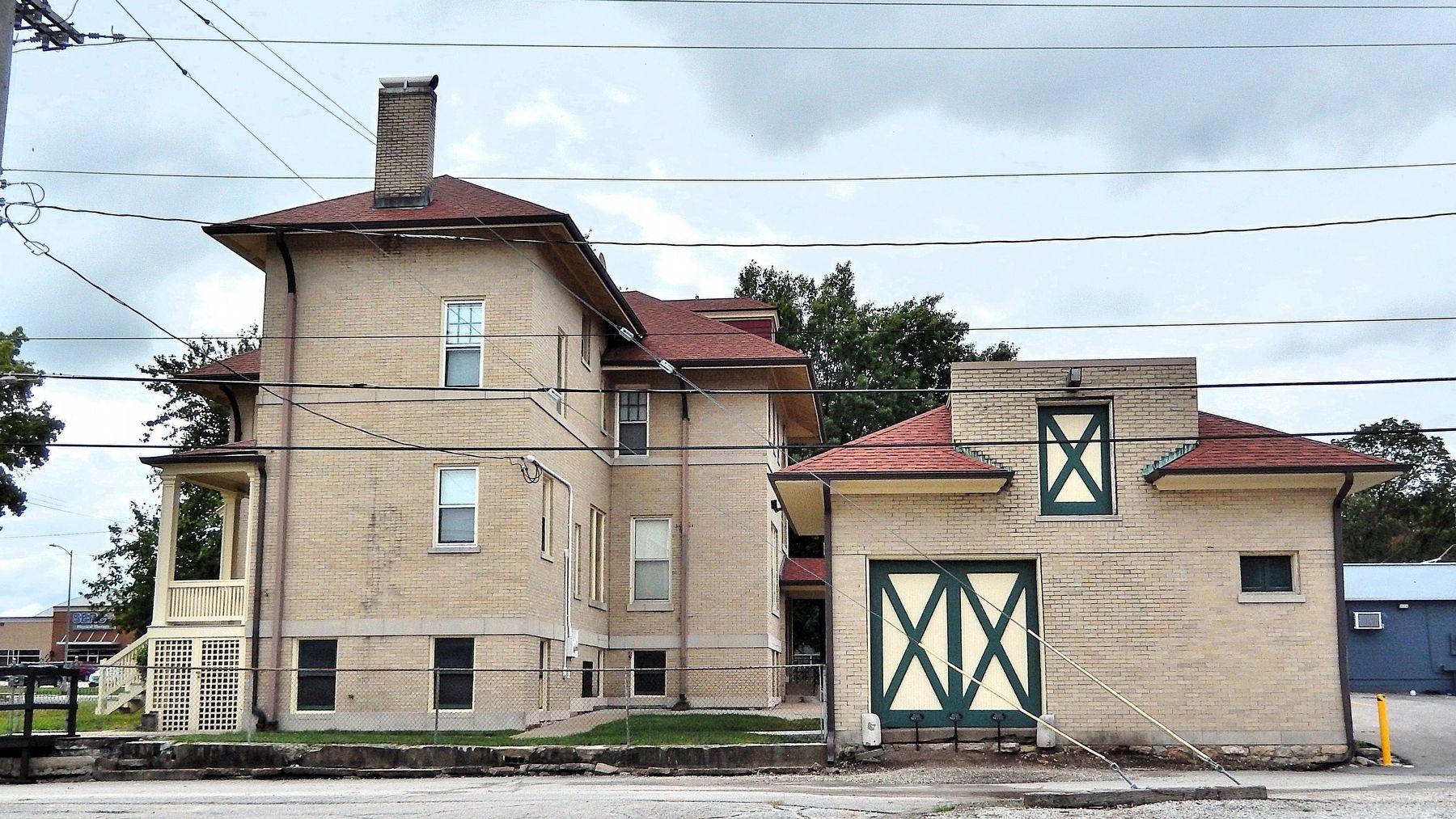
5. John T. and Lillian Heard House (north elevation)
The service wing is on the left/east side and the carriage house is on the right/west side.
From the National Register Nomination: The north elevation shows the narrowness of the service wing and contains only one window per floor and two large basement windows. The drive-through carriage house features double doors on the east side of the south and north facades. The west side of the carriage house was originally the stable area. Above the carriage house is a hay loft. The carriage house is considered a contributing building.
From the National Register Nomination: The north elevation shows the narrowness of the service wing and contains only one window per floor and two large basement windows. The drive-through carriage house features double doors on the east side of the south and north facades. The west side of the carriage house was originally the stable area. Above the carriage house is a hay loft. The carriage house is considered a contributing building.
Photographed by Cosmos Mariner, September 24, 2025
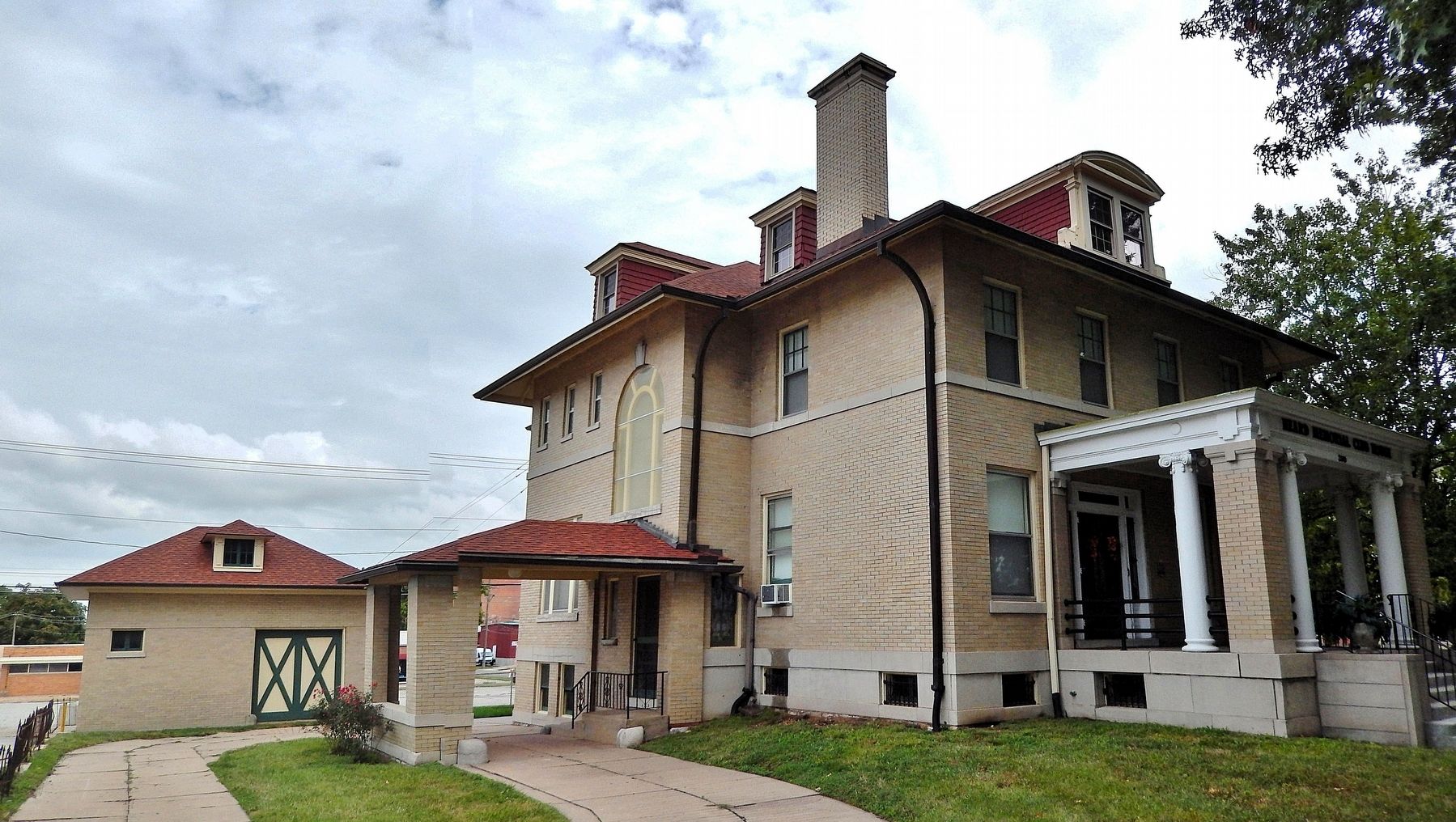
6. John T. and Lillian Heard House (southwest elevation)
From the National Register Nomination: The west facade has a porte cochere with low pitched roof supported by square brick posts. An entry to the side of the house opens from the porte cochere into an entry hall with stained glass windows. Above the porte cochere is a round arched, Venetian glass window that opens onto the stair landing between the first and second floors of the house. The attic of the west facade has a hipped roof dormer and a small segmental arched dormer. The carriage house is located at the left/northwest corner of the property.
Credits. This page was last revised on September 18, 2026. It was originally submitted on September 29, 2025, by Cosmos Mariner of Cape Canaveral, Florida. This page has been viewed 104 times since then and 48 times this year. Photos: 1, 2, 3, 4, 5, 6. submitted on September 30, 2025, by Cosmos Mariner of Cape Canaveral, Florida.
