Croom in Prince George's County, Maryland — The American Northeast (Mid-Atlantic)
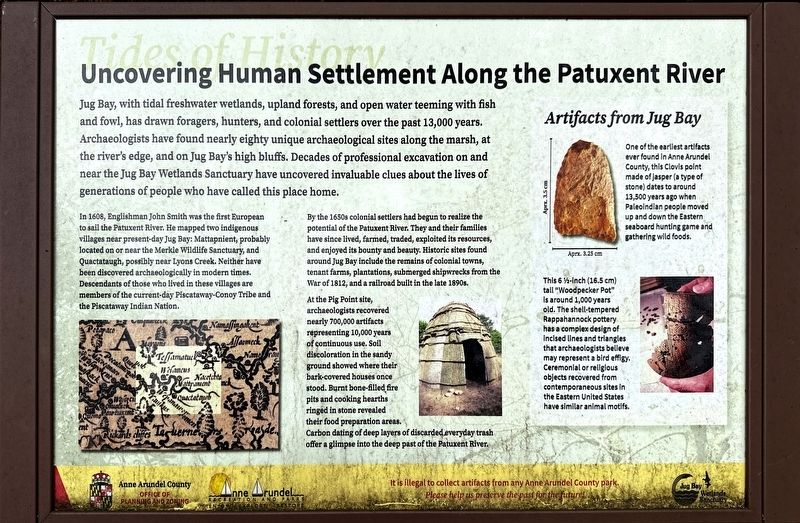
Uncovering Human Settlement Along the Patuxent River
Tides of History
Photographed by Allen C. Browne, October 11, 2025
1. Tides of History Marker
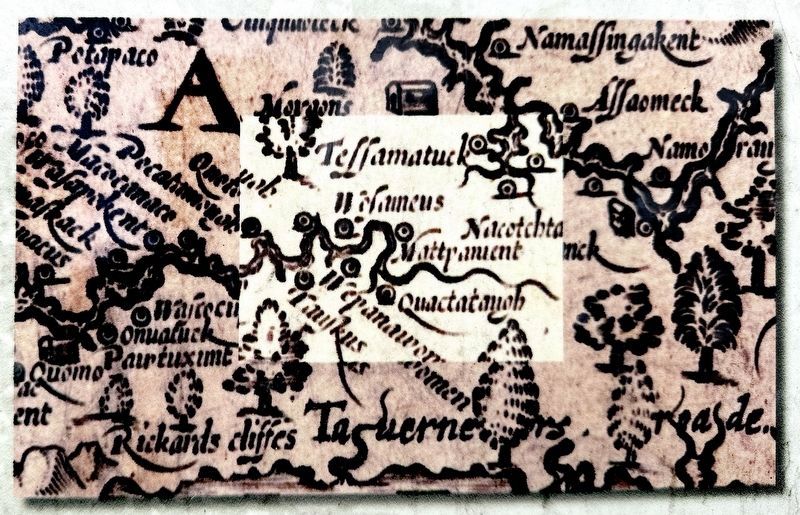
In 1608, Englishman John Smith was the first European to sail the Patuxent River. He mapped two indigenous villages near present-day Jug Bay: Mattapnient, probably located on or near the Merkle Wildlife Sanctuary, and Quactataugh, possibly near Lyons Creek. Neither have been discovered archaeologically in modern times. Descendants of those who lived in these villages are members of the current-day Piscataway-Conoy Tribe and the Piscataway Indian Nation.
By the 1650s colonial settlers had begun to realize the potential of the Patuxent River. They and their families have since lived, farmed, traded, exploited its resources, and
this page online
At the Pig Point site, archaeologists recovered nearly 700,000 artifacts representing 10,000 years of continuous use. Soil discoloration in the sandy ground showed where their bark-covered houses once stood. Burnt bone-filled fire pits and cooking hearths ringed in stone revealed their food preparation areas. Carbon dating of deep layers of discarded everyday trash offer a glimpse into the deep past of the Patuxent River.
Erected by Anne Arundel County.
Topics. This historical marker is listed in these topic lists: Indigenous Peoples and Communities • Paleontology • Settlements & Settlers • War of 1812. A significant historical year for this entry is 1608.
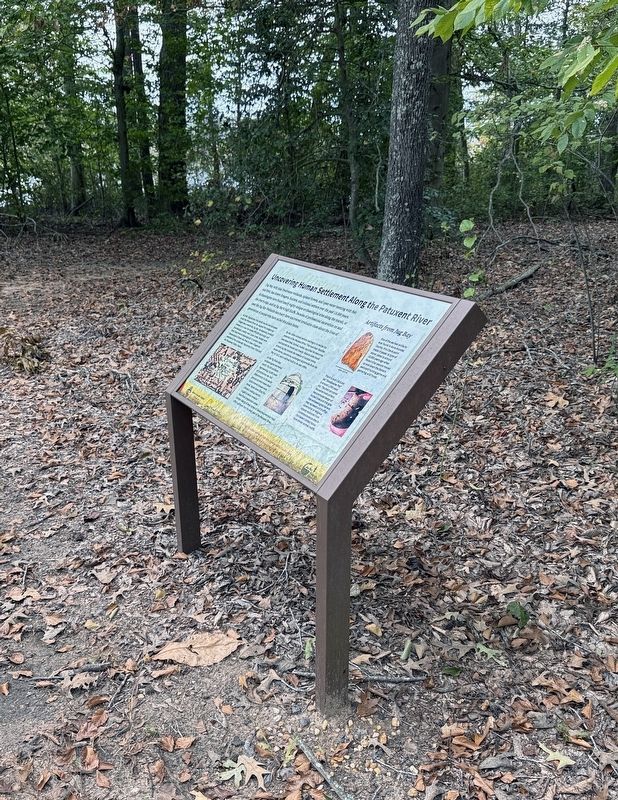
Location. 38° 46.708′ N, 76° 42.195′ W. Marker is in Croom, Maryland, in Prince George's County. It can be reached from The Jug Bay Wetlands Visiters' Center. Marker is at Otter Point, near the mouth of Two Run Creek. Follow the Otter Point Trail from
Photographed by Allen C. Browne, October 11, 2025
2. Tides of History Marker

Regionally, this marker is in the Washington Metropolitan Area and in Central Maryland. It is also in the American South, specifically in the Upper South, in the Mid-Atlantic, and on the Eastern Seaboard. Globally, it is in the North Atlantic Region, North America, the Western Hemisphere, the Western World, and the Anglosphere. Historically, it finds itself in what was once one of the original Thirteen Colonies and also the Antebellum South.
Other nearby markers. At least 8 other markers are within walking distance of this marker: Climate Change and Jug Bay (approx. half a mile away); Blown to Atoms (approx. half a mile away); The Blacksmith Shop (approx. 0.6 miles away); The Duckett Cabin (approx. 0.6 miles away); The Sears House (approx. 0.6 miles away); Mount Calvert Historical and Archaeological Park (approx. ¾ mile away); Mount Calvert Federal Period Plantation House (approx. ¾ mile away); Explosive Scene (approx. ¾ mile away). Touch for a list and map
Photographed by Allen C. Browne, October 11, 2025
3. Mattapnient and Quactataugh
Close-up of map on marker.
Another marker is no longer nearby. The Duckett Cabin (was approx. 0.6 miles away but has been replaced with another marker now near it).
Photographed by Allen C. Browne, October 11, 2025
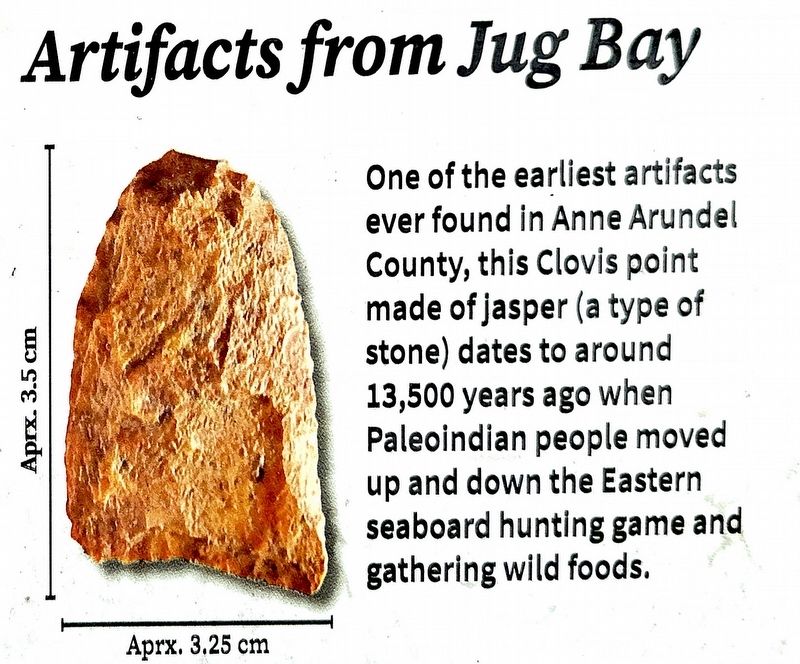
4. Clovis Point
One of the earliest artifacts ever found in Anne Arundel County, this Clovis point
made of jasper (a type of stone) dates to around 13,500 years ago when Paleoindian people moved up and down the Eastern seaboard hunting game and gathering wild foods.
Close-up of sidebar on marker.
Photographed by Allen C. Browne, October 11, 2025
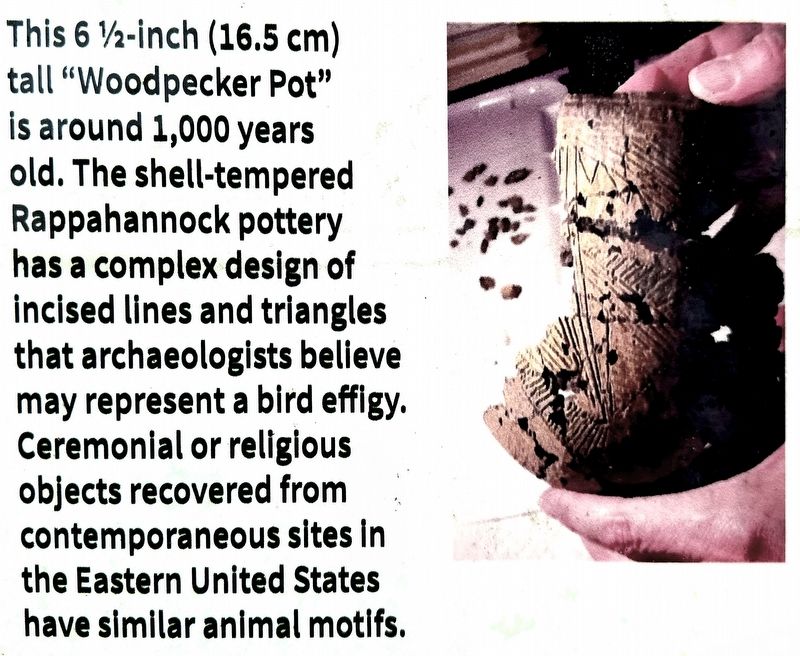
5. Woodpecker Pot
This 6 1/2-inch (16.5 cm) tall "Woodpecker Pot" is around 1,000 years old. The shell-tempered Rappahannock pottery has a complex design of incised lines and triangles that archaeologists believe may represent a bird effigy. Ceremonial or religious objects recovered from contemporaneous sites in pits and cooking hearths in the Eastern United States have similar animal motifs.
Close-up of sidebar on marker.
Credits. This page was last revised on October 13, 2025. It was originally submitted on October 12, 2025, by Allen C. Browne of Silver Spring, Maryland. This page has been viewed 106 times since then and 68 times this year. Photos: 1, 2, 3, 4, 5. submitted on October 12, 2025, by Allen C. Browne of Silver Spring, Maryland.
