Lawrence Cultural District in Douglas County, Kansas — The American Midwest (Upper Plains)
Lynching in America ⎯⎯⎯ Lynching in Douglas County
Community Remembrance Project
Photographed by Jason Voigt, October 30, 2025
1. Lynching in America / Lynching in Douglas County Marker
Inscription.
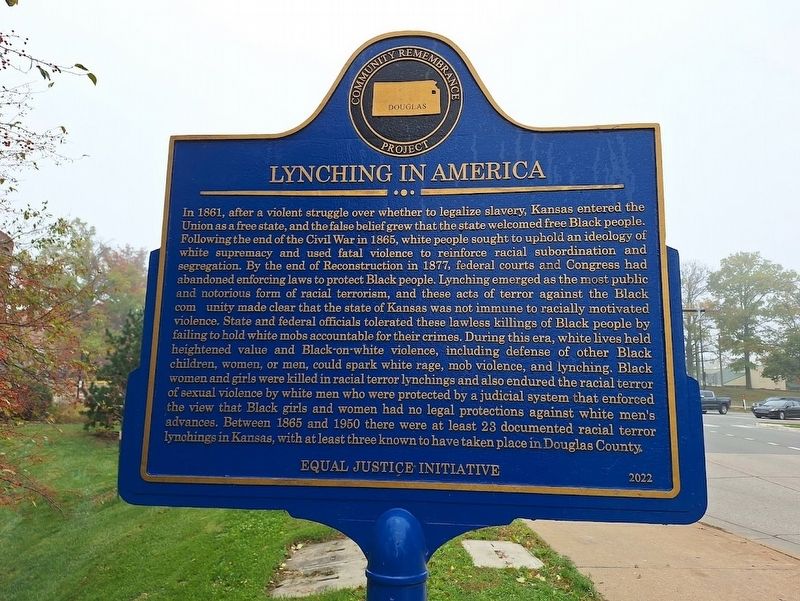
Lynching in America.
In 1861, after a violent struggle over whether to legalize slavery, Kansas entered the Union as a free state, and the false belief grew that the state welcomed free Black people. Following the end of the Civil War in 1865, white people sought to uphold an ideology of white supremacy and used fatal violence to reinforce racial subordination and segregation. By the end of Reconstruction in 1877, federal courts and Congress had abandoned enforcing laws to protect Black people. Lynching emerged as the most public and notorious form of racial terrorism, and these acts of terror against the Black community made clear that the state of Kansas was not immune to racially motivated violence. State and federal officials tolerated these lawless killings of Black people by failing to hold white mobs accountable for their crimes. During this era, white lives held heightened value and Black-on-white violence, including defense of other Black children, women, or men, could spark white rage, mob violence, and lynching. Black women and girls were killed in racial terror lynchings and also endured the racial terror
Click or scan to see this page online
of sexual violence by white men who were protected by a judicial system that enforced the view that Black girls and women had no legal protections against white men's advances. Between 1865 and 1950 there were at least 23 documented racial terror lynchings in Kansas, with at least three known to have taken place in Douglas County.
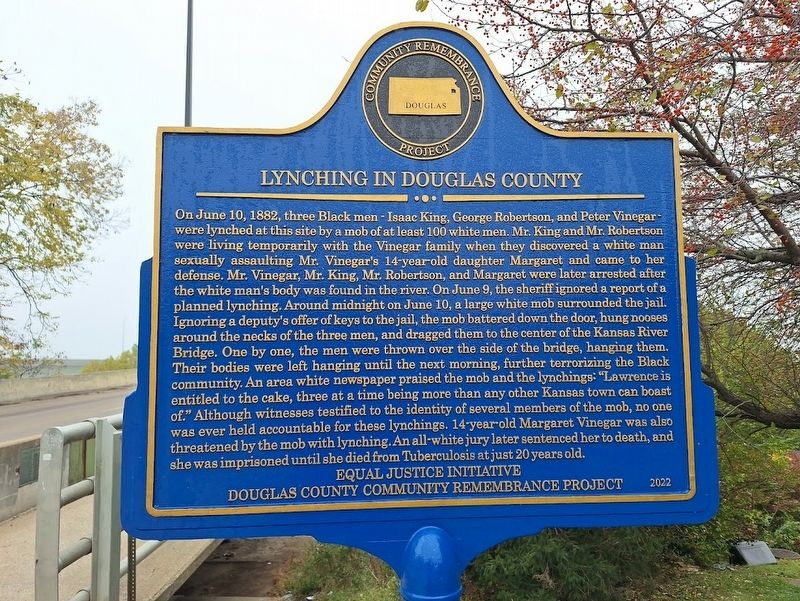
Lynching in Douglas County.
On June 10, 1882, three Black men - Isaac King, George Robertson, and Peter Vinegar - were lynched at this site by a mob of at least 100 white men. Mr. King and Mr. Robertson were living temporarily with the Vinegar family when they discovered a white man sexually assaulting Mr. Vinegar's 14-year-old daughter Margaret and came to her defense. Mr. Vinegar, Mr. King, Mr. Robertson, and Margaret were later arrested after the white man's body was found in the river. On June 9, the sheriff ignored a report of a planned lynching. Around midnight on June 10, a large white mob surrounded the jail. Ignoring a deputy's offer of keys to the jail, the mob battered down the door, hung nooses around the necks of the three men, and dragged them to the center of the Kansas River Bridge.
Photographed by Jason Voigt, October 30, 2025
2. Lynching in America / Lynching in Douglas County Marker
reverse side
One by one, the men were thrown over the side of the bridge, hanging them. Their bodies were left hanging until the next morning, further terrorizing the Black community. An area white newspaper praised the mob and the lynchings: "Lawrence is entitled to the cake, three at a time being more than any other Kansas town can boast of." Although witnesses testified to the identity of several members of the mob, no one was ever held accountable for these lynchings. 14-year-old Margaret Vinegar was also threatened by the mob with lynching. An all-white jury later sentenced her to death, and she was imprisoned until she died from Tuberculosis at just 20 years old.
Erected 2022 by Equal Justice Initiative and Douglas County Community Remembrance Project.
Topics and series. This historical marker is listed in these topic lists: African Americans • Civil Rights. In addition, it is included in the Lynching in America series list. A significant historical date for this entry is June 10, 1882.
Location. 38° 58.408′ N, 95° 14.161′ W. Marker is in Lawrence, Kansas, in Douglas County. It is in the Lawrence Cultural District. It is on U.S. 59 north of
Photographed by Jason Voigt, October 30, 2025
3. Lynching in America / Lynching in Douglas County Marker
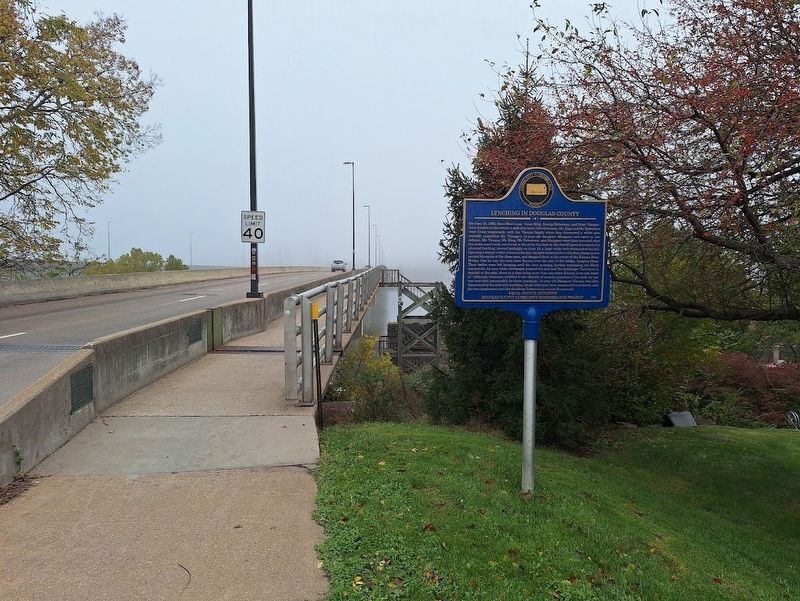
Looking north on US 59
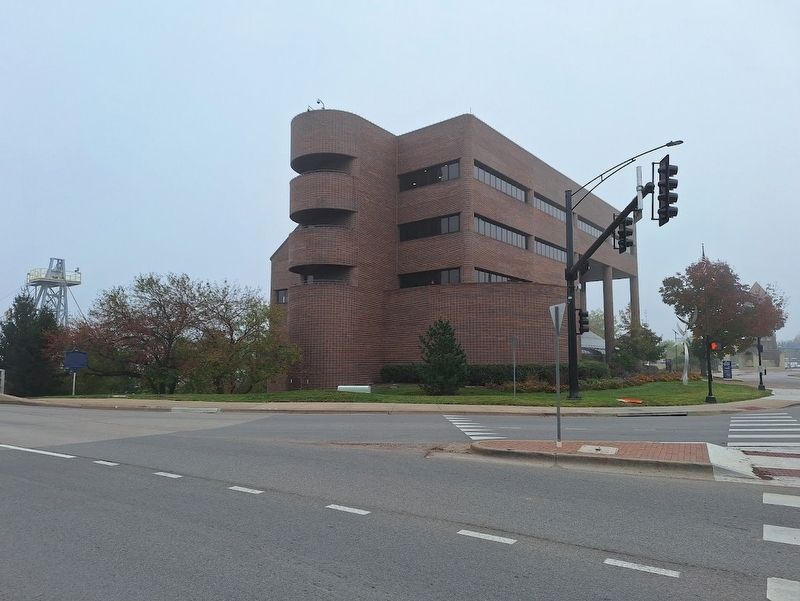
East 6th Street, on the right when traveling north. Marker is located on the grounds of Lawrence City Hall. Touch for map. Marker is at or near this postal address: 6 E 6th St, Lawrence KS 66044, United States of America. Touch for directions.
Regionally, this marker is in Eastern Kansas and specifically in Bleeding Kansas Border War Country. It is also in the American Midwest, in the Corn Belt, on the prairies, on the Southern Plains, and on the Santa Fe Trail Corridor. Globally, it is in North America, the Western Hemisphere, the Western World, and the Anglosphere. Historically, it finds itself in what was once the Louisiana Purchase.
Credits. This page was last revised on March 22, 2026. It was originally submitted on October 31, 2025, by Jason Voigt of Glen Carbon, Illinois. This page has been viewed 124 times since then and 50 times this year. Photos:1, 2, 3, 4. submitted on October 31, 2025, by Jason Voigt of Glen Carbon, Illinois.