Downtown in Topeka in Shawnee County, Kansas — The American Midwest (Upper Plains)
The Failure of the Missionaries
Photographed by Jason Voigt, October 29, 2025
1. The Failure of the Missionaries Marker
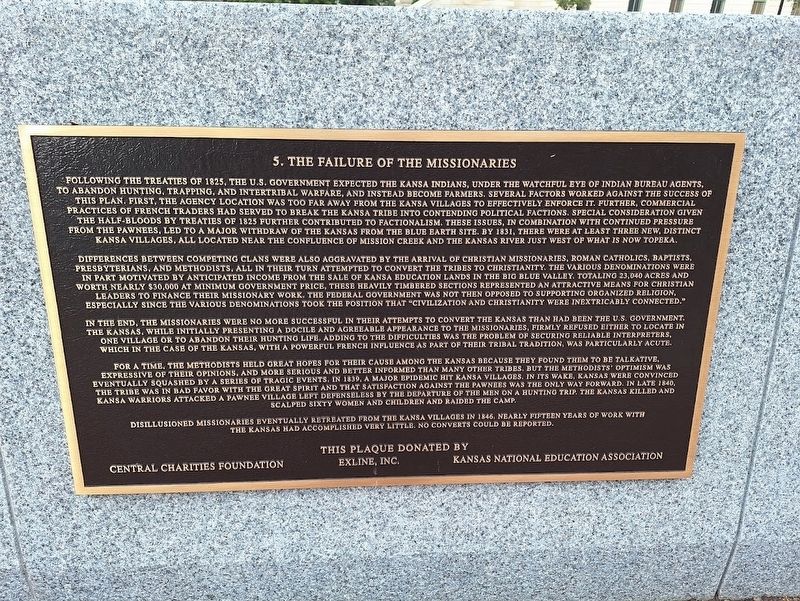
Following the treaties of 1825, the U.S. government expected the Kansa Indians, under the watchful eye of Indian bureau agents, to abandon hunting, trapping, and intertribal warfare, and instead become farmers. Several factors worked against the success of this plan. First, the agency location was too far away from the Kansa villages to effectively enforce it. Further, commercial practices of French traders had served to break the Kansa tribe into contending political factions. Special consideration given the half-bloods by treaties of 1825 further contributed to factionalism. These issues, in combination with continued pressure from the Pawnees, led to a major withdraw of the Kansas rom the Blue Earth site. By 1831, there were at least three new, distinct Kansa villages, all located near the confluence of Mission Creek and the Kansas River just west of what is now Topeka.
Differences between competing clans were also aggravated by the arrival of Christian missionaries, Roman Catholics, Baptists, Presbyterians, and Methodists, all in their turn attempted to convert the tribes to Christianity. The various denominations
this page online
In the end, the missionaries were no more successful in their attempts to convert the Kansas than had been the U.S. government. The Kansas, while initially presenting a docile and agreeable appearance to the missionaries, firmly refused either to locate in one village or to abandon their hunting life. Adding to the difficulties was the problem of securing reliable interpreters, which in the case of the Kansas, with a powerful French influence as part of their tribal tradition, was particularly acute.
For a time, the Methodists held great hopes for their cause among the Kansas because they found them to be talkative, expressive
Photographed by Jason Voigt, October 29, 2025
2. The Failure of the Missionaries Marker
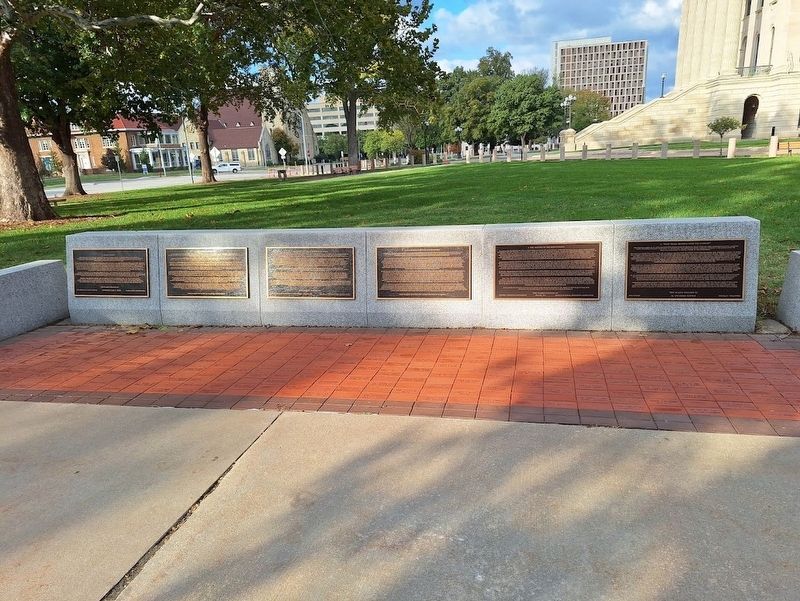
Marker is second from the right
Disillusioned missionaries eventually retreated from the Kansa villages in 1846. Nearly fifteen years of work with the Kansas had accomplished very little. No converts could be reported.
Erected by Central Charities Foundation, Exline, Inc. and Kansas National Education Association. (Marker Number 5.)
Topics. This historical marker is listed in these topic lists: Forts and Castles • Indigenous Peoples and Communities • Religion & Religious Structures. A significant historical year for this entry is 1825.
Location. 39° 2.866′ N, 95° 40.749′ W. Marker is in Topeka, Kansas,
Photographed by Jason Voigt, October 29, 2025
3. The Failure of the Missionaries Marker
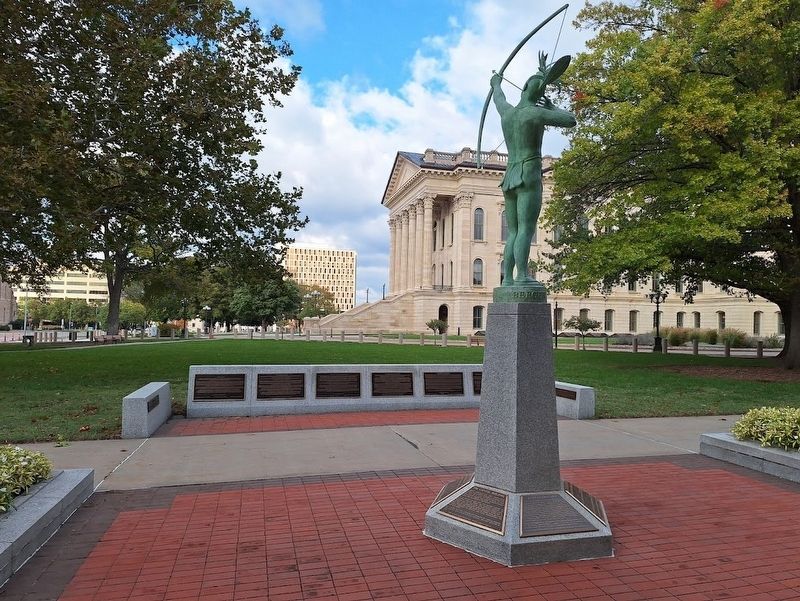
On the grounds of Kansas State Capitol

Regionally, this marker is in Eastern Kansas. It is also in the American Midwest, in the Corn Belt, on the prairies, and on the Southern Plains. Globally, it is in North America, the Western Hemisphere, the Western World, and the Anglosphere. Historically, it finds itself in what was once the Louisiana Purchase.
Other nearby markers. At least 8 other markers are within walking distance of this marker: "What shall be done with the Kansas?" (here, next to this marker); The Indian Policy of a New Nation (here, next to this marker); The Impact of the European Fur Trade (here, next to this marker); The Kansa Way of Life (here, next to this marker); Kansa Origins (here, next to this marker); The Capitol Building (here, next to this marker); The Governor's Plaque (here, next to this marker); Kansas Children (here, next to this marker). Touch for a list and map of all markers in Topeka.
Credits. This page was last revised on October 31, 2025. It was originally submitted on October 31, 2025, by Jason Voigt of Glen Carbon, Illinois. This page has been viewed 76 times since then and 41 times this year. Photos: 1, 2, 3. submitted on October 31, 2025, by Jason Voigt of Glen Carbon, Illinois.
