Saqarah in Badrshein, Giza Governorate, Egypt — مصر (Northeast Africa)
The Step Pyramid
⎯⎯⎯
الهرم المدرج
Photographed by James Hulse, October 8, 2024
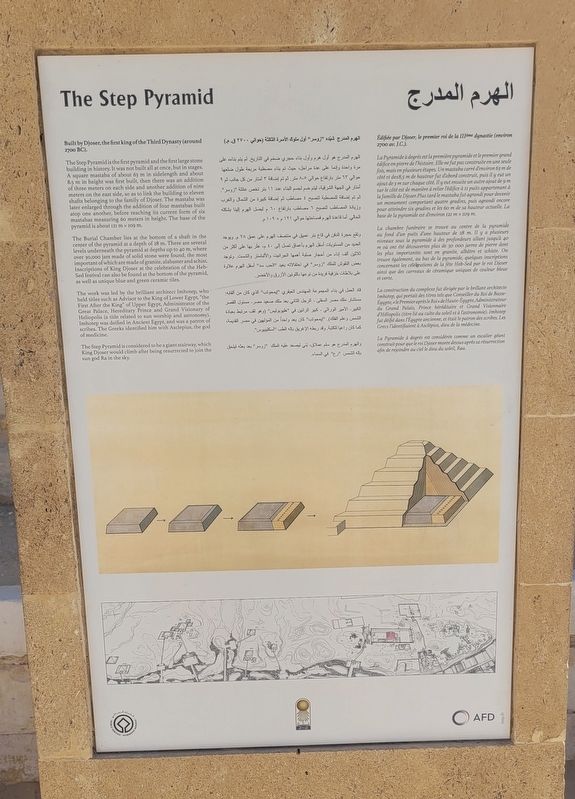
1. The Step Pyramid / الهرم المدرج Ma
 Built by Djoser, the first king of the Third Dynasty (around 2700 BC).
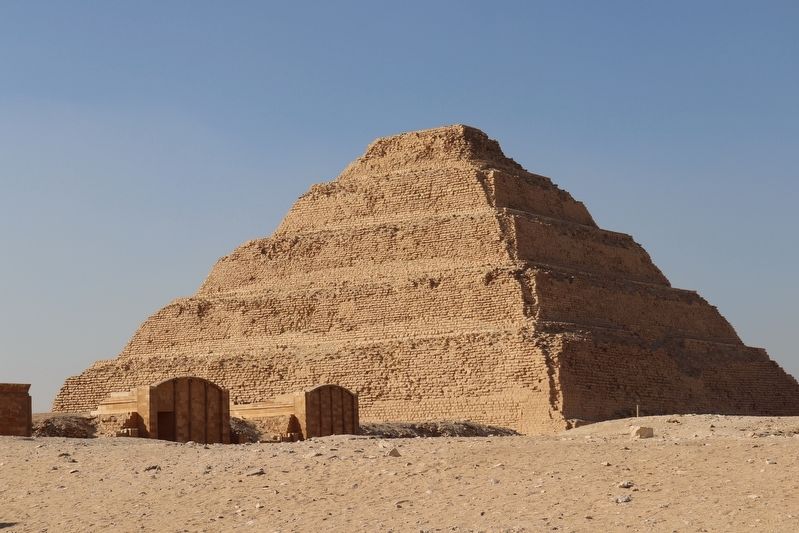
The Step Pyramid is the first pyramid and the first large stone building in history. It was not built all at once, but in stages. A square mastaba of about 63 m in sidelength and about 8.5 m in height was first built, then there was an addition of three meters on each side and another addition of nine meters on the east side, so as to link the building to eleven shafts belonging to the family of Djoser. The mastaba was later enlarged through the addition of four mastabas built atop one another, before reaching its current form of six mastabas measuring 60 meters in height. The base of the pyramid is about 121 m × 109 m.
The Burial Chamber lies at the bottom of a shaft in the center of the pyramid at a depth of 28 m. There are several levels underneath the pyramid at depths up to 40 m, where over 30,000 jars made of solid stone were found, the most important of which are made of granite, alabaster and schist. Inscriptions of King Djoser at the celebration of the Heb-Sed festival can also be found at the bottom of the pyramid, as well as unique blue and green ceramic tiles.
The work was led by the brilliant architect Imhotep, who held titles such as Advisor to the King of Lower Egypt, "the First After the King" of Upper Egypt, Administrator of the Great Palace, Hereditary Prince and Grand Visionary of Heliopolis (a title related to sun worship and astronomy). Imhotep was deified in Ancient Egypt, and was a patron of scribes. The Greeks identified him with Asclepius, the god of medicine.
The Step Pyramid is considered to be a giant stairway, which King Djoser would climb after being resurrected to join the sun god Ra in the sky.
Édifiée par Djoser, le premier roi de la IIIème dynastie (environ 2700 av. J.C.).
La Pyramide à degrés est la première pyramide et le premier grand édifice en pierre de l'histoire. Elle ne fut pas construite en une seule fois, mais en plusieurs étapes. Un mastaba carré d'environ 63 m de côté et dex8,5 m de hauteur fut d'abord construit, puis il y eut un ajout de 3 m sur chaque côté. Il y eut ensuite un autre ajout de 9 m sur le côté est de manière à relier l'édifice à 11 puits appartenant à la famille de Djoser. Plus tard le mastaba fut agrandi pour devenir un monument comportant quatre gradins, puis agrandi encore pour atteindre six gradins et les 60 m de sa hauteur actuelle. La base de la pyramide est d'environ 121 m x 109 m.
La chambre funéraire se trouve au centre de la pyramide au fond d'un puits d'une hauteur de 28 m. Il y a plusieurs niveaux sous la pyramide à des profondeurs allant jusqu'à 40 m où ont été découvertes plus de 30 000 jarres de pierre dont les plus importantes sont en granite, albâtre et schiste. On trouve également, au bas de la pyramide, quelques inscriptions concernant les célébrations de la fête Heb-Sed par le roi Djoser ainsi que des carreaux de céramique uniques de couleur bleue et verte.
La construction du complexe fut dirigée par le brillant architecte Imhotep, qui portait des titres tels que Conseiller du Roi de Basse-Égypte, «le Premier après le Roi» de Haute-Égypte, Administrateur du Grand Palais, Prince héréditaire et Grand Visionnaire d'Héliopolis (titre lié au culte du soleil et à l'astronomie). Imhotep fut déifié dans l'Égypte ancienne, et était le patron des scribes. Les Grecs l'identifiaient à Asclépios, dieu de la médecine.
La Pyramide à degrés est considérée comme un escalier géant construit pour que le roi Djoser monte dessus après sa résurrection afin de rejoindre au ciel le dieu du soleil, Raa.
الهرم المدرج
الهرم المدرج شيّده "زوسر" أول ملوك الأسرة الثالثة (حوالي ۲۷۰۰ ق. م.)
الهرم المدرج هو أول هرم وأول بناء حجري ضخم في التاريخ. لم يتم بناءه على مرة واحدة وإنما على عدة مراحل، حيث تم بناء مصطبة مربعة طول ضلعها حوالي ٦٣ متر بارتفاع حوالي ٨،٥ متر . ثم تم إضافة

Click or scan to see
this page online
3 أمتار من كل جانب ثم 9 أمتار في الجهة الشرقية، ليتم ضم لجسم البناء عدد ۱۱ بئر تخص عائلة "زوسر". ثم تم إضافة للمصطبة لتصبح ٤ مصاطب ثم إضافة كبيرة من الشمال والغرب
وزيادة المصاطب لتصبح ٦ مصاطب بارتفاع ٦٠م ليصل الهرم إلينا بشكله الحالي. أما قاعدة الهرم فمساحتها حوالي ۱۲۱ م × ۱۰۹ م.
وتقع حجرة الدفن في قاع بئر عميق في منتصف الهرم على عمق ۲۸ م. ويوجد العديد من المستويات أسفل الهرم بأعماق تصل إلى ٤٠م، عثر بها على أكثر من ثلاثين ألف إناء من أحجار صلبة أهمها الجرانيت والألباستر والشست. وتوجد بعض النقوش للملك زوسر" في احتفالاته بعيد "الحب" سد" أسفل الهرم علاوة على بلاطات خزفية فريدة من نوعها باللونين الأزرق والأخضر.
قاد العمل في بناء المجموعة المهندس العبقري "إيمحوتب" الذي كان من ألقابه: مستشار ملك مصر السفلى - الرجل الثاني بعد ملك صعيد مصر - مسئول القصر الكبير - الأمير الوراثي - كبير الرائين في هليوبوليس" وهو لقب مرتبط بعبادة الشمس وعلم الفلك). "إيمحوتب" كان يعد واحداً من المؤلهين في مصر القديمة كما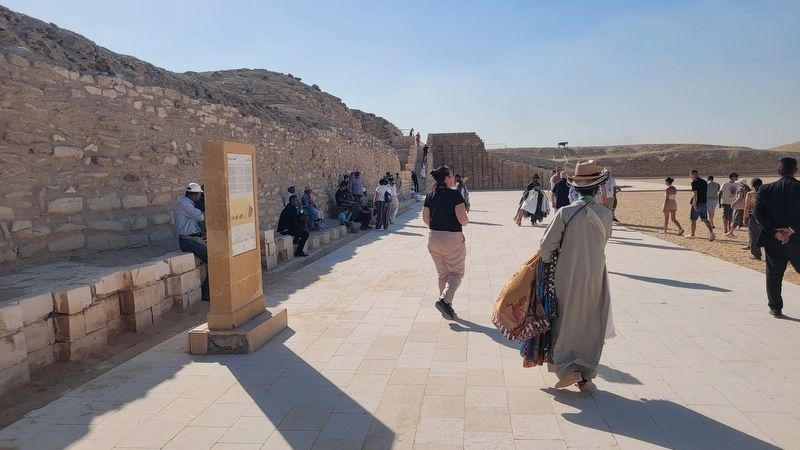 كان راعيا للكتبة. وقد ربطه الإغريق بإله الطب "اسكليبيوس".
والهرم المدرج هو سلم عملاق بني ليصعد عليه الملك زوسر" بعد بعثه ليلحق بإله الشمس "رع" في السماء.
الهرم المدرج شيّده "زوسر" أول ملوك الأسرة الثالثة (حوالي ۲۷۰۰ ق. م.)
الهرم المدرج هو أول هرم وأول بناء حجري ضخم في التاريخ. لم يتم بناءه على مرة واحدة وإنما على عدة مراحل، حيث تم بناء مصطبة مربعة طول ضلعها حوالي ٦٣ متر بارتفاع حوالي ٨،٥ متر . ثم تم إضافة
this page online
وتقع حجرة الدفن في قاع بئر عميق في منتصف الهرم على عمق ۲۸ م. ويوجد العديد من المستويات أسفل الهرم بأعماق تصل إلى ٤٠م، عثر بها على أكثر من ثلاثين ألف إناء من أحجار صلبة أهمها الجرانيت والألباستر والشست. وتوجد بعض النقوش للملك زوسر" في احتفالاته بعيد "الحب" سد" أسفل الهرم علاوة على بلاطات خزفية فريدة من نوعها باللونين الأزرق والأخضر.
قاد العمل في بناء المجموعة المهندس العبقري "إيمحوتب" الذي كان من ألقابه: مستشار ملك مصر السفلى - الرجل الثاني بعد ملك صعيد مصر - مسئول القصر الكبير - الأمير الوراثي - كبير الرائين في هليوبوليس" وهو لقب مرتبط بعبادة الشمس وعلم الفلك). "إيمحوتب" كان يعد واحداً من المؤلهين في مصر القديمة كما
Photographed by James Hulse, October 8, 2024
2. The view of the Step Pyramid Marker near the Cobra wall
والهرم المدرج هو سلم عملاق بني ليصعد عليه الملك زوسر" بعد بعثه ليلحق بإله الشمس "رع" في السماء.
Erected by UNESCO World Heritage.
Topics. This historical marker is listed in this topic list: Anthropology & Archaeology.
Location. 29° 52.149′ N, 31° 13.002′ E. Marker is in Saqarah, Giza Governorate, in Badrshein. It is on Pyramid of Djoser Road. Touch for map. Marker is at or near this postal address: Pyramid of Djoser Rd, Saqarah, Giza Governorate 33520-01, Egypt. Touch for directions.

Regionally, it is in Africa, specifically in North Africa, in the Middle East, on the Red Sea, and in a coastal Mediterranean country. Historically, it finds itself in what was once the Byzantine Empire, the Ottoman Empire, a British colony, and the Roman Empire.
Other nearby markers. At least 8 other markers are within walking distance of this marker: The Southern Tomb (a few steps from this marker); South Court (a few steps from this marker); Colonnade Entrance (about 90 meters away, measured in a direct line); Enclosure Wall (about 90 meters away); Step Pyramid Complex (about 150 meters away); South Entrance of The Step Pyramid (about 150 meters away); The Tomb of Mereruka (approx. 0.8 kilometers away); The Funerary Complex of King Teti (approx. 0.9 kilometers away). Touch for a list and map of all markers in Saqarah.
Also see . . . Pyramid of Djoser. Wikipedia
The Pyramid of Djoser,[a] sometimes called the Step Pyramid of Djoser or Step Pyramid of Horus Netjerikhet, is an archaeological site in the Saqqara necropolis, Egypt, northwest of the ruins of Memphis. It was the first Egyptian pyramid to be built. The six-tier, four-sided structure is the earliest colossal stone building in Egypt. It was built in the 27th century BC during the Third Dynasty for the burial of Pharaoh Djoser. The pyramid is the central feature of a vast mortuary complex in an enormous courtyard surrounded by ceremonial structures and decoration.(Submitted on November 6, 2025, by James Hulse of Medina, Texas.)
The pyramid went through several revisions and redevelopments of the original plan. The pyramid originally stood 62.5 m (205 ft) tall, with a base of 109 m × 121 m (358 ft × 397 ft) and was clad in polished white limestone. As of 1997 the step pyramid (or proto-pyramid) was considered to be the earliest large-scale cut stone construction made by man, although the nearby enclosure wall "Gisr el-Mudir" is suggested by some Egyptologists to predate the complex, and the South American pyramids at Caral are contemporary.
Photographed by James Hulse, October 8, 2024
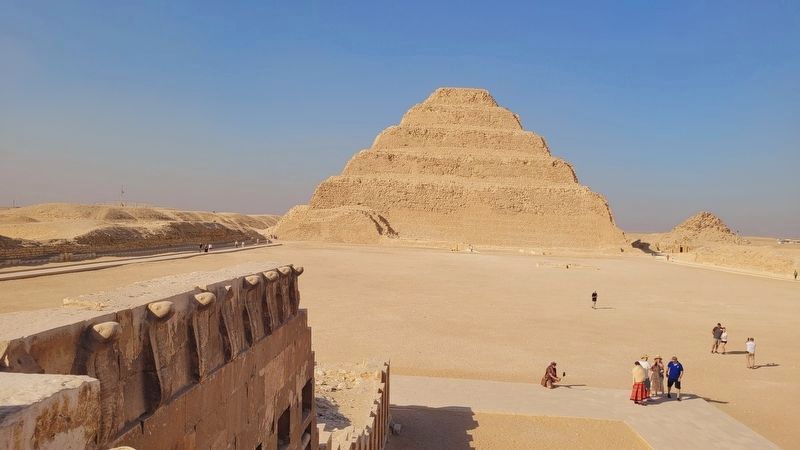
3. The view of the Step Pyramid from the Cobra Wall
Photographed by James Hulse, October 8, 2024
4. The Step Pyramid
Credits. This page was last revised on November 8, 2025. It was originally submitted on November 5, 2025, by James Hulse of Medina, Texas. This page has been viewed 111 times since then and 66 times this year. Photos: 1, 2, 3, 4. submitted on November 6, 2025, by James Hulse of Medina, Texas.
