Saqarah in Badrshein, Giza Governorate, Egypt — مصر (Northeast Africa)
South Entrance of The Step Pyramid
Photographed by James Hulse, October 8, 2024
1. South Entrance of The Step Pyramid Marker
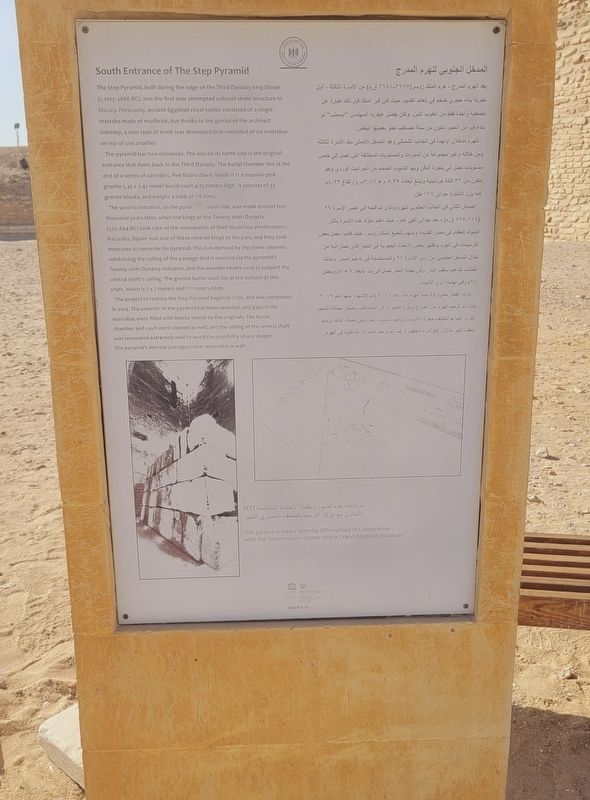
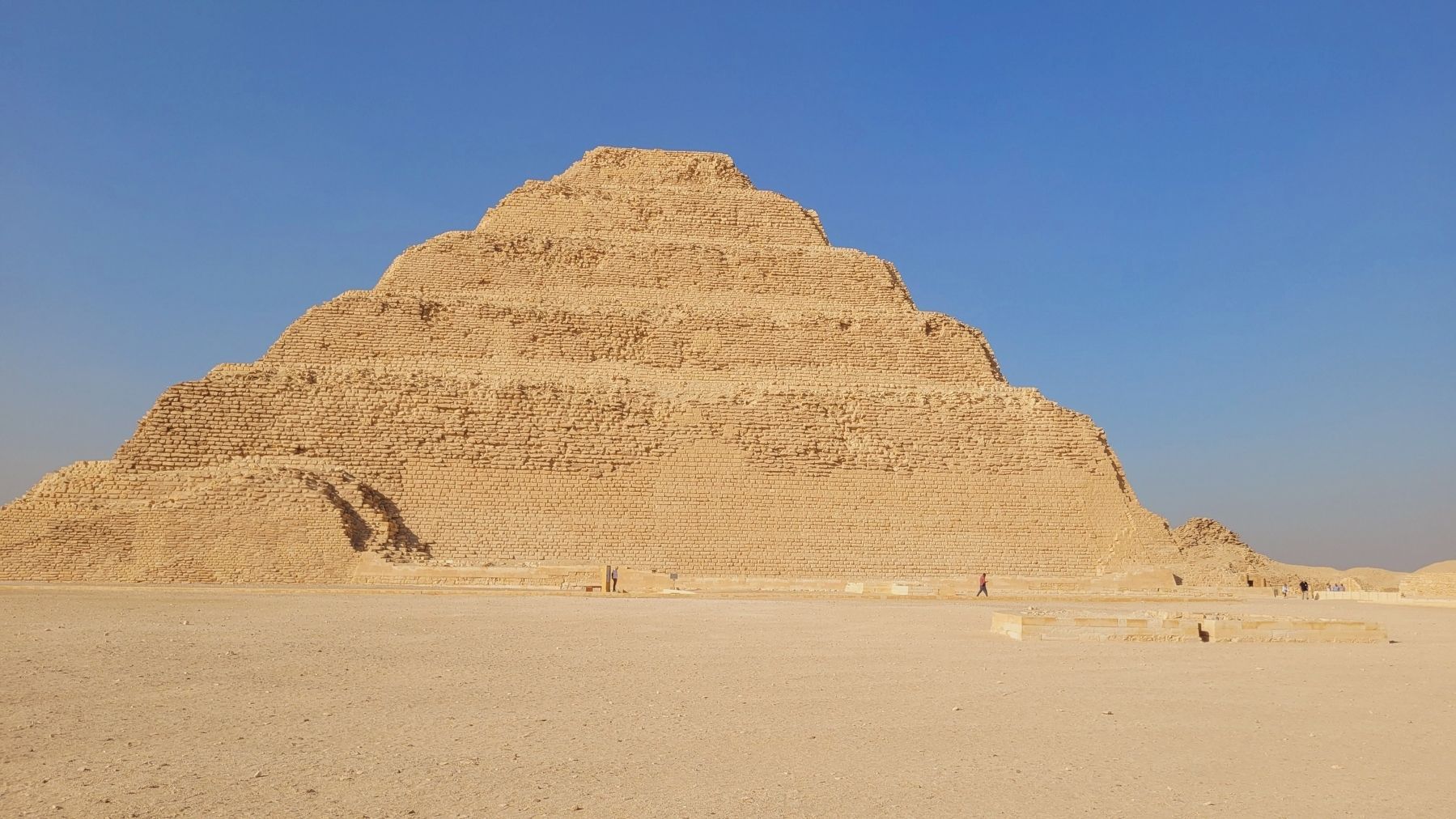
 The Step Pyramid, built during the reign of the Third Dynasty king Djoser (c.2613-2686 BC), was the first ever attempted colossal stone structure in history. Previously, ancient Egyptian royal tombs consisted of a single mastaba made of mudbrick, but thanks to the genius of the architect Imhotep, a new type of tomb was developed that consisted of six mastabas on top of one another.
The pyramid has two entrances. The one on its north side is the original entrance that dates back to the Third Dynasty. The burial chamber lies at the end of a series of corridors, five floors down. Inside it is a massive pink granite 5.35 x 3.47 meter burial vault 4.73 meters high. It consists of 32 granite blocks, and weighs a total of 176 tons.
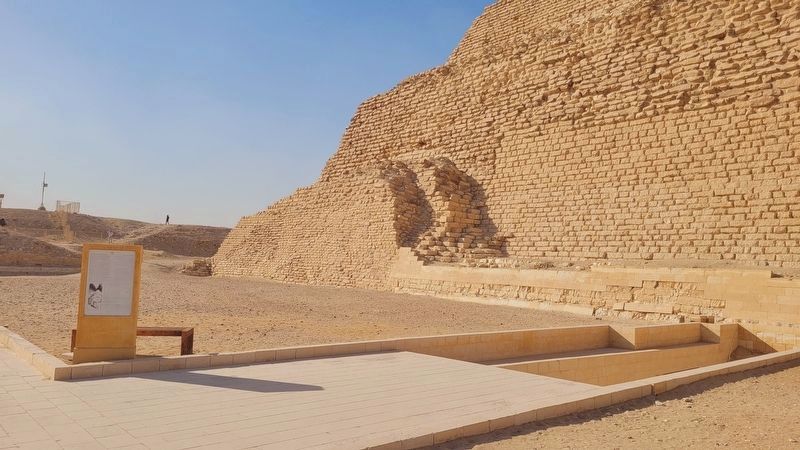
The second entrance, on the pyramids south side, was made around two thousand years later, when the kings of the Twenty sixth Dynasty (525-664 BC) took care of the monuments of their illustrious predecessors. Naturally, Djoser was one of these revered kings of the past, and they took measures to renovate his pyramid. This is evidenced by the stone columns reinforcing the ceiling of the passage that is reached via the pyramid's Twenty sixth Dynasty entrance, and the wooden beams used to support the central shaft's ceiling. The granite burial vault lies at the bottom of this shaft, which is 7 x 7 meters and 28 meters deep.
The project to restore the Step Pyramid began in 2006, and was completed in 2019. The exterior of the pyramid has been restored, and gaps in the mastabas were filled with blocks similar to the originals. The burial chamber and vault were cleaned as well, and the ceiling of the central shaft was renovated extremely well to avoid the possibility of any danger. The pyramid's internal passages were renovated as well.
This picture is taken with the RTI method in Cooperation with the Conservation Center of the Grand Egyptian Museum.
المدخل الجنوبي للهرم المدرج
يعد الهرم المدرج - هرم الملك زوسر ( ٢٦٦٠٧ - ٢٦٤٨) (ق.م) من الأسرة الثالثة - أول تجربة بناء حجري ضخم في العالم القديم، حيث كان قبر الملك قبل ذلك عبارة عن مصطبة واحدة فقط من الطوب اللبن، ولكن بفضل عبقرية المهندس "ايمحتب" تم بناء قبر من الحجر مكون من ستة مصاطب تعلو بعضها البعض.
للهرم مدخلان اولهما

Click or scan to see
this page online
في الجانب الشمالي وهو المدخل الأصلي منذ الأسرة الثالثة ومن خلاله وعبر مجموعة من الممرات والمستويات المختلفة التي تصل إلى خمس مستويات نصل إلى حجرة الدفن وبها التابوت الضخم من الجرانيت الوردي وهو مكون من ٣٢ كتلة جرانيتية وتبلغ أبعاده ٥,٣٥ م ٣,٤٧م، وارتفاع ٤,٧٣م . كما يزن التابوت حوالي ١٧٦ طن.
المدخل الثاني في الجانب الجنوبي للهرم والذي تم فتحه في عصر الأسرة ٢٦ ( ٦٦٤- ٥٢٥ (ق.م) - بعد حوالي ألفي عام - حيث اهتم ملوك هذه الأسرة بآثار الملوك العظام في مصر القديمة ومنهم بالطبع الملك زوسر ، حيث قاموا بعمل بعض الترميمات في الهرم وتظهر بعض الأعمدة الحجرية في الممر الذي نصل إليه من خلال المدخل الجنوبي من زمن الأسرة ٢٦ والمستخدمة في تدعيم الممر، وكذلك أخشاب لتدعيم سقف البدر. وفي نهاية الممر نصل إلى بئر بأبعاد 7 × 7 م وبعمق ۲۸ م وفي نهايته نرى التابوت.
بدات أعمال مشروع ترميم الهرم منذ عام ۲۰۰٦ وتم الانتهاء منها عام ۲۰۱۹ حيث تم ترميم الهرم من الخارج وملء الفجوات في المصاطب باحجار مماثلة للحجر القديم. كما تم تنظيف حجرة التابوت وترميم التابوت الجرانيتي للملك، كذلك ترميم سقف البئر شكل رائع لدرء الخطورة. كما تم ترميم الممرات الداخلية في الهرم.
تم التقاط هذه الصورة بتقنية الإضاءة المنعكسة RTI بالتعاون مع مركز الترميم بالمتحف المصري الكبير
يعد الهرم المدرج - هرم الملك زوسر ( ٢٦٦٠٧ - ٢٦٤٨) (ق.م) من الأسرة الثالثة - أول تجربة بناء حجري ضخم في العالم القديم، حيث كان قبر الملك قبل ذلك عبارة عن مصطبة واحدة فقط من الطوب اللبن، ولكن بفضل عبقرية المهندس "ايمحتب" تم بناء قبر من الحجر مكون من ستة مصاطب تعلو بعضها البعض.
للهرم مدخلان اولهما
this page online
المدخل الثاني في الجانب الجنوبي للهرم والذي تم فتحه في عصر الأسرة ٢٦ ( ٦٦٤- ٥٢٥ (ق.م) - بعد حوالي ألفي عام - حيث اهتم ملوك هذه الأسرة بآثار الملوك العظام في مصر القديمة ومنهم بالطبع الملك زوسر ، حيث قاموا بعمل بعض الترميمات في الهرم وتظهر بعض الأعمدة الحجرية في الممر الذي نصل إليه من خلال المدخل الجنوبي من زمن الأسرة ٢٦ والمستخدمة في تدعيم الممر، وكذلك أخشاب
Photographed by James Hulse, October 8, 2024
2. The South Entrance of The Step Pyramid and Marker
بدات أعمال مشروع ترميم الهرم منذ عام ۲۰۰٦ وتم الانتهاء منها عام ۲۰۱۹ حيث تم ترميم الهرم من الخارج وملء الفجوات في المصاطب باحجار مماثلة للحجر القديم. كما تم تنظيف حجرة التابوت وترميم التابوت الجرانيتي للملك، كذلك ترميم سقف البئر شكل رائع لدرء الخطورة. كما تم ترميم الممرات الداخلية في الهرم.
تم التقاط هذه الصورة بتقنية الإضاءة المنعكسة RTI بالتعاون مع مركز الترميم بالمتحف المصري الكبير
Erected by Ministry of Tourism & Antiquity.
Topics. This historical marker is listed in this topic list: Anthropology & Archaeology. A significant historical year for this entry is 2613 BCE.
Location. 29° 52.234′ N, 31° 12.992′ E. Marker is in Saqarah, Giza Governorate, in Badrshein. It is on Pyramid of Djoser Road. Touch for map. Marker is at or near this postal address: Pyramid of Djoser Rd, Saqarah, Giza Governorate 33520-01, Egypt. Touch for directions.

Regionally, it is in Africa, specifically in North Africa, in the Middle East, on the Red Sea, and in a coastal Mediterranean country. Historically, it finds itself in what was once the Byzantine Empire, the Ottoman Empire, a British colony, and the Roman Empire.
Other nearby markers. At least 8 other markers are within walking distance of this marker: The Southern Tomb (about 150 meters away, measured in a direct line); South Court (about 150 meters away); The Step Pyramid / الهرم المدرج
Photographed by James Hulse, October 8, 2024
3. The side view of the South Entrance of The Step Pyramid and Marker
Also see . . . Pyramid of Djoser. Wikipedia
Djoser was the first or second king of the 3rd Dynasty (c. 2670–2650 BC) of the Old Kingdom of Egypt (c. 2686 – c. 2125 BC). He is believed to have ruled for 19 years or, if the 19 years were biennial taxation years, 38 years. He reigned long enough to allow the grandiose plan for his pyramid to be realized in his lifetime.(Submitted on November 6, 2025, by James Hulse of Medina, Texas.)
Djoser is best known for his innovative tomb, which dominates the Saqqara landscape. In this tomb he is referred to by his Horus name Netjerikhet; Djoser is a name given by New Kingdom visitors more than a thousand years later. Djoser's step pyramid is astounding in its departure from previous architecture. It sets several important precedents, perhaps the most important of which is its status as the first monumental structure made of stone.
Photographed by James Hulse, October 8, 2024
4. The Step Pyramid
Credits. This page was last revised on November 6, 2025. It was originally submitted on November 5, 2025, by James Hulse of Medina, Texas. This page has been viewed 62 times since then and 24 times this year. Photos: 1, 2, 3, 4. submitted on November 6, 2025, by James Hulse of Medina, Texas.
