Luxor, Luxor Governorate, Egypt — مصر (Northeast Africa)
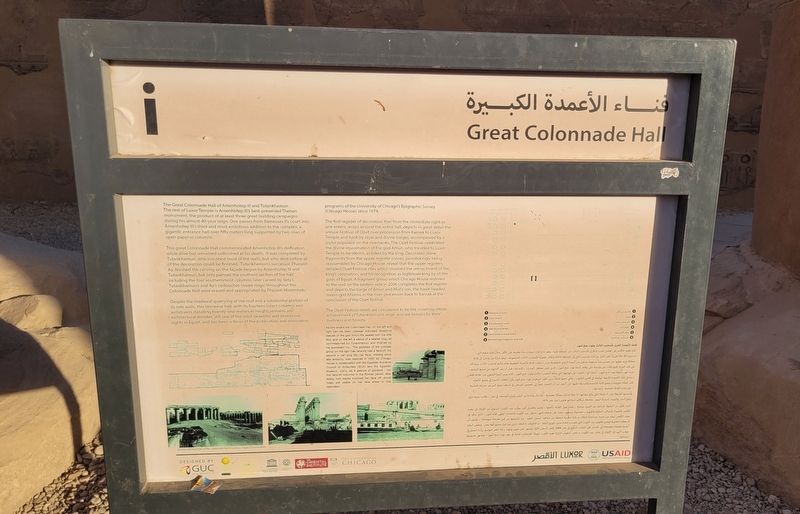
Great Colonnade Hall
Photographed by James Hulse, October 10, 2024
1. Great Colonnade Hall Marker
 The Great Colonnade Hall of Amenhotep III and Tutankhamun
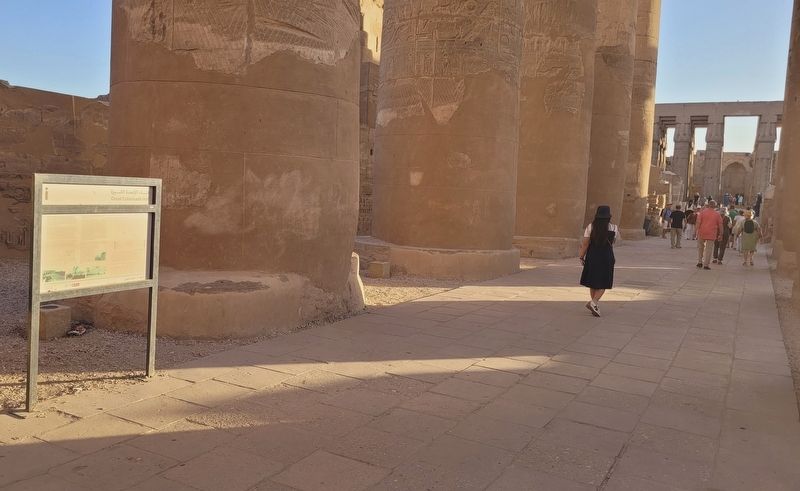
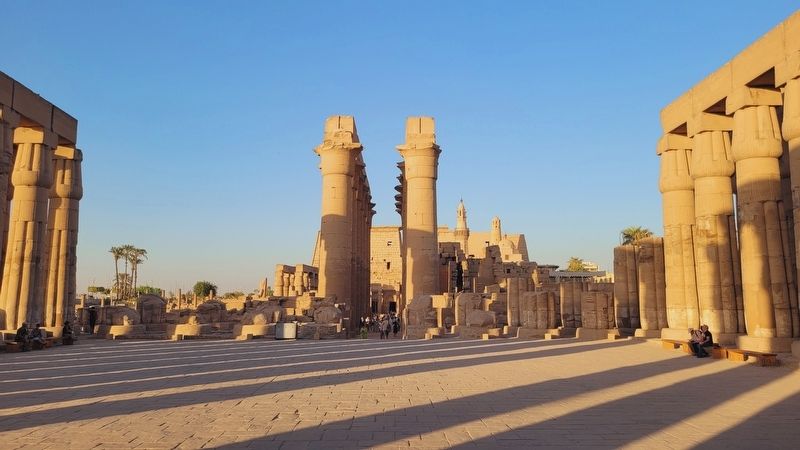
The rest of Luxor Temple is Amenhotep III's best-preserved Theban monument, the product of at least three great building campaigns during his almost 40-year reign. One passes from Ramesses II's court into Amenhotep III's third and most ambitious addition to the complex, a gigantic entrance hall over fifty meters long supported by two rows of open papyrus columns.
This great Colonnade Hall commemorated Amenhotep III's deification while alive but remained unfinished at his death. It was completed by Tutankhamun, who inscribed most of the walls, but who died before all of the decoration could be finished. Tutankhamun's successor, Pharaoh Ay, finished the carving on the façade begun by Amenhotep III and Tutankhamun, but only painted the southern section of the hall, including the four southernmost columns, later carved by Sety I. Tutankhamun's and Ay's cartouches (name rings) throughout the Colonnade Hall were erased and appropriated by Pharaoh Horemheb.
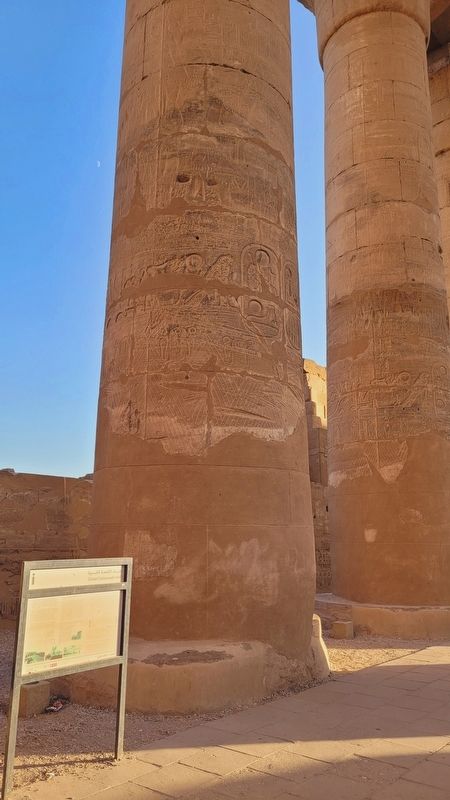
Despite the medieval quarrying of the roof and a substantial portion of its side walls, this immense hall, with its fourteen intact columns and architraves (totalling twenty-one meters in height) remains an architectural wonder, still one of the most beautiful and impressive sights in Egypt, and has been a focus of the publication and restoration programs of the University of Chicago's Epigraphic Survey (Chicago House) since 1974.
The first register of decoration that from the immediate right as one enters, wraps around the entire hall, depicts in great detail the annual Festival of Opet river procession from Karnak to Luxor Temple and back by royal and divine barges, accompanied by a joyful populace on the riverbanks. The Opet Festival celebrated the divine rejuvenation of the god Amun, who traveled to Luxor Temple to be reborn, assisted by the king. Decorated stone fragments from the upper register scenes, painstakingly being reassembled by Chicago House, reveal that the upper registers detailed Opet Festival rites which involved the reenactment of the king's coronation, and his recognition as legitimate king by all the gods of Egypt. A fragment group which Chicago House restored to the wall on the eastern side in 2006 completes the first register and depicts the barge of Amun and Mut's son, the hawk-headed, moon-god Khonsu in the river procession back to Karnak at the conclusion of the Opet festival.
The Opet Festival reliefs are considered to be the crowning artistic achievement of Tutankhamun's reign, and are famous for their liveliness and beauty.
As one enters the Colonnade Hall, on the left and right can be seen colossal indurated limestone statues of the god Amun-Re seated with his wife Mut, and on the left a statue of a seated king, all commissioned by Tutankhamun and finished by his successor Ay. The goddess of the colossal group on the right has recently had a face-lift, the second in her long life; her face, missing since late antiquity, was restored in 1997 by Chicago House in collaboration with the Egyptian Supreme Council of Antiquities (SCA) and the Egyptian Museum, Cairo, as a gesture of goodwill. Her first face-lift occurred in the Roman period, after falling roof blocks knocked her face off; dowel holes still visible on her face attest to that restoration.
فناء الأعمدة الكبيرة
قاعة الأعمدة الكبرى لأمنحتب الثالث وتوت عنخ آمون
بقايا معبد الأقصر هى أفضل نصب تذكاري لأمنحتب الثالث تم الحفاظ عليه ، وهو نتاج ثلاث حملات بناء عظيمة على الأقل خلال فترة حكمه التي استمرت 40 عاما تقريبًا. يعبر المار من فناء رمسيس الثاني إلى الإضافة الثالثة والأكثر طموحا لأمنحتب الثالث للمجموعه ، وهو عبارة عن مدخل الى قاعة عملاقة يزيد طولها عن خمسين متراً مدعومة بصفين من أعمدة البردى المفتوحة. حيث احتفلت قاعة الأعمدة العظيمة هذه بتأليه أمنحتب الثالث بينما كان على قيد الحياة لكنها ظلت غير مكتملة حتى وفاته. أكمله توت عنخ آمون ، الذي نقش معظم الجدران ، لكنه مات قبل أن يتم الانتهاء من جميع الزخارف. حيث أنهى خليفة توت عنخ آمون ، الملك آي ، النحت على الواجهة التي بدأها أمنحتب الثالث وتوت عنخ آمون ، لكنه رسم الجزء الجنوبي من القاعة فقط ، بما في ذلك الأعمدة الأربعة الواقعة في أقصى الجنوب ، والتي

Click or scan to see
this page online
نحتها لاحقًا سيتي الأول خراطيش توت عنخ آمون وآي حلقات الاسم) في جميع الأنحاء. قام الملك حور محب بمحو قاعة الأعمدة والاستيلاء عليها. على الرغم من ان الاحجار تعود إلى العصور الوسطى فى السقف وجزء كبير من جدرانه الجانبية ، فإن هذه القاعة الضخمة بأعمدتها ،
وأعمدتها الأربعة عشر السليمة التي يبلغ ارتفاعها 21 مترًا) لا تزال عجائبا معمارية ، ولا تزال واحدة من أجمل وأروع المشاهد في مصر ، وكانت محط تركيز برامج النشر والترميم لدراسة الرموز بجامعة شيكاغو (شيكاغو (هاوس) منذ عام 1974.
الجزء الأول من الزخرفة للداخل من اليمين مباشرة ، يلتف حول القاعة بأكملها ، يصور بتفصيل كبير موكب عيد الأوبت السنوي من الكرنك إلى معبد الأقصر والعودة بالمراكب الملكية والإلهية ، مصحوبة بجمهور سعيد على ضفاف النهر احتفل عيد الأوبت بالتجديد الإلهي للإله آمون ، الذي سافر إلى معبد الأقصر ليولد من جديد بمساعدة الملك. وبقايا حجرية مزخرفة من مشاهد السجل العليا ، تم تجميعها من قبل Chicago House ، تكشف أن السجلات العلوية توضح طقوس عيد الاوبت التي تضمنت إعادة تمثيل تتويج الملك ، والاعتراف به كملك شرعي من قبل جميع آلهة مصر. وبعض البقايا أعادها Chicago House إلى الجدار على الجانب الشرقي في عام 2006 تكمل السجل الأول وتصور نجل آمون وموت ، إله القمر خونسو برأسه الصقر في موكب النهر إلى الكرنك في ختام عيد الأوبت. و تعتبر النقوش البارزة لعيد الأوبت تتويجا للإنجازات الفنية في عهد توت عنخ آمون ، وتشتهر بحيويتها وجمالها.
قاعة الأعمدة الكبرى لأمنحتب الثالث وتوت عنخ آمون
بقايا معبد الأقصر هى أفضل نصب تذكاري لأمنحتب الثالث تم الحفاظ عليه ، وهو نتاج ثلاث حملات بناء عظيمة على الأقل خلال فترة حكمه التي استمرت 40 عاما تقريبًا. يعبر المار من فناء رمسيس الثاني إلى الإضافة الثالثة والأكثر طموحا لأمنحتب الثالث للمجموعه ، وهو عبارة عن مدخل الى قاعة عملاقة يزيد طولها عن خمسين متراً مدعومة بصفين من أعمدة البردى المفتوحة. حيث احتفلت قاعة الأعمدة العظيمة هذه بتأليه أمنحتب الثالث بينما كان على قيد الحياة لكنها ظلت غير مكتملة حتى وفاته. أكمله توت عنخ آمون ، الذي نقش معظم الجدران ، لكنه مات قبل أن يتم الانتهاء من جميع الزخارف. حيث أنهى خليفة توت عنخ آمون ، الملك آي ، النحت على الواجهة التي بدأها أمنحتب الثالث وتوت عنخ آمون ، لكنه رسم الجزء الجنوبي من القاعة فقط ، بما في ذلك الأعمدة الأربعة الواقعة في أقصى الجنوب ، والتي
this page online
وأعمدتها الأربعة عشر السليمة التي يبلغ ارتفاعها 21 مترًا) لا تزال عجائبا معمارية ، ولا تزال واحدة من أجمل وأروع المشاهد في مصر ، وكانت محط تركيز برامج النشر والترميم لدراسة الرموز بجامعة شيكاغو (شيكاغو (هاوس) منذ عام 1974.
الجزء الأول من الزخرفة للداخل من اليمين مباشرة ، يلتف حول القاعة بأكملها ، يصور بتفصيل كبير موكب عيد الأوبت السنوي من الكرنك إلى معبد الأقصر والعودة بالمراكب الملكية والإلهية ، مصحوبة بجمهور سعيد على ضفاف النهر احتفل عيد الأوبت بالتجديد الإلهي للإله آمون ، الذي سافر إلى معبد الأقصر ليولد من جديد بمساعدة الملك. وبقايا حجرية مزخرفة من مشاهد السجل العليا ، تم تجميعها من قبل Chicago House ، تكشف أن السجلات العلوية توضح طقوس عيد الاوبت التي تضمنت إعادة تمثيل تتويج الملك ، والاعتراف به كملك شرعي من قبل جميع آلهة مصر. وبعض البقايا أعادها Chicago House إلى الجدار على الجانب الشرقي في عام 2006 تكمل السجل الأول وتصور نجل آمون وموت ، إله القمر خونسو برأسه الصقر في موكب النهر إلى الكرنك في ختام عيد الأوبت. و تعتبر النقوش البارزة لعيد الأوبت تتويجا للإنجازات الفنية في عهد توت عنخ آمون ، وتشتهر بحيويتها وجمالها.
Erected by Ministry of Tourism & Antiquity.
Topics. This historical marker is listed in these topic lists: Anthropology & Archaeology • Religion & Religious Structures. A significant historical year for this entry is 1974.
Location. 25° 41.986′ N, 32° 38.354′ E. Marker is in Luxor, Luxor Governorate. It is at the intersection of Mabad Al Oksor and Al Mahata on Mabad Al Oksor. The marker is located on the grounds of the Luxor Temple. Touch for map. Marker is at or near this postal address: Mabad Al Oksor, Luxor, Luxor Governorate 13625-01, Egypt. Touch for directions.

Regionally, it is in Africa, specifically in North Africa, in the Middle East, on the Red Sea, and in a coastal Mediterranean country. Historically, it finds itself in what was once the Byzantine Empire, the Ottoman Empire, a
Photographed by James Hulse, October 10, 2024
2. The Great Colonnade Hall and Marker
Other nearby markers. At least 8 other markers are within walking distance of this marker: Luxor Temple Fragment Conservation Project & Open Air Museum (within shouting distance of this marker); Ramesses II Court (within shouting distance of this marker); Pylon of Ramesses II (about 90 meters away, measured in a direct line); Luxor Temple / معبد الأقصر (about 90 meters away); Roman Luxor Temple (about 120 meters away); Sanctuary Area (about 120 meters away); Avenue of Sphinxes/ طريق الكباش (about 150 meters away); Hatshepsut (about 150 meters away). Touch for a list and map of all markers in Luxor.
Photographed by James Hulse, October 10, 2024
3. The marker at the first column of the hall
Photographed by James Hulse, October 10, 2024
4. Great Colonnade Hall
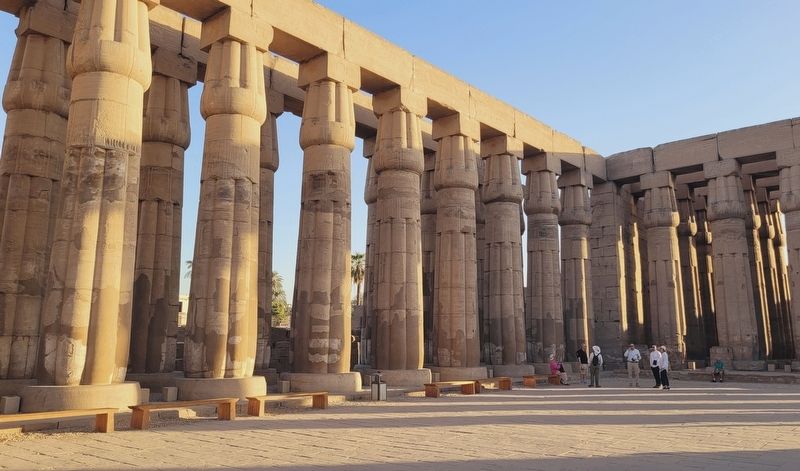
Photographed by James Hulse, October 10, 2024
5. Great Colonnade Hall
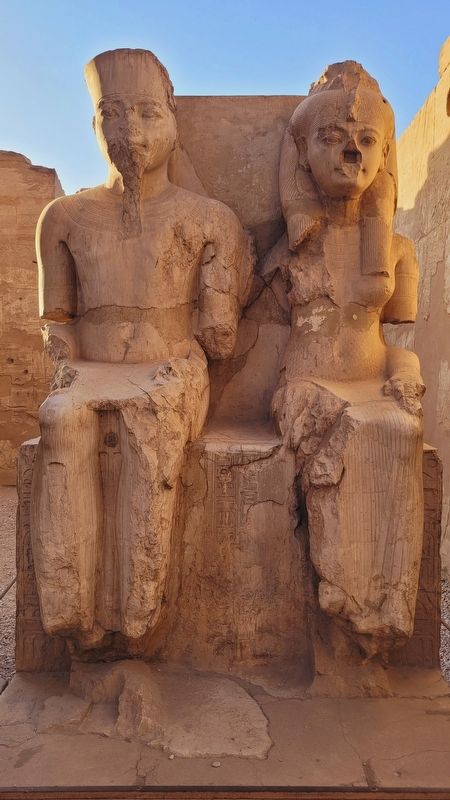
Photographed by James Hulse, October 10, 2024
6. Statues of Amun and Mut
Credits. This page was last revised on November 15, 2025. It was originally submitted on November 12, 2025, by James Hulse of Medina, Texas. This page has been viewed 76 times since then and 51 times this year. Photos: 1, 2, 3, 4, 5, 6. submitted on November 15, 2025, by James Hulse of Medina, Texas.
