Luxor, Luxor Governorate, Egypt — مصر (Northeast Africa)
Luxor Temple
⎯⎯⎯
معبد الأقصر
'Ipt Rsyt'
Photographed by James Hulse, October 10, 2024
1. Luxor Temple / معبد الأقصر Marker
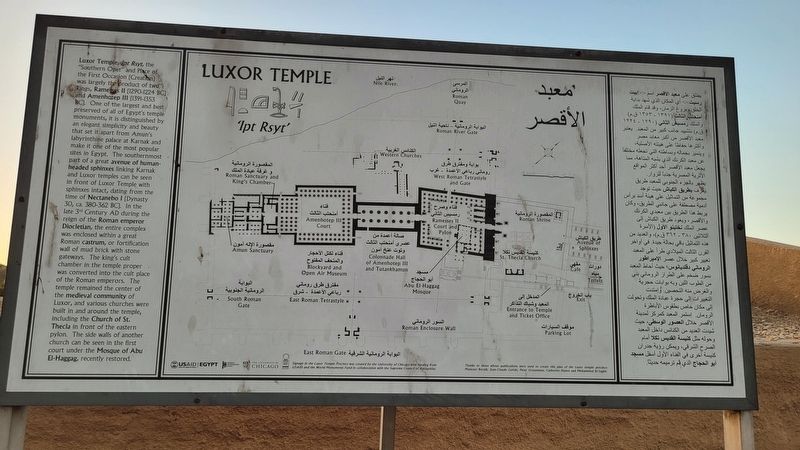
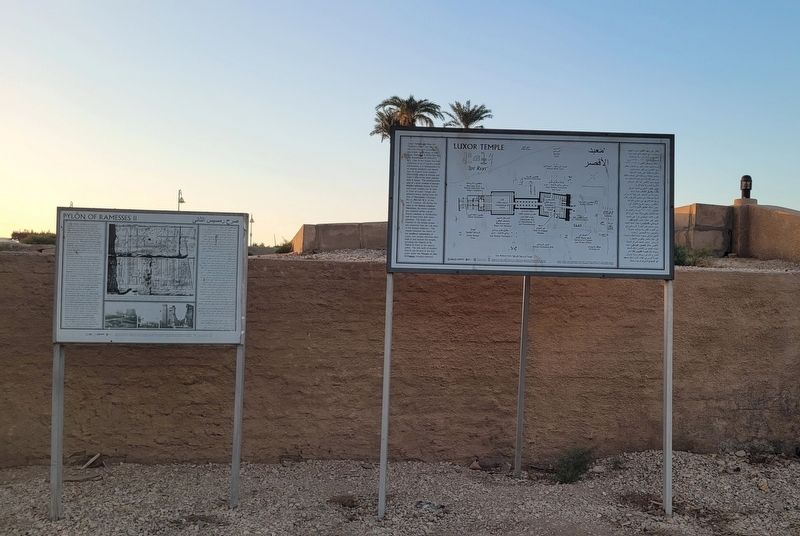
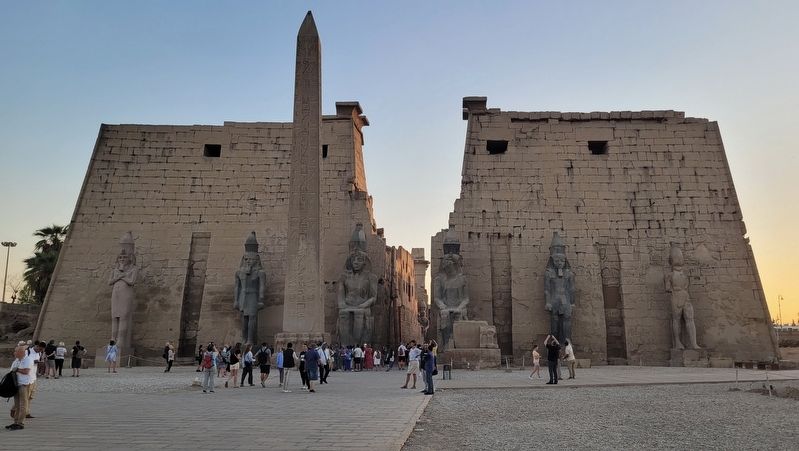
 Luxor Temple, Ipt Rsyt, the "Southern Opet" and Place of the First Occasion (Creation) was largely the product of two Kings, Ramesses II (1290-1224 BC) and Amenhotep III (1391-1353 BC). One of the largest and best preserved of all of Egypt's temple monuments, it is distinguished by an elegant simplicity and beauty that set it apart from Amun's labyrinthine palace at Karnak and make it one of the most popular sites in Egypt. The southernmost part of a great avenue of human-headed sphinxes linking Karnak and Luxor temples can be seen in front of Luxor Temple with sphinxes intact, dating from the time of Nectanebo I (Dynasty 30, ca. 380-362 BC). In the late 3rd Century AD during the reign of the Roman emperor Diocletian, the entire complex was enclosed within a great Roman castrum, or fortification wall of mud brick with stone gateways. The king's cult chamber in the temple proper was converted into the cult place of the Roman emperors. The temple remained the center of the medieval community of Luxor, and various churches were built in and around the temple, including the Church of St. Thecla in front of the eastern pylon. The side walls of another church can be seen in the first court under the Mosque of Abu El-Haggag, recently restored.
معبد الأقصر
يطلق على معبد الأقصر اسم <<إيبت رسيت>> أي المكان الذي شهد بداية الخلق وبزوغ الزمان، وقد قام الملك أمنحتب الثالث ( ۱۳۹۱ - ١٣٥٣ ق.م) والملك رمسيس الثاني ( ١٢٩٠ - ١٢٢٤ ق.م) بتشييد جانب كبير من المعبد. يعتبر معبد الأقصر من أكبر معابد مصر وأكثرها حفاظاً على هيئته الأصلية، ويتميز بجماله وبساطته التي تجعله مختلفاً عن معبد الكرنك الذي يشبه المتاهة، مما يجعل معبد الأقصر أحد أكثر المواقع الأثرية المصرية جذبا للزوار. يظهر بالجزء الجنوبي للمعبد طريق يعرف بطريق الكباش حيث توجد مجموعة من التماثيل على هيئة أسد برأس آدمية مصطفة على جانبي الطريق، وكان يربط هذا الطريق بين معبدي الكرنك والأقصر، ويعود طريق الكباش إلى عصر الملك نختبنو الأول الأسرة الثلاثين ٣٨٠ - ٣٦٢ ق.م)، والعديد من هذه التماثيل باقي بحالة جيدة. في أواخر القرن الثالث الميلادي طرأ على المعبد تغيير كبير خلال عصر الإمبراطور الروماني دقلديانوس؛ حيث أحاط المعبد بسور ضخم على الطراز الروماني بني من الطوب اللبن وبه بوابات حجرية والغرض منه التحصين. وإمتدت التغييرات إلى حجرة عبادة الملك وتحولت إلى مكان خاص بطقوس الأباطرة الرومان. إستمر المعبد كمركز لمدينة الأقصر خلال العصور الوسطى، حيث شيدت العديد من الكنائس داخل المعبد وحوله مثل كنيسة القديس تكلا أمام الصرح الشرقي، ويمكن رؤية جدران كنيسة أخرى في الفناء

Click or scan to see
this page online
الأول أسفل مسجد
أبو الحجاج الذي تم ترميمه حديثاً.
يطلق على معبد الأقصر اسم <<إيبت رسيت>> أي المكان الذي شهد بداية الخلق وبزوغ الزمان، وقد قام الملك أمنحتب الثالث ( ۱۳۹۱ - ١٣٥٣ ق.م) والملك رمسيس الثاني ( ١٢٩٠ - ١٢٢٤ ق.م) بتشييد جانب كبير من المعبد. يعتبر معبد الأقصر من أكبر معابد مصر وأكثرها حفاظاً على هيئته الأصلية، ويتميز بجماله وبساطته التي تجعله مختلفاً عن معبد الكرنك الذي يشبه المتاهة، مما يجعل معبد الأقصر أحد أكثر المواقع الأثرية المصرية جذبا للزوار. يظهر بالجزء الجنوبي للمعبد طريق يعرف بطريق الكباش حيث توجد مجموعة من التماثيل على هيئة أسد برأس آدمية مصطفة على جانبي الطريق، وكان يربط هذا الطريق بين معبدي الكرنك والأقصر، ويعود طريق الكباش إلى عصر الملك نختبنو الأول الأسرة الثلاثين ٣٨٠ - ٣٦٢ ق.م)، والعديد من هذه التماثيل باقي بحالة جيدة. في أواخر القرن الثالث الميلادي طرأ على المعبد تغيير كبير خلال عصر الإمبراطور الروماني دقلديانوس؛ حيث أحاط المعبد بسور ضخم على الطراز الروماني بني من الطوب اللبن وبه بوابات حجرية والغرض منه التحصين. وإمتدت التغييرات إلى حجرة عبادة الملك وتحولت إلى مكان خاص بطقوس الأباطرة الرومان. إستمر المعبد كمركز لمدينة الأقصر خلال العصور الوسطى، حيث شيدت العديد من الكنائس داخل المعبد وحوله مثل كنيسة القديس تكلا أمام الصرح الشرقي، ويمكن رؤية جدران كنيسة أخرى في الفناء
this page online
Erected by Egyptian Ministry of Antiquities, Egyptian Supreme Council of Anticulties, Luxor Temple Precinct, the University of Chicago and USAID.
Topics. This historical marker is listed in this topic list: Anthropology & Archaeology. A significant historical year for this entry is 1391 BCE.
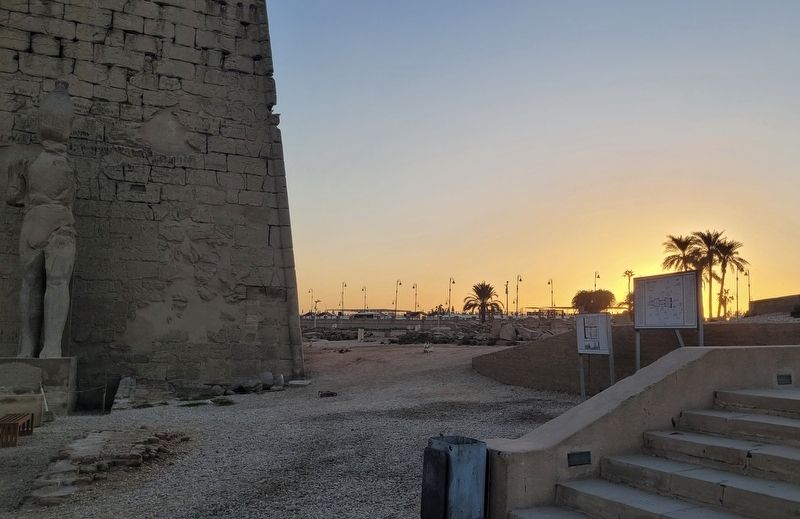
Location. 25° 42.031′ N, 32° 38.379′ E. Marker is in Luxor, Luxor Governorate. It is at the intersection of Kornish Al Nile and Al Hatama on Kornish Al Nile. The marker is located at the front entrance of the Luxor Temple. Touch for map. Marker is at or near this postal address: Kornish Al Nile, Luxor, Luxor Governorate 13625-01, Egypt. Touch for directions.

Regionally, it is in Africa, specifically in North Africa, in the Middle East, on the Red Sea, and in a coastal Mediterranean country. Historically, it finds itself in what was once the Byzantine Empire, the Ottoman Empire, a British colony, and the Roman Empire.
Other nearby markers. At least 8 other markers are within walking distance of this marker: Pylon of Ramesses II (here, next to this marker); Ramesses II Court (within shouting distance of this marker); Nectanebo I (within shouting distance of this marker); Pinedjem I (within shouting distance of this marker); Ramses II (within shouting distance of this marker); Tutankhamun (within shouting distance of this marker); Amenhotep III (within shouting distance of this marker); Hatshepsut (within shouting distance of this marker). Touch for a list and map of all markers in Luxor.
Photographed by James Hulse, October 10, 2024
2. Luxor Temple Marker (Right marker)
Photographed by James Hulse, October 10, 2024
3. Luxor Temple and Marker
Photographed by James Hulse, October 10, 2024
4. The front of the Luxor Temple
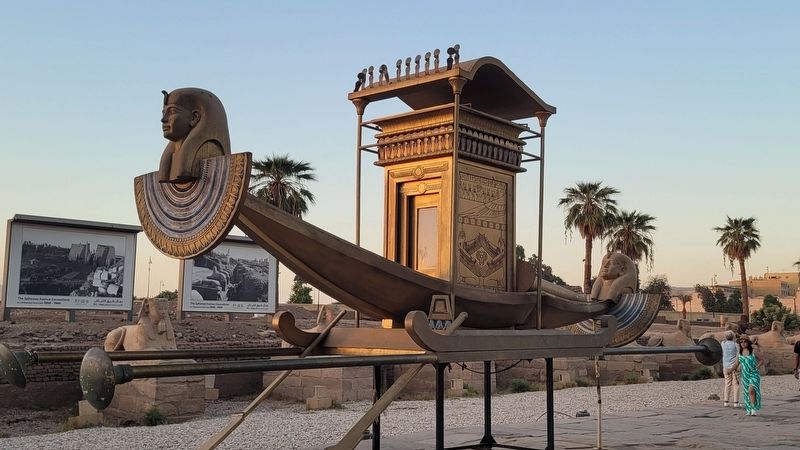
Photographed by James Hulse, October 10, 2024
5. Royal boat in front of the Luxor Temple
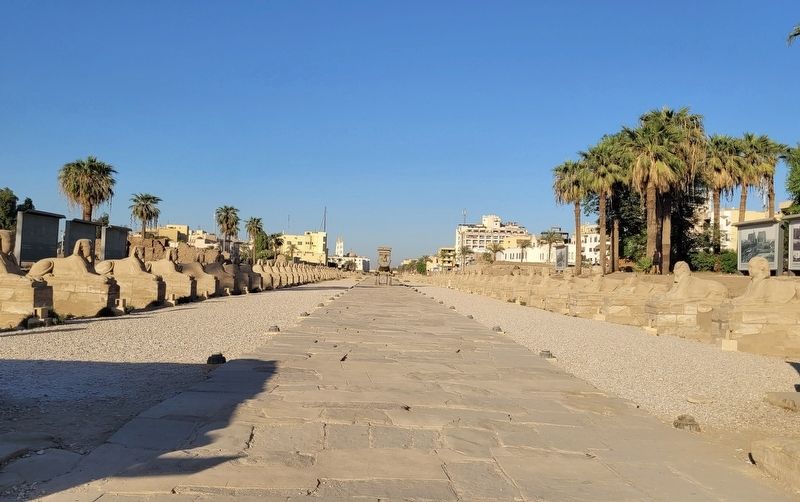
Photographed by James Hulse, October 10, 2024
6. The Avenue of the Sphinxes lead directly to the Luxor Temple
Credits. This page was last revised on November 17, 2025. It was originally submitted on November 12, 2025, by James Hulse of Medina, Texas. This page has been viewed 130 times since then and 105 times this year. Photos: 1, 2, 3, 4, 5, 6. submitted on November 17, 2025, by James Hulse of Medina, Texas.
