Edfu in Edfo, Aswan Governorate, Egypt — مصر (Northeast Africa)
Birth House
⎯⎯⎯
بيت الولادة
Photographed by James Hulse, October 12, 2024
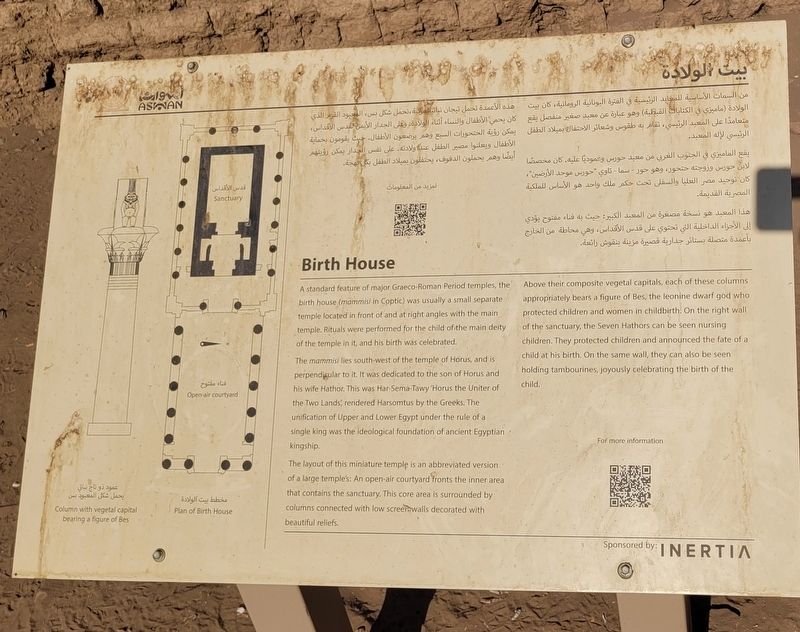
1. Birth House / بيت الولادة Marker
 A standard feature of major Graeco-Roman Period temples, the birth house (mammisi in Coptic) was usually a small separate temple located in front of and at right angles with the main temple. Rituals were performed for the child of the main deity of the temple in it, and his birth was celebrated.
The mammisi lies south-west of the temple of Horus, and is perpendicular to it. It was dedicated to the son of Horus and his wife Hathor. This was Har-Sema-Tawy 'Horus the Uniter of the Two Lands, rendered Harsomtus by the Greeks. The unification of Upper and Lower Egypt under the rule of a single king was the ideological foundation of ancient Egyptian kingship.
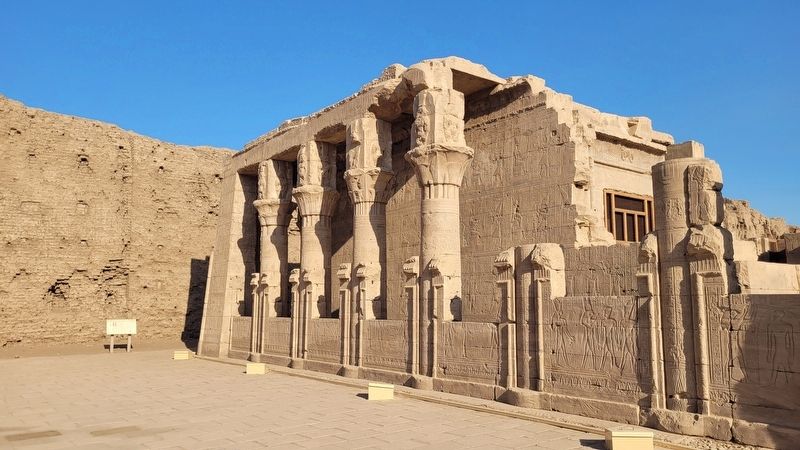
The layout of this miniature temple is an abbreviated version of a large temple's: An open-air courtyard fronts the inner area that contains the sanctuary. This core area is surrounded by columns connected with low screen walls decorated with beautiful reliefs.
Captions
(Photo #1) Column with vegetal capital bearing a figure of Bes
(Photo #2) Plan of Birth House
بيت الولادة
من السمات الأساسية للمعايد الرئيسية في الفترة اليونانية الرومانية، كان بيت الولادة ماميزي في الكتابات القبطية) وهو عبارة عن معبد صغير منفصل يقع متعامدا على المعبد الرئيسي، تقام به طقوس وشعائر الاحتفال بميلاد الطفل الرئيسي لإله المعبد.
هذه الأعمدة تحمل تيجان نباتية مركبة ، تحمل شكل بس، المعبود القزم الذي كان يحمي الأطفال والنساء أثناء الولادة، وعلى الجدار الأيمن القدس الأقداس يمكن رؤية الحتحورات السبع وهم يرضعون الأطفال. حيث يقومون بحماية الأطفال ويعلنوا مصير الطفل عند ولادته على نفس الجدار يمكن رؤيتهم أيضًا وهم يحملون الدفوف، يحتفلون بميلاد الطفل بكل بهجة.
يقع الماميزي في الجنوب الغربي من معبد حورس وعمودياً عليه. كان مخصصا لابن حورس وزوجته حتحور، وهو حور - سما - تاوي "حورس موحد الأرضين"، كان توحيد مصر العليا والسفلى تحت حكم ملك واحد هو الأساس للملكية المصرية القديمة.
هذا المعبد هو نسخة مصغرة من المعبد الكبير حيث به فناء مفتوح يؤدي إلى الأجزاء الداخلية التي تحتوي على قدس الأقداس، وهي محاطة من الخارج بأعمدة متصلة بستائر جدارية قصيرة مزينة بنقوش رائعة.
(1) عمود ذو تاج نباتي يحمل شكل المعبود بس
(2) مخطط بيت الولادة
Erected by Ministry of Tourism & Antiquity, Aswan and Interia.
Topics. This historical marker is listed in this topic list: Anthropology & Archaeology.
Location. 24° 58.605′ N, 32° 52.368′ E. Marker is in Edfu, Aswan Governorate, in Edfo. It is on Ragab Lane north of Hasan Kassim. The marker is located on the grounds of the Edfu Temple. Touch for map. Marker is in this post office area: Edfu, Aswan Governorate 12912-37, Egypt. Touch for directions.

Regionally, it is in Africa, specifically in North Africa, in the Middle East, on the Red Sea, and in a coastal Mediterranean country. Historically, it finds itself in what was once the Byzantine Empire, the Ottoman Empire, a British colony, and the Roman Empire.
Other nearby markers. At least 2 other markers are within walking distance of this marker: Edfu Temple / معبد إدفو (about
this page online
Also see . . . Temple of Edfu. Wikipedia
The Temple of Edfu is an Egyptian temple located on the west bank of the Nile in Edfu, Upper Egypt. The city was known in the Hellenistic period in Koine Greek as Ἀπόλλωνος πόλις and in Latin as Apollonopolis Magna, after the chief god Horus, who was identified as Apollo under the interpretatio graeca. It is one of the best preserved shrines in Egypt. The temple was built in the Ptolemaic Kingdom between 237 and 57 BC. The inscriptions on its walls provide important information on language, myth and religion during the Hellenistic period in Egypt.(Submitted on November 23, 2025, by James Hulse of Medina, Texas.)
Photographed by James Hulse, October 12, 2024
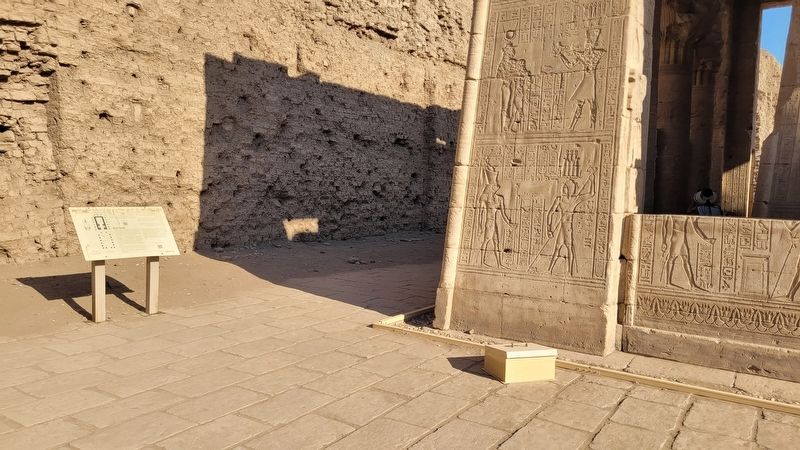
2. Birth House / بيت الولادة Marker
Photographed by James Hulse, October 12, 2024
3. Birth House and Marker
Photographed by James Hulse, October 12, 2024
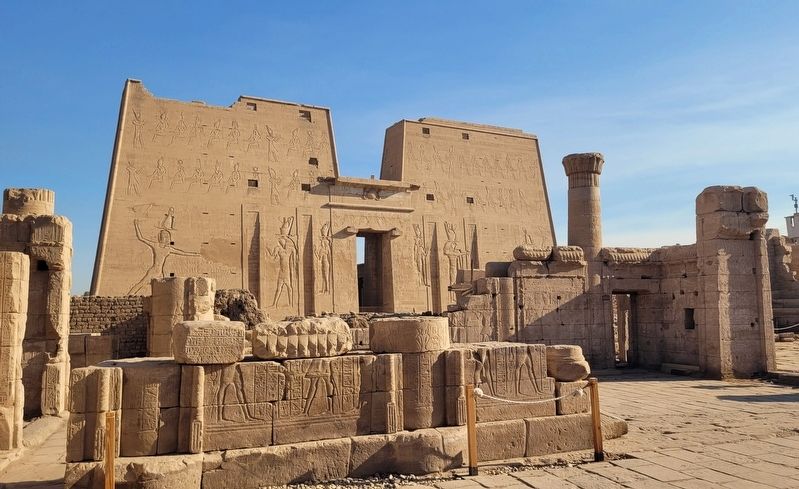
4. The view of the Birth House and the first pylon to the Edfu Temple
Credits. This page was last revised on November 23, 2025. It was originally submitted on November 21, 2025, by James Hulse of Medina, Texas. This page has been viewed 63 times since then and 33 times this year. Photos: 1, 2, 3, 4. submitted on November 23, 2025, by James Hulse of Medina, Texas.
