Edfu in Edfo, Aswan Governorate, Egypt — مصر (Northeast Africa)
Edfu Temple
⎯⎯⎯
معبد إدفو
Photographed by James Hulse, October 12, 2024
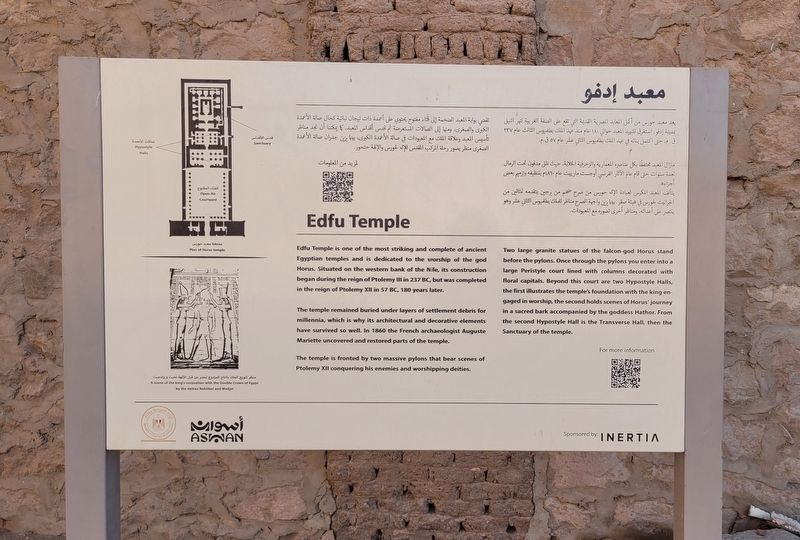
1. Edfu Temple / معبد إدفو Marker
 Edfu Temple is one of the most striking and complete of ancient Egyptian temples and is dedicated to the worship of the god Horus. Situated on the western bank of the Nile, its construction began during the reign of Ptolemy III in 237 BC, but was completed in the reign of Ptolemy XII in 57 BC, 180 years later.
The temple remained buried under layers of settlement debris for millennia, which is why its architectural and decorative elements have survived so well. In 1860 the French archaeologist Auguste Mariette uncovered and restored parts of the temple.
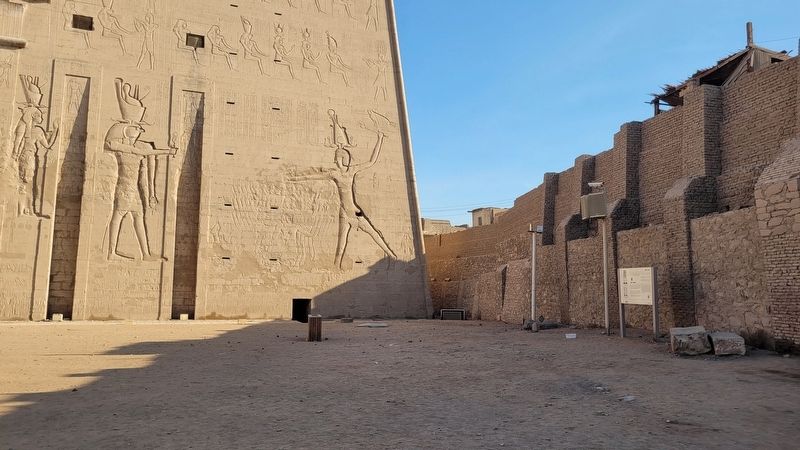
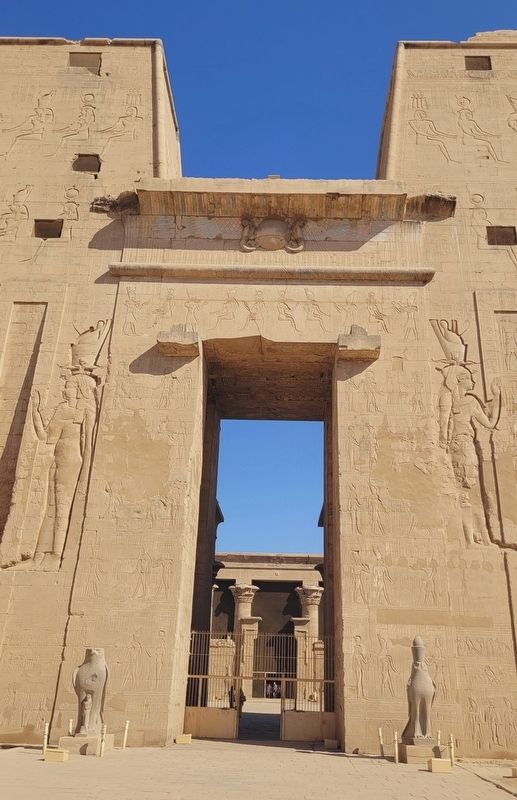
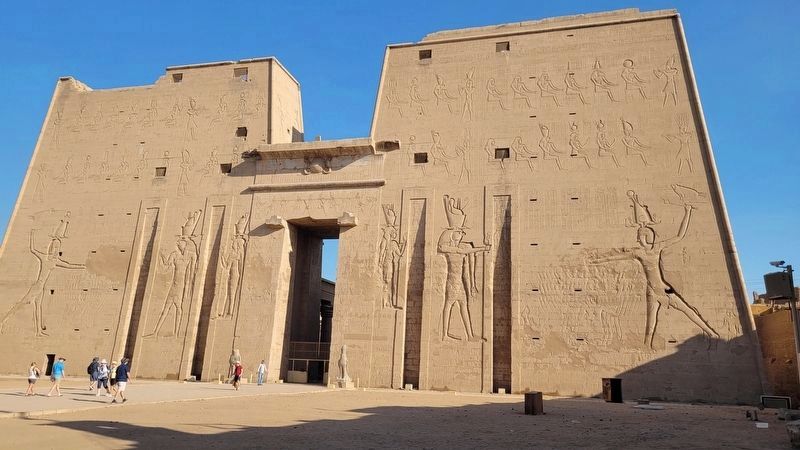
The temple is fronted by two massive pylons that bear scenes of Ptolemy XII conquering his enemies and worshipping deities.
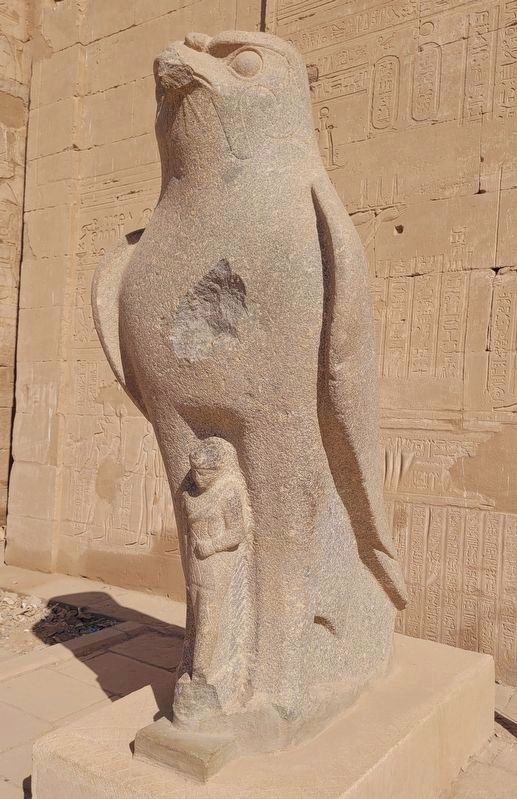
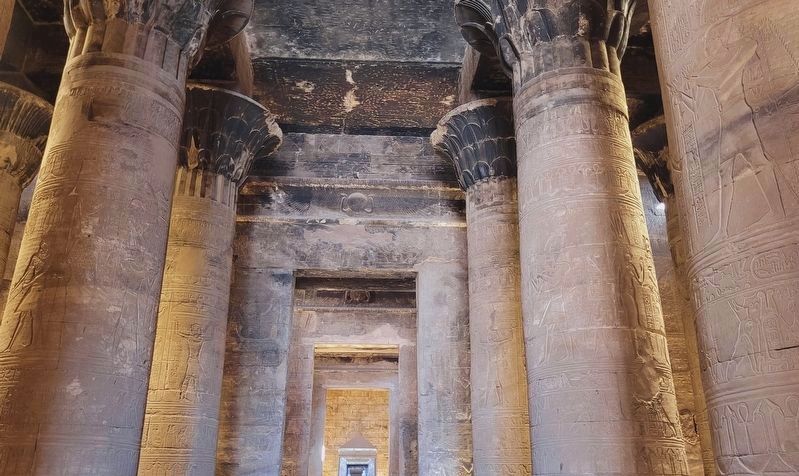
Two large granite statues of the falcon-god Horus stand before the pylons. Once through the pylons you enter into a large Peristyle court lined with columns decorated with floral capitals. Beyond this court are two Hypostyle Halls, the first illustrates the temple's foundation with the king engaged in worship, the second holds scenes of Horus' journey in a sacred bark accompanied by the goddess Hathor. From the second Hypostyle Hall is the Transverse Hall, then the Sanctuary of the temple.
Captions
(Photo #1) Plan of Horus temple
(Photo #2) A scene of the king's coronation with the Double Crown of Egypt by the deities Nekhbet and Wadjet
معبد إدفو
يعد معبد حورس من أكمل المعابد المصرية القديمة التي تقع على الضفة الغربية لنهر النيل بمدينة إدفو . استغرق تشييد المعبد حوالي ۱۸۰ عام منذ عهد الملك بطلميوس الثالث عام ٢٣٧ ق. م، حتى اكتمل بنائه في عهد الملك بطلميوس الثاني عشر عام ٥٧ ق.م.
مازال المعبد محتفظًا بكل عناصره المعمارية والزخرفية الخلابة، حيث ظل مدفون تحت الرمال لعدة سنوات حتى قام عالم الآثار الفرنسي أوجست مارييت عام ١٨٦٠م بتنظيفه وترميم بعض أجزاءه . يتألف المعبد المكرس لعبادة الإله حورس من صرح ضخم من برجين يتقدمه تمثالين من الجرانيت الحورس في هيئة صقر . بينما يزين واجهة الصرح مناظر للملك بطلميوس الثاني عشر وهو ينتصر على أعدائه، ومناظر أخرى تصوره مع المعبودات.
تفضي بوابة المعبد الضخمة إلى فناء مفتوح يحتوي على أعمدة ذات تيجان نباتية كحال صالة الأعمدة الكبرى والصغرى، ومنها إلى الصالات المستعرضة ثم قدس أقداس المعبد. كما يمكننا أن نجد مناظر تأسيس المعبد وعلاقة الملك مع المعبودات في صالة الأعمدة الكبرى، بينما يزين جدران صالة الأعمدة الصغرى منظر يصور رحلة المركب المقدس للإله الحورس والإلهة حتحور.
(1) مخطط معبد حورس
(2) منظر تتويج الملك بالتاج المزدوج لمصر من قبل الآلهة نخبت و وادجيت
Erected by Ministry of Tourism & Antiquity, Aswan and Interia.
Topics. This historical marker is listed in these topic lists: Anthropology & Archaeology • Architecture • Religion & Religious Structures. A significant historical year for this entry is 237 BCE.
Location. 24° 58.637′ N, 32° 52.428′ E. Marker is in Edfu, Aswan Governorate, in Edfo. It is on Ragab Lane just north of Hasan Kassim. The marker is located on the grounds of the Edfu Temple. Touch for map. Marker is in this post office area: Edfu, Aswan Governorate 12912-37, Egypt.
this page online

Regionally, it is in Africa, specifically in North Africa, in the Middle East, on the Red Sea, and in a coastal Mediterranean country. Historically, it finds itself in what was once the Byzantine Empire, the Ottoman Empire, a British colony, and the Roman Empire.
Other nearby markers. At least 2 other markers are within walking distance of this marker: The Architectural Description of the Temple (within shouting distance of this marker); Birth House / بيت الولادة (about 120 meters away, measured in a direct line).
Also see . . . Temple of Edfu. Wikipedia
The Temple of Edfu is an Egyptian temple located on the west bank of the Nile in Edfu, Upper Egypt. The city was known in the Hellenistic period in Koine Greek as Ἀπόλλωνος πόλις and in Latin as Apollonopolis Magna, after the chief god Horus, who was identified as Apollo under the interpretatio graeca.[1] It is one of the best preserved shrines in Egypt. The temple was built in the Ptolemaic Kingdom between 237 and 57 BC. The inscriptions on its walls provide important information on language, myth and religion during the Hellenistic period in Egypt.(Submitted on November 23, 2025, by James Hulse of Medina, Texas.)
Photographed by James Hulse, October 12, 2024
2. Edfu Temple and Marker
Photographed by James Hulse, October 12, 2024
3. The entrance to the Edfu Temple
Photographed by James Hulse, October 12, 2024
4. The first pylon to the Edfu Temple
Photographed by James Hulse, October 12, 2024
5. The left sided falcon-god Horus statue
The Edfu Temple has two falcon-god Horus statues standing guard at the entrance.
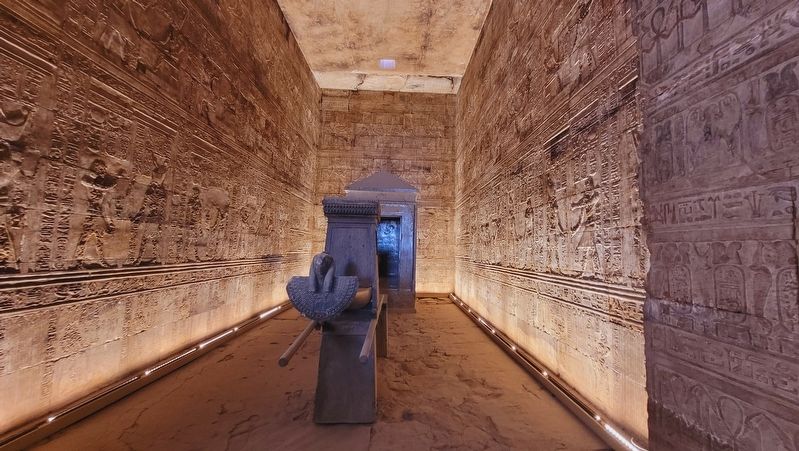
Photographed by James Hulse, October 12, 2024
6. Inside the sanctuary at the centre of the temple
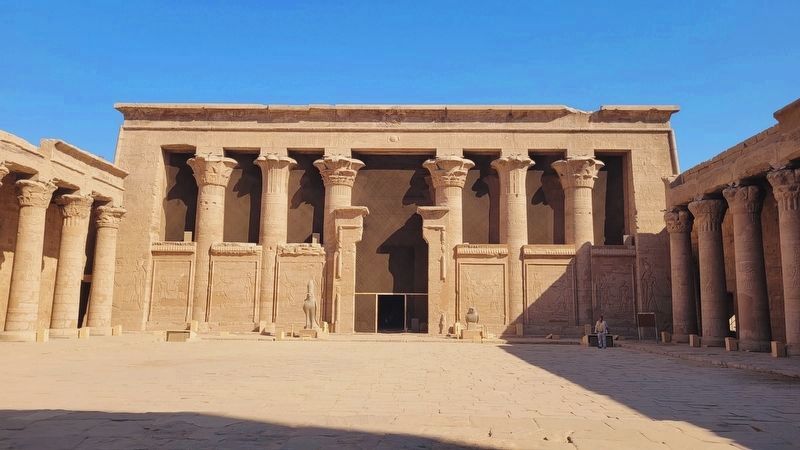
Photographed by James Hulse, October 12, 2024
7. Interior courtyard to the Edfu Temple
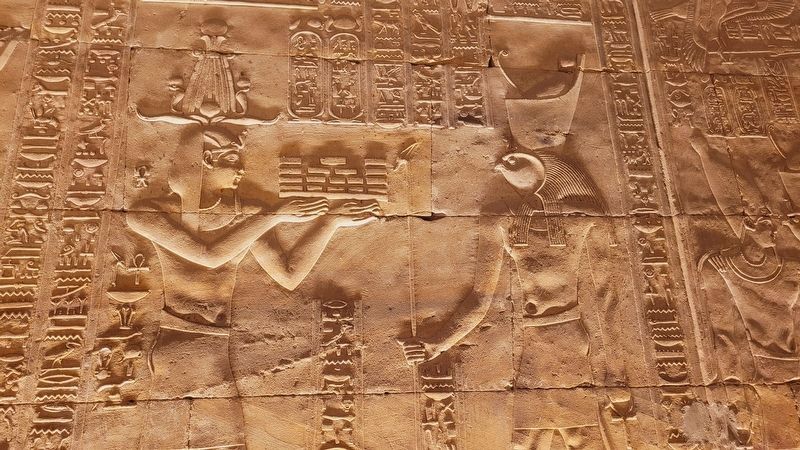
Photographed by James Hulse, October 12, 2024
8. Engraving within the hall of the Edfu Temple
Photographed by James Hulse, October 12, 2024
9. Hypostyle Hall
It is believed the blackened ceiling of the hypostyle hall was result of early Christians trying to destroy the temple.
Credits. This page was last revised on December 1, 2025. It was originally submitted on November 21, 2025, by James Hulse of Medina, Texas. This page has been viewed 131 times since then and 86 times this year. Photos: 1, 2, 3, 4, 5, 6, 7, 8, 9. submitted on November 23, 2025, by James Hulse of Medina, Texas.
