Izbat Al Bayyarah in Markaz Kom Ombo, Aswan Governorate, Egypt — مصر (Northeast Africa)
Kom Ombo Temple
⎯⎯⎯
معبد كوم امبو
Photographed by James Hulse, October 12, 2024
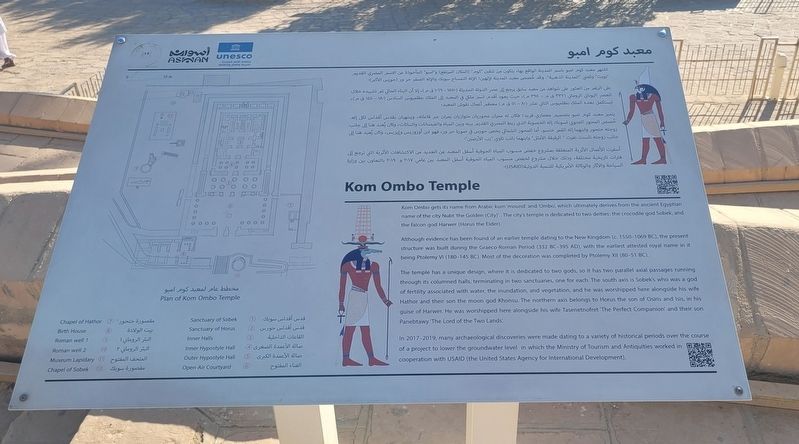
1. Kom Ombo Temple / معبد كوم امبو Ma
 Kom Ombo gets its name from Arabic kum 'mound' and 'Ombo, which ultimately derives from the ancient Egyptian name of the city Nubt 'the Golden (City)'. The city's temple is dedicated to two deities: the crocodile god Sobek, and the falcon god Harwer (Horus the Elder).
Although evidence has been found of an earlier temple dating to the New Kingdom (c. 1550-1069 BC), the present structure was built during the Graeco-Roman Period (332 BC-395 AD), with the earliest attested royal name in it being Ptolemy VI (180-145 BC). Most of the decoration was completed by Ptolemy XII (80-51 BC).
The temple has a unique design, where it is dedicated to two gods, so it has two parallel axial passages running through its columned halls, terminating in two sanctuaries, one for each. The south axis is Sobek's who was a god of fertility associated with water, the inundation, and vegetation, and he was worshipped here alongside his wife Hathor and their son the moon god Khonsu. The northern axis belongs to Horus the son of Osiris and Isis, in his guise of Harwer. He was worshipped here alongside his wife Tasenetnofret 'The Perfect Companion' and their son Panebtawy 'The Lord of the Two Lands.
In 2017-2019, many archaeological discoveries were made dating to a variety of historical periods over the course of a project to lower the groundwater level in which the Ministry of Tourism and Antiquities worked in cooperation with USAID (the United States Agency for International Development).
معبد كوم امبو
اشتهر معبد كوم امبو باسم المدينة الواقع بها، يتكون من شقين "كوم" المكان المرتفع) و"امبو" المأخوذة عن الاسم المصري القديم "نوبت" وتعني "المدينة الذهبية". وقد خُصص معبد المدينة لإلهين؛ الإله التمساح سوبك والإله الصقر حر ور (حورس الأكبر).
على الرغم من العثور على شواهد من معبد سابق يرجع إلى عصر الدولة الحديثة (١٥٥٠ - ١٠٦٩ ق م)، إلا أن البناء الحالي تم تشييده خلال العصر اليوناني الروماني (۳۳۲) ق م - ۳۹۵) م)، حيث يعود أقدم اسم ملكي في المعبد إلى الملك بطلميوس السادس (١٨٠ - ١٤٥ ق م)، ليستكمل بعده الملك بطلميوس الثاني عشر (۸۰) - ۵۱ ق م ) معظم أعمال نقوش المعبد.
يتميز معبد كوم امبو بتصميم معماري فريد؛ فكان له ممران محوریان متوازيان يمران عبر قاعاته، وينتهيان بقدس أقداس لكل إله. خصص المحور الجنوبي لسوبك إله الخصوبة الذي ربط المصري القديم بينه وبين المياه والفيضانات والنباتات، وكان يُعبد هنا إلى جانب زوجته حتحور وابنهما إله القمر خنسو. أما المحور الشمالي يخص حورس في صورة حرور، فهو ابن أوزوريس وإيزيس، وكان يعبد هنا إلى جانب زوجته تاسنت نفرت " الرفيقة الأمثل" وابنهما بانب تاوي "رب الأرضين".
أسفرت الأعمال الأثرية المتعلقة بمشروع خفض منسوب المياه الجوفية أسفل المعبد عن العديد من الاكتشافات الأثرية التي ترجع إلى فترات تاريخية مختلفة، وذلك

Click or scan to see
this page online
خلال مشروع لخفض منسوب المياه الجوفية أسفل المعبد بين عامي ۲۰۱۷ و ۲۰۱۹ بالتعاون بين وزارة السياحة والآثار والوكالة الأمريكية للتنمية الدولية (USAID).
اشتهر معبد كوم امبو باسم المدينة الواقع بها، يتكون من شقين "كوم" المكان المرتفع) و"امبو" المأخوذة عن الاسم المصري القديم "نوبت" وتعني "المدينة الذهبية". وقد خُصص معبد المدينة لإلهين؛ الإله التمساح سوبك والإله الصقر حر ور (حورس الأكبر).
على الرغم من العثور على شواهد من معبد سابق يرجع إلى عصر الدولة الحديثة (١٥٥٠ - ١٠٦٩ ق م)، إلا أن البناء الحالي تم تشييده خلال العصر اليوناني الروماني (۳۳۲) ق م - ۳۹۵) م)، حيث يعود أقدم اسم ملكي في المعبد إلى الملك بطلميوس السادس (١٨٠ - ١٤٥ ق م)، ليستكمل بعده الملك بطلميوس الثاني عشر (۸۰) - ۵۱ ق م ) معظم أعمال نقوش المعبد.
يتميز معبد كوم امبو بتصميم معماري فريد؛ فكان له ممران محوریان متوازيان يمران عبر قاعاته، وينتهيان بقدس أقداس لكل إله. خصص المحور الجنوبي لسوبك إله الخصوبة الذي ربط المصري القديم بينه وبين المياه والفيضانات والنباتات، وكان يُعبد هنا إلى جانب زوجته حتحور وابنهما إله القمر خنسو. أما المحور الشمالي يخص حورس في صورة حرور، فهو ابن أوزوريس وإيزيس، وكان يعبد هنا إلى جانب زوجته تاسنت نفرت " الرفيقة الأمثل" وابنهما بانب تاوي "رب الأرضين".
أسفرت الأعمال الأثرية المتعلقة بمشروع خفض منسوب المياه الجوفية أسفل المعبد عن العديد من الاكتشافات الأثرية التي ترجع إلى فترات تاريخية مختلفة، وذلك
this page online
Erected by Ministry of Tourism & Antiquity, Aswan and unesco.
Topics. This historical marker is listed in these topic lists: Anthropology & Archaeology • Architecture • Religion & Religious Structures. A significant historical year for this entry is 332 BCE.
Location. 24° 27.09′ N, 32° 55.691′ E. Marker is in Izbat Al Bayyarah, Aswan Governorate, in Markaz Kom Ombo. It is on Tariaq Bedon Esm. The marker is located on the grounds of the Kom Ombo Temple. Touch for map. Marker is at or near this postal address: Tariaq Bedon Esm, Izbat Al Bayyarah, Aswan Governorate 12813-01, Egypt. Touch for directions.

Regionally, it is in Africa, specifically in North Africa, in the Middle East, on the Red Sea, and in a coastal Mediterranean country. Historically, it finds itself in what was once the Byzantine Empire, the Ottoman Empire, a British colony, and the Roman Empire.
Other nearby markers. At least 8 other markers are within walking distance of this marker: Gate and Pylon (a few steps from this marker); Chapel of Hathor / مقصورة حتحور (within shouting distance of this marker); The Open-Air Courtyard (within shouting distance of this marker); The Temple of Ombos / Le temple d’Ombos (within shouting distance of this marker); Outer Hypostyle Hall (within shouting distance of this marker); Birth House / بيت الولادة (within shouting distance of this marker); Inner Hypostyle Hall (within shouting distance of this marker); Inner Halls and Twin Sanctuaries (about 90 meters away, measured in a direct line). Touch for a list and map of all markers in Izbat Al Bayyarah.
Also see . . . Temple of Kom Ombo. Wikipedia
The building is unique because its 'double' design meant that there were courts, halls, sanctuaries and rooms duplicated for two sets of gods. The southern half of the temple was dedicated to the crocodile god Sobek, god of fertility and creator of the world with Hathor and Khonsu. Meanwhile, the northern part of the temple was dedicated to the falcon god Haroeris ("Horus the Elder"), along "with Tasenetnofret (the Good Sister, a special form of Hathor or Tefnut) and Panebtawy (Lord of the Two Lands)". The temple is atypical because everything is perfectly symmetrical along the main axis.(Submitted on November 24, 2025, by James Hulse of Medina, Texas.)
Photographed by James Hulse, October 12, 2024
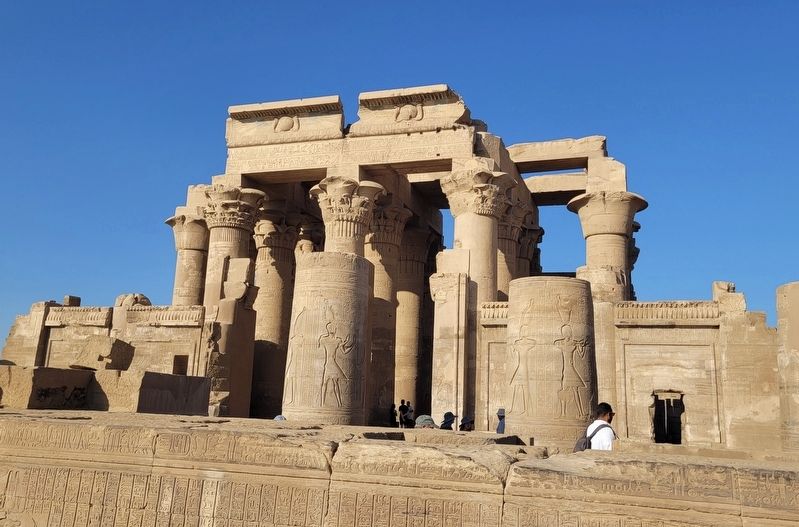
2. The main entrance to the Kom Ombo Temple
Photographed by James Hulse, October 12, 2024
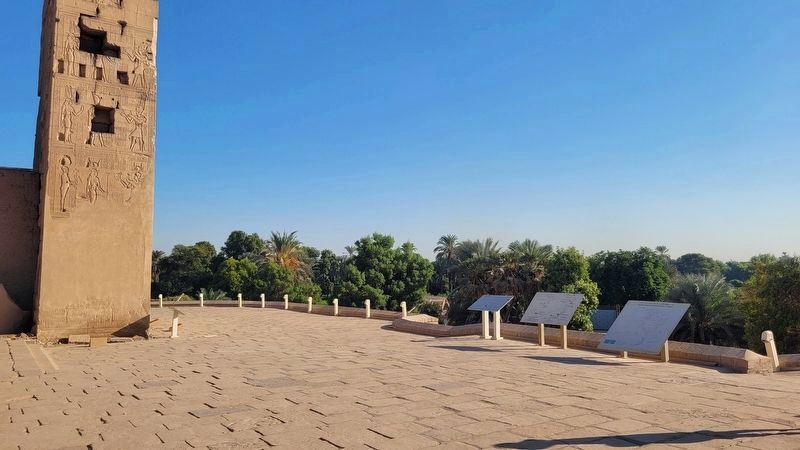
3. The markers near the entrance to Kom Ombo Temple
Photographed by James Hulse, October 12, 2024
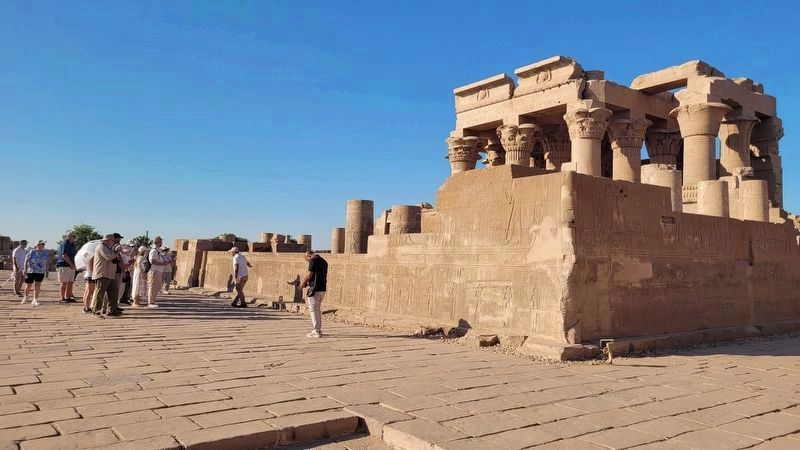
4. The view of the front side of the Kom Ombo Temple
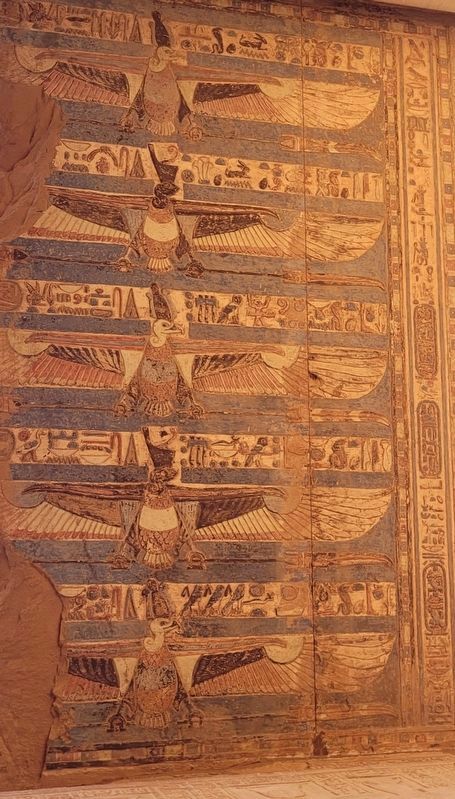
Photographed by James Hulse, October 12, 2024
5. Detailed ceiling carving of the ancient Egyptian vulture goddess Nekhbet at the Kom Ombo Temple
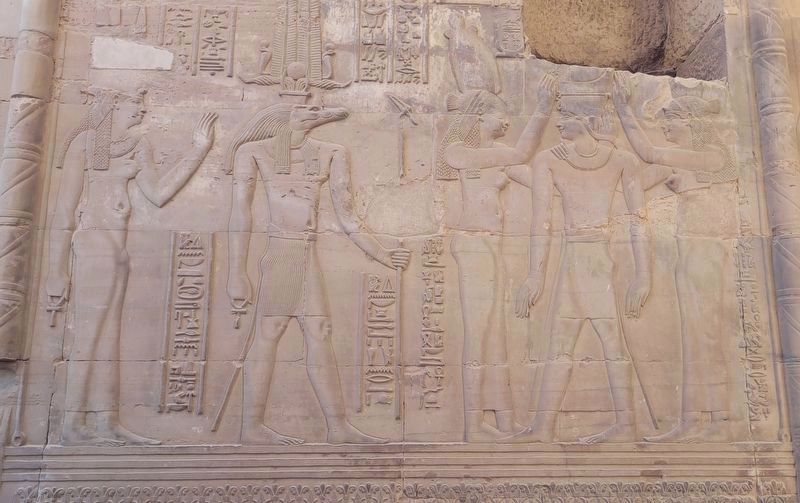
Photographed by James Hulse, October 12, 2024
6. Wall relief of the Crocodile god Sobek with the pharaoh
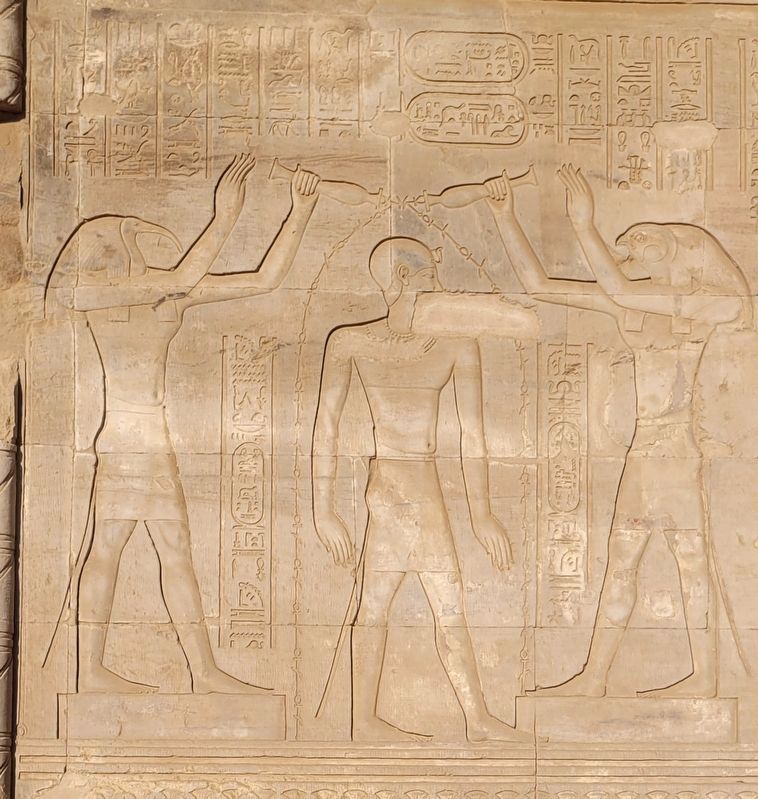
Photographed by James Hulse, October 12, 2024
7. Wall relief of Thot and Horus with Ptolemy XII at Kom Ombo Temple
Credits. This page was last revised on November 24, 2025. It was originally submitted on November 21, 2025, by James Hulse of Medina, Texas. This page has been viewed 82 times since then and 46 times this year. Photos: 1, 2, 3, 4, 5, 6, 7. submitted on November 24, 2025, by James Hulse of Medina, Texas.
