Izbat Al Bayyarah in Markaz Kom Ombo, Aswan Governorate, Egypt — مصر (Northeast Africa)
Chapel of Hathor
⎯⎯⎯
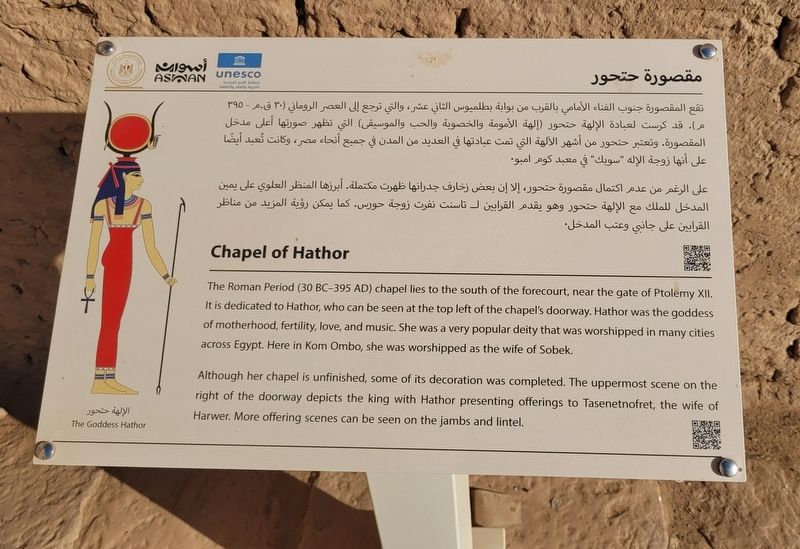
مقصورة حتحور
Photographed by James Hulse, October 12, 2024
1. Chapel of Hathor / مقصورة حتحور Ma
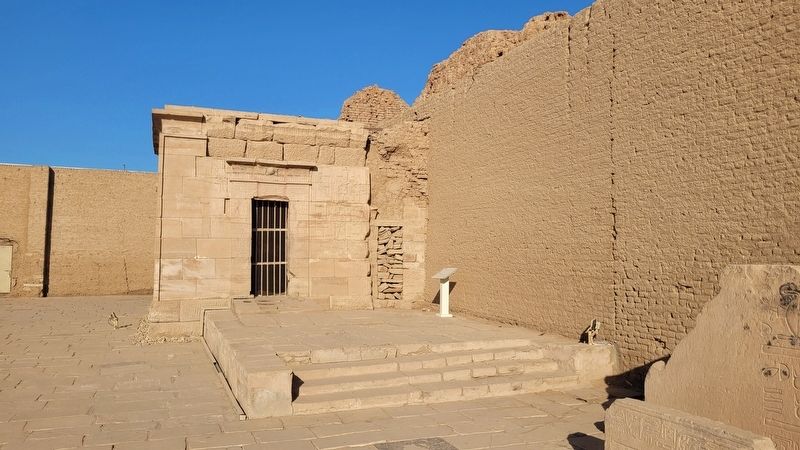
 The Roman Period (30 BC-395 AD) chapel lies to the south of the forecourt, near the gate of Ptolemy XII. It is dedicated to Hathor, who can be seen at the top left of the chapel's doorway. Hathor was the goddess of motherhood, fertility, love, and music. She was a very popular deity that was worshipped in many cities across Egypt. Here in Kom Ombo, she was worshipped as the wife of Sobek.
Although her chapel is unfinished, some of its decoration was completed. The uppermost scene on the right of the doorway depicts the king with Hathor presenting offerings to Tasenetnofret, the wife of Harwer. More offering scenes can be seen on the jambs and lintel.
Captions
(Photo #1) The Goddess Hathor
مقصورة حتحور
تقع المقصورة جنوب الفناء الأمامي بالقرب من بوابة بطلميوس الثاني عشر، والتي ترجع إلى العصر الروماني (۳۰) ق.م - ٣٩٥) م). قد كرست لعبادة الإلهة حتحور إلهة الأمومة والخصوبة والحب والموسيقى التي تظهر صورتها أعلى مدخل المقصورة. وتعتبر حتحور من أشهر الآلهة التي تمت عبادتها في العديد من المدن في جميع أنحاء مصر، وكانت تعبد أيضًا على أنها زوجة الإله "سوبك" في معبد كوم امبو.
على الرغم من عدم اكتمال مقصورة حتحور ، إلا إن بعض زخارف جدرانها ظهرت مكتملة . أبرزها المنظر العلوي على يمين المدخل للملك مع الإلهة حتحور وهو يقدم القرابين لـ تاسنت نفرت زوجة حورس. كما يمكن رؤية المزيد من مناظر القرابين على جانبي وعتب المدخل.
(1) الإلهة حتحور
Erected by Ministry of Tourism & Antiquity, Aswan and unesco.
Topics. This historical marker is listed in these topic lists: Anthropology & Archaeology • Architecture • Religion & Religious Structures. A significant historical year for this entry is 30 BCE.
Location. 24° 27.096′ N, 32° 55.705′ E. Marker is in Izbat Al Bayyarah, Aswan Governorate, in Markaz Kom Ombo. It is on Tariaq Bedon Esm. The marker is located on the grounds of the Kom Ombo Temple. Touch for map. Marker is at or near this postal address: Tariaq Bedon Esm, Izbat Al Bayyarah, Aswan Governorate 12813-01, Egypt. Touch for directions.

Regionally, it is in Africa, specifically in North Africa, in the Middle East, on the Red Sea, and in a coastal Mediterranean country. Historically, it finds itself in what was once the Byzantine Empire, the Ottoman Empire, a British colony, and the Roman Empire.
Other nearby markers. At least 8 other markers are within walking distance of this marker: Gate and Pylon (a few steps from this marker); Kom Ombo Temple / معبد كوم امبو (within shouting distance of this marker); The Temple of Ombos / Le temple d’Ombos (within shouting distance of this marker); The Open-Air Courtyard (within shouting distance of this marker); Outer Hypostyle Hall (within shouting distance of this marker); Inner Hypostyle Hall (within shouting distance of this marker); Birth House / بيت الولادة (within shouting distance of this marker); Inner Halls and Twin Sanctuaries (within shouting distance of this marker). Touch for a list and map of all markers in Izbat Al Bayyarah.
Also see . . .
1. Temple of Kom Ombo. Wikipedia
The building is unique because its 'double' design meant that there were courts, halls, sanctuaries and rooms duplicated for two sets of gods. The southern half of the temple was dedicated to the crocodile god Sobek, god of fertility and creator of the world with Hathor and Khonsu. Meanwhile, the northern part of the temple was dedicated to the falcon god Haroeris ("Horus the Elder"), along "with Tasenetnofret (the Good Sister, a special form of Hathor or Tefnut) and Panebtawy (Lord of the Two Lands)". The temple is atypical because everything is perfectly symmetrical along the main axis.(Submitted on November 24, 2025, by James Hulse of Medina, Texas.)
2. Hathor. Wikipedia
Hathor (Ancient Egyptian: ḥwt-ḥr, lit. 'House of Horus', Ancient Greek: Ἁθώρ Hathōr, Coptic: ϩⲁⲑⲱⲣ, Meroitic: 𐦠𐦴𐦫𐦢 Atari) was a major goddess in ancient Egyptian religion who played a wide variety of roles. As a sky deity, she was the mother or consort of the sky god Horus and the sun god Ra, both of whom were connected with kingship, and thus she was the symbolic mother of their earthly representatives, the pharaohs. She was one of several goddesses who acted as the Eye of Ra, Ra's feminine counterpart, and in this form, she had a vengeful aspect that protected him from his enemies. Her beneficent side represented beauty, music, dance, joy, love, sexuality, and maternal care, and she acted as the consort of several male deities and the mother of their sons. These two aspects of the goddess exemplified the Egyptian conception of femininity. Hathor crossed boundaries between worlds, helping deceased souls in the transition to the afterlife.(Submitted on November 24, 2025, by James Hulse of Medina, Texas.)
this page online
Photographed by James Hulse, October 12, 2024
2. Chapel of Hathor / مقصورة حتحور Ma
Photographed by James Hulse, October 12, 2024
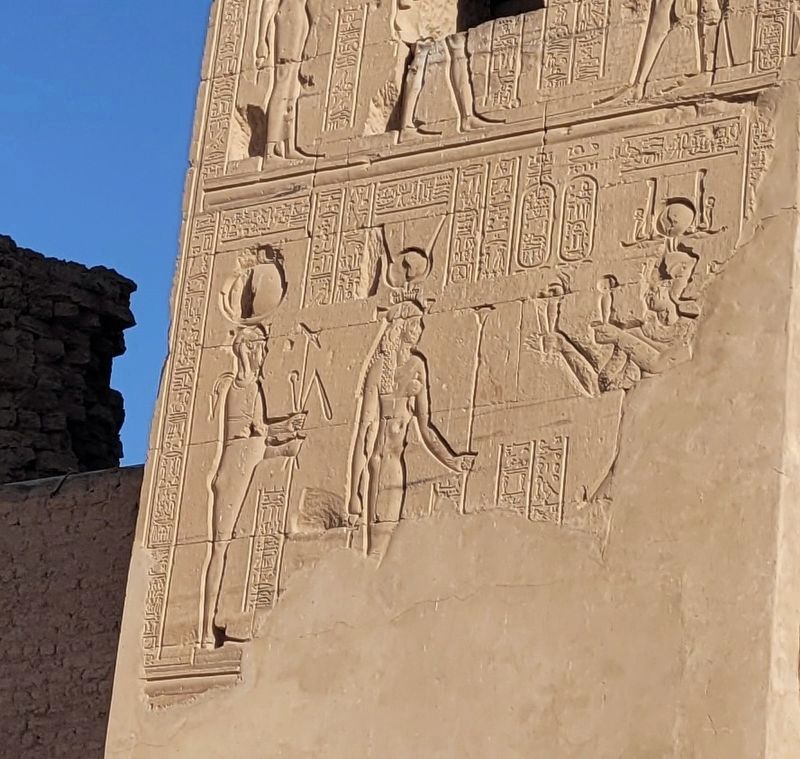
3. Wall relief of Ptolemy XII making offering to Hathor on the pylon
Credits. This page was last revised on November 24, 2025. It was originally submitted on November 21, 2025, by James Hulse of Medina, Texas. This page has been viewed 47 times since then and 17 times this year. Photos: 1, 2, 3. submitted on November 24, 2025, by James Hulse of Medina, Texas.
