Izbat Al Bayyarah in Markaz Kom Ombo, Aswan Governorate, Egypt — مصر (Northeast Africa)
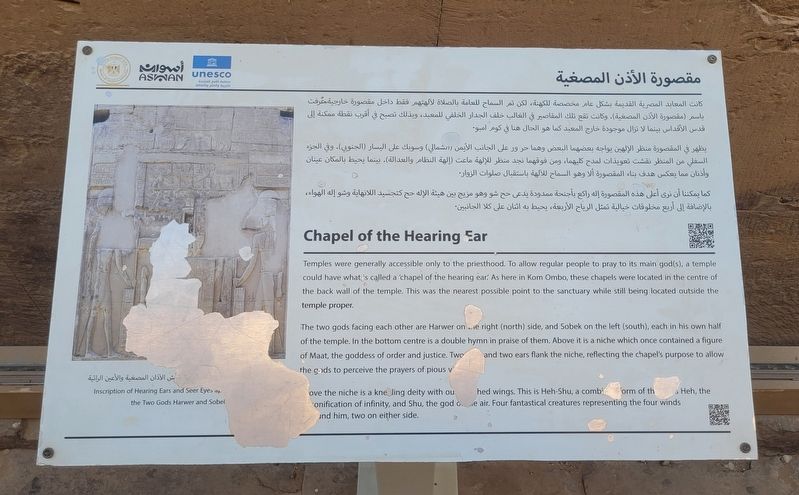
Chapel of the Hearing Ear
Photographed by James Hulse, October 12, 2024
1. Chapel of the Hearing Ear Marker
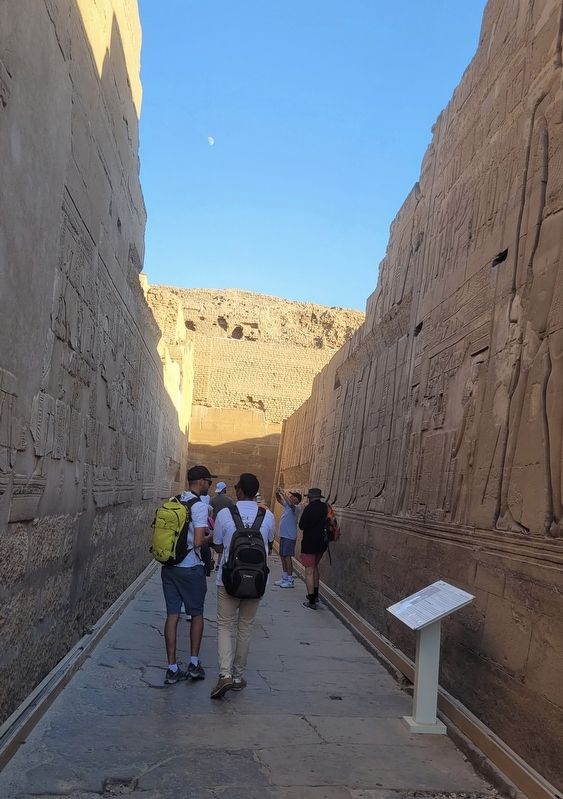
 Temples were generally accessible only to the priesthood. To allow regular people to pray to its main god(s), a temple could have what is called a 'chapel of the hearing ear’. As here in Kom Ombo, these chapels were located in the centre of the back wall of the temple. This was the nearest possible point to the sanctuary while still being located outside the temple proper.
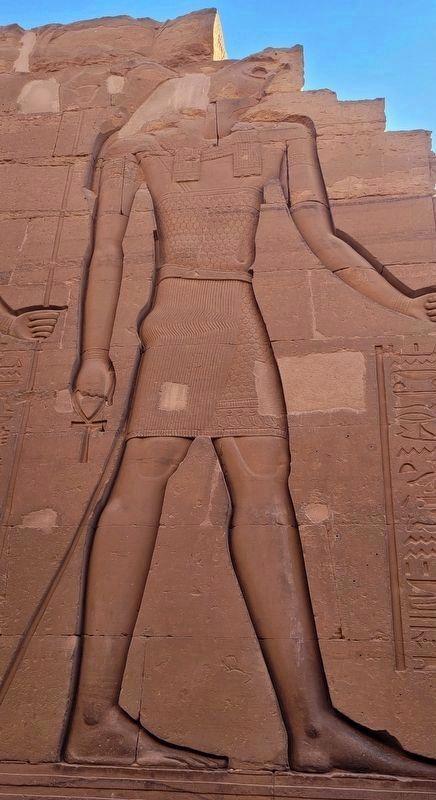
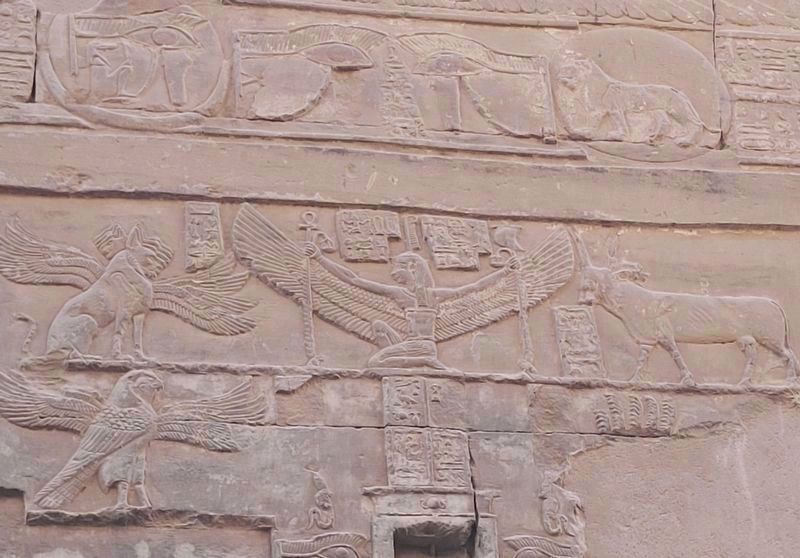
The two gods facing each other are Harwer on the right (north) side, and Sobek on the left (south), each in his own half of the temple. In the bottom centre is a double hymn in praise of them. Above it is a niche which once contained a figure of Maat, the goddess of order and justice. Two eyes and two ears flank the niche, reflecting the chapel's purpose to allow the gods to perceive the prayers of pious visitors.
Above the niche is a kneeling deity with outstretched wings. This is Heh-Shu, a composite form of the god Heh, the personification of infinity, and Shu, the god of air. Four fantastical creatures representing the four winds surround him, two on either side.
مقصورة الأذن المصغية
كانت المعابد المصرية القديمة بشكل عام مخصصة للكهنة، لكن تم السماح للعامة بالصلاة لآلهتهم فقط داخل مقصورة خارجية عرفت باسم ( مقصورة الأذن المصغية). وكانت تقع تلك المقاصير في الغالب خلف الجدار الخلفي للمعبد، وبذلك تصبح في أقرب نقطة ممكنة إلى قدس الأقداس بينما لا تزال موجودة خارج المعبد كما هو الحال هنا في كوم امبو.
يظهر في المقصورة منظر الإلهين يواجه بعضهما البعض وهما حر ور على الجانب الأيمن (الشمالي) وسوبك على اليسار (الجنوبي). وفي الجزء السفلي من المنظر نقشت تعويذات لمدح كليهما، ومن فوقهما نجد منظر للإلهة ماعت (إلهة) النظام والعدالة). بينما يحيط بالمكان عينان وأذنان مما يعكس هدف بناء المقصورة ألا وهو السماح للآلهة باستقبال صلوات الزوار.
كما يمكننا أن نرى أعلى هذه المقصورة إله راكع بأجنحة ممدودة يدعى حج شو وهو مزيج بين هيئة الإله حج كتجسيد اللانهاية وشو إله الهواء، بالإضافة إلى أربع مخلوقات خيالية تمثل الرياح الأربعة، يحيط به اثنان على كلا الجانبين.
Erected by Ministry of Tourism & Antiquity, Aswan and unesco.
Topics. This historical marker is listed in this topic list: Anthropology & Archaeology.
Location. 24° 27.142′ N, 32° 55.722′ E. Marker is in Izbat Al Bayyarah, Aswan Governorate, in Markaz Kom Ombo. It is on Tariaq Bedon Esm. The marker is located on the grounds of the Kom Ombo Temple. Touch for map. Marker is in this post office area: Izbat Al Bayyarah, Aswan Governorate 12813-01, Egypt. Touch for directions.

Regionally, it is in Africa, specifically in North Africa, in the Middle East, on the Red Sea, and in a coastal Mediterranean country. Historically, it finds itself in what was once the Byzantine Empire, the Ottoman Empire, a British colony, and the Roman Empire.
Other nearby markers. At least 8 other markers are within walking distance of this marker: The Surgical Instruments Scene (a few steps from this marker); Festival Calendars (within shouting distance of this marker); a different marker also named The Surgical Instruments Scene (within shouting distance of this marker); Inner Halls and Twin Sanctuaries (within shouting distance of this marker); Inner Hypostyle Hall (within shouting distance of this marker); Outer Hypostyle Hall (within shouting distance of this marker); The Temple of Ombos / Le temple d’Ombos (within shouting distance of this marker); The Open-Air Courtyard (about 90 meters away, measured in a direct line). Touch for a list and map of all markers in Izbat Al Bayyarah.
Also see . . . Temple of Kom Ombo. Wikipedia
The building is unique because its 'double' design meant that there were courts, halls, sanctuaries and rooms duplicated for two sets of gods. The southern half of the temple was dedicated to the crocodile god Sobek, god of fertility and creator of the world with Hathor(Submitted on November 24, 2025, by James Hulse of Medina, Texas.)and Khonsu. Meanwhile, the northern part of the temple was dedicated to the falcon god Haroeris ("Horus the Elder"), along "with Tasenetnofret (the Good Sister, a special form of Hathor or Tefnut) and Panebtawy (Lord of the Two Lands)". The temple is atypical because everything is perfectly symmetrical along the main axis.
Click or scan to see
this page online
Photographed by James Hulse, October 12, 2024
2. Chapel of the Hearing Ear Marker
Photographed by James Hulse, October 12, 2024
3. Engraving of the falcon-headed god Horus (Harwer)
Photographed by James Hulse, October 12, 2024
4. Heh-Shu - the kneeling deity with outstretched wings above the marker
The personification of infinity, and Shu, the god of air. Four fantastical creatures representing the four winds surround him, two on either side.
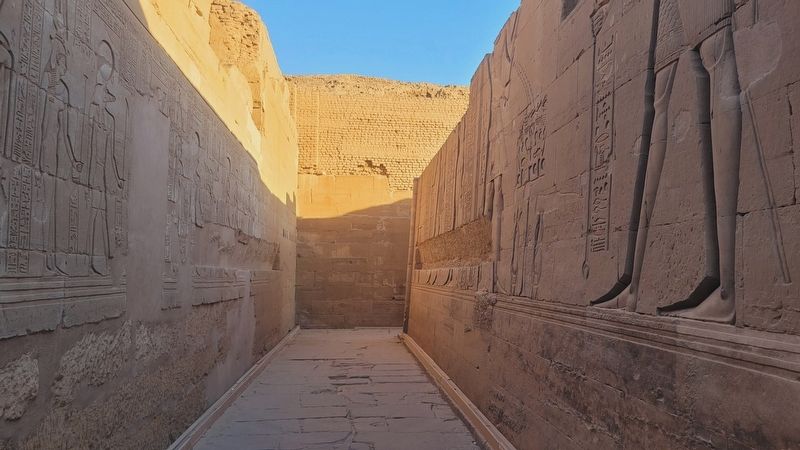
Photographed by James Hulse, October 12, 2024
5. The hall along the marker
Credits. This page was last revised on November 30, 2025. It was originally submitted on November 21, 2025, by James Hulse of Medina, Texas. This page has been viewed 188 times since then and 142 times this year. Photos: 1, 2, 3, 4, 5. submitted on November 30, 2025, by James Hulse of Medina, Texas.
