Abu Simbel, Aswan Governorate, Egypt — مصر (Northeast Africa)
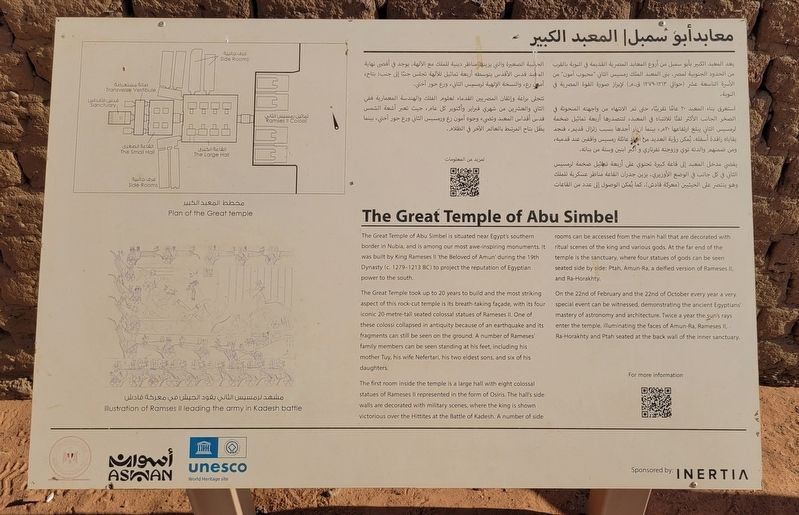
The Great Temple of Abu Simbel
Photographed by James Hulse, October 13, 2024
1. The Great Temple of Abu Simbel Marker
 The Great Temple of Abu Simbel is situated near Egypt's southern border in Nubia, and is among our most awe-inspiring monuments. It was built by King Rameses II 'the Beloved of Amun' during the 19th Dynasty (c. 1279-1213 BC) to project the reputation of Egyptian power to the south.
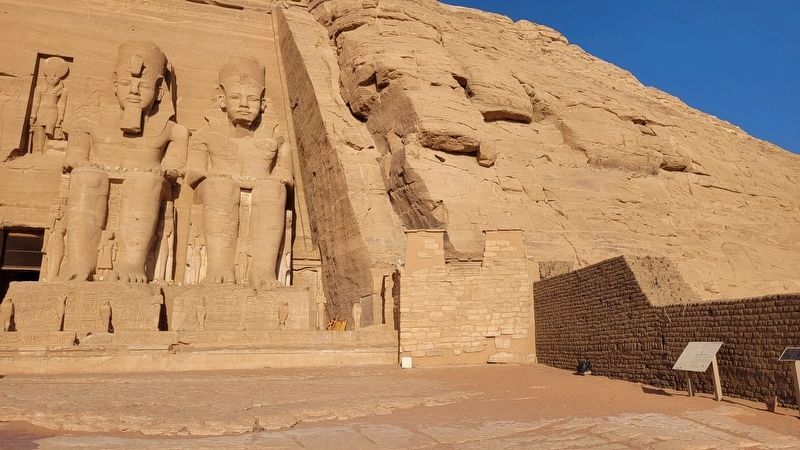
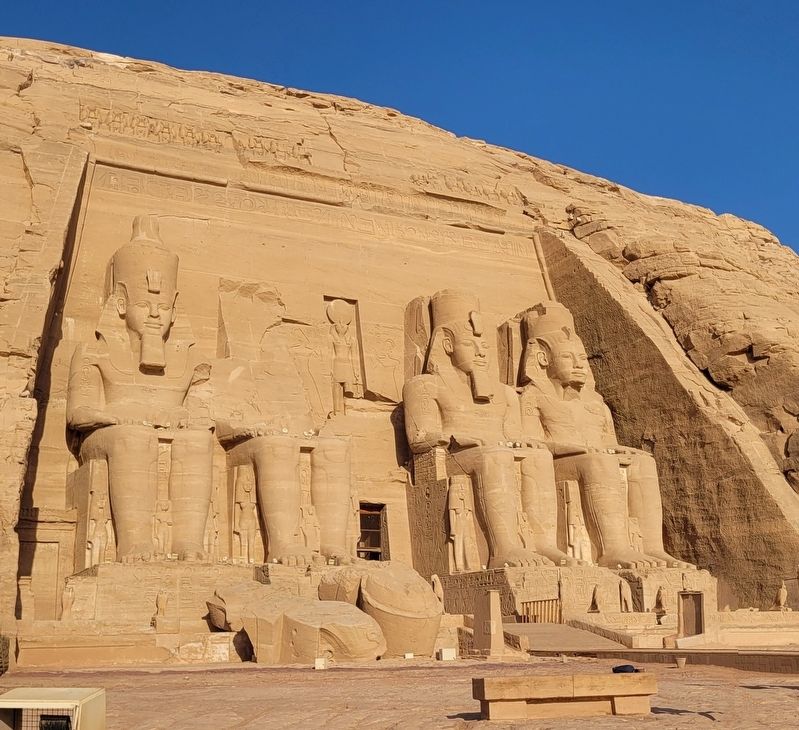
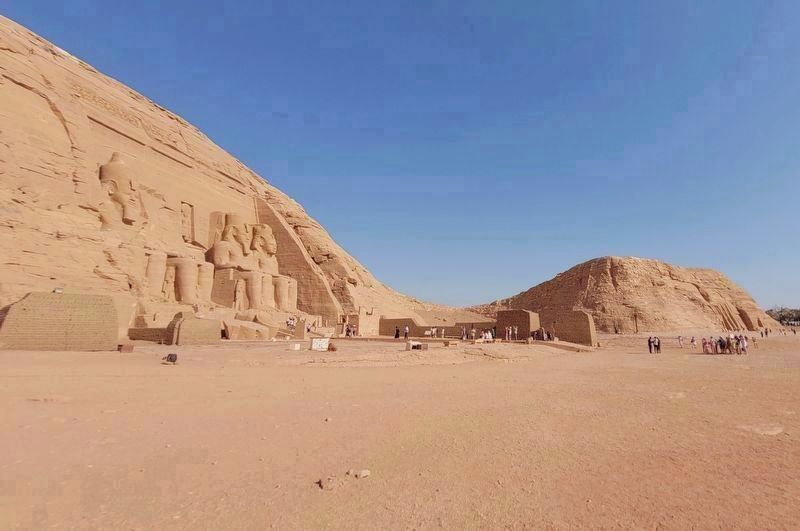
The Great Temple took up to 20 years to build and the most striking aspect of this rock-cut temple is its breath-taking façade, with its four iconic 20-metre-tall seated colossal statues of Rameses II. One of these colossi collapsed in antiquity because of an earthquake and its fragments can still be seen on the ground. A number of Rameses' family members can be seen standing at his feet, including his mother Tuy, his wife Nefertari, his two eldest sons, and six of his daughters.
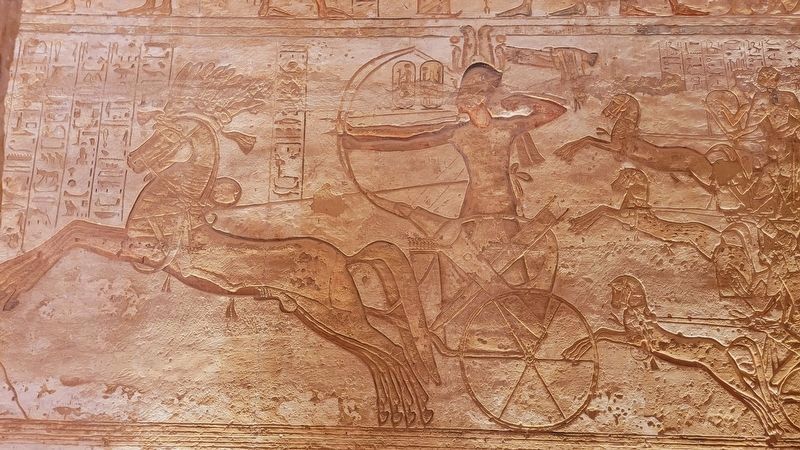
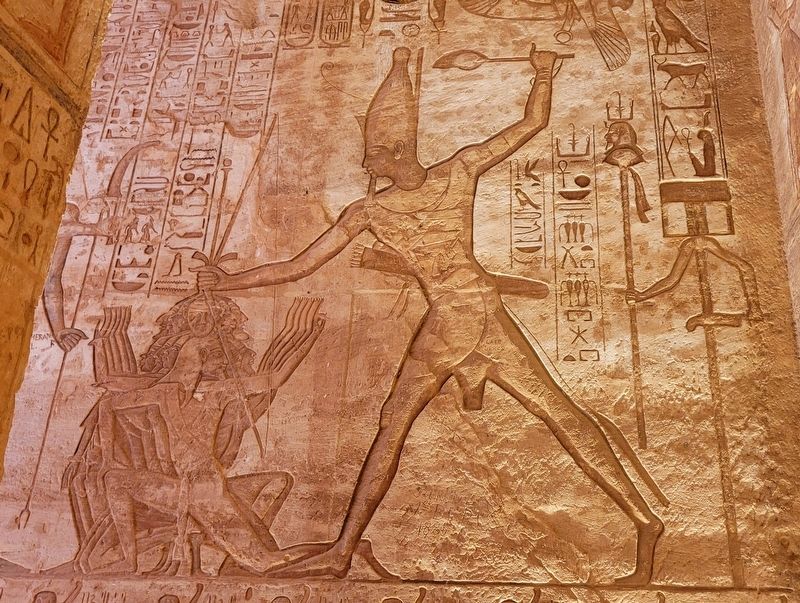
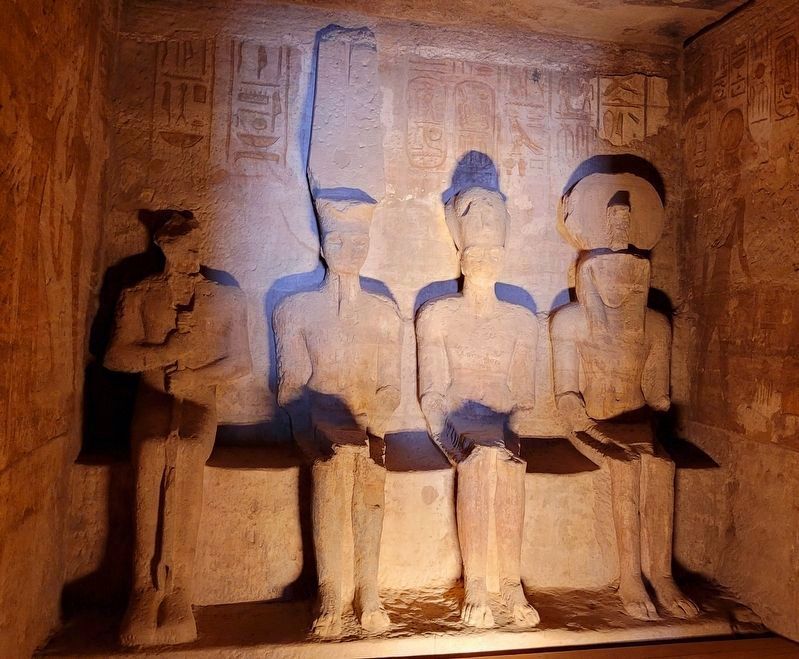
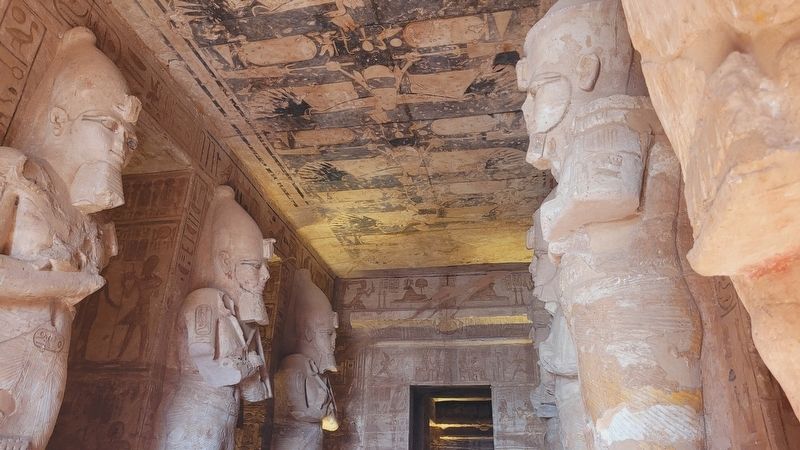
The first room inside the temple is a large hall with eight colossal statues of Rameses II represented in the form of Osiris. The hall's side walls are decorated with military scenes, where the king is shown victorious over the Hittites at the Battle of Kadesh. A number of rooms can be accessed from the main hall that are decorated with ritual scenes of the king and various gods. At the far end of the temple is the sanctuary, where four statues of gods can be seen seated side by side: Ptah, Amun-Ra, a deified version of Rameses II, and Ra-Horakhty.
On the 22nd of February and the 22nd of October every year a very special event can be witnessed, demonstrating the ancient Egyptians' mastery of astronomy and architecture. Twice a year the sun's rays enter the temple, illuminating the faces of Amun-Ra, Rameses II, Ra-Horakhty and Ptah seated at the back wall of the inner sanctuary.
Captions
(Photo #1) Plan of the Great temple
(Photo #2) Illustration of Ramses II leading the army in Kadesh battle
معابد أبو سمبل | المعبد الكبير
يعد المعبد الكبير بأبو سمبل من أروع المعابد المصرية القديمة في النوبة بالقرب من الحدود الجنوبية لمصر . بنى المعبد الملك رمسيس الثاني "محبوب آمون" من الأسرة التاسعة عشر (حوالي ۱۲۱۳-۱۲۷۹ ق.م) لإبراز صورة القوة المصرية في النوبة.
استغرق بناء المعبد ٢٠ عامًا تقريبًا، حتى تم الانتهاء من واجهته المنحوتة في الصخر الجانب الأكثر لفتا للانتباه في المعبد لتتصدرها أربعة تماثيل ضخمة لرمسيس الثاني يبلغ ارتفاعها ۲۰ م ، بينما انهار أحدها بسبب زلزال قديم ، فنجد بقاياه راقدة أسفله. يُمكن رؤية العديد من أفراد عائلة رمسيس واقفين عند قدميه ومن ضمنهم والدته توي وزوجته نفرتاري و أكبر ابنين وستة من بناته.
يفضي مدخل المعبد إلى قاعة كبيرة تحتوي على أربعة تماثيل ضخمة لرمسيس الثاني في كل جانب في الوضع الأوزيري. يزين جدران القاعة مناظر عسكرية للملك وهو ينتصر على الحيثيين (معركة قادش). كما يُمكن الوصول إلى عدد من القاعات الجانبية الصغيرة والتي يزينها مناظر دينية للملك مع الآلهة. يوجد في أقصى نهاية المعبد قدس الأقدس يتوسطه أربعة تماثيل للآلهة تجلس جنبا إلى جنب بتاحآمرين رع، والنسخة الإلهية لرمسيس الثاني، ورع حور آختي. تتجلى براعة وإتقان المصريين القدماء لعلوم الفلك والهندسة المعمارية ففي الثاني والعشرين من شهري فبراير وأكتوبر كل عام، حيث تعبر أشعة الشمس قدس أقداس المعبد وتضيء وجوه آمون رع ورمسيس الثاني ورع حور آختي، بينما يظل بتاح المرتبط بالعالم الآخر في الظلام.
(1) مخطط المعبد الكبير
(2) مشهد لرمسيس الثاني يقود الجيش في معركة قادش
Erected by Ministry of Tourism & Antiquity, Aswan, unesco and Interia.
Topics. This historical marker is listed in this topic list: Anthropology & Archaeology.
Location. 22° 20.223′ N, 31° 37.547′ E. Marker is in Abu Simbel, Aswan Governorate. It is on Ramsis. The marker is located on the grounds of the Abu Simbel
this page online

Regionally, it is in Africa, specifically in North Africa, in the Middle East, on the Red Sea, and in a coastal Mediterranean country. Historically, it finds itself in what was once the Byzantine Empire, the Ottoman Empire, a British colony, and the Roman Empire.
Other nearby markers. At least 2 other markers are within walking distance of this marker: The Small Temple of Abu Simbel (about 90 meters away, measured in a direct line); The Salvage of Abu Simbel Temples (about 180 meters away).
Also see . . . Abu Simbel. Ministry of Antiquities - Egypt
The Great Temple of Abu Simbel, in Nubia near Egypt’s southern border, is among the most awe-inspiring monuments of Egypt. It was cut into the living rock by King Ramesses II (the Great) of the Nineteenth Dynasty, around 1264 BC. The temple is most well known for the four imposing seated colossal statues that dominate its façade. One of these collapsed because of an ancient earthquake, and its fragments can still be seen on the ground.(Submitted on December 2, 2025, by James Hulse of Medina, Texas.)
Photographed by James Hulse, October 13, 2024
2. The Great Temple of Abu Simbel and Marker
The marker is located at the right side of the temple
Photographed by James Hulse, October 13, 2024
3. The Great Temple of Abu Simbel
Photographed by James Hulse, October 13, 2024
4. Engraving of King Rameses II leading his troops into battle
Photographed by James Hulse, October 13, 2024
5. Engraving of King Rameses II executing prisoners
Photographed by James Hulse, October 13, 2024
6. Four statues of gods - Ptah, Amun-Ra, a deified version of Rameses II and Ra-Horakhty
Photographed by James Hulse, October 13, 2024
7. The wide view of the Great Temple of Abu Simbel
Nefertari's Temple is located to the far right side of the Great Temple of Ramesses II.
Photographed by James Hulse, October 13, 2024
8. The view of the hall inside the Abu Simbel Temple
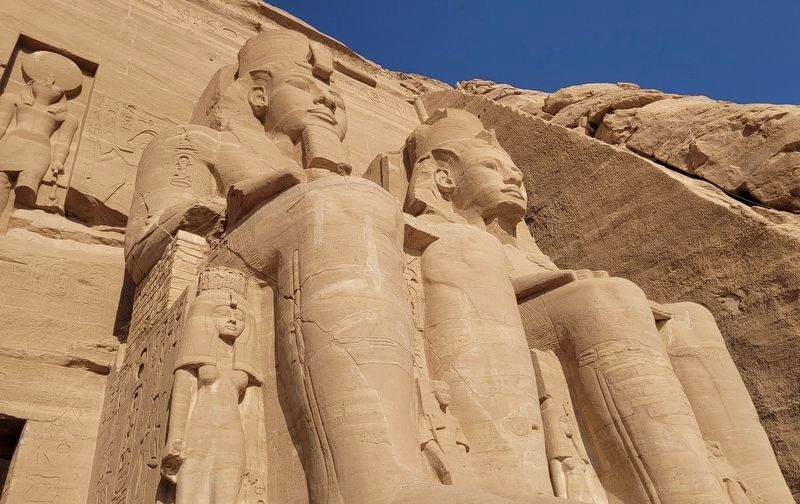
Photographed by James Hulse, October 13, 2024
9. Closeup view of two Ramesses statues
Credits. This page was last revised on December 4, 2025. It was originally submitted on December 2, 2025, by James Hulse of Medina, Texas. This page has been viewed 108 times since then and 79 times this year. Photos: 1, 2, 3, 4, 5, 6, 7, 8, 9. submitted on December 2, 2025, by James Hulse of Medina, Texas.
