Abu Simbel, Aswan Governorate, Egypt — مصر (Northeast Africa)
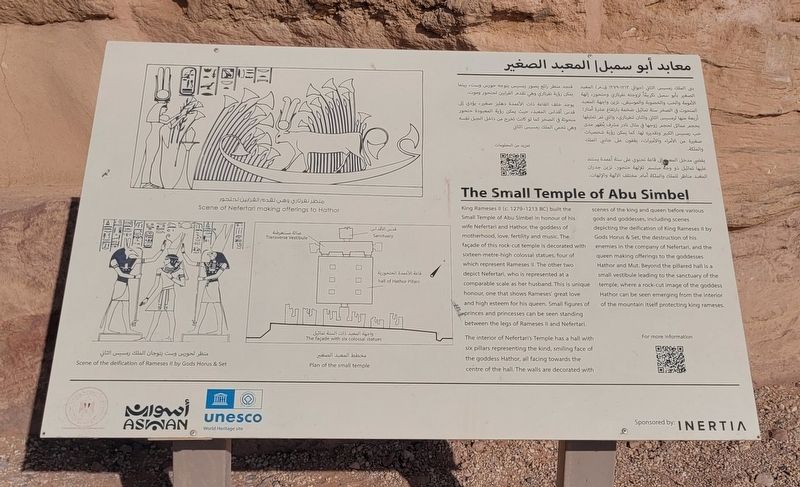
The Small Temple of Abu Simbel
Photographed by James Hulse, October 13, 2024
1. The Small Temple of Abu Simbel Marker
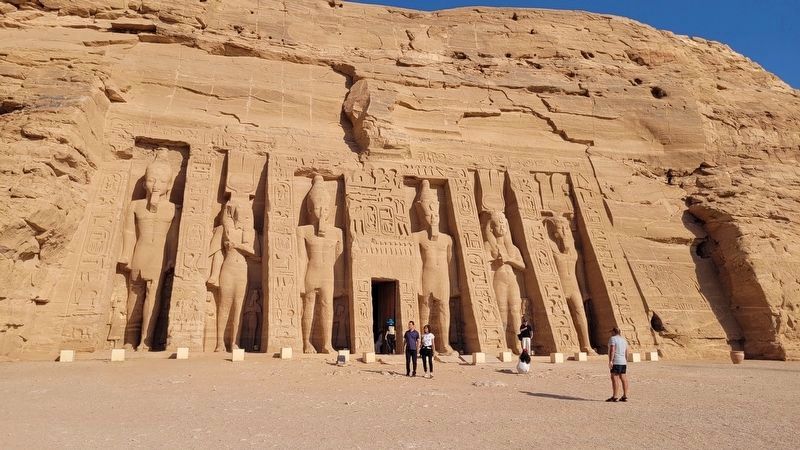
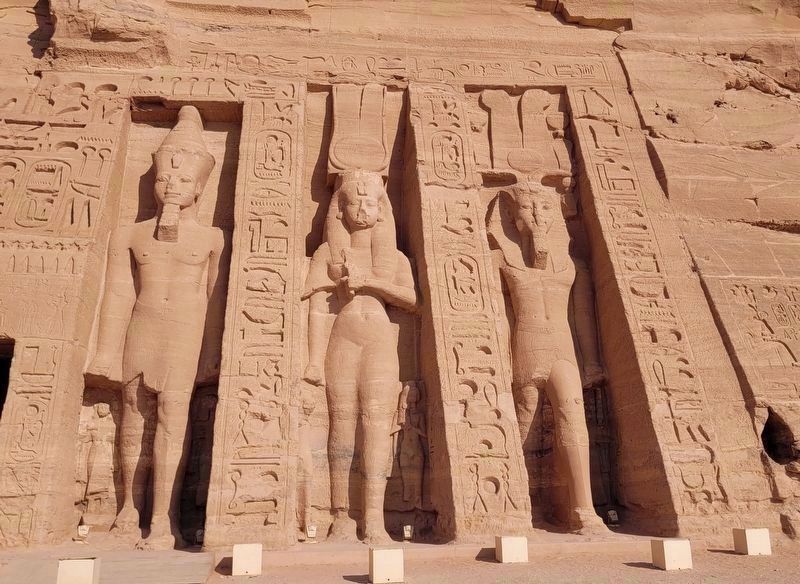
 King Rameses II (c. 1279-1213 BC) built the Small Temple of Abu Simbel in honour of his wife Nefertari and Hathor, the goddess of motherhood, love, fertility and music. The façade of this rock-cut temple is decorated with sixteen-metre-high colossal statues, four of which represent Rameses II. The other two depict Nefertari, who is represented at a comparable scale as her husband. This is unique honour, one that shows Rameses' great love and high esteem for his queen. Small figures of princes and princesses can be seen standing between the legs of Rameses II and Nefertari.
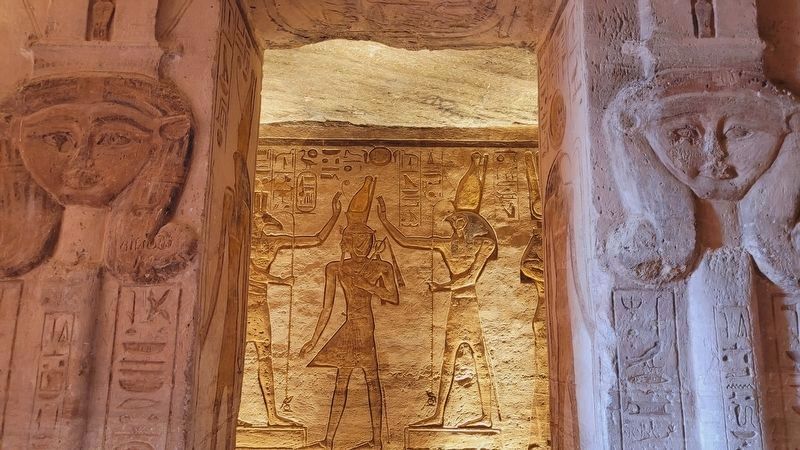
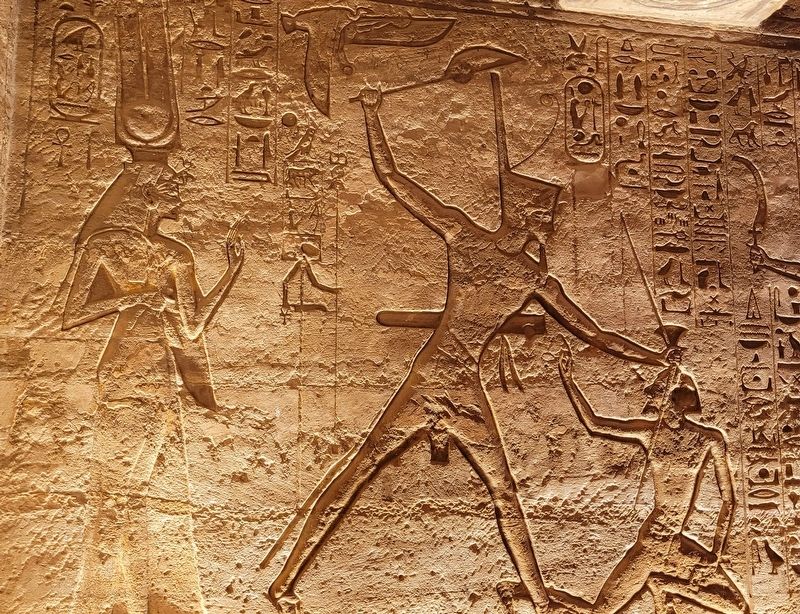
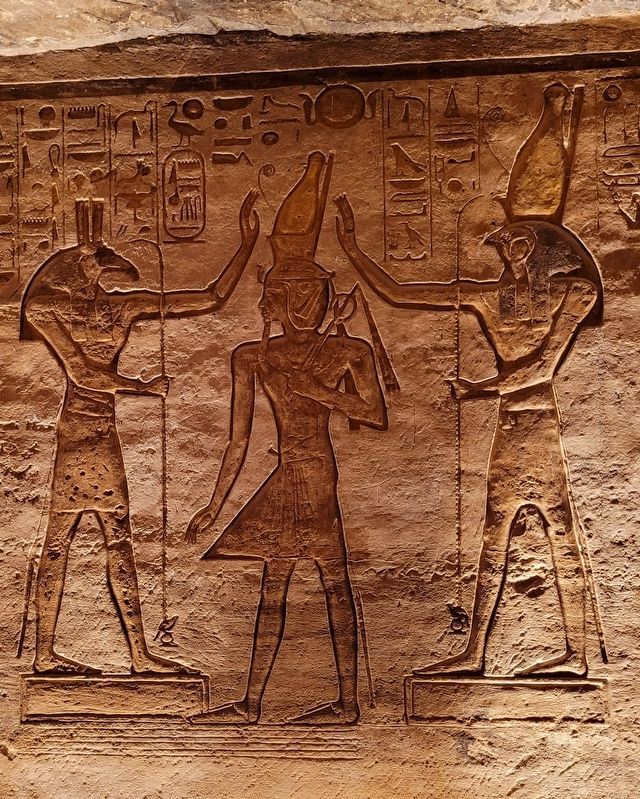
The interior of Nefertari's Temple has a hall with six pillars representing the kind, smiling face of the goddess Hathor, all facing towards the centre of the hall. The walls are decorated with scenes of the king and queen before various gods and goddesses, including scenes depicting the deification of King Rameses II by Gods Horus & Set, the destruction of his enemies in the company of Nefertari, and the queen making offerings to the goddesses Hathor and Mut. Beyond the pillared hall is a small vestibule leading to the sanctuary of the temple, where a rock-cut image of the goddess Hathor can be seen emerging from the interior of the mountain itself protecting King Rameses.
Captions
(Photo #1) Scene of Nefertari making offerings to Hathor
(Photo #2) Scene of the deification of Rameses II by Gods Horus & Set
(Photo #3) Plan of the small temple
معابد أبو سمبل | المعبد الصغير
بنى الملك رمسيس الثاني (حوالي) ۱۲۱۳-۱۲۷۹ ق.م ) المعبد الصغير بأبو سمبل تكريماً لزوجته نفرتاري وحتحور، إلهة الأمومة والحب والخصوبة والموسيقى. تزين واجهة المعبد المنحوت في الصخر ستة تماثيل ضخمة بارتفاع عشرة أمتار؛ أربعة منها لرمسيس الثاني واثنان لنفرتاري، والتي تم تمثيلها بحجم مماثل لحجم زوجها في مثال نادر مشرف يُظهر مدى حب رمسيس الكبير وتقديره لها. كما يمكن رؤية شخصيات صغيرة من الأمراء والأميرات، يقفون على جانبي الملك والملكة. يفضي مدخل المعربة إلى قاعة تحتوي على ستة أعمدة يستند عليها تماثيل ذو وجه مبتسم للإلهة حتحور تزين جدران المعبد مناظر للملك والملكة أمام مختلف الآلهة والإلهات.
فنجد منظر رائع يصور رمسيس يتوجه حورس وست بینما يمكن رؤية نفرتاري وهي تقدم القرابين لحتحور وموت. يوجد خلف القاعة ذات الأعمدة دهليز صغير، يؤدي إلى قدس أقداس المعبد، حيث يمكن رؤية المعبودة حتحور منحوتة في الصخر كما لو كانت تخرج من داخل الجبل نفسه وهي تحمي الملك رمسيس الثاني
(1) منظر نفرتاري وهي تقدم القرابين لحتحور
(2) منظر لحورس وست يتوجان الملك رمسيس الثاني
(3) مخطط المعيد الصغير
Erected by Ministry of Tourism & Antiquity, Aswan, unesco and Interia.
Topics. This historical marker is listed in these topic lists: Anthropology & Archaeology • Architecture • Religion & Religious Structures.
Location. 22° 20.245′ N, 31° 37.6′ E. Marker is in Abu Simbel, Aswan Governorate. It is on Tariaq Bedon Esm. The marker is located on the grounds of the Abu Simbel Temples. Touch for map. Marker is in this post office area: Abu Simbel, Aswan Governorate 12115-01, Egypt. Touch for directions.

Regionally, it is in Africa, specifically in North Africa, in the Middle East, on the Red Sea, and in a coastal Mediterranean country. Historically, it finds itself in what was once the Byzantine Empire, the Ottoman Empire,
this page online
Other nearby markers. At least 2 other markers are within walking distance of this marker: The Great Temple of Abu Simbel (about 90 meters away, measured in a direct line); The Salvage of Abu Simbel Temples (about 210 meters away).
Also see . . . Abu Simbel. Ministry of Antiquities - Egypt
The Great Temple of Abu Simbel, in Nubia near Egypt’s southern border, is among the most awe-inspiring monuments of Egypt. It was cut into the living rock by King Ramesses II (the Great) of the Nineteenth Dynasty, around 1264 BC. The temple is most well known for the four imposing seated colossal statues that dominate its façade. One of these collapsed because of an ancient earthquake, and its fragments can still be seen on the ground.(Submitted on December 2, 2025, by James Hulse of Medina, Texas.)
Photographed by James Hulse, October 13, 2024
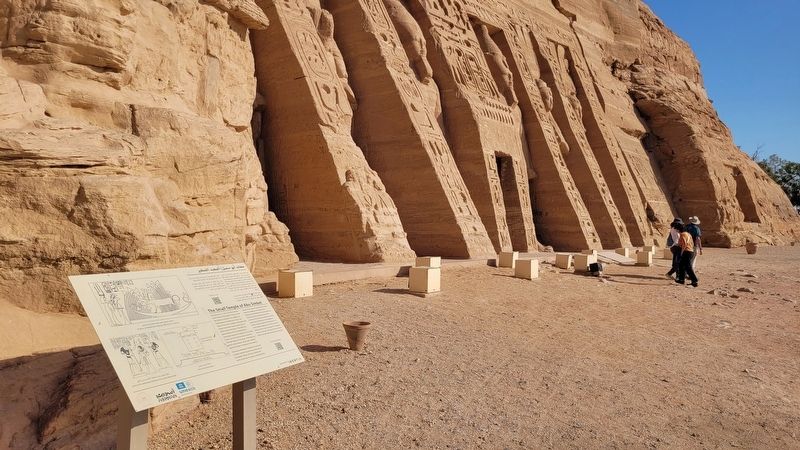
2. The Small Temple of Abu Simbel and Marker
Photographed by James Hulse, October 13, 2024
3. The Small Temple of Abu Simbel
At the entrance of the temple is colossal statues, four of which represent Rameses II and the other two depict Nefertari.
Photographed by James Hulse, October 13, 2024
4. The view inside the Temple Hall of Hathor Pillars
Photographed by James Hulse, October 13, 2024
5. Engraving of Nefertari with King Rameses II executing a prisoner
Photographed by James Hulse, October 13, 2024
6. Scene of the deification of Rameses II by Gods Horus & Set
Photographed by James Hulse, October 13, 2024
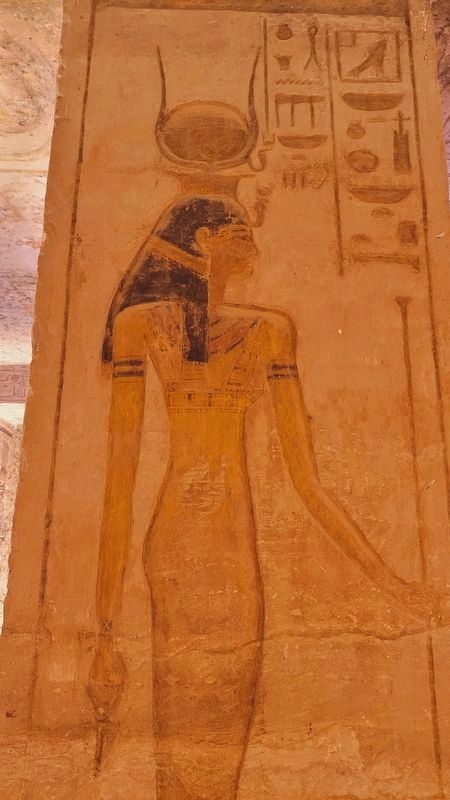
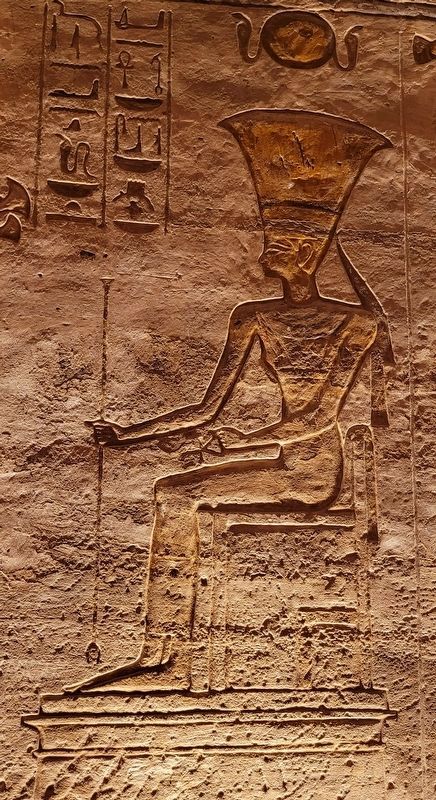
7. Nefertari
Photographed by James Hulse, October 13, 2024
8. Engraving of Nefertari
Photographed by James Hulse, October 13, 2024
9. Two statues of Rameses II and one of Nefertari (middle statue)
Small figures of princes and princesses can be seen standing between the legs of Rameses II and Nefertari.
Photographed by James Hulse, October 13, 2024
10. The Small Temple of Abu Simbel Marker
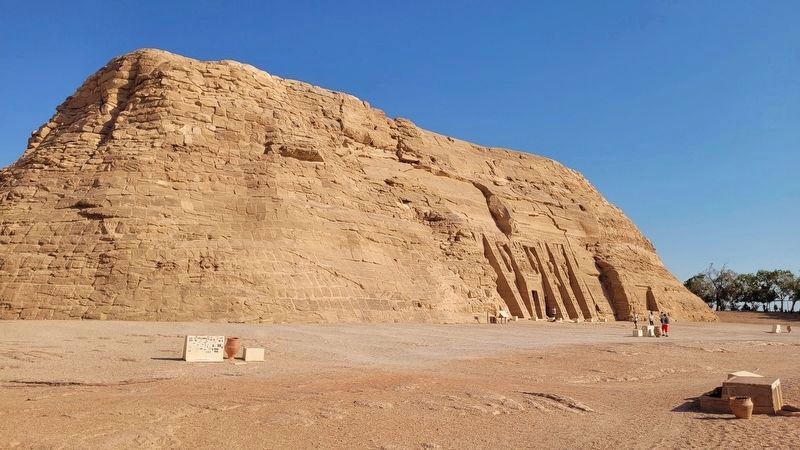
The view of Nefertari’ Temple as you approach from the Great Temple of Rameses II.
Credits. This page was last revised on December 4, 2025. It was originally submitted on December 2, 2025, by James Hulse of Medina, Texas. This page has been viewed 93 times since then and 60 times this year. Photos: 1, 2, 3, 4, 5, 6, 7, 8, 9, 10. submitted on December 4, 2025, by James Hulse of Medina, Texas.
