Aswan, Aswan Governorate, Egypt — مصر (Northeast Africa)
The Unfinished Obelisk
Photographed by James Hulse, October 14, 2024
1. The Unfinished Obelisk Marker
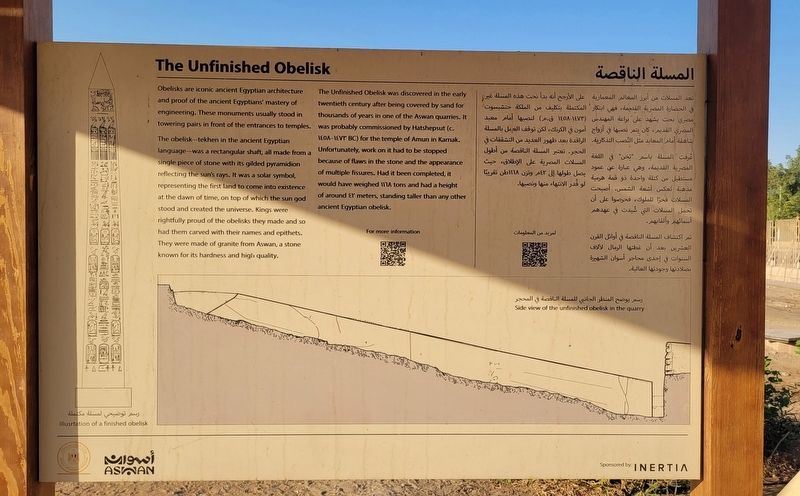
 Obelisks are iconic ancient Egyptian architecture and proof of the ancient Egyptians' mastery of engineering. These monuments usually stood in towering pairs in front of the entrances to temples.
The obelisk - tekhen in the ancient Egyptian language - was a rectangular shaft, all made from a single piece of stone with its gilded pyramidion reflecting the sun's rays. It was a solar symbol, representing the first land to come into existence at the dawn of time, on top of which the sun god stood and created the universe. Kings were rightfully proud of the obelisks they made and so had them carved with their names and epithets. They were made of granite from Aswan, a stone known for its hardness and high quality.
The Unfinished Obelisk was discovered in the early twentieth century after being covered by sand for thousands of years in one of the Aswan quarries. It was probably commissioned by Hatshepsut (c. 1473–1458 BC) for the temple of Amun in Karnak.
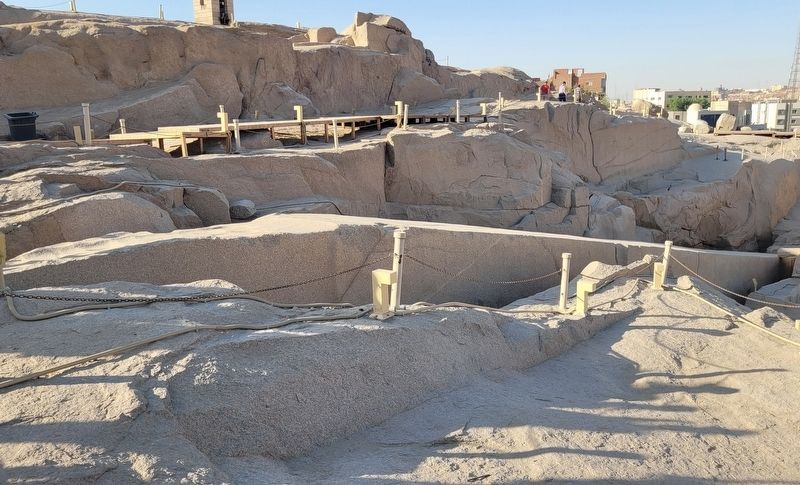
Unfortunately, work on it had to be stopped because of flaws in the stone and the appearance of multiple fissures. Had it been completed, it would have weighed 1168 tons and had height of around 43 meters, standing taller than any other ancient Egyptian obelisk.
Captions
(Photo #1) Illusrtation of a finished obelisk
(Photo #2) Side view of the unfinished obelisk in the quarry
المسلة الناقصة
تعد المسلات من أبرز المعالم المعمارية في الحضارة المصرية القديمة، فهي ابتكار مصري بحت يشهد على براعة المهندس المصري القديم ، كان يتم نصبها في أزواج شاهقة أمام المعابد مثل النصب التذكارية.
عُرفت المسلة باسم "تخن" في اللغة المصرية القديمة، وهي عبارة عن عمود مستطيل من كتلة واحدة ذو قمة هرمية مذهبة تعكس أشعة الشمس. أصبحت المسلات فخرًا للملوك، فحرصوا على أن تحمل المسلات التي شيدت في عهدهم أسمائهم وألقابهم .
تم اكتشاف المسلة الناقصة في أوائل القرن العشرين بعد أن غطتها الرمال الآلاف السنوات في إحدى محاجر أسوان الشهيرة بصلادتها وجودتها العالية.
على الأرجح أنه بدأ نحت هذه المسلة غير المكتملة بتكليف من الملكة حتشبسوت (١٤٧٣-١٤٥٨ ق.م) لنصبها أمام معبد آمون في الكرنك ، لكن توقف العمل بالمسلة الراقدة بعد ظهور العديد من التشققات في الحجر. تعتبر المسلة الناقصة من أطول المسلات المصرية على الإطلاق، حيث يصل طولها إلى ٤٢ م وتزن ١١٦٨طن تقريبا لو قدر الانتهاء منها ونصبها.
(1) رسم توضيحي لمسلة مكتملة
(2) رسم يوضح المنظر الجانبي للمسلة الناقصة في المحجر
Erected by Ministry of Tourism & Antiquity, Aswan and Interia.
Topics. This historical marker is listed in these topic lists: Anthropology & Archaeology • Architecture • Religion & Religious Structures. A significant historical year for this entry is 1473 BCE.
Location. 24° 4.634′ N, 32° 53.665′ E. Marker is in Aswan, Aswan Governorate. It is on Doctor Abd Al Rady Hanafe' just east of El Sadat Road. The marker is located at the Aswan Quarry and Unfinished Obelisk Archaeological Site. Touch for map. Marker is in this post office area: Aswan, Aswan Governorate 12417-71, Egypt. Touch for directions.

Regionally, it is in Africa, specifically in North Africa, in the Middle East, on the Red Sea, and in a coastal Mediterranean country. Historically, it finds itself in what was once the Byzantine Empire, the Ottoman Empire, a British colony, and the Roman Empire.
Other nearby markers. At least 2 other markers are within walking distance of this marker: The Granite Quarries of Aswan (within shouting distance of this marker); How Obelisks Were Made: Converting Stone into a Monument (within shouting distance
this page online
Also see . . . Unfinished obelisk. Wikipedia
The unfinished obelisk is the largest known ancient obelisk and is located in the northern region of the stone quarries of ancient Egypt in Aswan, Egypt. It was studied in detail by Reginald Engelbach in 1922.(Submitted on December 4, 2025, by James Hulse of Medina, Texas.)
The obelisk and wider quarry were inscribed on the UNESCO World Heritage List in 1979 along with other examples of Upper Egyptian architecture, as part of the "Nubian Monuments from Abu Simbel to Philae" (despite the quarry site being neither Nubian, nor between Abu Simbel and Philae).
Photographed by James Hulse, October 14, 2024
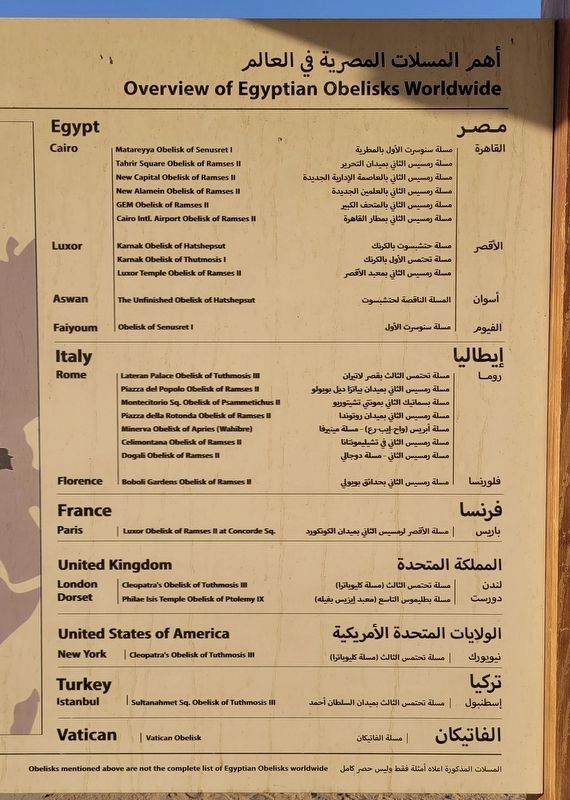
2. Overview of Egyptian Obelisk Worldwide Marker
Photographed by James Hulse, October 14, 2024
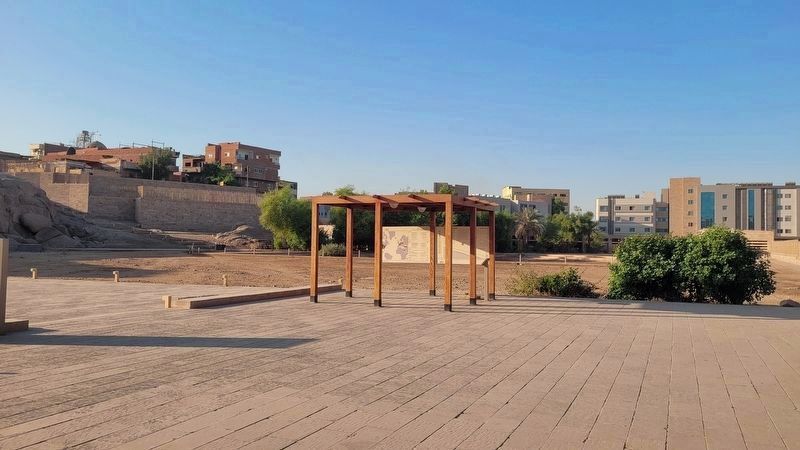
3. The view of the markers near the museum
Photographed by James Hulse, October 14, 2024
4. The Unfinished Obelisk
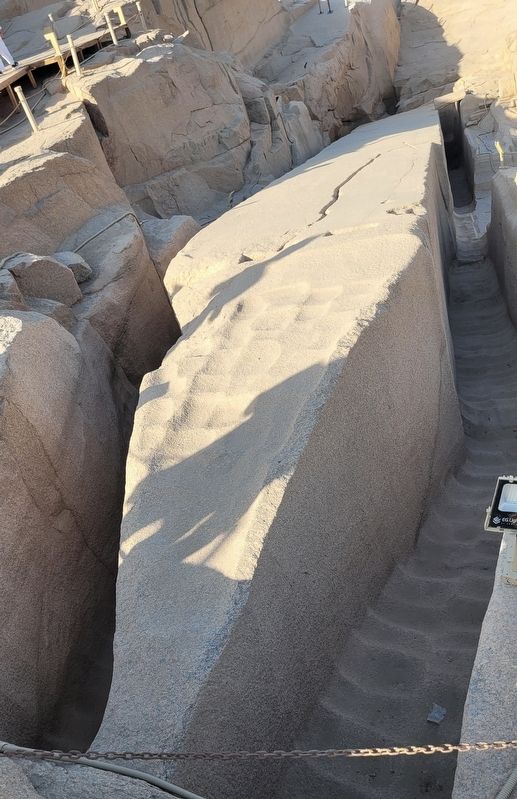
Photographed by James Hulse, October 14, 2024
5. The View of the Unfinished Obelisk with the crack down the middle of the obelisk
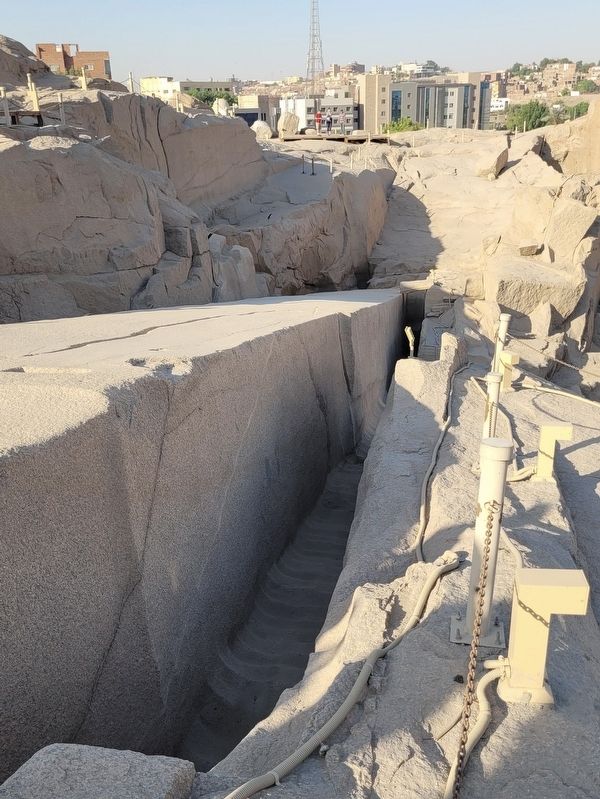
Photographed by James Hulse, October 14, 2024
6. The side view of the Unfinished Obelisk
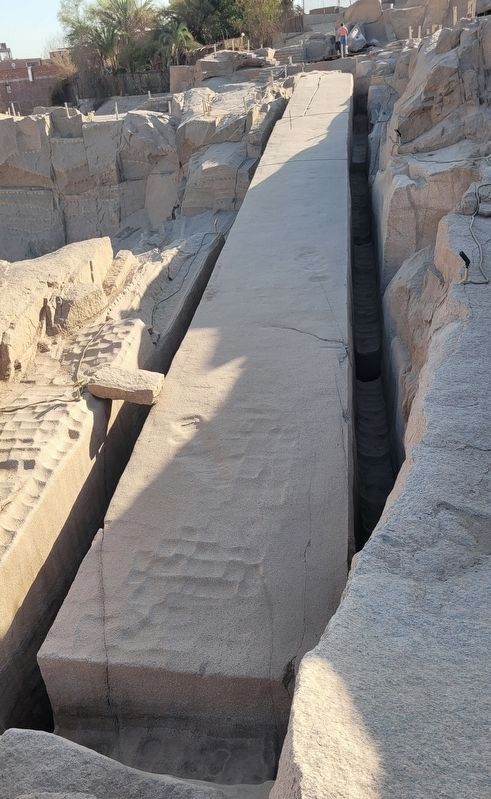
Photographed by James Hulse, October 14, 2024
7. The view of the bottom side of the Unfinished Obelisk
Credits. This page was last revised on December 5, 2025. It was originally submitted on December 2, 2025, by James Hulse of Medina, Texas. This page has been viewed 90 times since then and 49 times this year. Photos: 1, 2, 3, 4, 5, 6, 7. submitted on December 4, 2025, by James Hulse of Medina, Texas.
