Aswan, Aswan Governorate, Egypt — مصر (Northeast Africa)
The Granite Quarries of Aswan
Photographed by James Hulse, October 14, 2024
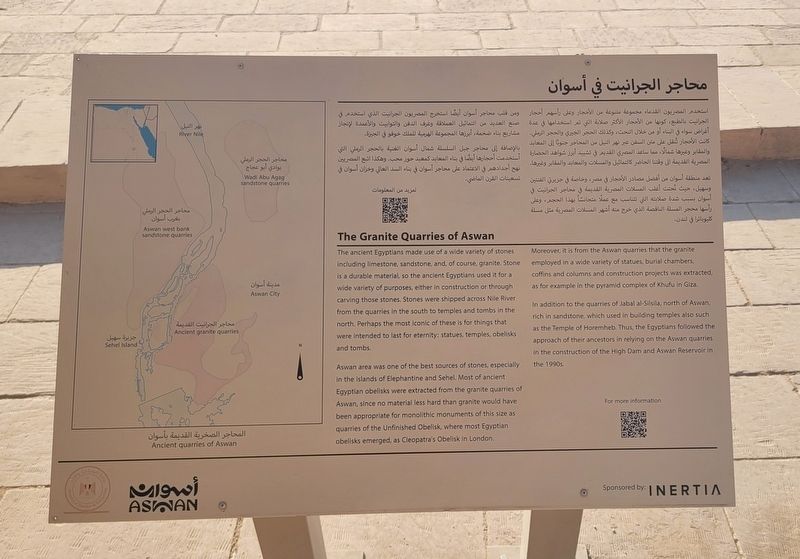
1. The Granite Quarries of Aswan Marker
 The ancient Egyptians made use of a wide variety of stones including limestone, sandstone, and, of course, granite. Stone is a durable material, so the ancient Egyptians used it for a wide variety of purposes, either in construction or through carving those stones. Stones were shipped across Nile River from the quarries in the south to temples and tombs in the north. Perhaps the most iconic of these is for things that were intended to last for eternity: statues, temples, obelisks and tombs.
Aswan area was one of the best sources of stones, especially in the islands of Elephantine and Sehel. Most of ancient Egyptian obelisks were extracted from the granite quarries of Aswan, since no material less hard than granite would have been appropriate for monolithic monuments of this size as quarries of the Unfinished Obelisk, where most Egyptian obelisks emerged, as Cleopatra's Obelisk in London.
Moreover, it is from the Aswan quarries that the granite employed in a wide variety of statues, burial chambers, coffins and columns and construction projects was extracted, as for example in the pyramid complex of Khufu in Giza.
In addition to the quarries of Jabal al-Silsila, north of Aswan, rich in sandstone, which used in building temples also such as the Temple of Horemheb. Thus, the Egyptians followed the approach of their ancestors in relying on the Aswan quarries in the construction of the High Dam and Aswan Reservoir in the 1990s.
Captions
(Photo #1) Ancient quarries of Aswan
محاجر الجرانيت في أسوان
استخدم المصريون القدماء مجموعة متنوعة من الأحجار وعلى رأسهم أحجار الجرانيت بالطبع، كونها من الأحجار الأكثر صلابة التي تم استخدامها في عدة أغراض سواء في البناء أو من خلال النحت، وكذلك الحجر الجيري والحجر الرملي. كانت الأحجار تنقل على متن السفن عبر نهر النيل من المحاجر جنوبا إلى المعابد والمقابر وغيرها شمالاً، مما ساعد المصري القديم في تشييد أبرز شواهد الحضارة المصرية القديمة الى وقتنا الحاضر كالتماثيل والمسلات والمعابد والمقابر وغيرها.
تعد منطقة أسوان من أفضل مصادر الأحجار في مصر، وخاصة في جزيرتي الفنتين وسهيل، حيث نُحتت أغلب المسلات المصرية القديمة في محاجر الجرانيت في أسوان بسبب شدة صلابته التي تتناسب مع عملاً متجانساً بهذا الحجم، وعلى رأسها محجر المسلة الناقصة الذي خرج منه أشهر المسلات المصرية مثل مسلة كليوباترا في لندن.
ومن قلب محاجر أسوان أيضًا استخرج المصريون الجرانيت الذي استخدم في صنع العديد من التماثيل العملاقة وغرف الدفن والتوابيت والأعمدة لإنجاز مشاريع بناء ضخمة، أبرزها المجموعة الهرمية للملك خوفو في الجيزة. بالإضافة إلى محاجر جبل السلسلة شمال أسوان الغنية بالحجر الرملي التي استخدمت أحجارها أيضًا في بناء المعابد كمعبد حور محب. وهكذا اتبع المصريين نهج أجدادهم

Click or scan to see
this page online
في الاعتماد على محاجر أسوان في بناء السد العالي وخزان أسوان في تسعينات القرن الماضي.
(1) المحاجر الصخرية القديمة بأسوان
استخدم المصريون القدماء مجموعة متنوعة من الأحجار وعلى رأسهم أحجار الجرانيت بالطبع، كونها من الأحجار الأكثر صلابة التي تم استخدامها في عدة أغراض سواء في البناء أو من خلال النحت، وكذلك الحجر الجيري والحجر الرملي. كانت الأحجار تنقل على متن السفن عبر نهر النيل من المحاجر جنوبا إلى المعابد والمقابر وغيرها شمالاً، مما ساعد المصري القديم في تشييد أبرز شواهد الحضارة المصرية القديمة الى وقتنا الحاضر كالتماثيل والمسلات والمعابد والمقابر وغيرها.
تعد منطقة أسوان من أفضل مصادر الأحجار في مصر، وخاصة في جزيرتي الفنتين وسهيل، حيث نُحتت أغلب المسلات المصرية القديمة في محاجر الجرانيت في أسوان بسبب شدة صلابته التي تتناسب مع عملاً متجانساً بهذا الحجم، وعلى رأسها محجر المسلة الناقصة الذي خرج منه أشهر المسلات المصرية مثل مسلة كليوباترا في لندن.
ومن قلب محاجر أسوان أيضًا استخرج المصريون الجرانيت الذي استخدم في صنع العديد من التماثيل العملاقة وغرف الدفن والتوابيت والأعمدة لإنجاز مشاريع بناء ضخمة، أبرزها المجموعة الهرمية للملك خوفو في الجيزة. بالإضافة إلى محاجر جبل السلسلة شمال أسوان الغنية بالحجر الرملي التي استخدمت أحجارها أيضًا في بناء المعابد كمعبد حور محب. وهكذا اتبع المصريين نهج أجدادهم
this page online
(1) المحاجر الصخرية القديمة بأسوان
Erected by Ministry of Tourism & Antiquity, Aswan and Interia.
Topics. This historical marker is listed in this topic list: Anthropology & Archaeology.
Location. 24° 4.65′ N, 32° 53.681′ E. Marker is in Aswan, Aswan Governorate. It is on Doctor Abd Al Rady Hanafe' just east of El Sadat Road. The marker is located at the Aswan Quarry and Unfinished Obelisk Archaeological Site. Touch for map. Marker is in this post office area: Aswan, Aswan Governorate 12417-71, Egypt. Touch for directions.

Regionally, it is in Africa, specifically in North Africa, in the Middle East, on the Red Sea, and in a coastal Mediterranean country. Historically, it finds itself in what was once the Byzantine Empire, the Ottoman Empire, a British colony, and the Roman Empire.
Other nearby markers. At least 2 other markers are within walking distance of this marker: How Obelisks Were Made: Converting Stone into a Monument (here, next to this marker); The Unfinished Obelisk (within shouting distance of this marker).
Also see . . . Unfinished obelisk. Wikipedia
The unfinished obelisk is the largest known ancient obelisk and is located in the northern region of the stone quarries of ancient Egypt in Aswan, Egypt. It was studied in detail by Reginald Engelbach in 1922.(Submitted on December 4, 2025, by James Hulse of Medina, Texas.)
The obelisk and wider quarry were inscribed on the UNESCO World Heritage List in 1979 along with other examples of Upper Egyptian architecture, as part of the "Nubian Monuments from Abu Simbel to Philae" (despite the quarry site being neither Nubian, nor between Abu Simbel and Philae).
Photographed by James Hulse, October 14, 2024
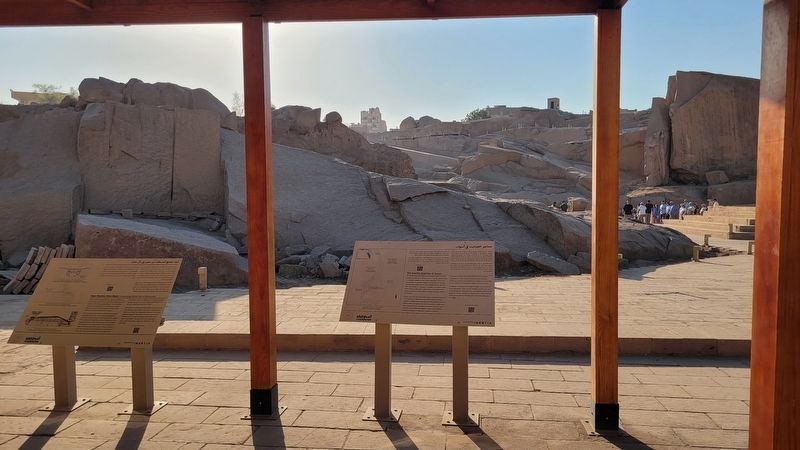
2. The Granite Quarries of Aswan Marker
The view of the Aswan Quarry can be seen in the background of the photo.
Photographed by James Hulse, October 14, 2024
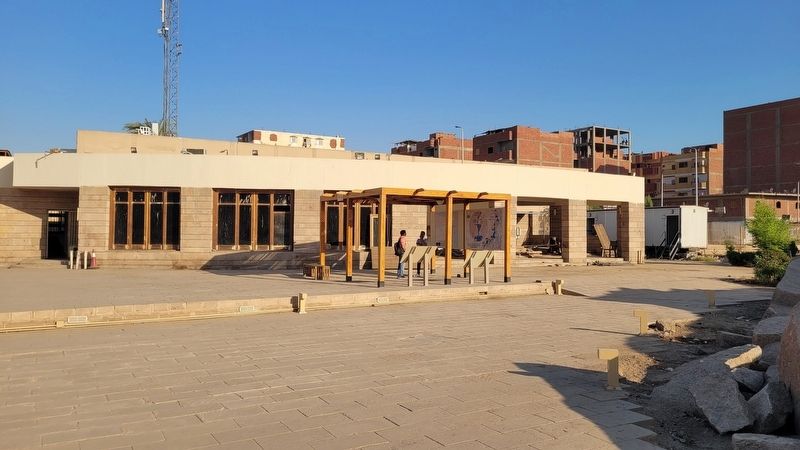
3. The view of the museum and markers
Photographed by James Hulse, October 14, 2024
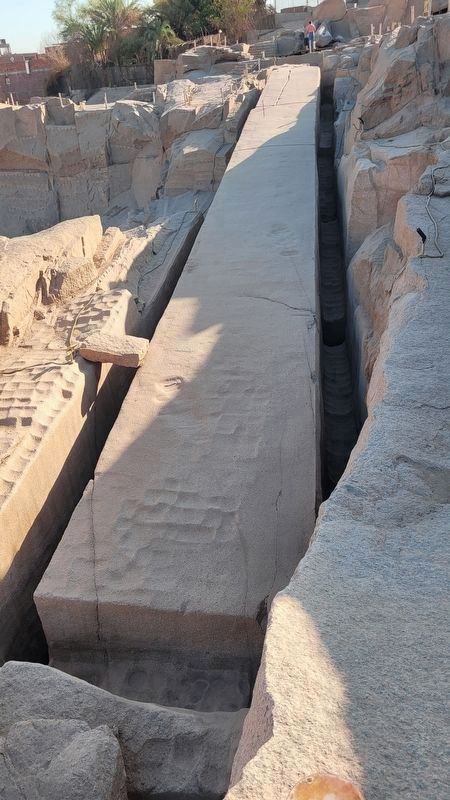
4. The Unfinished Obelisk in the quarry
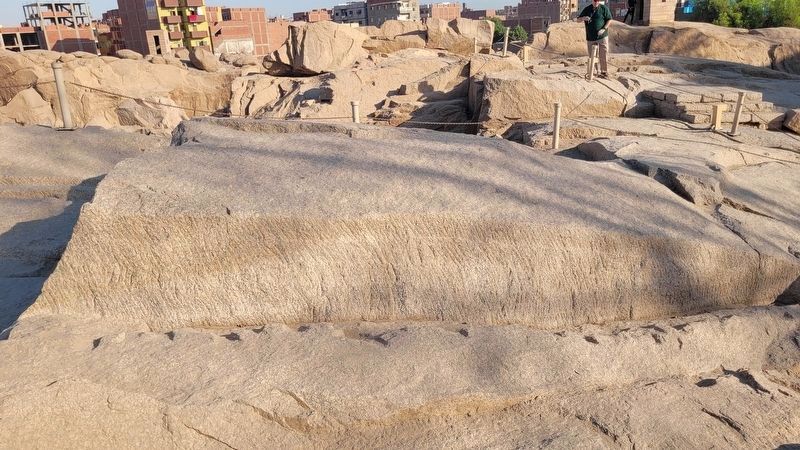
Photographed by James Hulse, October 14, 2024
5. The view of a previously worked piece of granite
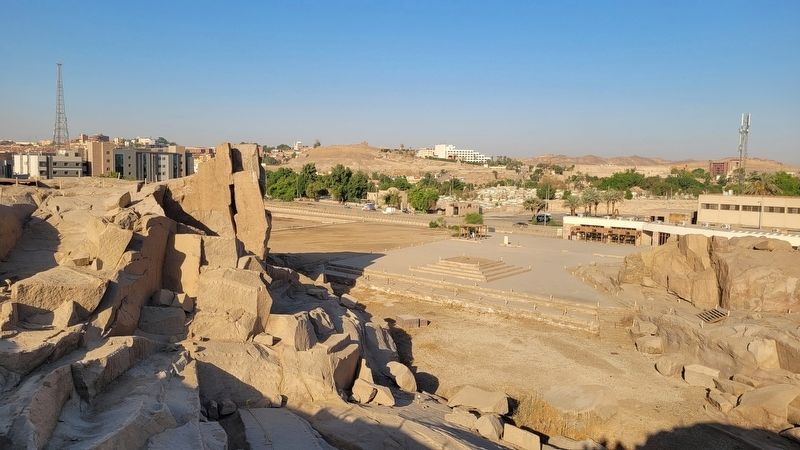
Photographed by James Hulse, October 14, 2024
6. The view from the top of the quarry looking down at the museum
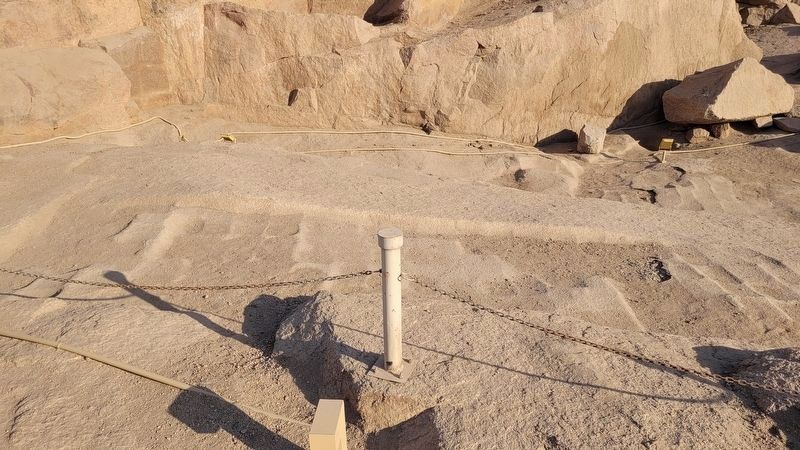
Photographed by James Hulse, October 14, 2024
7. The site of a worked and removed piece of granite
Credits. This page was last revised on December 4, 2025. It was originally submitted on December 2, 2025, by James Hulse of Medina, Texas. This page has been viewed 238 times since then and 178 times this year. Photos: 1, 2, 3, 4, 5, 6, 7. submitted on December 4, 2025, by James Hulse of Medina, Texas.
