Near Lenoir in Caldwell County, North Carolina — The American South (South Atlantic)
Patterson School Foundation
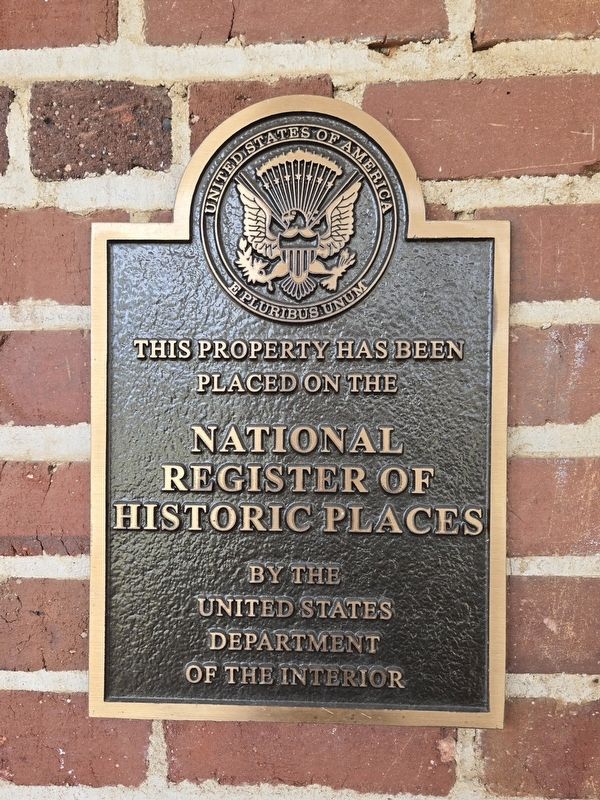
Photographed by Mark Parker, March 23, 2025
1. Patterson School Foundation Marker
placed on the
National Register of
Historic Places
by the
United States
Department
of the Interior
Erected by United States Department of the Interior.
Topics. This historical marker is listed in these topic lists: Agriculture • Education. A significant historical year for this entry is 1909.
Location. 36° 0.712′ N, 81° 31.174′ W. Marker is near Lenoir, North Carolina, in Caldwell County. It can be reached from Patterson School Drive north of North Carolina Route 268, on the left when traveling east. The plaque is near the entrance of Palmyra Hall. Touch for map. Marker is at or near this postal address: 4646 Patterson School Dr, Lenoir NC 28645, United States of America. Touch for directions.

Regionally, this marker is in the Mountains. It is also in the American South, specifically in the Upper South, in Appalachia, and specifically in Southern Appalachia. Globally, it is in North America, the Western Hemisphere, the Western World, and the Anglosphere. Historically, it finds itself in what was once the territory of the Mississippian Culture, one of the original Thirteen
this page online
Other nearby markers. At least 8 other markers are within 3 miles of this marker, measured as the crow flies: Chapel of Rest (approx. 0.4 miles away); Collett Leventhorpe (approx. 0.4 miles away); Revolutionary War Patriots (approx. 1.4 miles away); A Storied Trail (approx. 1.4 miles away); William Lenoir (approx. 1½ miles away); Charles Gordon Jr. (approx. 1½ miles away); Patterson Mill (approx. 2½ miles away); Fort Defiance (approx. 2.6 miles away). Touch for a list and map of all markers in Lenoir.
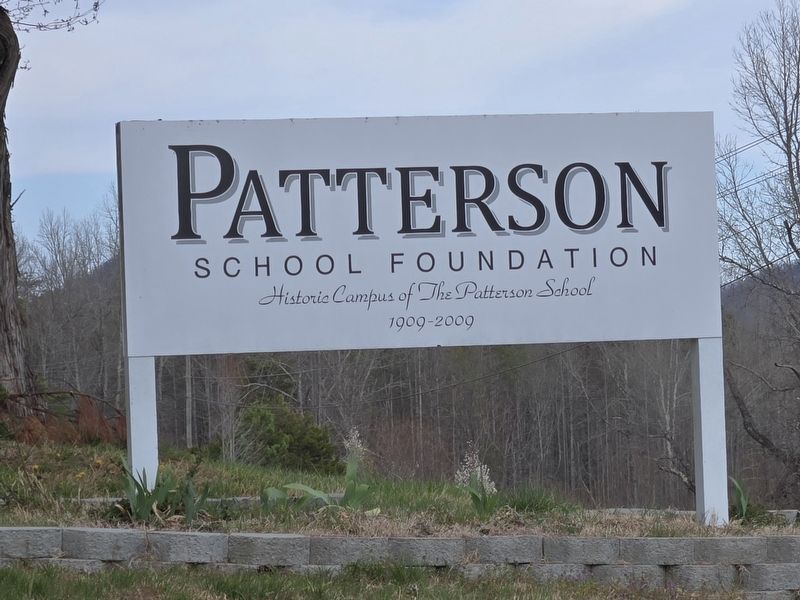
Regarding Patterson School Foundation. Patterson School closed in 2009. It is now managed by the Patterson School Foundation. Excerpts from the Nomination Form for the Patterson School District (#04001368)
Patterson School District
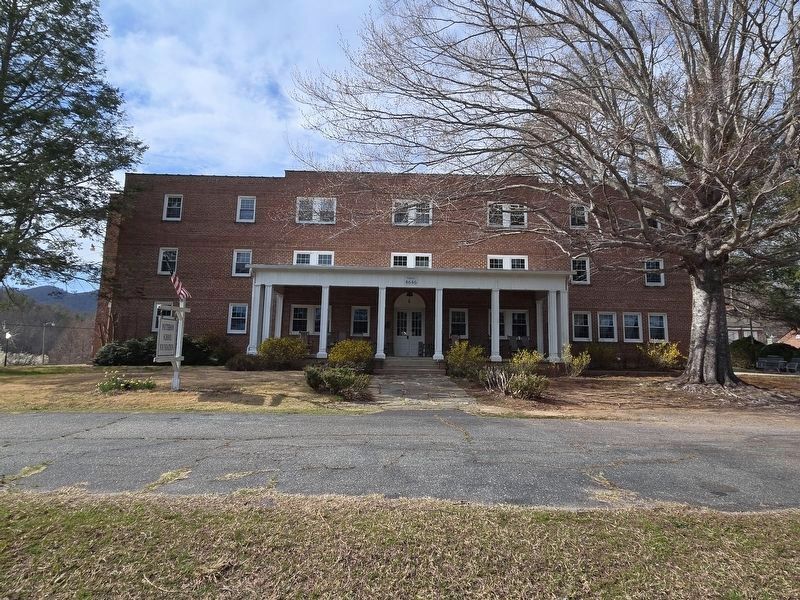
Patterson School Historic District is a rural district composed of approximately 1695 acres containing fifty-three resources. Located in the Yadkin River Valley of westem North Carolina's Caldwell County, the district possesses land elevations that rise more than 1000 feet, ranging from the broad bottom lands of the riverto the 2,200-foot-high ridge of Ripshin Mountain - a distance of approximately 1.7 miles...Photographed by Mark Parker, March 23, 20252. Palmyra Hall. Marker is at the porch to the left of the main entranceFrom the Nomination Form (pg. 9) In 1924 Palmyra, the nineteenth-century home of the Jones and Patterson families and Patterson School's primary building in the early twentieth century, burned. It was replaced in 1927 by Palmyra Hall, a three-story, five-to-one common bond red-brick building with a flat, parapeted roof crowned by a ceramic tile coping...Palmyra Hall was erected with.the help of student labor. Originally, it was used for recitation rooms, dormitory space, an infirmary, and social halls. Today (2004) it is used primarily for administrative offices.
(From page 25)
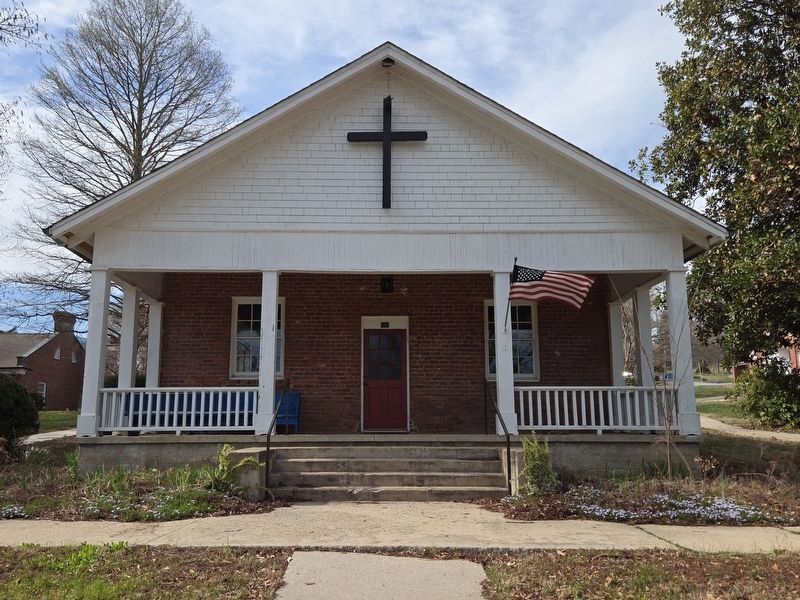
Samuel Legerwood Patterson (1850-1908) conceived of the idea for the school and gave the land on which it developed. As North Carolina's first commissioner of agriculture between 1893 and his death in 1908, Patterson pushed for the advancement of agricultural practices in the state. His progressive influence lasted beyond his death through Patterson School. In his will, Patterson bequeathed his Palmyra property (after the death of his wife, which occurred in 1909) to the trustees of the Episcopal Church's Missionary Jurisdiction of Asheville - which included twenty-seven counties in western North Carolina - for the purpose of erecting and maintaining an agricultural and industrial school for boys. The new school was one of three operated by the Episcopal Church in western North Carolina to offer instmction at the high school level. Patterson School opened in 1909 with twenty-two students; by 1922 the student body had grown to seventy-five. Although the school taught academic subjects as well as practical courses in farming, itsprimary goal was to train mountain boys, many of them poor, to be good farmers. In the process, Patterson School also became recognized as a model agricultural and mission school, and its farm operation was used by both state and federal agencies as a demonstration of sound land use and farm management.Photographed by Mark Parker, March 23, 20253. Sarah Joyce Lenoir Memorial Chapel(from a plaque over the front entrance) Originally erected as a library, it was converted into a chapel in 1951. It took on the name of Lenoir at its consecration in 1958.
Also see . . .
1. Patterson School District Nomination Form (pdf). Nomination Form prepared by Laura A. W. Phillips, Architectural Historian, Winston-Salem (Submitted on December 9, 2025, by Mark Parker of Hickory, North Carolina.)
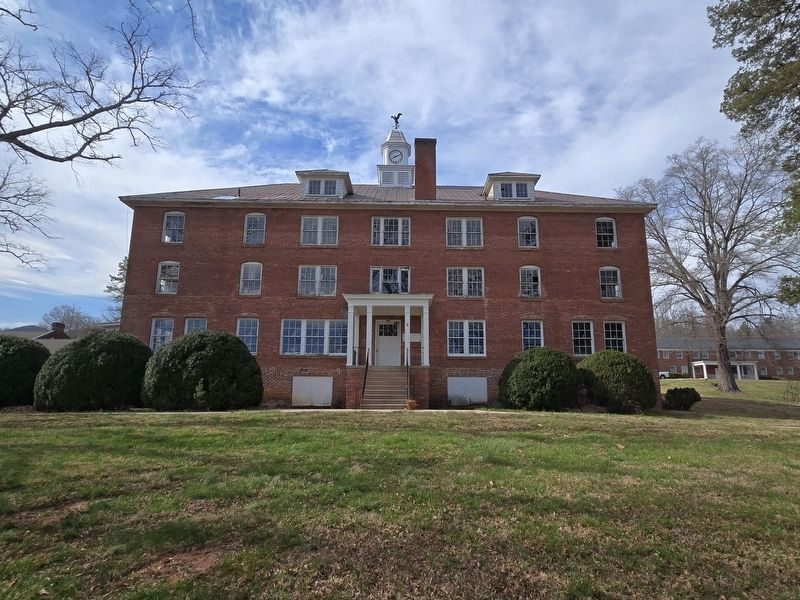
2. Patterson School Foundation.Patterson School Foundation is a non-profit organization located in Caldwell County, North Carolina. It was founded to preserve the history and legacy of the Patterson School, an educational institution that operated from 1909 until 2009. The foundation’s mission is to preserve the buildings and grounds of the Patterson School, as well as its archives and artifacts, in order to promote education, historical preservation, and community engagement. The foundation promotes education, innovation, and sustainable agriculture practices through(Submitted on December 9, 2025, by Mark Parker of Hickory, North Carolina.)the Incubator Farm Program. The foundation also offers educational programs, tours, and events to the public, and seeks to honor the legacy of the Patterson School and its contributions to the local community and beyond.Photographed by Mark Parker, March 23, 20254. Gard Hall at Patterson School District(From pg. 10 of the Nomination Form)Lenoir resident Caroline S. Gard provided $10,000 to build Gard Hall as a memorial to her late husband, Charles. Originally the building was used for classrooms, offices, dormitory, chapel, dining room, and kitchen, but today it serves as the school library and as school officePhotographed by Mark Parker, March 23, 20255. Patterson School Foundation Sign
Credits. This page was last revised on December 15, 2025. It was originally submitted on December 9, 2025, by Mark Parker of Hickory, North Carolina. This page has been viewed 121 times since then and 92 times this year. Photos: 1, 2, 3, 4, 5. submitted on December 9, 2025, by Mark Parker of Hickory, North Carolina. • Bernard Fisher was the editor who published this page.