Culpeper in Culpeper County, Virginia — The American South (Mid-Atlantic)
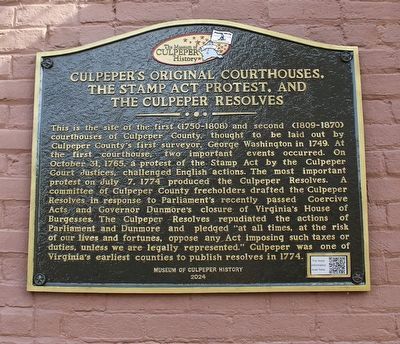
Culpeper's Original Courthouses, The Stamp Act, and The Culpeper Resolves
Photographed by Evan Dwyer, October 25, 2025
1. Culpeper's Original Courthouses, The Stamp Act, and The Culpeper Resolves Marker
Erected 2024 by The Museum of Culpeper History.
Topics. This historical marker is listed in these topic lists: Colonial Era • Patriots & Patriotism. A significant historical date for this entry is July 7, 1774.
Location. 38° 28.41′ N, 77° 59.757′ W.
this page online

Regionally, this marker is in the Washington Metropolitan Area and in Northern Virginia. It is also in the American South, specifically in the Upper South, and in the Mid-Atlantic. Globally, it is in North America, the Western Hemisphere, the Western World, and the Anglosphere. Historically, it finds itself in what was once the territory of the Mississippian Culture, one of the original Thirteen Colonies, one of the Confederate States of America, and the Antebellum South.
Other nearby markers. At least 8 other markers are within walking distance of this marker: George Washington (within shouting distance of this marker); The Gallant Pelham (within shouting distance of this marker); “Gallant” Pelham’s Last Days (about 300 feet
Photographed by Evan Dwyer, October 25, 2025
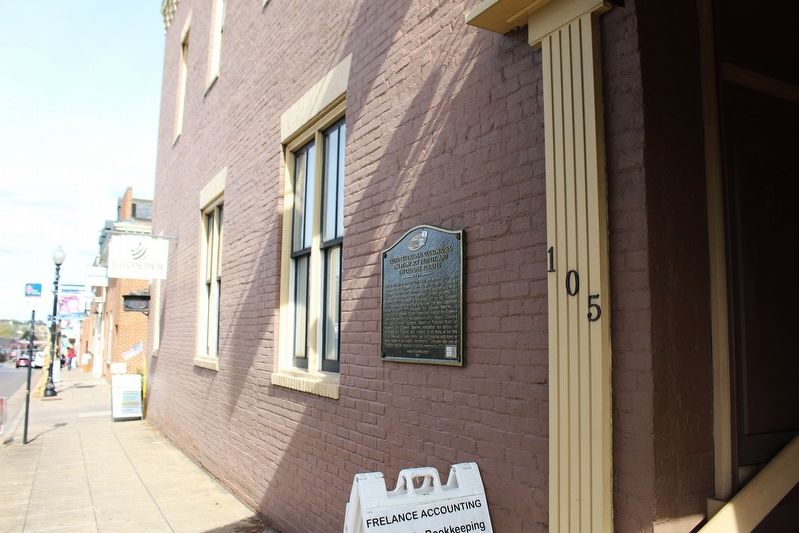
2. Culpeper's Original Courthouses, The Stamp Act, and The Culpeper Resolves Marker
Another marker is no longer nearby. A.P. Hill's Boyhood Home (was within shouting distance of this marker but has been confirmed missing).
Photographed by Timothy H. O'Sullivan, circa 1862
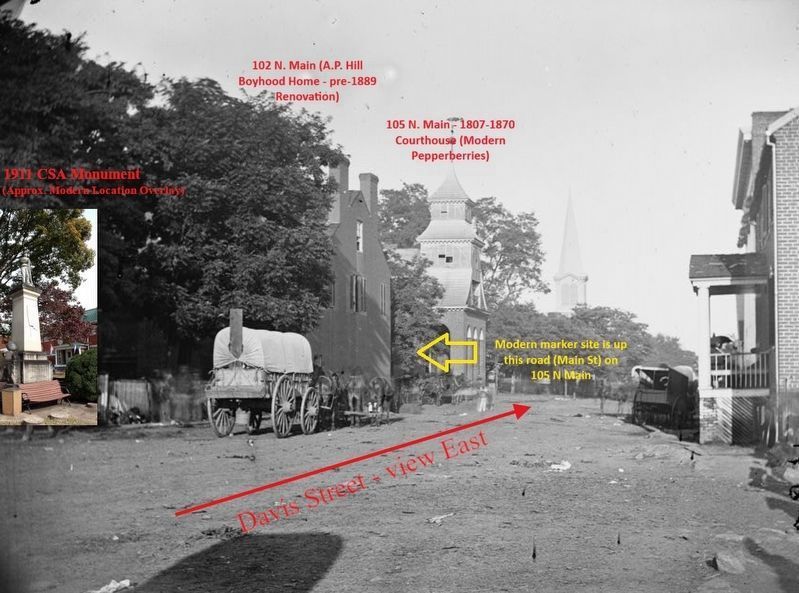
3. Culpeper Courthouse (1807-1870) 1862 View
This well-known image from the Library of Congress (LOC Ctrl # 2018666217) shows Culpeper in 1862, looking east from W Davis St. The photograph shows how the A.P. Hill Boyhood Home (today a towering Italianate Villa on the corner of W. Davis & N. Main, thanks to renovations in the late 19th century) stood across Main Street from the courthouse - the marker described on this page marks this old courthouse location. An overlay of the 1911 Confederate Monument is included at left to orient the viewer, since the third courthouse (built 1870-4 on a lot out of view to the left to replace the one visible in this photo) was constructed in a different location and does not represent the historic courthouse site. The yellow arrow points up Main Street to the north towards the modern location of this marker on what is today the boutique store "Pepperberries." The old courthouse was dismantled in 1871.
Photographed by Evan Dwyer, October 25, 2025
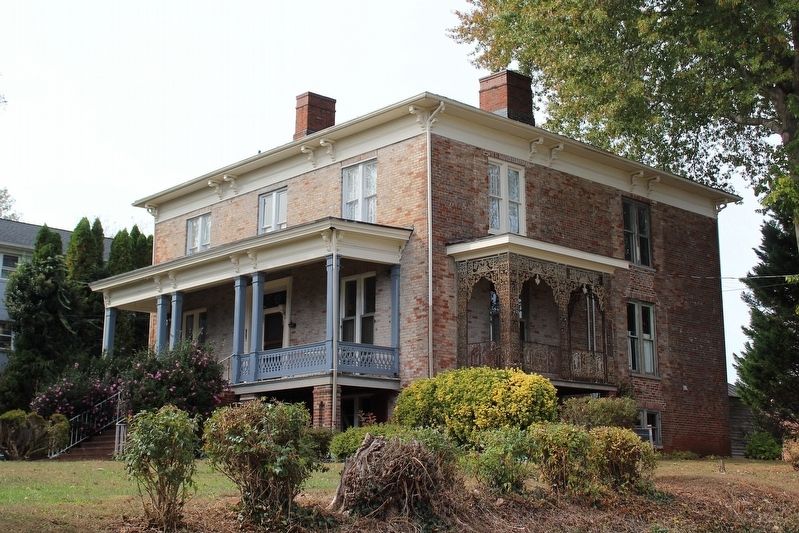
4. Courthouse Remains
Ex-Confederate Major Charles Waite purchased bricks from the second (1807-1870) courthouse for $500 when the building was dismantled. Those bricks were then used to build his home at 502 S. East Street in 1871 - that home, and the bricks from that dismantled historic courthouse, is visible to passing pedestrians and cars from the street and sidewalk (the house itself is private property and a residence).
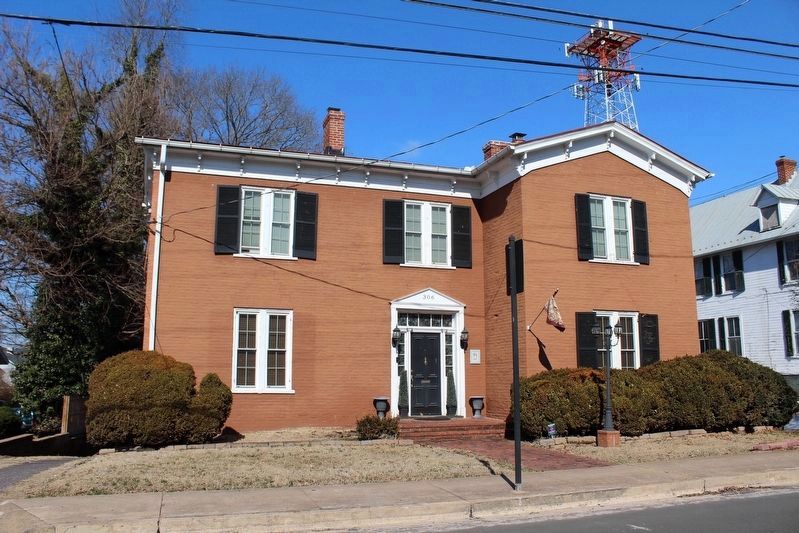
Photographed by Evan Dwyer, February 16, 2026
5. 1871 Allan House
Another home in the town of Culpeper built from bricks of the second (1807-1870) courthouse (private property and a private residence) stands on Piedmont Street.
Credits. This page was last revised on August 1, 2026. It was originally submitted on December 28, 2025, by Evan Dwyer of Richmond, Virginia. This page has been viewed 95 times since then and 66 times this year. Photos: 1, 2, 3, 4. submitted on December 28, 2025, by Evan Dwyer of Richmond, Virginia. 5. submitted on August 1, 2026, by Evan Dwyer of Richmond, Virginia. • Bernard Fisher was the editor who published this page.
