Central Ward in Newark in Essex County, New Jersey — The American Northeast (Mid-Atlantic)
The Founders
Photographed by Devry Becker Jones (CC0), January 2, 2026
1. The Founders Marker
Inscription.
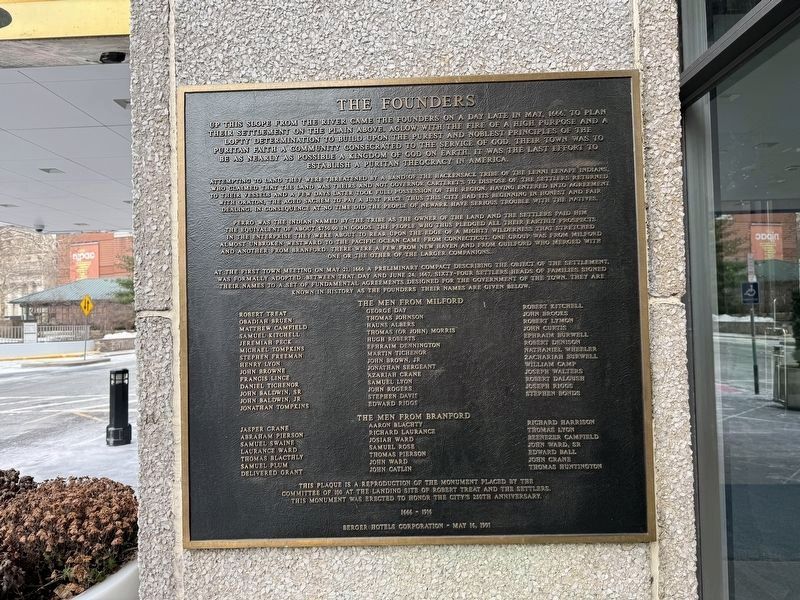
The Founders. . , Up this slope from the river came the founders on a day late in May, 1666. To plan their settlement on the plain above, aglow with the fire of a high purpose and a lofty determination to build up on the purest and noblest principles of the Puritan faith a community consecrated to the service of God. Their town was to be as nearly as possible a Kingdom of God on Earth. It was the last effort to establish a Puritan theocracy in America., Attempting to land they were threatened by a band of the Hackensack Tribe of the Lenni Lenape Indians, who claimed that the land was theirs and not Governor Carteret's to dispose of. The settlers returned to their vessels and a few days later took full possession of the region, having entered into agreement with oration, the aged Sachem to pay a just price. Thus this city had its beginning in honest and fair dealing. In consequence, at no time did the people of Newark have a serious trouble with the Natives., Perro was the Indian named by the tribe as the owner of the land and the settlers paid him the equivalent of about $750.00 in goods. The people who thus pledged all their earthly prospects in the enterprise they were about to rear upon the edge of a mighty wilderness that stretched almost unbroken westward to the Pacific Ocean came from Connecticut. One group was from Milford and another from Branford. There were a few from New Haven and from Guilford who merged with one or the other of the larger companions., At first the town meeting on May 21, 1666 a preliminary compact describing the object of the settlement, was formally adopted. Between that day and June 24, 1667, sixty-four settlers heads of families signed their names to a set of fundamental agreements designed for the government of the town. They are known in history as the founders their names are given below.
The Men from Milford. Robert Treat . Obadiah Bruen . Matthew Camfield . Samuel Kitchell . Jeremiah Peck . Michael Tompkins . Stephen Freeman . Henry Lyon . John Browne . Francis Lince . Daniel Tichenor . John Baldwin, Sr . John Baldwin, Jr . Jonathan Tompkins . George Day . Thomas Johnson . Hauns Albers . Thomas (or John) Morris . Hugh Roberts . Ephraim Dennington . Martin Tichenor . John Brown, Jr . Jonathan Sergeant . Azariah Crane . Samuel Lyon . John Rogers . Stephen Davis . Edward Riggs . Robert Kitchell . John Brooks . Robert Lymon . John Curtis . Ephraim Burwell . Robert Denison . Nathaniel Wheeler . Zachariah Burwell . William Camp . Joseph Walters . Robert DDalgush . Joseph Riggs . Stephen Bonds,
The Men from Branford. Jasper Crane . Samuel Swaine . Laurance Ward . Thomas Blachtly . Samuel Plum . Delivered Grant . Aaron Blachty . Richard Laurance . Josiah Ward . Samuel rose . Thomas Pierson . John Ward . John Catlin . Richard Harrison . Thomas Lyon . Beenezer Camfield . John Ward, Sr . Edward Ball . John Crane . Thomas Huntington, This plaque is a reproduction of the monument placed by the Committee of 100 at the landing site of Robert Treat and the settlers. This monument was erected to honor the city's 250th anniversary.,
1666 - 1916.
Up this slope from the river came the founders on a day late in May, 1666. To plan their settlement on the plain above, aglow with the fire of a high purpose and a lofty determination to build up on the purest and noblest principles of the Puritan faith a community consecrated to the service of God. Their town was to be as nearly as possible a Kingdom of God on Earth. It was the last effort to establish a Puritan theocracy in America.
Attempting to land they were threatened by a band of the Hackensack Tribe of the Lenni Lenape Indians, who claimed that the land was theirs and not Governor Carteret's to dispose of. The settlers returned to their vessels and a few days later took full possession of the region, having entered into agreement with oration, the aged Sachem to pay a just price. Thus this city had its beginning in honest and fair dealing. In consequence, at no time did the people of Newark have a serious trouble with the Natives.
Perro was the Indian named by the tribe as the owner of the land and the settlers paid him the equivalent of about $750.00 in goods. The people who thus pledged all their earthly
Click or scan to see this page online
prospects in the enterprise they were about to rear upon the edge of a mighty wilderness that stretched almost unbroken westward to the Pacific Ocean came from Connecticut. One group was from Milford and another from Branford. There were a few from New Haven and from Guilford who merged with one or the other of the larger companions.
At first the town meeting on May 21, 1666 a preliminary compact describing the object of the settlement, was formally adopted. Between that day and June 24, 1667, sixty-four settlers heads of families signed their names to a set of fundamental agreements designed for the government of the town. They are known in history as the founders their names are given below.
The Men from Milford
Robert Treat
Obadiah Bruen
Matthew Camfield
Samuel Kitchell
Jeremiah Peck
Michael Tompkins
Stephen Freeman
Henry Lyon
John Browne
Francis Lince
Daniel Tichenor
John Baldwin, Sr
John Baldwin, Jr
Jonathan Tompkins
George Day
Thomas Johnson
Hauns Albers
Thomas (or John) Morris
Hugh Roberts
Ephraim Dennington
Martin Tichenor
John Brown, Jr
Jonathan Sergeant
Azariah Crane
Samuel Lyon
John Rogers
Stephen Davis
Edward Riggs
Robert Kitchell
John Brooks
Robert Lymon
John Curtis
Ephraim Burwell
Robert Denison
Nathaniel Wheeler
Zachariah Burwell
William Camp
Joseph Walters
Robert DDalgush
Joseph Riggs
Stephen Bonds
The Men from Branford
Jasper Crane
Samuel Swaine
Laurance Ward
Thomas Blachtly
Samuel Plum
Delivered Grant
Aaron Blachty
Richard Laurance
Josiah Ward
Samuel rose
Thomas Pierson
John Ward
John Catlin
Richard Harrison
Thomas Lyon
Beenezer Camfield
John Ward, Sr
Edward Ball
John Crane
Thomas Huntington
This plaque is a reproduction of the monument placed by the Committee of 100 at the landing site of Robert Treat and the settlers. This monument was erected to honor the city's 250th anniversary.
1666 - 1916
Erected 1991
Photographed by Devry Becker Jones (CC0), January 2, 2026
Location. 40° 44.349′ N, 74° 10.107′ W. Marker is in Newark, New Jersey, in Essex County. It is in the Central Ward. It is on Park Place / Wayne Shorter Way south of Center Street, on the right when traveling north. Touch for map. Marker is at or near this postal address: 42 Park Pl, Newark NJ 07102, United States of America. Touch for directions.

Regionally, this marker is in North Jersey and in the New York City Metropolitan Area. It is also in the American Northeast, in the Mid-Atlantic, and on the Eastern Seaboard. Globally, it is in the North Atlantic Region, North America, the Western Hemisphere, the Western World, and the Anglosphere. Historically, it finds itself in what was once New Netherland and also one of the original Thirteen Colonies.
Credits. This page was last revised on January 3, 2026. It was originally submitted on January 3, 2026, by Devry Becker Jones of Washington, District of Columbia. This page has been viewed 75 times since then. Photos:1, 2. submitted on January 3, 2026, by Devry Becker Jones of Washington, District of Columbia.
