Gambles Hill in Richmond, Virginia — The American South (Mid-Atlantic)
Tredegar Spike Mill
Photographed by Bernard Fisher, November 3, 2009
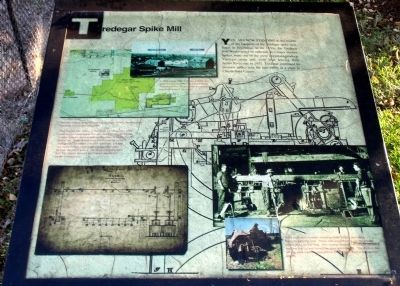
1. Tredegar Spike Mill Marker
Topics. This historical marker is listed in these topic lists: Industry & Commerce • Railroads & Streetcars. A significant historical year for this entry is 1957.
Location. Marker has been permanently removed. It was located near 37° 32.161′ N, 77° 26.767′ W. Marker was in Richmond, Virginia. It was in Gambles Hill. It could be reached from Tredegar Street 0.1 miles west of South 5th Street. This marker is located outside the Civil War Visitor Center at Tredegar Iron Works. Touch for map. Marker was at or near this postal address: 470 Tredegar Street, Richmond VA 23219, United States of America.
We have been informed that this marker is no longer there and will not be replaced. This page is an archival view of what was.
Regionally, this
this page online

Other nearby markers. within walking distance of this location: Touch for a list and map of all markers in Richmond.
Other markers no longer nearby. Rutherfoord’s Mill (was a few steps from this marker but has been permanently removed); Cupolas from the Virginia State Penitentiary (was within shouting distance of this marker but has been permanently removed); Worker Housing (was within shouting distance of this marker but has been permanently removed); Rail Lines at Tredegar (was within shouting distance of this marker but has been permanently removed); President Lincoln Visits Richmond (was within shouting distance of this marker but has been confirmed missing); The Canal and the Civil War (was within shouting distance
Photographed by Bernard Fisher, November 3, 2009
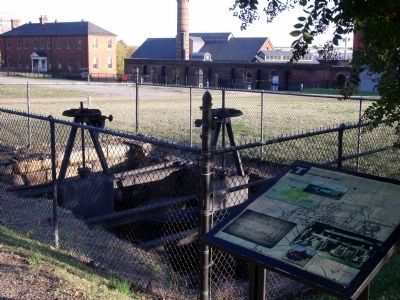
2. Tredegar Spike Mill Marker
More about this marker.
Photographed by Bernard Fisher, November 8, 2009
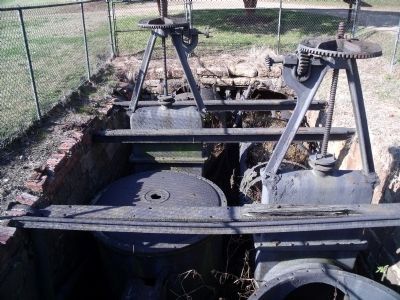
3. Spike Mill water turbines
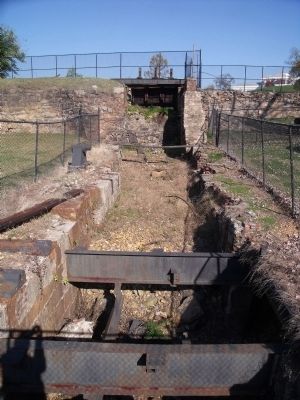
On the lower left is a schematic of the mill's power plant with the caption, “From the mid-19th century to the 1950s the rolling mills, spike machines and other equipment were powered through the use of water turbines, sophisticated water wheels housed in the pit behind you. Water flowed down the hill from the canal in underground “raceways” (the brick openings), and was channeled through metal tubes into the metal cases you can see below ground. The shafts coming upward from the turbines turned a set of gears, transferring power to equipment."
On the lower right is a photograph of a mill in operation with the caption, “Spike production involved reheating meta “billets,” and rolling them into long thin rods. These rods would then be cut into
Photographed by Bernard Fisher, November 8, 2009
4. Spike Mill raceway from the canal
Credits. This page was last revised on January 20, 2026. It was originally submitted on November 11, 2009, by Bernard Fisher of Richmond, Virginia. This page has been viewed 949 times since then and 20 times this year. Last updated on January 19, 2026, by Evan Dwyer of Richmond, Virginia. Photos: 1, 2, 3, 4. submitted on November 11, 2009, by Bernard Fisher of Richmond, Virginia. • Devry Becker Jones was the editor who published this page.
