Downtown Market District in Olympia in Thurston County, Washington — The American West (Northwest)
Market District
WWII U.S. Merchant Marine Anchors
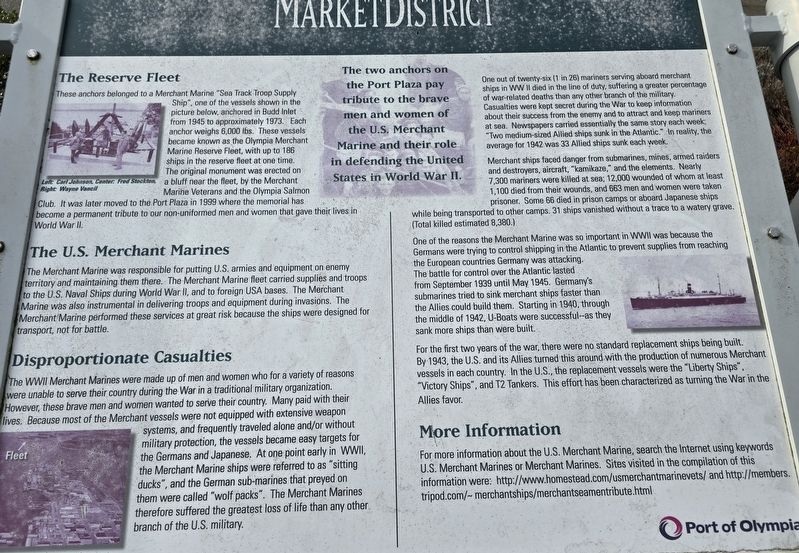
Photographed by Shirley A Stirling, February 6, 2026
1. Market District Marker
The Reserve Fleet
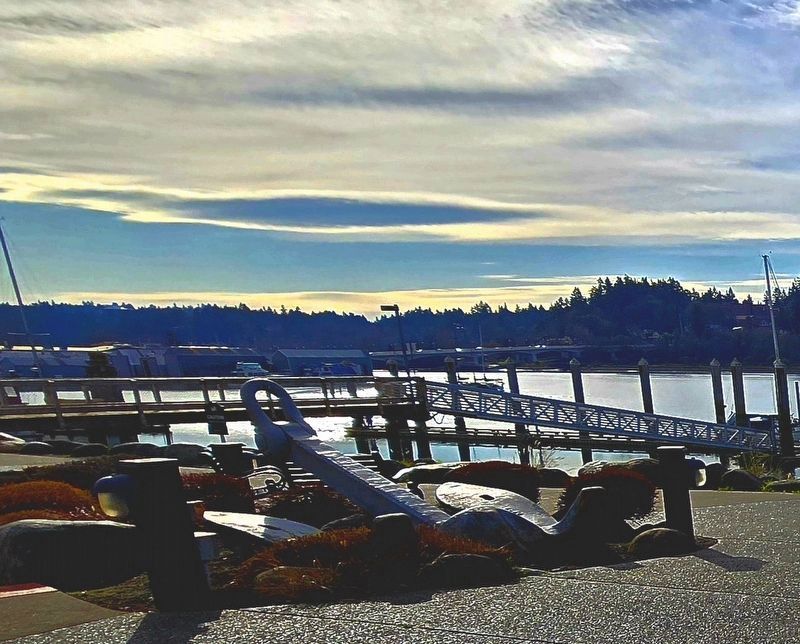
These anchors belonged to a Merchant Marine "Sea Track Troop Supply Ship", one of the vessels shown in the picture below, anchored in Budd Inlet from 1945 to approximately 1973. Each anchor weighs 6,000 lbs. These vessels became known as the Olympia Merchant Marine Reserve Fleet, with up to 186 ships in the reserve fleet at one time. The original monument was erected on a bluff near the fleet, by the Merchant Veterans and the Olympia Salmon Club. It was later moved to the Port Plaza in 1999 where the memorial has become a permanent tribute to our non-uniformed men and women that gave their lives in World War II.
The U.S. Merchant Marines
The Merchant Marine was responsible for putting U.S. armies and equipment on enemy territory and maintaining them there. The Merchant Marine fleet carried supplies and troops to the U.S. Naval Ships during World War II, and to foreign USA bases. The Merchant Marine was also instrumental in delivering
this page online
Disproportionate Casualties
The WWII Merchant Marines were made up of men and women who, for a variety of reasons, were unable to serve their country during the War in a traditional military organization. However, these brave men and women wanted to serve their country. Many paid with their lives. Because most of the Merchant vessels were not equipped with extensive weapon systems, and frequently traveled alone and/or without military protection, the vessels became easy targets for the Germans and Japanese. At one point early in WWII, the Merchant Marine ships were referred to as "sitting ducks", and the German submarines that preyed on them were called "wolf packs". The Merchant Marines therefore suffered the greatest loss of life than any other branch of the U.S. military.
One out of twenty-six (1 in 26) mariners serving aboard merchant ships in WW II died in the line of duty, suffering a greater percentage of war-related deaths than any other branch of the military. Casualties
Photographed by Shirley A Stirling, February 6, 2026
2. The two anchors
These are the two anchors described in the marker. Each weighs 6,000 lbs.
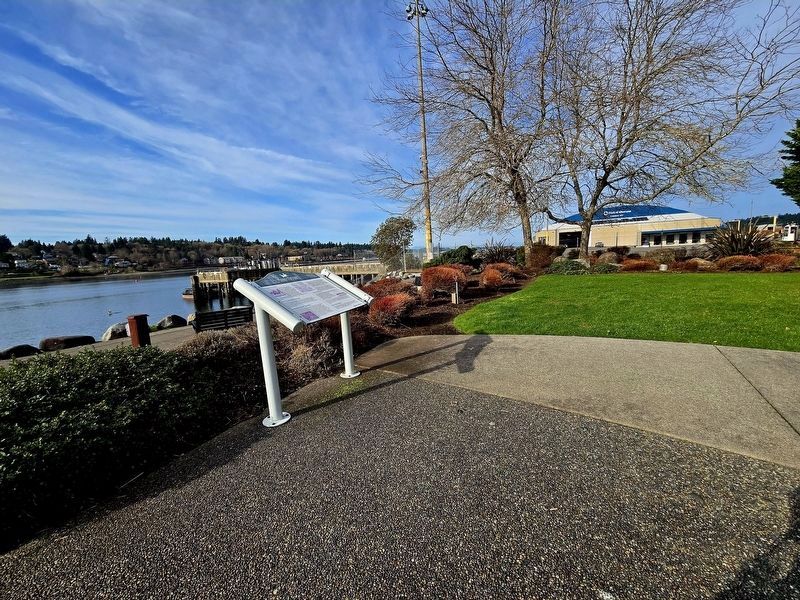
Photographed by Shirley A Stirling, February 6, 2026
3. The Port of Olympia is to the right.
For the first two years of the war, there were no standard replacement ships being built. By 1943, the U.S. and its Allies turned this around with the production of numerous Merchant vessels in each country. In the U.S., the replacement vessels were the "Liberty Ships," "Victory Ships," and T2 Tankers. This effort has been characterized as turning the War in the Allies favor.
Erected by Port of Olympia.
Topics. This historical marker is listed in these topic lists: Industry & Commerce • War, World II • Waterways & Vessels. A significant historical year for this entry is 1945.
Location. 47° 3.053′ N, 122° 54.279′ W. Marker is in Olympia, Washington, in Thurston County. It is in the Downtown Market District. It can be reached from the intersection of Columbia Street Northwest and Corky Ave NW. Touch for map. Marker is at or near this postal address: 701 Columbia St NW, Olympia WA 98501, United States of America. Touch for directions.

Regionally, this marker is in the Puget Sound Region and in Greater Seattle. It
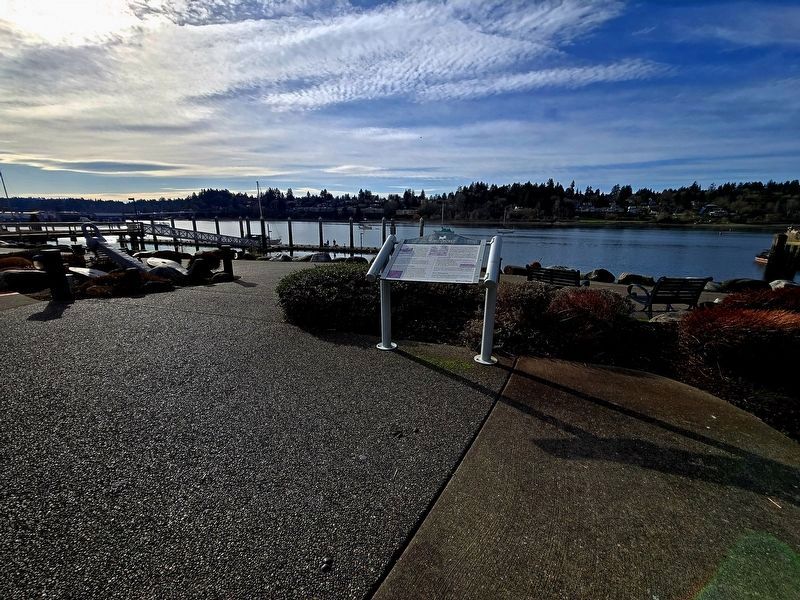
Photographed by Shirley A Stirling, February 6, 2026
4. Anchors in context with the marker
To the left of the Market District Marker, you can see the anchors.
Other nearby markers. At least 8 other markers are within walking distance of this marker: Olympia Lodge No. 1 F. & A.M. (approx. 0.3 miles away); Working Waterfront (approx. 0.4 miles away); Tribute to Family Support Center Founders (approx. 0.4 miles away); Old City Hall and Fire Station (approx. 0.4 miles away); Billy the man (approx. half a mile away); Howard Point - An Olympia Black History Landmark (approx. 0.6 miles away); Marking the End of the Oregon Trail (approx. 0.6 miles away); John Rankin Rogers (approx. 0.6 miles away). Touch for a list and map of all markers in Olympia.
More about this marker. Lower right corner: Port of Olympia logo.
Also see . . .
1. Merchant Marine Vets. (Submitted on February 6, 2026, by Shirley A Stirling of Lacey, Washington.)
2. The Allied Merchant Navy of World War Two. Website homepage (Submitted on February 6, 2026, by Shirley A Stirling of Lacey, Washington.)
Photographed by Shirley A Stirling, February 6, 2026
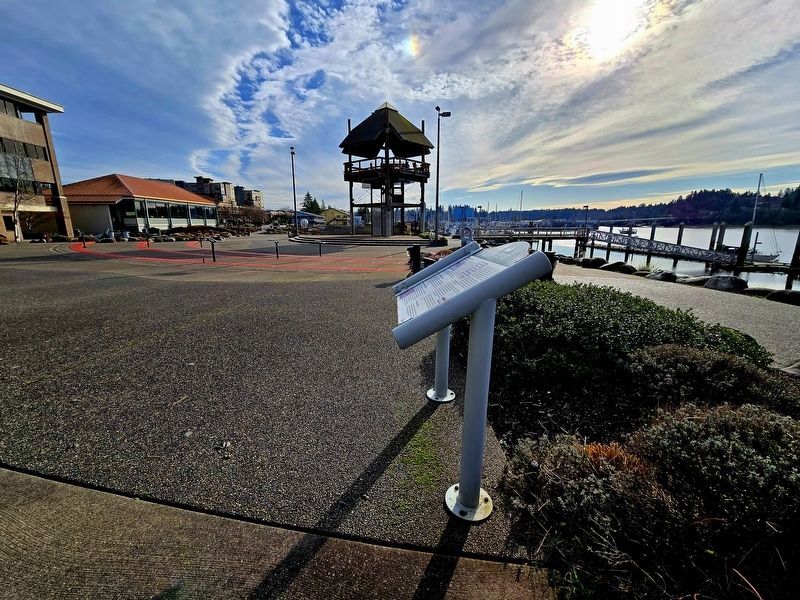
5. Observation tower
From the marker, you can see the observation tower intended for people strolling the boardwalk and Percival Landing to climb.
Photographed by Shirley A Stirling, February 6, 2026
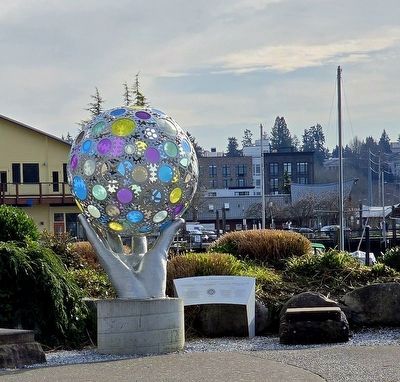
6. Public Art
This sculpture is visible, at a distance, from the marker.
Credits. This page was last revised on February 7, 2026. It was originally submitted on February 6, 2026, by Shirley A Stirling of Lacey, Washington. This page has been viewed 60 times since then. Photos: 1, 2, 3, 4, 5, 6. submitted on February 6, 2026, by Shirley A Stirling of Lacey, Washington. • James Hulse was the editor who published this page.
