San Luis in Costilla County, Colorado — The American Mountains (Southwest)
San Luis
Photographed by Cosmos Mariner, July 12, 2025
1. San Luis Marker
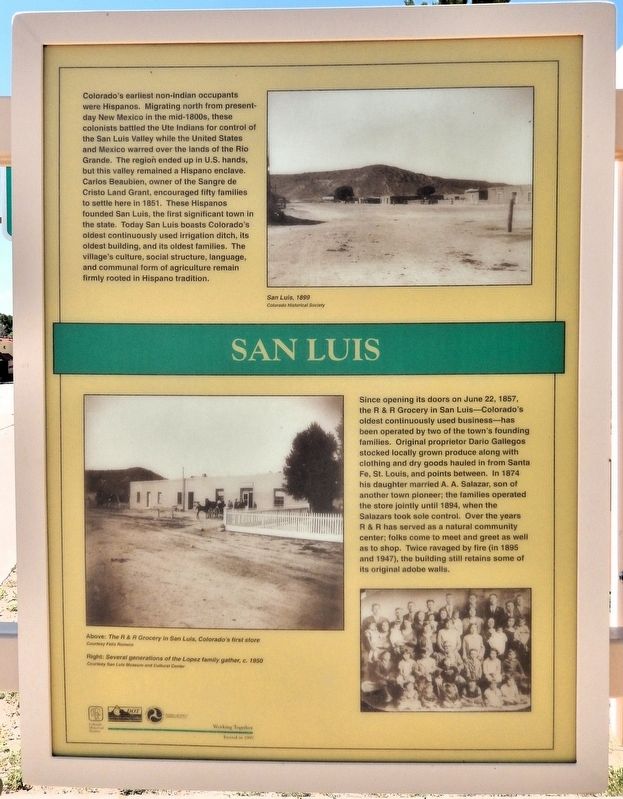
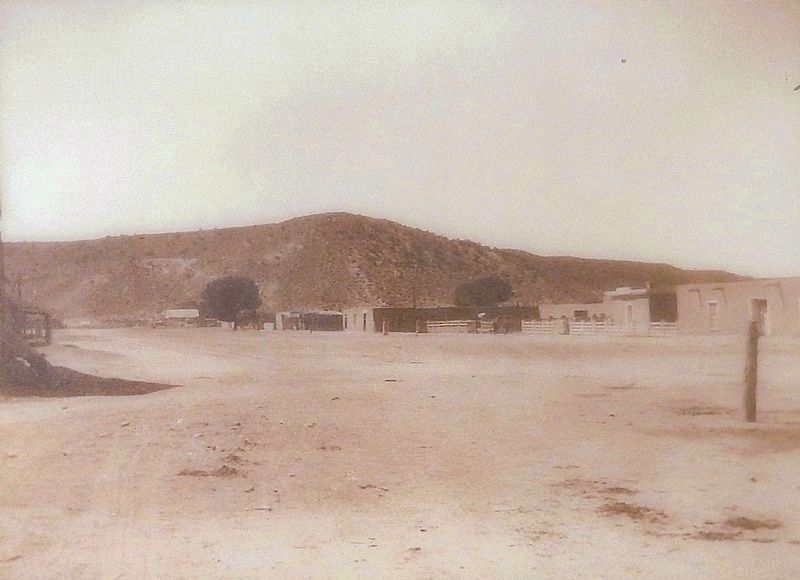
Colorado's earliest non-Indian occupants were Hispanos. Migrating north from present-day New Mexico in the mid-1800s. These colonists battled the Ute Indians for control of the San Luis Valley while the United States and Mexico warred over the lands of the Rio Grande. The region ended up in U.S. hands, but this valley remained a Hispano enclave. Carlos Beaubien, owner of the Sangre de Cristo Land Grant, encouraged fifty families to settle here in 1851. These Hispanos founded San Luis, the first significant town in the state. Today San Luis boasts Colorado's oldest continuously used irrigation ditch, its oldest building, and its oldest families. The village's culture, social structure, language, and communal form of agriculture remain firmly rooted in Hispano tradition.
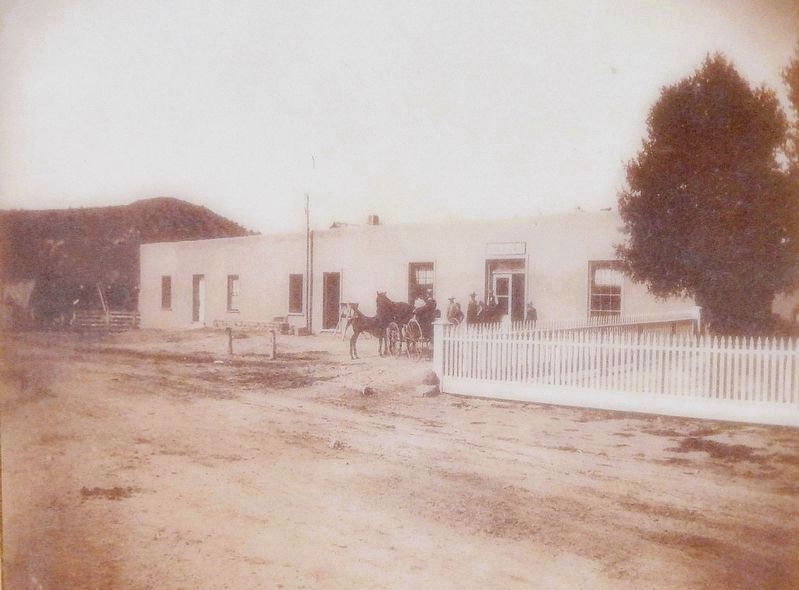
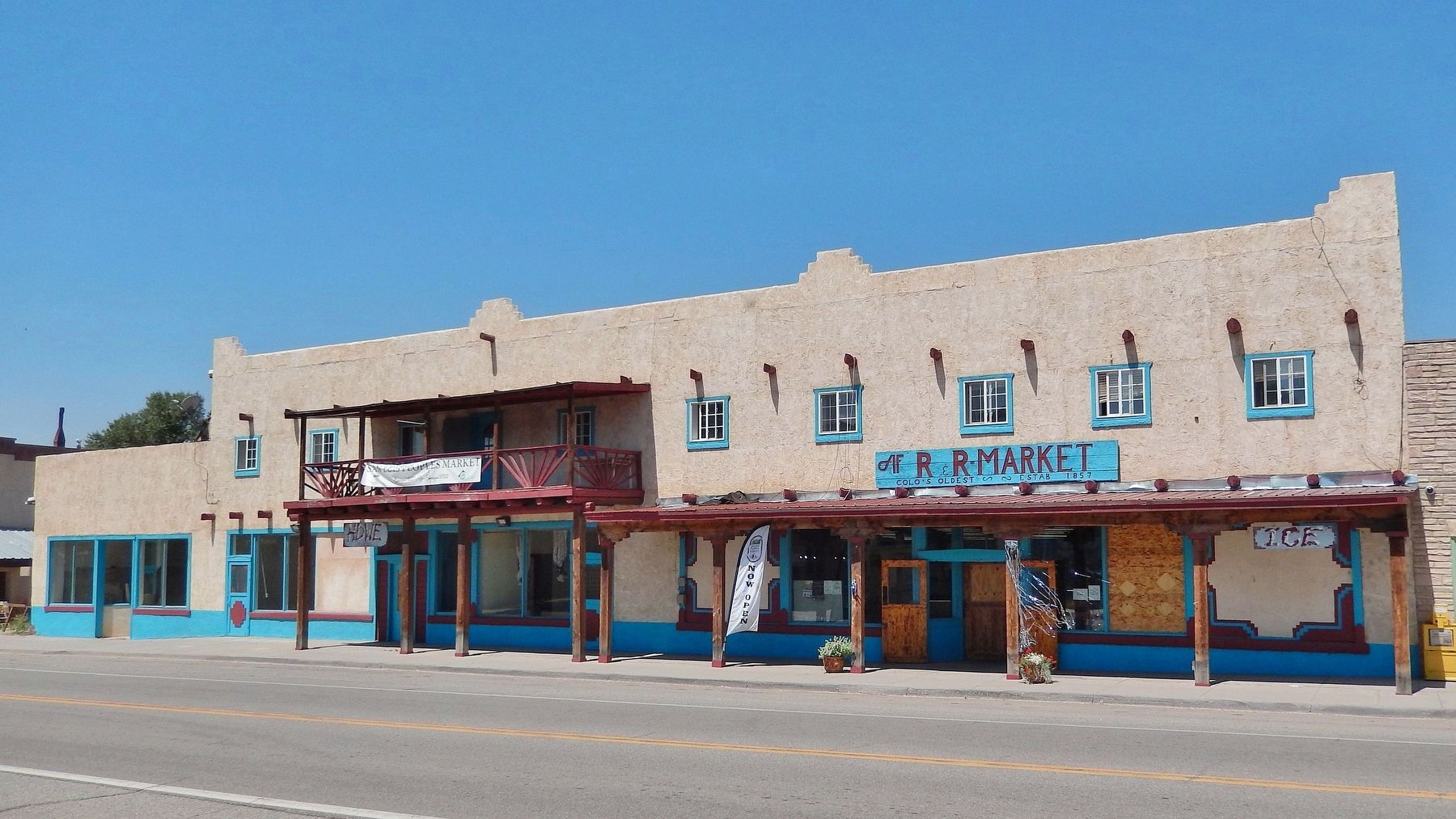
Since opening its doors on June 22, 1857, the R & R Grocery in San Luis — Colorado's oldest continuously used business — has been operated by two of the town's founding families. Original proprietor Dario Gallegos stocked locally grown produce along with clothing and dry goods hauled in from Santa Fe, St. Louis, and points between. In 1874 his daughter married
this page online
[photo captions]
• Several generations of the Lopez family gather, c. 1950
Erected 1997 by Colorado Historical Society, Colorado Department of Transportation, and Federal Highway Administration.
Topics and series. This historical marker is listed in these topic lists: Hispanic Americans • Settlements & Settlers. In addition, it is included in the History Colorado series list. A significant historical year for this entry is 1851.
Location. 37° 12.043′ N, 105° 25.561′ W. Marker is in San Luis, Colorado, in Costilla County. It is on Main Street (State Highway 159) just north of State Highway 142, on the left when traveling north. The marker is on the sidewalk at the north end of the Stations of the Cross Park Picnic Area. Touch for map. Marker is in this post office area: San Luis CO 81152,
Colorado Historical Society
2. Marker detail: San Luis, 1899

Regionally, this marker is in the San Juan Mountains and in the San Luis Valley. It is also in the American Mountain West. Globally, it is in North America, the Rocky Mountains, the Western Hemisphere, the Western World, and the Anglosphere. Historically, it finds itself in what was once New Spain and also the Republic of Texas.
Other nearby markers. At least 8 other markers are within walking distance of this marker: San Luis Valley Country (here, next to this marker); Hispano Folkways (here, next to this marker); Acequias (here, next to this marker); Plaza de San Luis de la Culebra (about 500 feet away, measured in a direct line); San Luis and Costilla County Veterans Memorial (about 500 feet away); R & R Market (about 600 feet away); Welcome to El Valle de San Luis (about 600 feet away); Oldest Town in Colorado (about 600 feet away). Touch for a list and map of all markers in San Luis.
Related markers. Click here for a list of markers that are related to this marker. San Luis, Colorado
Also see . . . San Luis, Colorado (Wikipedia).
Excerpt: San(Submitted on February 18, 2026, by Cosmos Mariner of Cape Canaveral, Florida.)Luis was in the Sangre de Cristo Land Grant awarded by the government of New Mexico to the Carlos Beaubien family in 1843. Hispanic settlers from the Taos Valley established several small villages along the Rio Culebra in the San Luis Valley and officially took possession of this portion of the Sangre de Cristo Land Grant on April 9, 1851. The settlers built a church in the central village of La Plaza Medio. They dedicated it on the Feast of Saint Louis, June 21, 1851, renaming the village San Luis de la Culebra in honor of the saint. The village of San Luis remained part of the Territory of New Mexico until 1861 when the Territory of Colorado was established. San Luis became the seat of Costilla County in 1863 and remains so to this day. Colorado became a state in 1876, and the Town of San Luis was incorporated in 1885. Today, San Luis is the oldest continuously inhabited town in the State of Colorado.Courtesy Felix Romero3. Marker detail: The R & R Grocery in San Luis,
Colorado’s first store
Photographed by Cosmos Mariner, July 12, 2025
4. San Luis Interpretive Kiosk
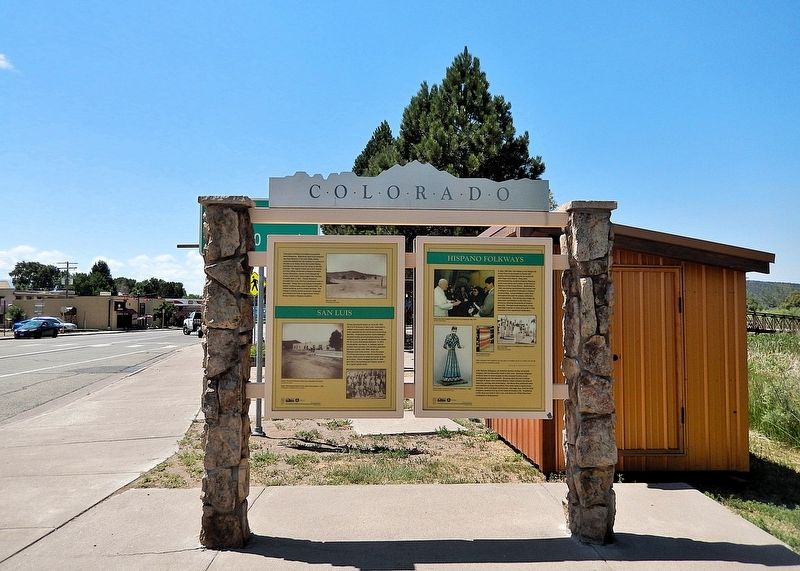
Looking south; Main Street is on the left. This historical marker is the leftmost of two interpretive panels on the north side of the kiosk.
Photographed by Cosmos Mariner, July 12, 2025
5. R & R Market, Colorado's Oldest Continuously Operated Business
It is one block south of this historical marker on Main Street.
Credits. This page was last revised on February 18, 2026. It was originally submitted on February 16, 2026, by Cosmos Mariner of Cape Canaveral, Florida. This page has been viewed 69 times since then. Photos: 1, 2, 3, 4, 5. submitted on February 18, 2026, by Cosmos Mariner of Cape Canaveral, Florida.
