Grinnell in Poweshiek County, Iowa — The American Midwest (Upper Plains)
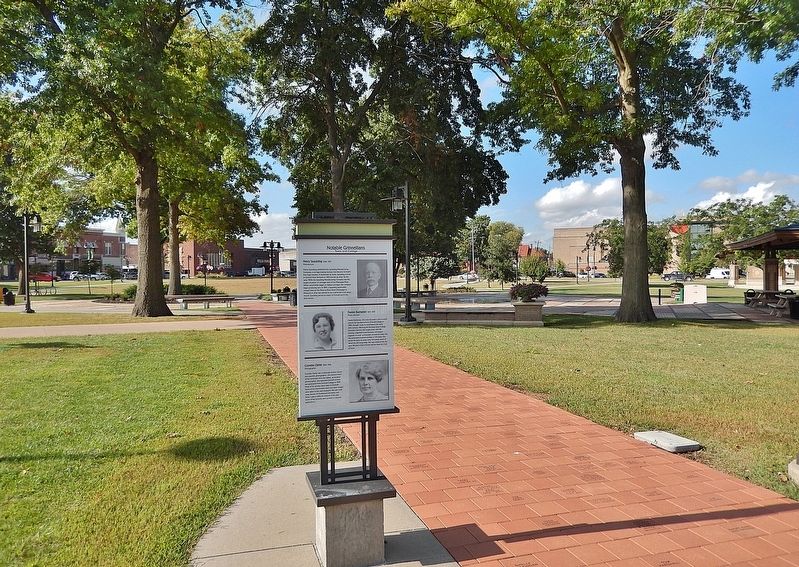
Notable Grinnellians
Town and College
Photographed by Cosmos Mariner, September 19, 2025
1. Notable Grinnellians Marker
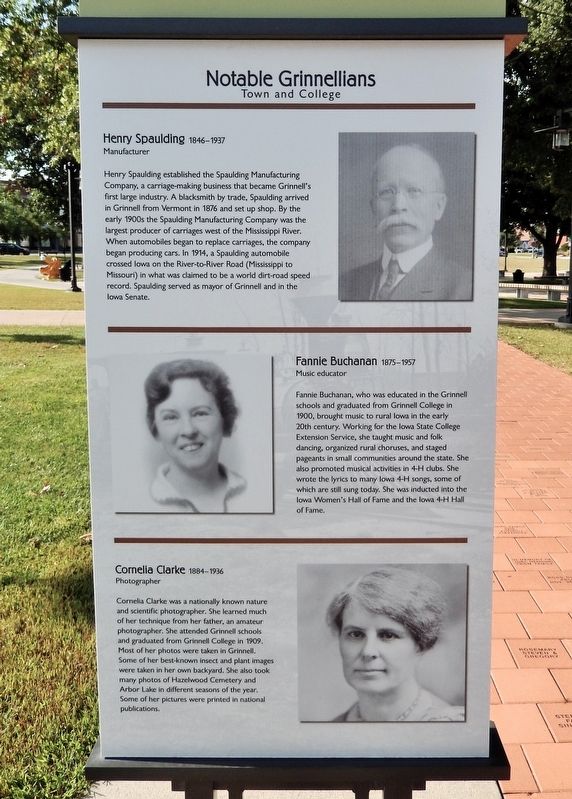
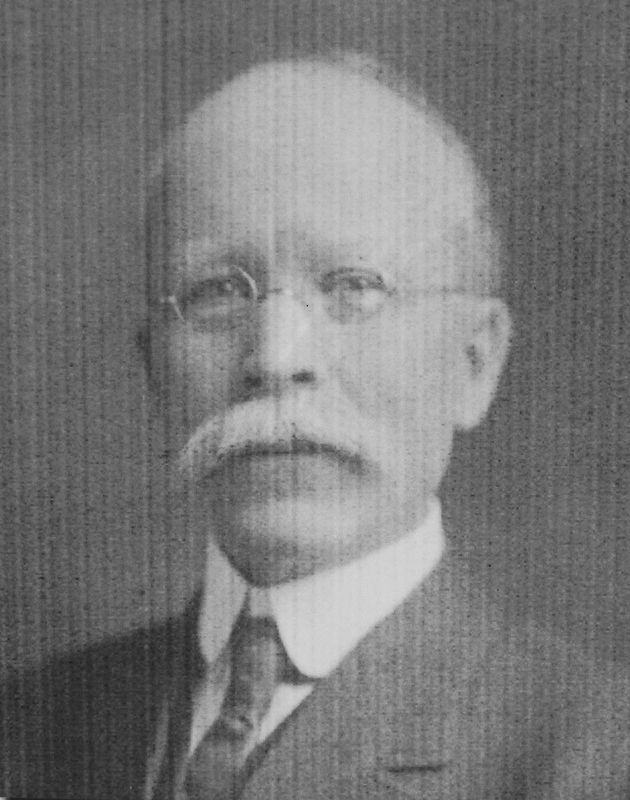
Henry Spaulding 1846-1937
Manufacturer
Henry Spaulding established the Spaulding Manufacturing Company, a carriage-making business that became Grinnell's first large industry. A blacksmith by trade, Spaulding arrived in Grinnell from Vermont in 1876 and set up shop. By the early 1900s the Spaulding Manufacturing Company was the largest producer of carriages west of the Mississippi River. When automobiles began to replace carriages, the company began producing cars. In 1914, a Spaulding automobile crossed Iowa on the River-to-River Road (Mississippi to Missouri) in what was claimed to be a world dirt-road speed record. Spaulding served as mayor of Grinnell and in the Iowa Senate.
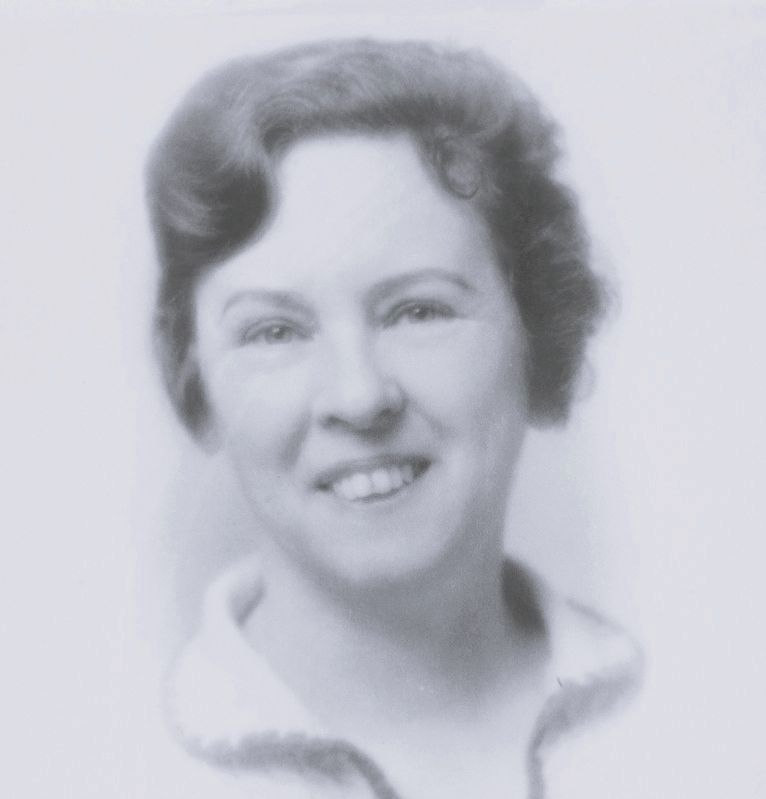
Fannie Buchanan 1875-1957
Music educator
Fannie Buchanan, who was educated in the Grinnell schools and graduated from Grinnell College in 1900, brought music to rural Iowa in the early 20th century. Working for the Iowa State College Extension Service, she taught music and folk dancing, organized rural choruses, and staged pageants in small communities around the state. She also promoted musical activities in 4-H clubs. She wrote the lyrics to many
this page online
Cornelia Clarke 1884-1936
Photographer
Cornelia Clarke was a nationally known nature and scientific photographer. She learned much of her technique from her father, an amateur photographer. She attended Grinnell schools and graduated from Grinnell College in 1909. Most of her photos were taken in Grinnell. Some of her best-known insect and plant images were taken in her own backyard. She also took many photos of Hazelwood Cemetery and Arbor Lake in different seasons of the year. Some of her pictures were printed in national publications.
Topics. This historical marker is listed in these topic lists: Arts, Letters, Music • Education • Industry & Commerce • Women.
Location. 41° 44.531′ N, 92° 43.379′ W. Marker is in Grinnell, Iowa, in Poweshiek County. It is at the intersection of 3rd Avenue and Park Street, on the left when traveling east on 3rd Avenue. The marker is beside the diagonal walkway near the southeast corner of Central Park.
2. Marker detail: Henry Spaulding

Regionally, this marker is in Eastern Iowa. It is also in the American Midwest and in the Corn Belt. Globally, it is in North America, the Western Hemisphere, the Western World, and the Anglosphere. Historically, it finds itself in what was once the territory of the Mississippian Culture and also the Louisiana Purchase.
Other nearby markers. At least 8 other markers are within walking distance of this marker: Historic Buildings (here, next to this marker); First Businesses (here, next to this marker); Grinnell College (a few steps from this marker); a different marker also named Notable Grinnellians (a few steps from this marker); a different marker also named Notable Grinnellians (a few steps from this marker); J. B. Grinnell (a few steps from this marker); Founding of Grinnell (a few steps from this marker); a different marker also named Notable Grinnellians (within shouting distance of this marker). Touch for a list and map of all markers in Grinnell.
Also see . . .
1. Henry Washington Spaulding (Wikipedia).
3. Marker detail: Fannie Buchanan
Excerpt: At the turn of the century the Spaulding Manufacturing Company was the oldest and largest producer of vehicles west of the Mississippi. Henry Spaulding's sons, Frederick E. and Ernest H. joined their father in the family business. The Spaulding automobiles introduced in 1910 were a 30-hp Model C with three-speed sliding gear transmission and Model D with a two-speed planetary transmission. The wheelbase was 112 inches, and the price $1,500, equivalent to $51,830 in 2025. In 1911 the Model D became a larger 122-inch wheelbase, $2,500 (equivalent to $86,384 in 2025) 40-hp car. In 1915 the Panama-Pacific International Exposition selected a Spaulding to map the overland route to the California exposition. The car traveled with a moving picture camera to film during its journey. Difficulty in getting parts transported to Grinnell and under-financing caused the end for the Spaulding car in 1916. Spaulding Manufacturing began building truck bodies and this replaced car manufacturing. In the early Twenties the Spaulding Manufacturing Company was producing road machinery. The business closed in 1929. Henry W. Spaulding died in(Submitted on February 19, 2026, by Cosmos Mariner of Cape Canaveral, Florida.)1937 at the age of ninety-one.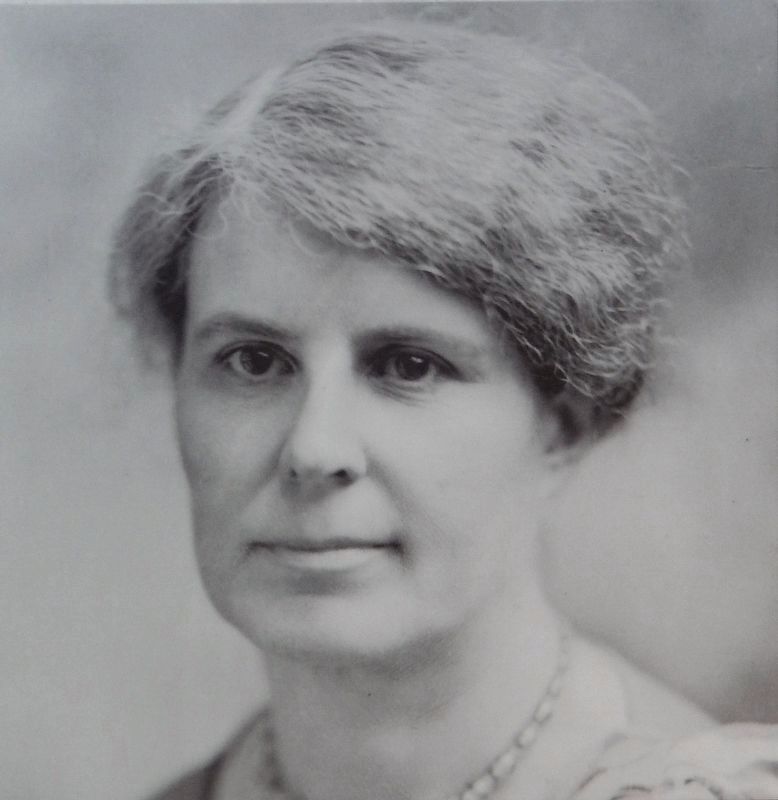 4. Marker detail: Cornelia Clarke
2. Fannie R. Buchanan (Wikipedia).
Excerpt: Buchanan was born on September 23, 1875 in Victor, Iowa, and she spent her childhood in Grinnell, Iowa. She graduated from the Iowa College School of Music, now Grinnell College, in 1900 as part of its Music Department. Her personal music studio was active for 12 years in Grinnell and she taught music to children in rural Iowa. For two years, Buchanan was a play supervisor for Redpath Chautauqua Company in Iowa, Minnesota, South Dakota, and North Dakota. She was later a manager and director of the same company for women attending Grinnell College. For 18 months, she was Supervisor of Recreation for the New York War Camp Community Service Girls' Division. Buchanan was one of the editors of Compton Publication Company in Chicago, Illinois, for one year and she was a writer for Compton's Encyclopedia. She then was a field worker for one year for the American Red Cross, Northern Division.(Submitted on February 19, 2026, by Cosmos Mariner of Cape Canaveral, Florida.)
Buchanan wrote various music booklets including Music Gems from an Old World TreasureChest, Half-Hour Studies from Famous Operas, Musical Moments from Latin America, and Short Stories of American Music. She also wrote storybooks such as "Sunny Crest Farmyard" (1925). In 1959, she authored the book "How man made music" about the historical development of music, musical instruments, lives and works of great composers, and various musical forms.Photographed by Cosmos Mariner, September 19, 20255. Notable Grinnellians MarkerLooking northwest through Central Park.
3. Cornelia Clarke gaining acclaim. Wikipedia entry:
(by Jeremy Shapiro, October 2021) Excerpt: With about 1,200 of her photographs published in magazines, encyclopedias, books, and newspapers, what Cornelia Clarke captured with her camera was widely seen in the early 20th century. Yet Clarke was largely unheralded in her hometown of Grinnell both during her life and in the eight decades following her death. A volunteer endeavor by Grinnellians has raised awareness about Clarke’s talent and brought her photography to light, resulting in newfound appreciation, including Clarke’s upcoming induction into the Iowa Women’s Hall of Fame.(Submitted on February 19, 2026, by Cosmos Mariner of Cape Canaveral, Florida.)
To highlight women’s heritage and recognize their important contributions to society, the Iowa Commission on the Status of Women established the Iowa Women’s Hall of Fame in 1975. Each subsequent year, the Commission and the Iowa Department of Human Rights welcome four women into the Iowa Women’s Hall of Fame, paying tribute to them and setting them forth as role models for others. Grinnell College, Drake Community Library, and the Grinnell Historical Museum banded together to nominate Clarke for this honor.
Credits. This page was last revised on September 6, 2026. It was originally submitted on February 17, 2026, by Cosmos Mariner of Cape Canaveral, Florida. This page has been viewed 52 times since then. Photos: 1, 2, 3, 4, 5. submitted on February 19, 2026, by Cosmos Mariner of Cape Canaveral, Florida.
