Grinnell in Poweshiek County, Iowa — The American Midwest (Upper Plains)
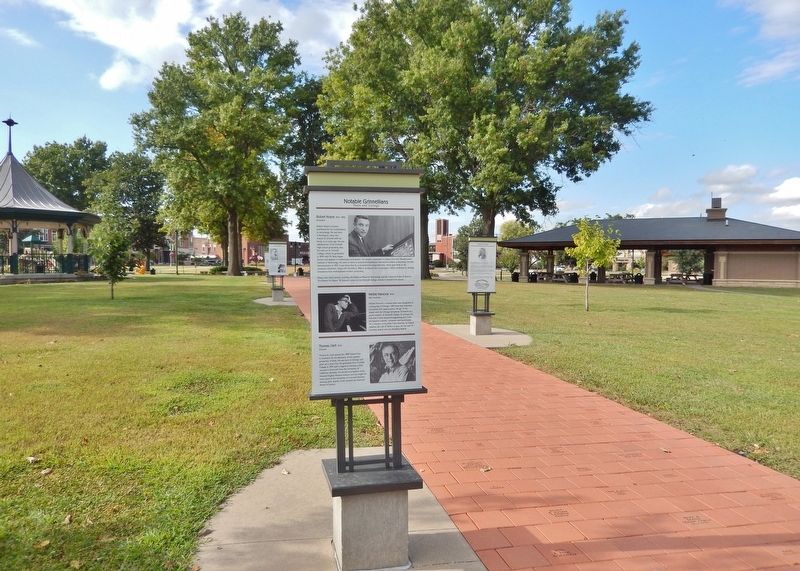
Notable Grinnellians
Town and College
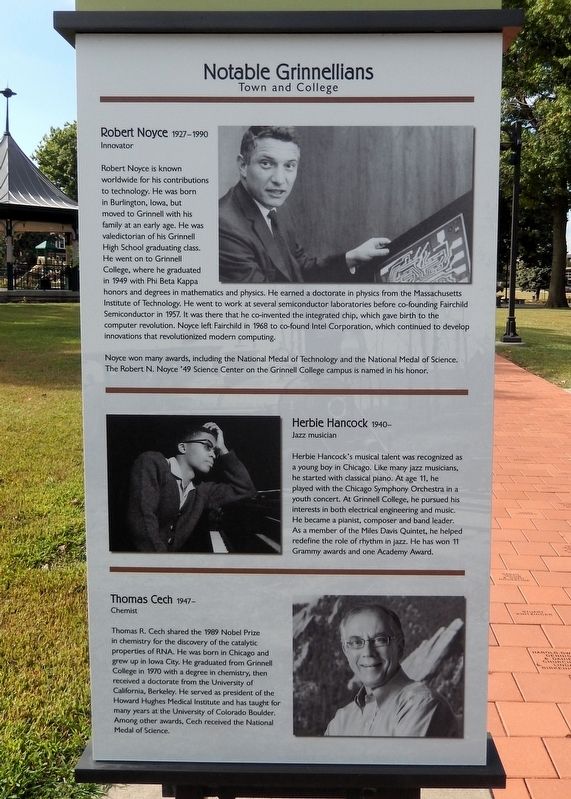
Photographed by Cosmos Mariner, September 19, 2025
1. Notable Grinnellians Marker
Robert Noyce 1927-1990
Innovator
Robert Noyce is known worldwide for his contributions to technology. He was born in Burlington, Iowa, but moved to Grinnell with his family at an early age. He was valedictorian of his Grinnell High School graduating class. He went on to Grinnell College, where he graduated in 1949 with Phi Beta Kappa honors and degrees in mathematics and physics. He earned a doctorate in physics from the Massachusetts Institute of Technology. He went to work at several semiconductor laboratories before co-founding Fairchild Semiconductor in 1957. It was there that he co-invented the integrated chip, which gave birth to the computer revolution. Noyce left Fairchild in 1968 to co-found Intel Corporation, which continued to develop innovations that revolutionized modern computing.
Noyce won many awards, including the National Medal of Technology and the National Medal of Science. The Robert N. Noyce '49 Science Center on the Grinnell College campus is named in his honor.
Herbie Hancock 1940 —
Jazz Musician
Herbie Hancock's musical talent was recognized as a young boy in Chicago. Like many jazz musicians, he
this page online
Thomas Cech 1947—
Chemist
Thomas R. Cech shared the 1989 Nobel Prize in chemistry for the discovery of the catalytic properties of RNA. He was born in Chicago and grew up in Iowa City. He graduated from Grinnell College in 1970 with a degree in chemistry, then received a doctorate from the University of California, Berkeley. He served as president of the Howard Hughes Medical Institute and has taught for many years at the University of Colorado Boulder. Among other awards, Cech received the National Medal of Science.
Topics. This historical marker is listed in these topic lists: African Americans • Arts, Letters, Music • Education • Science & Medicine.
Location. 41° 44.518′ N, 92° 43.365′ W. Marker
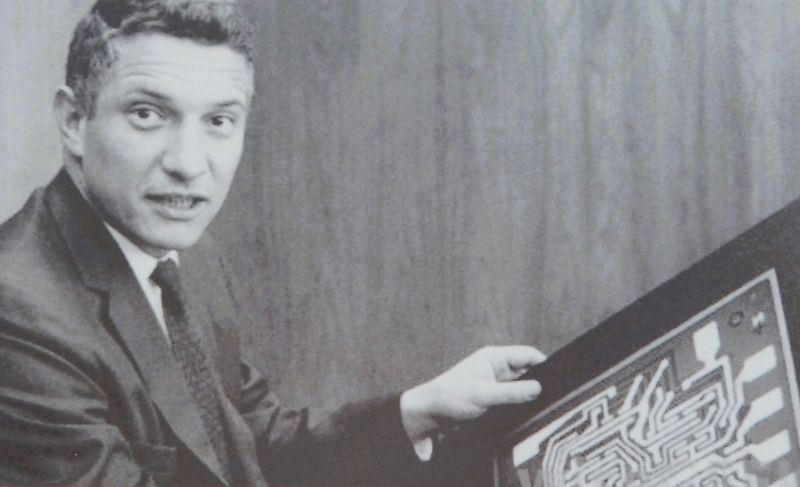
2. Marker detail: Robert Noyce

Regionally, this marker is in Eastern Iowa. It is also in the American Midwest and in the Corn Belt. Globally, it is in North America, the Western Hemisphere, the Western World, and the Anglosphere. Historically, it finds itself in what was once the territory of the Mississippian Culture and also the Louisiana Purchase.
Other nearby markers. At least 8 other markers are within walking distance of this marker: A different marker also named Notable Grinnellians (here, next to this marker); Founding of Grinnell (a few steps from this marker); J. B. Grinnell (a few steps from this marker); a different marker also named Notable Grinnellians (a few steps from this marker); a different marker also named Notable Grinnellians (a few steps from this marker); Grinnell College
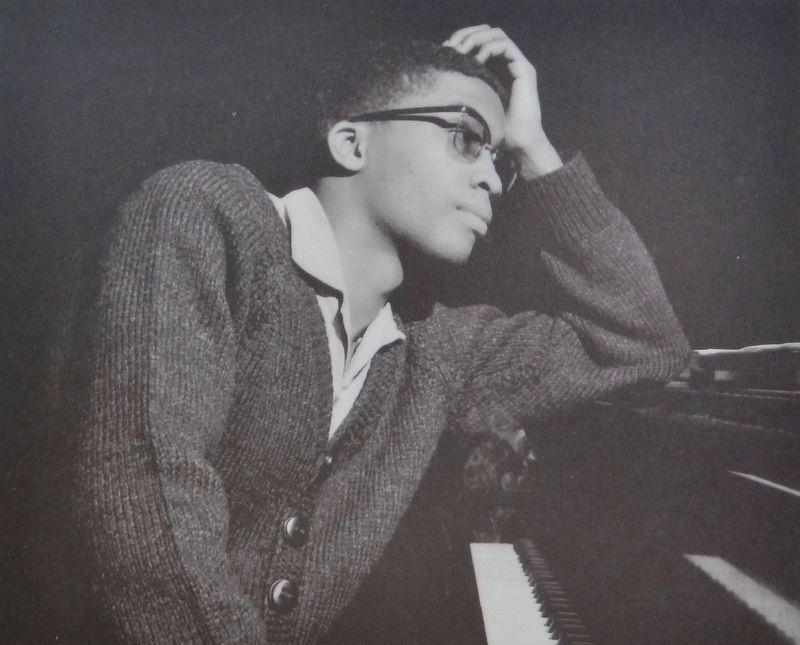
3. Marker detail: Herbie Hancock
Related markers. Click here for a list of markers that are related to this marker.
Also see . . .
1. Robert Norton Noyce (Wikipedia).
Excerpt: Nicknamed "the Mayor of Silicon Valley", he was an American physicist and entrepreneur who co-founded Fairchild Semiconductor in 1957 and Intel Corporation in 1968. He was also credited with the realization of the first monolithic integrated circuit or microchip made with silicon, which fueled the personal computer revolution and gave Silicon Valley its name.(Submitted on February 21, 2026, by Cosmos Mariner of Cape Canaveral, Florida.)
Noyce founded The Noyce School of Applied Computing within the College of Engineering at Cal Poly, San Luis Obispo. In 1987, President Ronald Reagan awarded him the National Medal of Technology, and in 1989, he was inducted into the U.S. Business Hall of Fame, with President George H. W. Bush delivering the keynote. In 1990, he received a Lifetime Achievement Medal alongside Jack Kilby andJohn Bardeen during the bicentennial celebration of the Patent Act.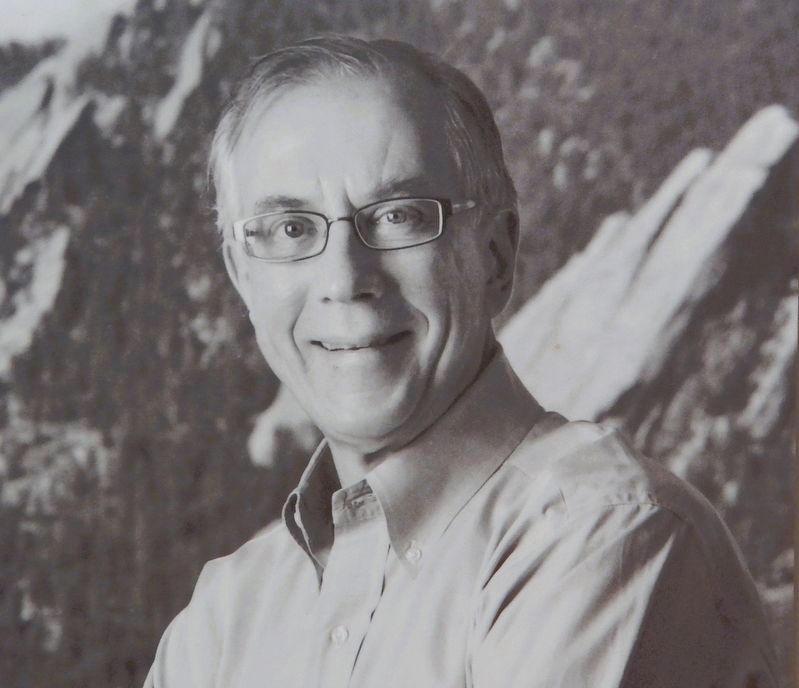 4. Marker detail: Thomas Cech
2. Herbert Jeffrey Hancock (Wikipedia).
Excerpt: American jazz musician, bandleader, and composer. He started his career with trumpeter Donald Byrd's group. Hancock soon joined the Miles Davis Quintet, where he helped to redefine the role of a jazz rhythm section and was one of the primary architects of the post-bop sound. In the 1970s, he experimented with jazz fusion, funk, and electro styles using a wide array of synthesizers and electronics.(Submitted on February 21, 2026, by Cosmos Mariner of Cape Canaveral, Florida.)
Hancock's best-known compositions include "Cantaloupe Island", "Watermelon Man", "Maiden Voyage", and "Chameleon", all of which are jazz standards. During the 1980s, he had a hit single with the electronic instrumental "Rockit", a collaboration with bassist/producer Bill Laswell. Hancock has won an Academy Award and 14 Grammy Awards, including Album of the Year for his 2007 album River: The Joni Letters, a tribute to his friend Joni Mitchell. In 2024, Neil McCormick of The Daily Telegraph ranked Hancock as the greatest keyboardplayer of all time. In 2025, he received the Polar Music Prize.Photographed by Cosmos Mariner, September 19, 20255. Notable Grinnellians MarkerLooking northwest through Central Park.
3. Thomas Robert Cech (Wikipedia).
Excerpt: Cech was born to parents of Czech origin (his grandfather was Czech, his other grandparents were first-generation Americans) in Chicago. He grew up in Iowa City, Iowa. In junior high school, he knocked on the doors of geology professors at the University of Iowa, and asked them to discuss crystal structures, meteorites and fossils.(Submitted on February 21, 2026, by Cosmos Mariner of Cape Canaveral, Florida.)
A National Merit Scholar, Cech entered Grinnell College in 1966. In 1975, Cech completed his PhD in chemistry at the University of California, Berkeley and in the same year, he entered the Massachusetts Institute of Technology where he engaged in postdoctoral research. In 1978, he obtained his first faculty position at the University of Colorado where he lectured undergraduate students in chemistry and biochemistry.
Cech discovered that RNA could itself cut strands of RNA, suggesting that life might have started as RNA. He found that RNA can not only transmit instructions but can act as a catalyst to speed up the necessary reactions. He has also studied telomeres, and his lab discovered an enzyme, TERT (telomerase reverse transcriptase), which is part of the process of restoring telomeres after they are shortened during cell division. As president of Howard Hughes Medical Institute (2000–2008) he promoted science education, and he teaches an undergraduate chemistry course at the University of Colorado.
Credits. This page was last revised on February 21, 2026. It was originally submitted on February 18, 2026, by Cosmos Mariner of Cape Canaveral, Florida. This page has been viewed 62 times since then. Photos: 1, 2, 3, 4, 5. submitted on February 21, 2026, by Cosmos Mariner of Cape Canaveral, Florida.
