Mayesville in Sumter County, South Carolina — The American South (South Atlantic)
The Mayesville Story
Photographed by Mike Stroud, 2010
1. The Mayesville Story Marker
National Register of Historic Places:
Mayesville Historic District (added 1979 - District - #79002395)
All images courtesy of the University of South Carolina
All images courtesy of the University of South Carolina
A Railroad Town
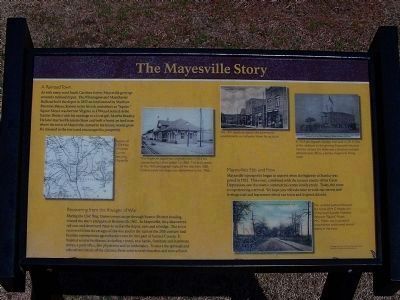
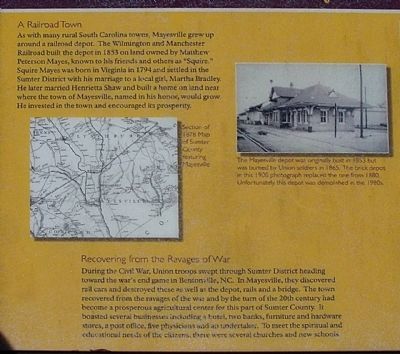
As with many rural South Carolina towns, Mayesville grew up around a railroad depot. The Wilmington and Manchester Railroad built the depot in 1853 on land owned by Matthew Peterson Mayes, known to his friends and others as "Squire." Squire Mayes was born in Virginia in 1794 and settled in the Sumter District with his marriage to a local girl, Martha Bradley. He later married Henrietta Shaw and built a home on land near where the town of Mayesville, named in his honor, would grow. He invested in the town and encouraged its prosperity.
(Lower left text)
Recovering from the Raveges of War
During the Civil War, Union troops swept through Sumter District heading toward the war's end game in Bentonville, NC. In Mayesville, they discovered rail cars and destroyed these as well as the depot, rails and a bridge. The town recovered from the ravages of the war and by the turn of the 20th century had become a prosperous agricultural center for this part of Sumter County. It boasted several businesses including a hotel, two banks, furniture and hardware stores, a post office,
this page online
(Right text)
Mayesville's Ebb and Flow
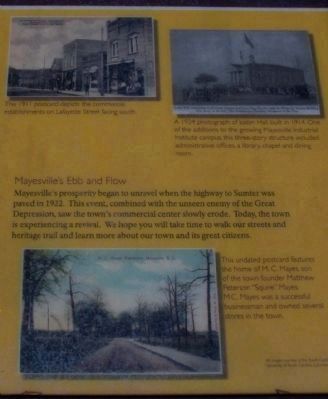
Mayesville's prosperity began to unravel when the highway to Sumter was paved in 1922. This event, combined with the unseen enemy of the Great Depression, saw the town's commercial center slowly erode. Today, the town is experiencing a revival. We hope you will take time to walk our streets and heritage trail and learn more about our town and its great citizens.
Topics. This historical marker is listed in these topic lists: Landmarks • Railroads & Streetcars • Settlements & Settlers. A significant historical year for this entry is 1853.
Location. 33° 59.214′ N, 80° 12.483′ W. Marker is in Mayesville, South Carolina, in Sumter County. It is on South Main Street East near Liberty Street, on the left. Touch for map. Marker is in this post office area: Mayesville SC 29104, United States of America. Touch for directions.

Regionally, this marker is in South Carolina’s Pee Dee. It is also in the American South and specifically in
The Mayesville Story Marker
2. The Mayesville Story Marker
[Map included]
Section of 1878 map of Sumter County featuring Mayesville.
(Center left photo)
The Mayesville depot was originally built in 1853 but was burned by Union soldiers in 1865. The brick depot in this 1908 photograph replaced the one from 1880. Unfortunately this depot was demolished in the 1980s.
Section of 1878 map of Sumter County featuring Mayesville.
(Center left photo)
The Mayesville depot was originally built in 1853 but was burned by Union soldiers in 1865. The brick depot in this 1908 photograph replaced the one from 1880. Unfortunately this depot was demolished in the 1980s.
Other nearby markers. At least 8 other markers are within 7 miles of this marker, measured as the crow flies: Birthplace of Mary McLeod Bethune (approx. 0.4 miles away); Birth Place of Mary McLeod Bethune (approx. 2.7 miles away); Beulah School (approx. 2.9 miles away); Salem (Black River) Presbyterian Church (approx. 4.6 miles away); Concord Presbyterian Church (approx. 5.4 miles away); Bethel United Methodist Church (approx. 5.6 miles away); Goodwill Presbyterian Church, U.S.A. (approx. 6.1 miles away); " Ebenezer " (approx. 6.1 miles away). Touch for a list and map of all markers in Mayesville.
Another marker is no longer nearby. Rev. John Leighton Wilson, D.D. (was approx. 4.6 miles away but has been confirmed missing).
Regarding The Mayesville Story. The Mayesville Historic District is notable for
The Mayesville Story Marker
3. The Mayesville Story Marker
(Center right photo)
This 1911 postcard depicts the commercial establishments on Lafayette Street facing south.
(Right photo)
A 1924 photograph of Joslyn Hall built in 1914. One of the additions to the growing Mayesville Industrial campus, this three-story structure included adminstrative offices, a library, chapel and dining room.
(Lower right photo)
This undated postcard features the home of M.C. Mayes, son of the founder Matthew Peterson "Squire" Mayes. M.C.Mayes was a successful businessman and owned several stores in the town.
This 1911 postcard depicts the commercial establishments on Lafayette Street facing south.
(Right photo)
A 1924 photograph of Joslyn Hall built in 1914. One of the additions to the growing Mayesville Industrial campus, this three-story structure included adminstrative offices, a library, chapel and dining room.
(Lower right photo)
This undated postcard features the home of M.C. Mayes, son of the founder Matthew Peterson "Squire" Mayes. M.C.Mayes was a successful businessman and owned several stores in the town.
examples. Architectural styles include Neo-Classical, Victorian, Queen Anne, Colonial Revival, Commercial, and Bungalow. The visual appearance of the district reflects the evolution of this small rural town that developed as the result of the changing economic forces brought about by the establishment of rail transportation and subsequent commercialization in the late 1800s. Unfortunately, since its nomination many properties have been demolished or altered significantly. Listed in the National Register July 16, 1979.(South Carolina Department of Archives and History)
Photographed by Mike Stroud, February 10, 2010
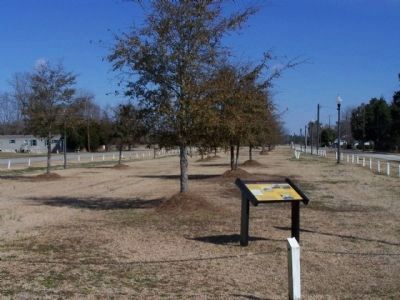
4. The Mayesville Story Marker between South Main Street East and North Main Street East
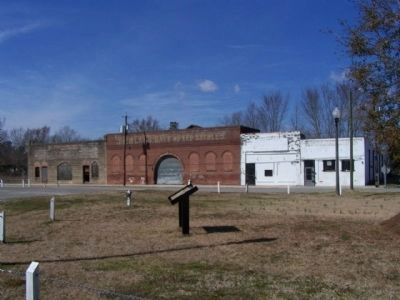
Photographed by Mike Stroud, February 10, 2010
5. The Mayesville Story Marker with Historic Commercial stores in background
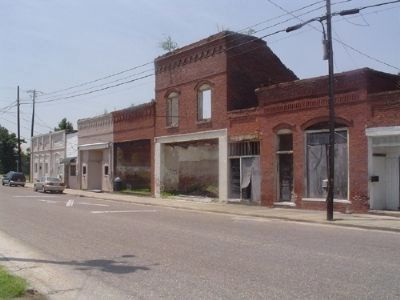
S.C. Dept of Archives and History, July 14, 2004
6. The Mayesville Historic Commercial block
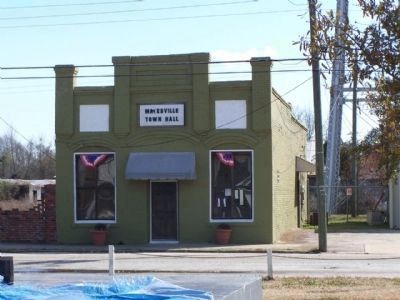
Photographed by Mike Stroud, February 10, 2010
7. The Mayesville Historic Town Hall
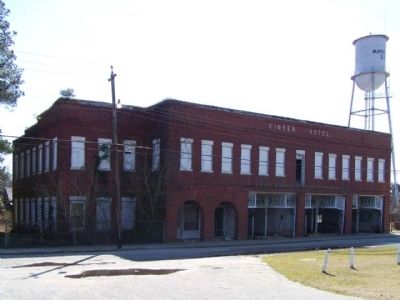
Photographed by Mike Stroud, February 10, 2010
8. The Mayesville Historic Kineen Hotel, seen today
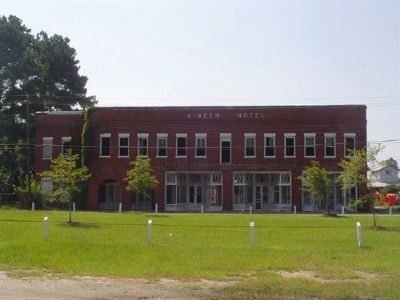
S.C. Dept. of Archives and History, July 14, 2004
9. The Mayesville Historic Kineen Hotel
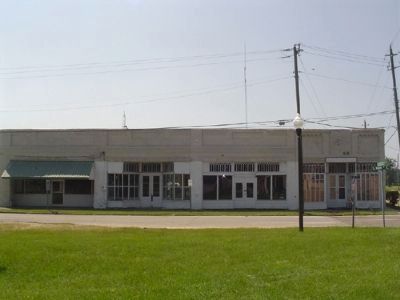
S.C. Dept. of Archives and History, July 14, 2004
10. The Mayesville Historic Mayes Store
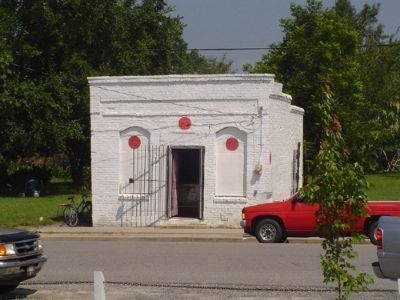
S.C. Dept of Archives and History, July 14, 2004
11. The Mayesville Historic Davis Store
Credits. This page was last revised on June 16, 2016. It was originally submitted on April 3, 2010, by Mike Stroud of Bluffton, South Carolina. This page has been viewed 4,807 times since then and 152 times this year. Photos: 1, 2, 3, 4, 5, 6, 7, 8, 9, 10, 11. submitted on April 3, 2010, by Mike Stroud of Bluffton, South Carolina. • Craig Swain was the editor who published this page.
