Garfield Park in Chicago in Cook County, Illinois — The American Midwest (Great Lakes)
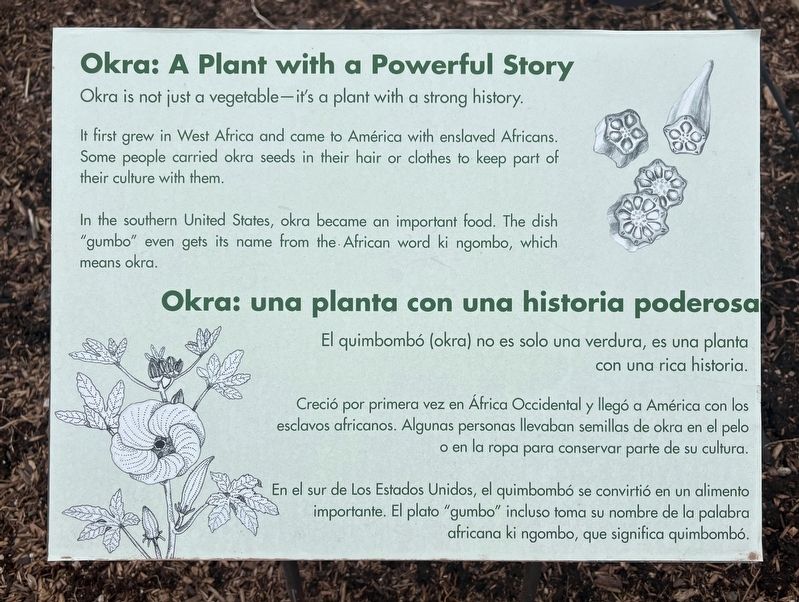
Okra: A Plant with a Powerful Story
⎯⎯⎯
Okra: una planta con una historia poderosa
Photographed by Sean P. Flynn, February 28, 2026
1. Okra: A Plant with a Powerful Story Marker
Okra is not just a vegetable-it's a plant with a strong history.
It first grew in West Africa and came to América with enslaved Africans. Some people carried okra seeds in their hair or clothes to keep part of their culture with them.
In the southern United States, okra became an important food. The dish "gumbo" even gets its name from the African word ki ngombo, which means okra.
El quimbombó (okra) no es solo una verdura, es una planta con una rica historia.
Creció por primera vez en África Occidental y llegó a América con los esclavos africanos. Algunas personas llevaban semillas de okra en el pelo o en la ropa para conservar parte de su cultura.
En el sur de Los Estados Unidos, el quimbombó se convirtió en un alimento importante. El plato "gumbo" incluso toma su nombre de la palabra africana ki ngombo, que significa quimbombó.
Topics. This historical marker is listed in these topic lists: African Americans • Environment • Horticulture & Forestry.
Location. 41° 53.167′ N, 87° 43.102′ W. Marker is in Chicago, Illinois, in Cook County. It is in Garfield
this page online

Regionally, this marker is on Chicago’s West Side. It is also in the American Midwest. Globally, it is in North America, on the Great Lakes, in the Western Hemisphere, in the Western World, and in the Anglosphere. Historically, it finds itself in what was once the Viceroyalty of New France, the territory of the Mississippian Culture, and the Northwest Territory.
Other nearby markers. At least 8 other markers are within walking distance of this marker: Corn: The Heart of Many Cultures / El maíz: el corazón de muchas culturas (here, next to this marker); City Garden (within shouting distance of this marker); Garfield Park Conservatory Water Lily Collection (within shouting distance of this marker); Garfield Park (about 400 feet away, measured in a direct line); The Boulevard System (about 600
Photographed by Sean P. Flynn, February 28, 2026
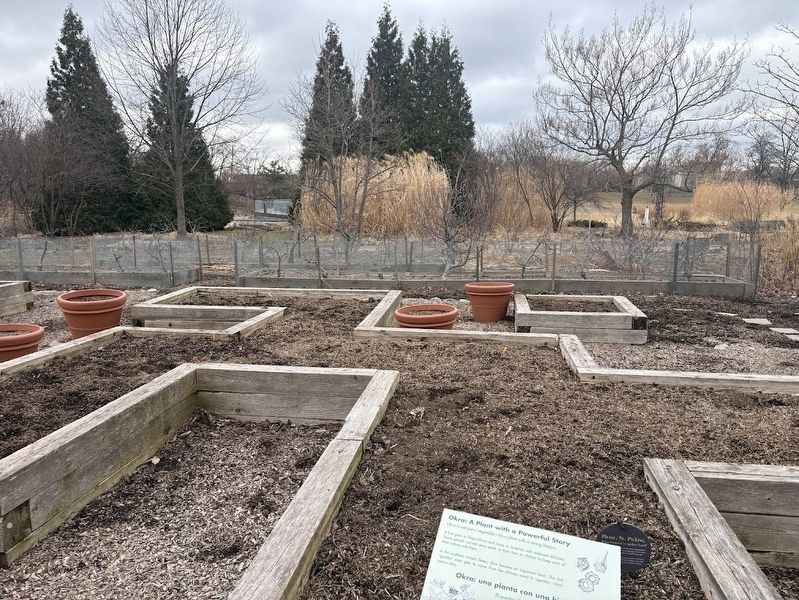
2. Okra: A Plant with a Powerful Story marker at Garfield Park Conservatory
Photographed by Sean P. Flynn, February 28, 2026
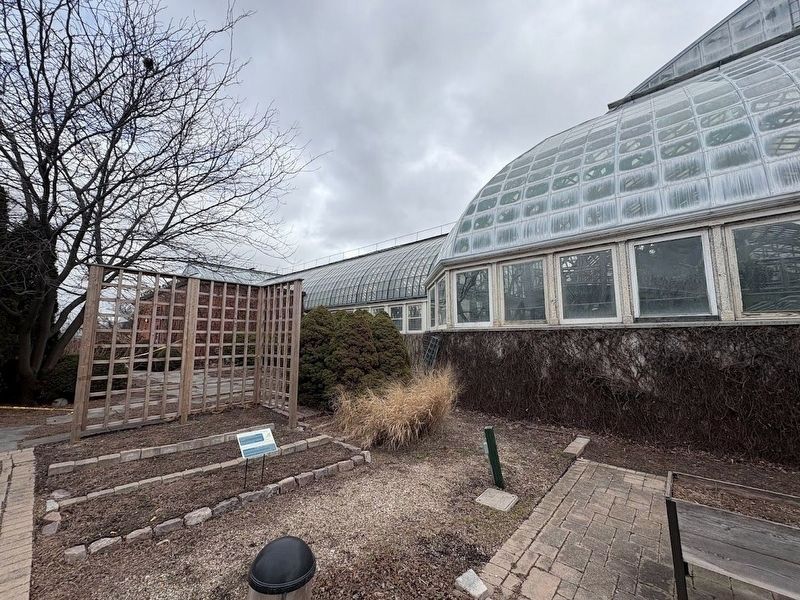
3. The garden behind the Garfield Park Conservatory
Credits. This page was last revised on February 28, 2026. It was originally submitted on February 28, 2026, by Sean P. Flynn of Oak Park, Illinois. This page has been viewed 43 times since then. Photos: 1, 2, 3. submitted on February 28, 2026, by Sean P. Flynn of Oak Park, Illinois.
