Downtown Seattle in King County, Washington — The American West (Northwest)
Gordon Hirabayashi
Legacy of Justice at Hirabayashi Place
Photographed by Douglass Halvorsen, February 20, 2026
1. Gordon Hirabayashi Marker
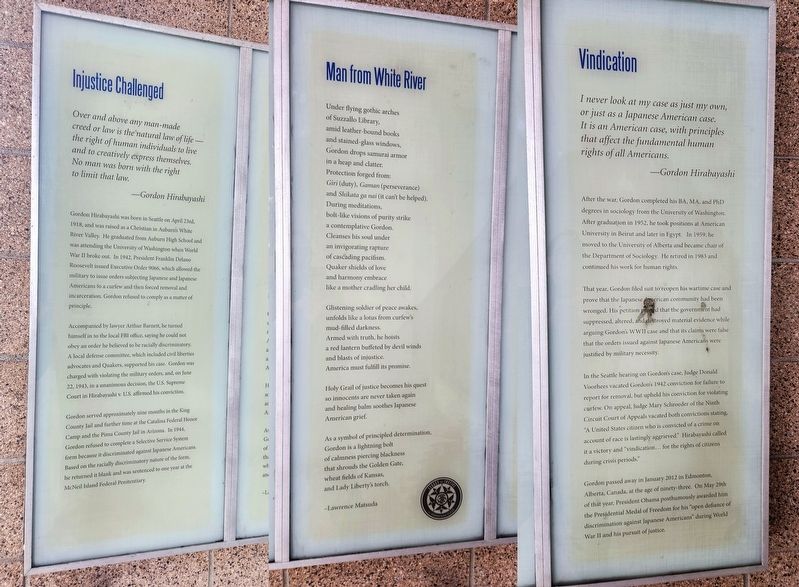
Injustice Challenged
Over and above any man-made creed or law is the natural law of life — the right of human individuals to live and to creatively express themselves. No man was born with the right to limit that law.
—Gordon Hirabayashi
Gordon Hirabayashi was born in Seattle on April 23rd, 1918, and was raised as a Christian in Auburn’s White River valley. He graduated from Auburn High School and was attending the University of Washington when World War II broke out. In 1942, President Franklin Delano Roosevelt issued Executive Order 9066, which allowed the military to issue orders subjecting Japanese and Japanese Americans to a curfew and then forced removal and incarceration. Gordon refused to comply as a matter of principle.
Accompanied by lawyer Arthur Barnett, he turned himself in to the local FBI office, saying he could not obey an order he believed to be racially discriminatory. A local defense committee, which included civil liberties advocates and Quakers, supported his case. Gordon was charged with violating the military orders, and, on June 22, 1943, in a unanimous decision, the U.S. Supreme Court in
this page online
Gordon served approximately nine months in the King County Jail and further time at the Catalina Federal Honor Camp and the Pima County Jail in Arizona. In 1944, Gordon refused to complete the Selective Service System form because it discriminated against Japanese Americans. Based on the racially discriminatory nature of the form, he returned it blank and was sentenced to one year at the McNeil Island Federal Penitentiary.
Man from White River
Under flying gothic arches of Suzzallo Library, amid leather-bound books and stained glass windows, Gordon drops samarai armor in a heap and clatter. Protection forged from: Giri (duty), Gaman (perseverance) and Shikata ga nai (it can’t be helped). During meditations, bolt-like visions of purity strike a contemplative Gordon. Cleanses his soul under an invigorating rapture of cascading pacifism. Quaker shields of love and harmony embrace like a mother cradling her child.
Glistening soldier of peace awakes, unfolds like a lotus from curfew’s mud-filled darkness. Armed with truth, he hoists a red lantern buffeted by devil winds and blasts
Photographed by Douglass Halvorsen, February 20, 2026
2. Gordon Hirabayashi Marker
Holy Grail of justice becomes his quest so innocents are never taken again and healing balm soothes Japanese American grief.
As a symbol of principled determination, Gordon is a lightning bolt of calmness piercing blackness that shrouds the Golden Gate, wheat fields of Kansas, and Lady Liberty’s torch.
—Lawrence Matsuda
Vindication
I never look at my case as just my own, or just as a Japanese American case. It is an American case, with principles that affect the fundamental human rights of all Americans.
—Gordon Hirabayashi
After the war, Gordon completed his BA, MA, and PhD degrees in sociology from the University of Washington. After graduation in 1952, he took positions at American University in Beirut and later in Egypt. In 1959, he moved to the University of Alberta and became chair of the Department of Sociology. He retired in 1983 and continued his work for human rights.
That year, Gordon filed suit to reopen his wartime case and prove that the Japanese American community had been wronged. His petition proved that the government had suppressed, altered, and
Photographed by Douglass Halvorsen, February 20, 2026
3. Gordon Hirabayashi Marker
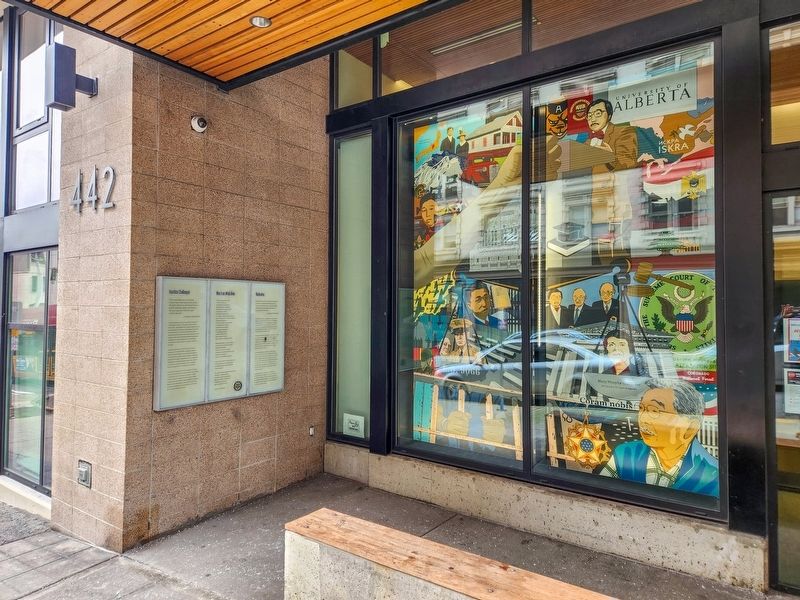
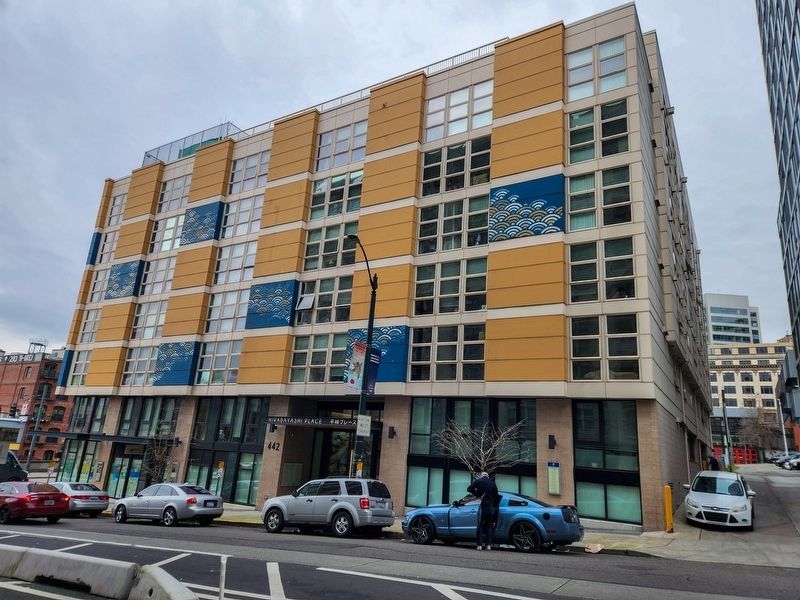
The markers are located to the left of the main entrance to Hirabayashi Place, as seen in the photo.
In the Seattle hearing on Gordon’s case, Judge Donald Voorhees vacated Gordon’s 1942 conviction for violating curfew. On appeal, Judge Mary Schroeder of the Ninth Circuit Court of Appeals vacated both convictions stating, “A United States citizen who is convicted of a crime on account of race is lastingly aggrieved.” Hirabayashi called it a victory and “vindication... for the rights of citizens during crisis periods.”
Gordon passed away in January 2012 in Edmonton, Alberta, Canada, at the age of ninety-three. On May 29th of that year, President Obama posthumously awarded him the Presidential Medal of Freedom for his “open defiance of discrimination against Japanese Americans” during World War II and his pursuit of justice.
Topics. This historical marker is listed in these topic lists: Asian Americans • Civil Rights • Patriots & Patriotism • War, World II. A significant historical year for this entry is 1942.
Location. 47° 36.009′ N, 122° 19.717′ W.
Photographed by Gordon Hirabayashi
4. Gordon Hirabayashi

Regionally, this marker is in the Puget Sound Region. It is also on the American Pacific Coast, in the Pacific Northwest, and in the Lewis & Clark Corridor. Globally, it is in North America, in the Cascade Range, in the Inside Passage, on the Ring of Fire, on the Pacific Rim, in the Western Hemisphere, in the Western World, and in the Anglosphere.
Other nearby markers. At least 8 other markers are within walking distance of this marker: Vindication, Healing, and the Legacy of Justice (a few steps from this marker); Reclaiming our Roots (a few steps from this marker); A Community Takes Root (a few steps from this marker); Japanese Farmers and Alien Land Laws (a few steps from this marker); A Thriving Nihonmachi (within shouting distance of this marker); Wartime Incarceration (within shouting distance of this marker); Starting Over After the War (within shouting distance of this marker); Great Northern Tunnel (within shouting distance of this marker). Touch for a list and map of all markers in Seattle.
Also see . . . Hirabayashi, Gordon K. (1918-2012).
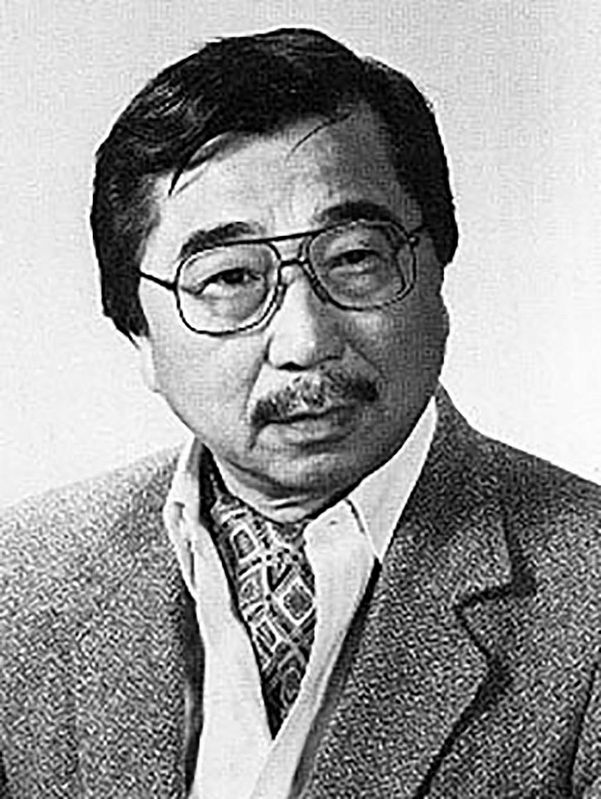
In a remarkable show of personal courage, Seattle native Gordon Hirabayashi was one of handful of Japanese Americans nationwide to defy U.S. government curfew and "evacuation" orders issued in 1942 (in the context of World War II) to persons of Japanese ancestry who lived on the West Coast. Hirabayashi considered the orders to be a gross violation of Constitutional rights. He was arrested, convicted, and imprisoned, and eventually appealed his case to the U.S. Supreme Court. Although the Supreme Court upheld his conviction at the time, the fight to overturn it resumed in the 1980s, culminating in his judicial vindication. After the war, Gordon Hirabayashi became a sociologist. He spent most of his career teaching at the University of Alberta, in Edmonton, Canada. He died on January 2, 2012.(Submitted on March 27, 2026, by Douglass Halvorsen of Klamath Falls, Oregon.)
Credits. This page was last revised on March 31, 2026. It was originally submitted on March 27, 2026, by Douglass Halvorsen of Klamath Falls, Oregon. This page has been viewed 23 times since then. Photos: 1, 2, 3, 4. submitted on March 27, 2026, by Douglass Halvorsen of Klamath Falls, Oregon. • Devry Becker Jones was the editor who published this page.
