Dutch Mill Service Station & Café
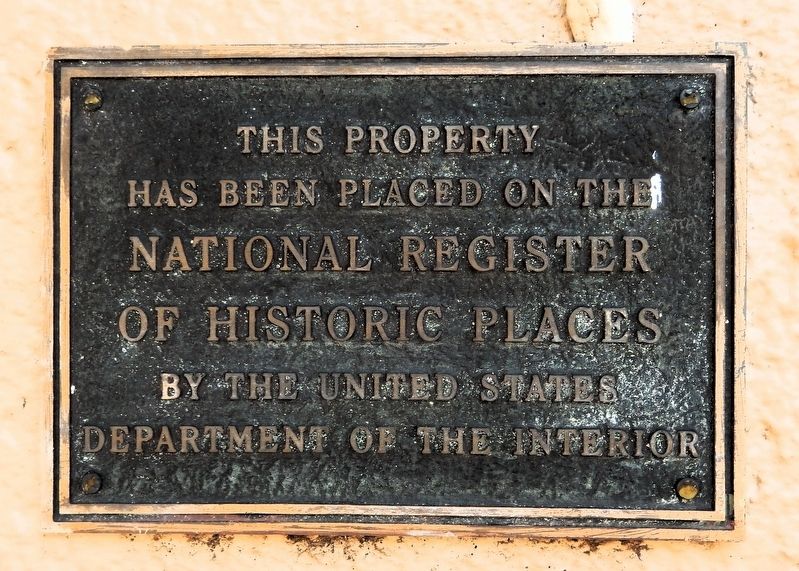
This property has been placed on the
National Register of Historic Places
by the United States Department of the Interior
Topics and series. This historical marker is listed in these topic lists: Architecture • Industry & Commerce • Roads & Vehicles. In addition, it is included in the National Register of Historic Places (NRHP), and the U.S. Route 66 series lists. A significant historical year for this entry is 1932.
Location. 35° 12.665′ N, 101° 52.485′ W. Marker is in Amarillo, Texas, in Potter County. It is at the intersection of Southwest 6th Avenue (Texas Hwy 279) (Old U.S. 66) and South Carolina Street, on the right when traveling east on Southwest 6th Avenue (Texas Hwy 279). The marker is mounted at eye level directly on the north/front facade of the subject building. Touch for map. Marker is at or near this postal address: 3401 Southwest 6th Avenue, Amarillo TX 79106, United States of America. Touch for directions.

Regionally, this marker is on the Texas Panhandle. It is also on the American Great Plains, specifically on the Southern Plains, and specifically on the High Plains. Globally, it is in North
this page online
Other nearby markers. At least 8 other markers are within 2 miles of this marker, measured as the crow flies: Texas Ivy Antiques, Amarillo, Texas (about 500 feet away, measured in a direct line); Bussey Building (approx. 0.4 miles away); Amarillo Natatorium ("The Nat") (approx. half a mile away); Route 66 in Amarillo (approx. half a mile away); Northwest Texas Hospital School of Nursing (approx. 0.7 miles away); Smith-Rogers House (approx. 1.1 miles away); William Henry Bush (approx. 1.3 miles away); Self Sacrifice of Padre Fray Juan de Padilla - 1544 (approx. 1.6 miles away). Touch for a list and map of all markers in Amarillo.
Regarding Dutch Mill Service Station & Café. Contributing property, US Route 66-Sixth Street Historic District, National Register of Historic Places № 94000982.
From the National Register Nomination prepared by Lueise Tyson and Bruce Jensen, 8/1993:
TheUS Route 66-Sixth Street Historic District is a section of the old Route 66 that runs through the San Jacinto Heights neighborhood of Amarillo, Texas. The 13-block strip contains an intact collection of commercial buildings with significant associations with Route 66 and its development through Amarillo and Texas from the mid-1920s to the post-World War II era. Route 66 was one of the earliest transcontinental highways in the United States. The Texas portion ran through the State's panhandle and measured 177 miles. Amarillo was the only major urban community the route traversed in the State.Photographed by Cosmos Mariner, July 8, 20252. Dutch Mill Service Station & Café MarkerThe marker is mounted between the front window [left] and the faux carriage doors [right].As Route 66 developed, facilities to cater to tourists increased. Many of these services can be interpreted through the US Route 66-Sixth Street Historic District property. When initiated in the mid-1920s, Route 66 was developed to facilitate transcontinental travel and tourism. It flourished during that decade as Amarillo benefitted from an oil and gas boom. During the hardships of the 1930s, the highway provided a major route of exodus for those who fled agricultural losses. Opportunities arose for neighborhood residents to operate businesses
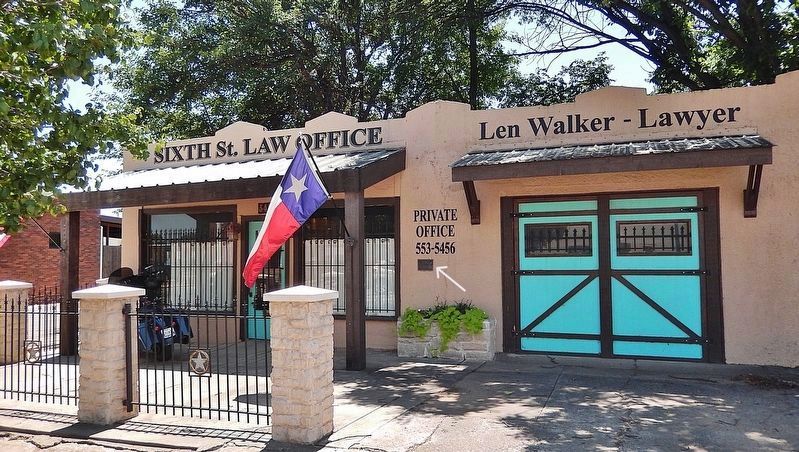
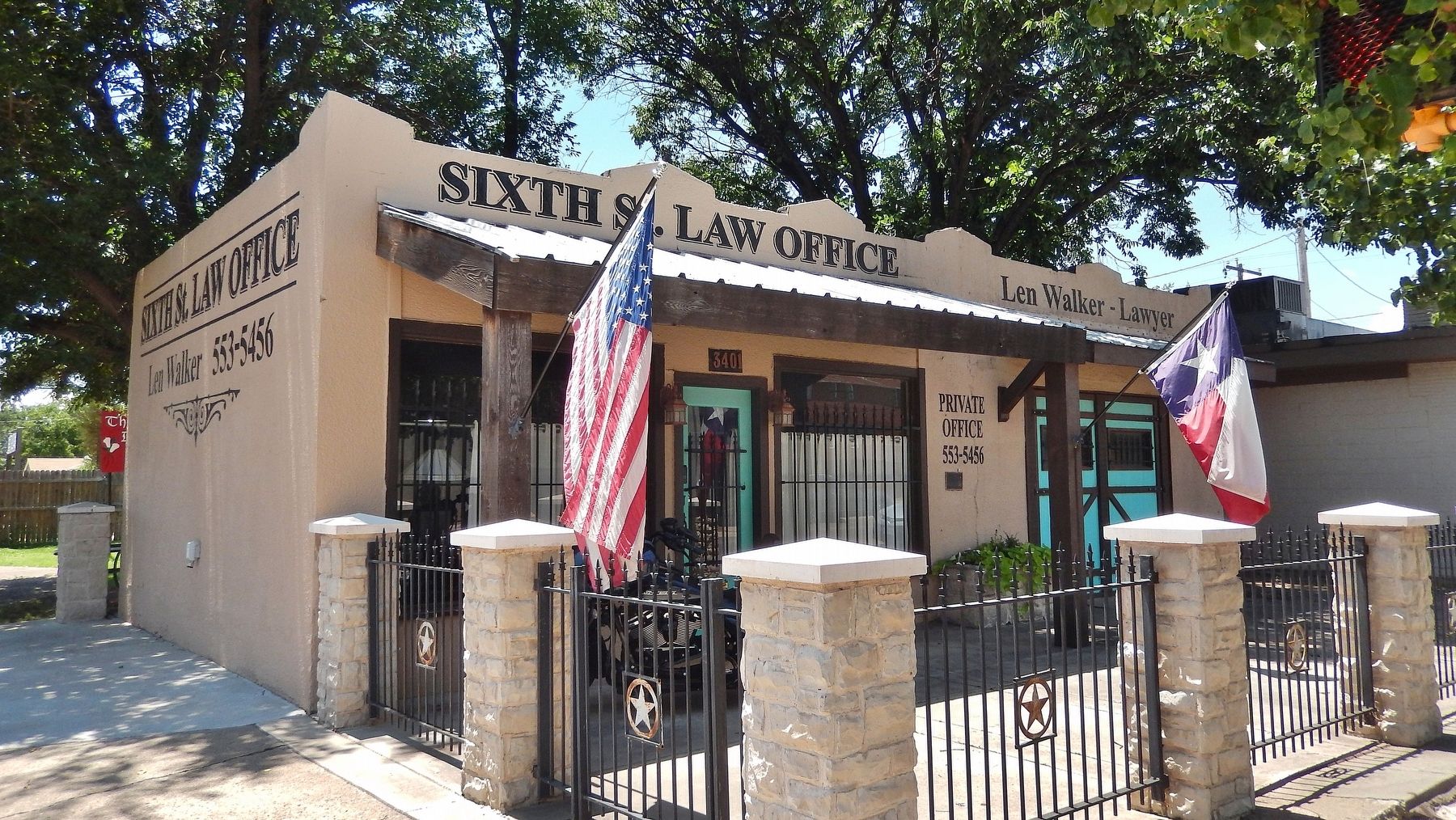
to service the tourists as well as the displaced moving along the highway during this period.Photographed by Cosmos Mariner, July 8, 20253. Dutch Mill Service Station & CaféToday the building houses a law office.The Dutch Mill Service Station and Café (1932) features stuccoed wall surfaces pierced by a glass paneled door, plate glass windows and a roll-down garage door. Ornamental crenellations grace the otherwise plain building. Part of a national chain that often incorporated lodging too, this operation originally featured a large Dutch windmill at curbside designed to attract the eye of passing motorists. This idiosyncratic approach represented early efforts to cater to travelers passing through the district by providing modest restaurant facilities to motorists waiting for their cars to be serviced.
Businesses on Sixth Street, especially service stations and restaurants such as the Dutch Mill Service Station and Café, often were open 24 hours a day. Most establishments catered to both tourists and locals. The building housed both the cafe and gas station operations until 1950, when the cafe expanded into a larger building. In the post-World War II era, the route was realigned, widened, and repaired. In 1953, Route 66 was realigned to the north
to avoid passage through Amarillo's downtown area. From that date, this property increasingly catered to local traffic.
Also see . . .
1. Amarillo Route 66 Information (Amarillo66.com).
Excerpt: 6th Street was the first paved (with gravel) highway through Amarillo. Besides being part of the Route 66 Highway, it was also part of the Ozark Trail Highway. 6th Street was widened twice in its history, the 1st time in 1926 and the 2nd time in 1942. In the widening of 1942 several of the buildings, mainly on the north side of the Street, had parts removed and new fronts added. That is why many of the buildings look “newer” and are so close to the sidewalk. In the 1950’s Route 66 was re-routed to the newly opened 8th Street (now Amarillo Blvd.) which caused many of the businesses that catered to travelers to move or close. In the 1960’s, I-40 replaced both as the main highway. In the 1980’s, antique dealers, bars, and restaurants took an interest in the district and began the revitalization that we see today on 6th Street. In the 1990’s, the district and a number of the buildings were listed on the National Historic Register.(Submitted on April 5, 2026, by Cosmos Mariner of Cape Canaveral, Florida.)One historic building, The Dutch Mill Service Station and Café, had been in operation since 1932 at 3401 West Sixth. This seemingly plain looking building may fool visitors, but it has just as much character as some of the flashier places. Until the 1950's this building housed both a service station and café. Unfortunately the original building was renovated, and the overhead door was covered up. It has recently undergone more changes to the front with the new owners restoring the look of the carriage doors.
2. Old Route 66 Association of Texas.
Excerpt: Welcome to the Old Route 66 Association of Texas. Our small but mighty stretch of the Mother Road runs 178 miles across the Texas Panhandle, packed with history, hidden gems, and plenty of stories worth telling. We take a lot of pride in protecting this piece of America’s highway — preserving landmarks, celebrating our towns, and keeping that Route 66 spirit alive for generations to come.(Submitted on April 5, 2026, by Cosmos Mariner of Cape Canaveral, Florida.)
Credits. This page was last revised on April 5, 2026. It was originally submitted on April 2, 2026, by Cosmos Mariner of Cape Canaveral, Florida. This page has been viewed 55 times since then. Photos: 1, 2, 3. submitted on April 5, 2026, by Cosmos Mariner of Cape Canaveral, Florida.
