Boron in Kern County, California — The American West (Pacific Coastal)
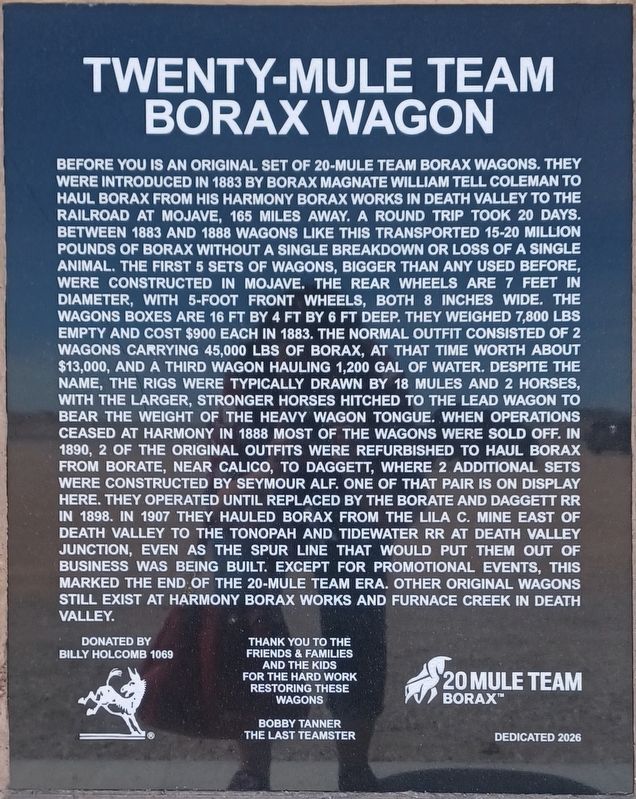
Twenty-Mule Team Borax Wagon
Photographed by Denise Boose, April 4, 2026
1. Twenty-Mule Team Borax Wagon Marker
this page online
Erected 2026 by E Clampus Vitus Billy Holcomb 1069, Billy Tanner, the last Teamster, and 20 Mule Team Borax.
Topics and series. This historical marker is listed in these topic lists: Industry & Commerce • Roads & Vehicles. In addition, it is included in the E Clampus Vitus series list. A significant historical year for this entry is 1883.
Location. 35° 1.782′ N, 117° 41.2′ W. Marker is in Boron, California, in Kern County. It is on Borax Road 2½ miles north of California Route 58. Touch for map. Marker is at or near this postal address: 14486 Borax Road, Boron CA 93516,
Photographed by Denise Boose, April 4, 2026
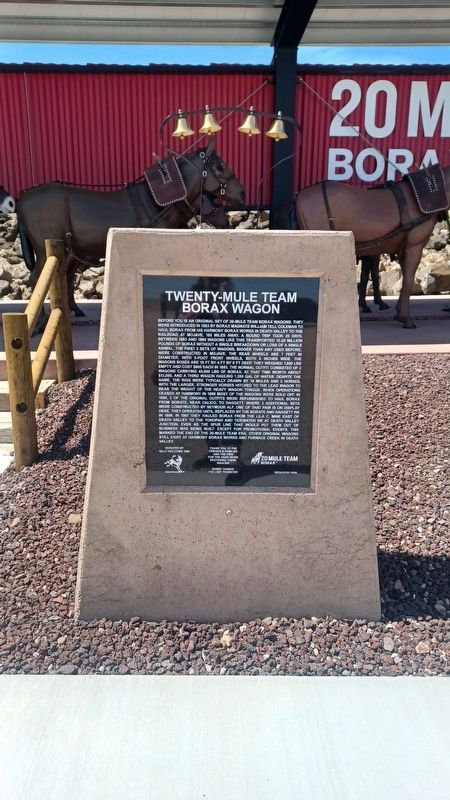
2. Twenty-Mule Team Borax Wagon Marker

Regionally, this marker is in the San Joaquin Valley, specifically in the Central Valley, in the Mojave Desert, and in the Sierra Nevada. It is also on the American Pacific Coast. Globally, it is in North America, on the Ring of Fire, on the Pacific Rim, in the Western Hemisphere, in the Western World, and in the Anglosphere. Historically, it finds itself in what was once New Spain and also Mexico’s Alta California.
Other nearby markers. At least 8 other markers are within 13 miles of this marker, measured as the crow flies: Miner's Cabin (here, next to this marker); Twenty Mule Team (about 300 feet away, measured in a direct line); Borax (approx. 2½ miles away); Florence Lowe “Pancho” Barnes (approx. 2.9 miles away); Twenty-Mule Teams (approx. 2.9 miles away); a different marker also named Miner's Cabin (approx. 3 miles away); Rocket Site (approx. 7 miles away); F-8 Supercritical Wing Aircraft (approx. 12.6 miles away). Touch for a list and map of all markers in Boron.
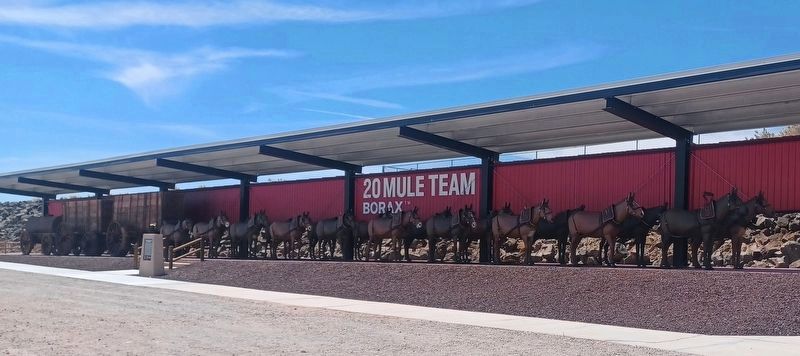
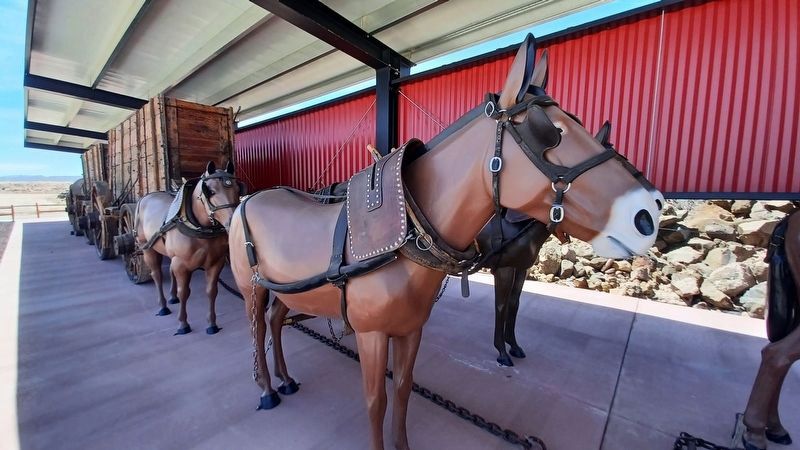
Regarding Twenty-Mule Team Borax Wagon. Only three sets of original Twenty Mule Team Wagons still exist. The largest set is on display at Harmony Borax Works in Death Valley. It is the only existing set of wagons that made the trip from Death Valley to Mojave, and it was built in Mojave. The other two sets of wagons are smaller and they made shorter trips from a mine near Daggett. They were built at Alf’s Blacksmith Shop in Daggett. One set is on display here, and the other set is on display in Death Valley at the ranch museum in Furnace Creek. This set of wagons is the only one that can still travel, and it often makes appearances at public events, including the Rose Parade in Pasadena.
Photographed by Denise Boose, April 4, 2026
3. Twenty-Mule Team Borax Wagons and Marker
Photographed by Denise Boose, April 4, 2026
4. Twenty-Mule Team Borax Wagons
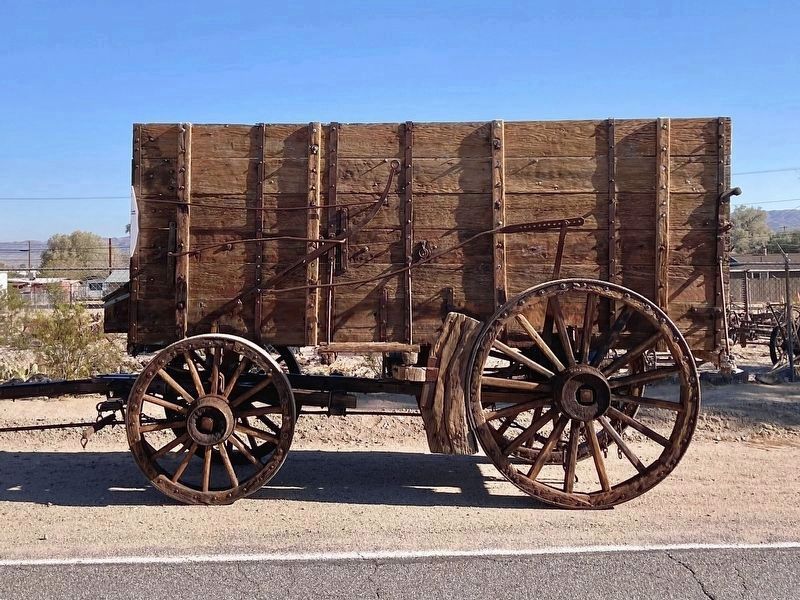
Photographed by Craig Baker, September 21, 2025
5. Twenty Mule Team Wagon
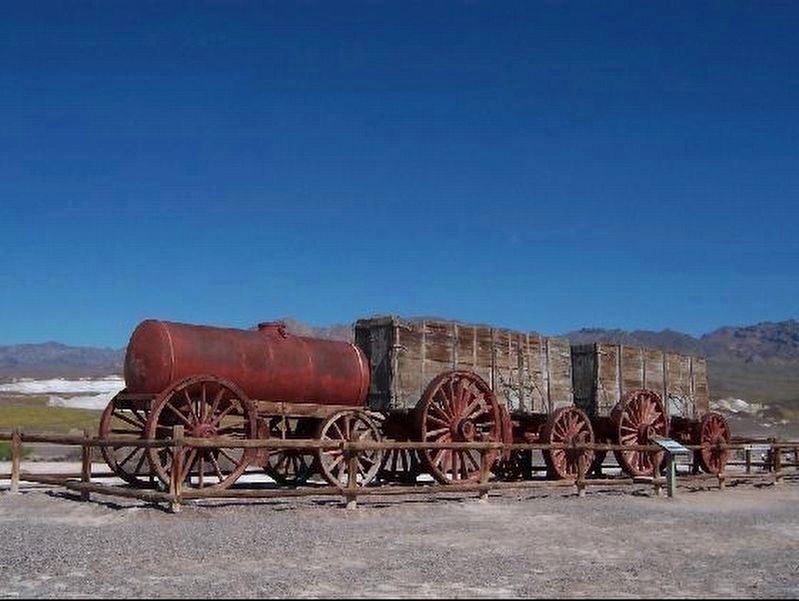
Photographed by Denise Boose
6. Twenty-Mule Team Wagons at Harmony Borax Works
Credits. This page was last revised on April 6, 2026. It was originally submitted on April 4, 2026, by Denise Boose of Tehachapi, California. This page has been viewed 38 times since then. Photos: 1, 2, 3, 4. submitted on April 4, 2026, by Denise Boose of Tehachapi, California. 5. submitted on September 24, 2025, by Craig Baker of Sylmar, California. 6. submitted on April 4, 2026, by Denise Boose of Tehachapi, California. • Andrew Ruppenstein was the editor who published this page.
Editor’s want-list for this marker. Clear photo of the three wagons. • Can you help?
