Montpelier Station in Orange County, Virginia — The American South (Mid-Atlantic)
The African American Cemetery
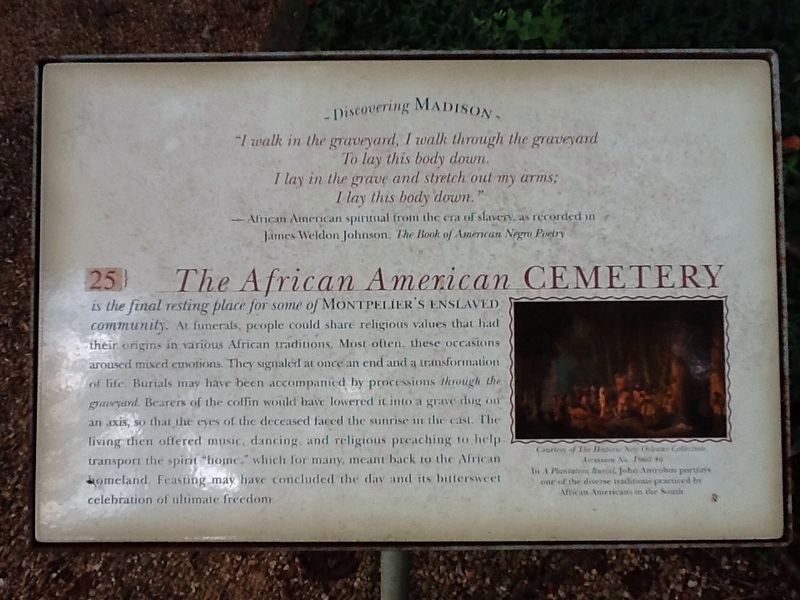
Discovering Madison
Photographed by Michael C. Wilcox, July 30, 2012
1. The African American Cemetery Marker
"I walk in the graveyard, I walk through the graveyard
To lay this body down.
I lay in the grave and stretch out my arms;
I lay this body down."
-African American spiritual from the era of slavery, as recorded in James Weldon Johnson, the Book of American Negro Poetry
The African American Cemetery is the final resting place for some of Montpelier's enslaved community. At funerals, people could share religious values that had their origins in various African traditions. Most often, these occasions aroused mixed emotions. They signaled at once an end and a transformation of life. Burials may have been accomplished by processions through the graveyard. Bearers of the coffin would have lowered it into a grave dug on an axis, so that the eyes of the deceased faced the sunrise in the east. The living then offered music, dancing, and religious preaching to help transport the spirit "home," which for many, meant back to the African homeland. Feasting may have concluded the day and its bittersweet celebration of ultimate freedom.
Erected by Montpelier Foundation. (Marker Number 19.)
Topics. This historical marker is listed
this page online
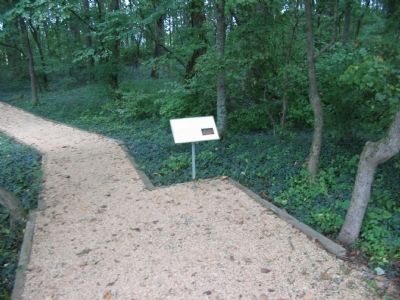
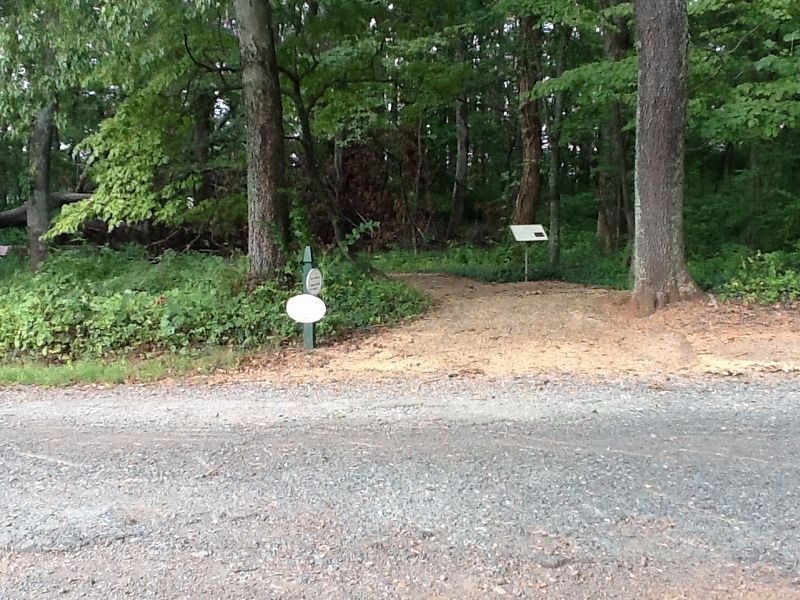
Location. This marker has been replaced by another marker nearby. It was located near 38° 13.16′ N, 78° 10.366′ W. Marker was in Montpelier Station, Virginia, in Orange County. It was on Race Barn Road, on the right when traveling north. Located in the African American Slave in the Montpelier Estate. Touch for map. Marker was in this post office area: Montpelier Station VA 22957, United States of America. Touch for directions.

Regionally, this marker was in Northern Virginia and in the Piedmont. It was also in the American South and specifically in the Upper South. Globally, it was in North America, the Western Hemisphere, the Western World, and the Anglosphere. Historically, it found itself in what was once the territory of the Mississippian Culture, one of the original Thirteen Colonies, one of the Confederate States of America, and the Antebellum South.
Other nearby markers. At least 6 other markers are within walking distance of this location: Mount Pleasant (about 700 feet away, measured in a
Photographed by Craig Swain, September 6, 2009
2. The African American Cemetery Marker
Other markers no longer nearby. Slave Cemetery (was a few steps from this marker but has been replaced with another marker now near it); Mount Pleasant c. 1750s (was about 700 feet away but has been replaced with another marker now near it); The Madison Family Cemetery (was about 800 feet away but has been replaced with another marker now near it); The Quarters (was approx. 0.2 miles away but has been replaced with another marker now near it); The Road (was approx. ¼ mile away but has been replaced with another marker now near it); Madison Farm Complex (was approx. ¼ mile away but has been replaced with another marker now near it); Homes for Enslaved Families (was approx. ¼ mile away but has been replaced with another marker now near it); The Backyard (was approx. ¼ mile away but has been replaced with
Photographed by Craig Swain, September 6, 2009
3. The African American Cemetery Marker
More about this marker. On the right is an illustration courtesy of the Historic New Orleans Collection, Accession No. 1960.46, captioned In a Plantation Burial, John Antrobus portrays one of the diverse traditions practiced by African Americans in the South.
Also see . . . Slave Cemetery. Page from the Montpelier web site. (Submitted on November 5, 2009, by Craig Swain of Leesburg, Virginia.)
Photographed by Michael C. Wilcox, July 30, 2012
4. The African American Cemetery Marker
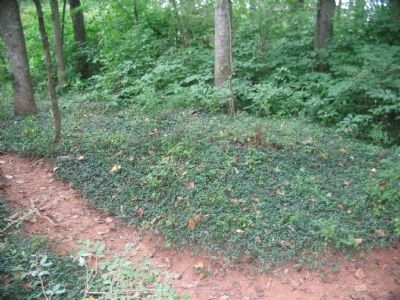
Photographed by Craig Swain, September 6, 2009
5. Area of the Cemetery
Depressions in the ground indicate the burial sites.
Credits. This page was last revised on April 23, 2026. It was originally submitted on November 5, 2009, by Craig Swain of Leesburg, Virginia. This page has been viewed 1,156 times since then and 25 times this year. Last updated on April 22, 2026, by Evan Dwyer of Richmond, Virginia. Photos: 1. submitted on November 26, 2016, by Michael C. Wilcox of Winston-Salem, North Carolina. 2, 3. submitted on November 5, 2009, by Craig Swain of Leesburg, Virginia. 4. submitted on November 26, 2016, by Michael C. Wilcox of Winston-Salem, North Carolina. 5. submitted on November 5, 2009, by Craig Swain of Leesburg, Virginia. • Devry Becker Jones was the editor who published this page.
