Pensacola in Escambia County, Florida — The American South (South Atlantic)
Magnolia Cemetery
Established c. 1886
| — | Pensacola's Historic Cemeteries | — |
Photographed by Cosmos Mariner, June 19, 2025
1. Magnolia Cemetery Marker
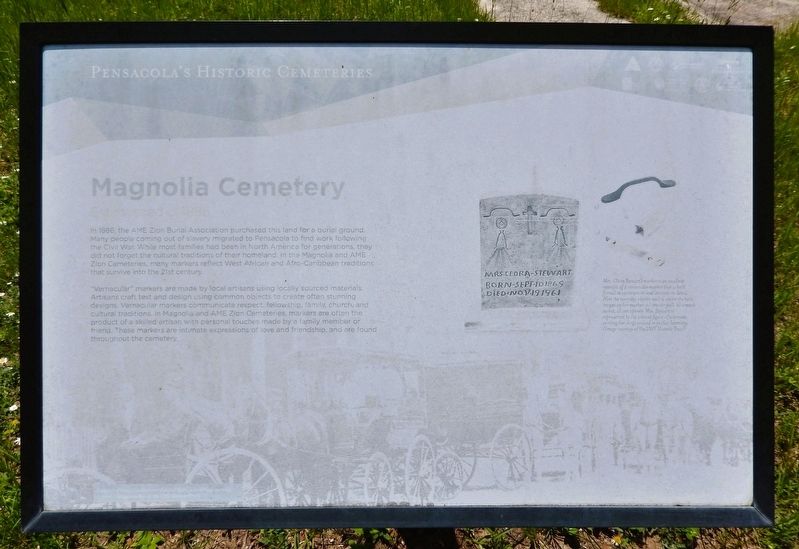
In 1886, the AME Zion Burial Association purchased this land for a burial ground. Many people coming out of slavery migrated to Pensacola to find work following the Civil War. While most families had been in North America for generations, they did not forget the cultural traditions of their homeland. In the Magnolia and AME Zion Cemeteries, many markers reflect West African and Afro-Caribbean traditions that survive into the 21st century.
“Vernacular” markers are made by local artisans using locally sourced materials. Artisans craft text and design using common objects to create often stunning designs. Vernacular markers communicate respect, fellowship, family, church, and cultural traditions. In Magnolia and AME Zion Cemeteries, markers are often the product of a skilled artisan with personal touches made by a family member or friend. These markers are intimate expressions of love and friendship, and are found throughout the cemetery.
Topics. This historical marker is listed in these topic lists: African Americans • Cemeteries & Burial Sites. A significant historical year for this entry is 1886.
Location. 30° 25.441′ N, 87° 13.525′ W.
this page online

Regionally, this marker is on the Florida Panhandle. It is also in the American South, specifically in the Deep South, and on the Gulf Coast. Globally, it is in the North Atlantic Region, North America, a Gulf of Mexico state, the Western Hemisphere, the Western World, and the Anglosphere. Historically, it finds itself in what was once New Spain, the territory of the Mississippian Culture, one of the Confederate States of America, and the Antebellum South.
Other nearby markers. At least 8 other markers are within walking distance of this marker: A.M.E. Zion Cemetery (a few steps from this marker); North Hill Preservation District (approx. 0.2 miles away); Fort San Bernardo (approx. ¼ mile away); General Francisco De Miranda
Courtesy UWF Historic Trust
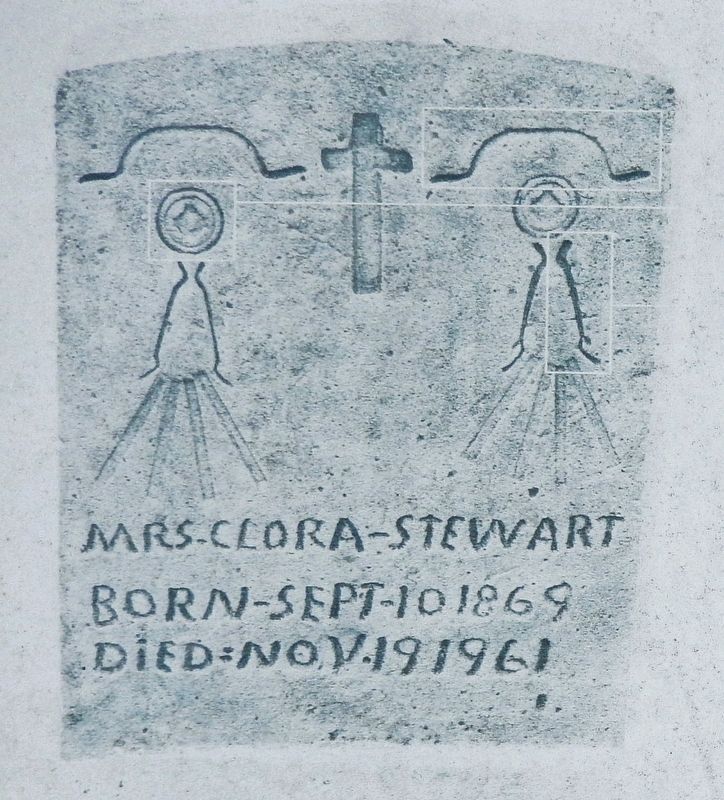
2. Marker detail: Mrs. Clora Stewart Marker
Mrs. Clora Stewart’s marker is an excellent example of a vernacular marker that is both formal in construction and intimate in detail. Note the everyday objects used to create the twin images on her marker: a) drawer pull, b) wrench socket, c) can opener. Mrs. Stewart is represented by the vibrant figure of a woman swirling her skirts around in perfect harmony.
Also see . . .
1. Pensacola Area Cemetery Team (PACT) (City of Pensacola).
Excerpt: The Magnolia/AME Zion cemeteries, co-located in the 1200 block of North A Street, were established at the turn of the 20th century and serve as an important physical reflection of Pensacola’s African-American community from the early 1900s through the 1980s. Unfortunately, in recent decades, the cemeteries had not been actively maintained and fell into disrepair.(Submitted on April 28, 2026, by Cosmos Mariner of Cape Canaveral, Florida.)With the ownership of the sites unclear, former Mayor of Pensacola, Ashton Hayward worked with the University of West Florida to develop a plan of action. That partnership expanded to include the Escambia County Property Appraiser's office, non-profits like Keep Pensacola Beautiful, and area residents, who have united to undertake several cleanup efforts. As a result of these combined efforts,
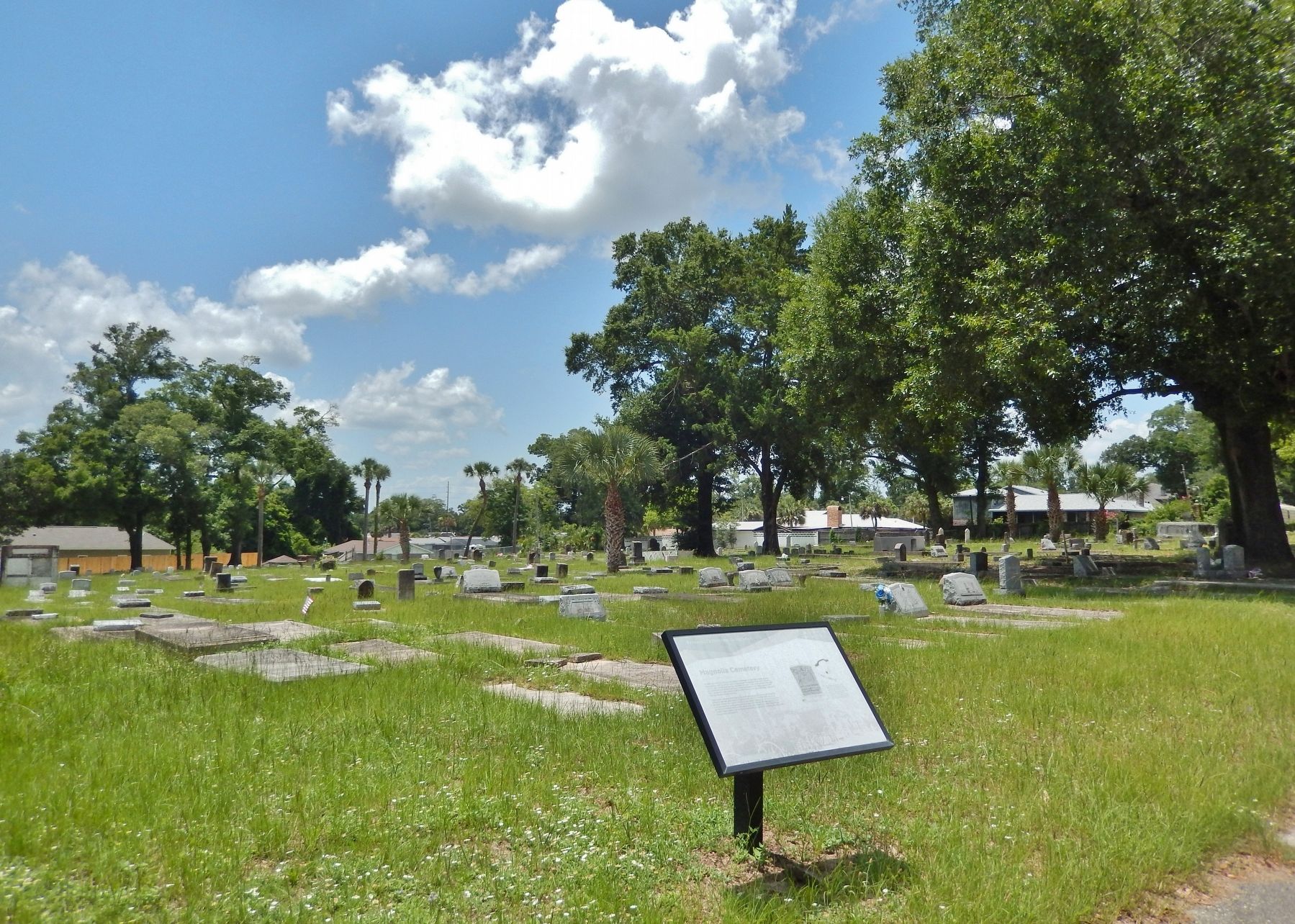
the cemeteries are in much better shape while all stakeholders work to develop a plan to keep the cemeteries maintained on a long-term basis.Photographed by Cosmos Mariner, June 19, 20253. Magnolia Cemetery & MarkerLooking northwest from North A Street.
2. Examing the grave markers at AME Zion and Magnolia cemeteries (WUWF.org).
(By Dr. Judy Bense, April 5, 2022) Excerpt: Grave markers reflect community preferences and availability, and this is very evident in Pensacola’s AME Zion and Magnolia cemeteries. Under the umbrella of the AME Zion Church, their burial association sold plots to their members. Established in the late 1800s, the cemeteries included almost two full city blocks and were the main burial grounds for church members from across Pensacola through the 1970s.(Submitted on April 28, 2026, by Cosmos Mariner of Cape Canaveral, Florida.)Some handmade markers at AME Zion and Magnolia cemeteries have very personal touches, including drawings created with everyday household artifacts like can openers and drawer pulls. These headstones reflect a different time in Pensacola and give us unique insight into Africa-American culture.
Credits. This page was last revised on April 28, 2026. It was originally submitted on April 27, 2026, by Cosmos Mariner of Cape Canaveral, Florida. This page has been viewed 21 times since then. Photos: 1, 2, 3. submitted on April 28, 2026, by Cosmos Mariner of Cape Canaveral, Florida.
