
St. John's Coalition in Pensacola in Escambia County, Florida — The American South (South Atlantic)
Zinc Marker
| — | St. John's Cemetery | — |
Photographed by Cosmos Mariner, June 19, 2025
1. Zinc Marker
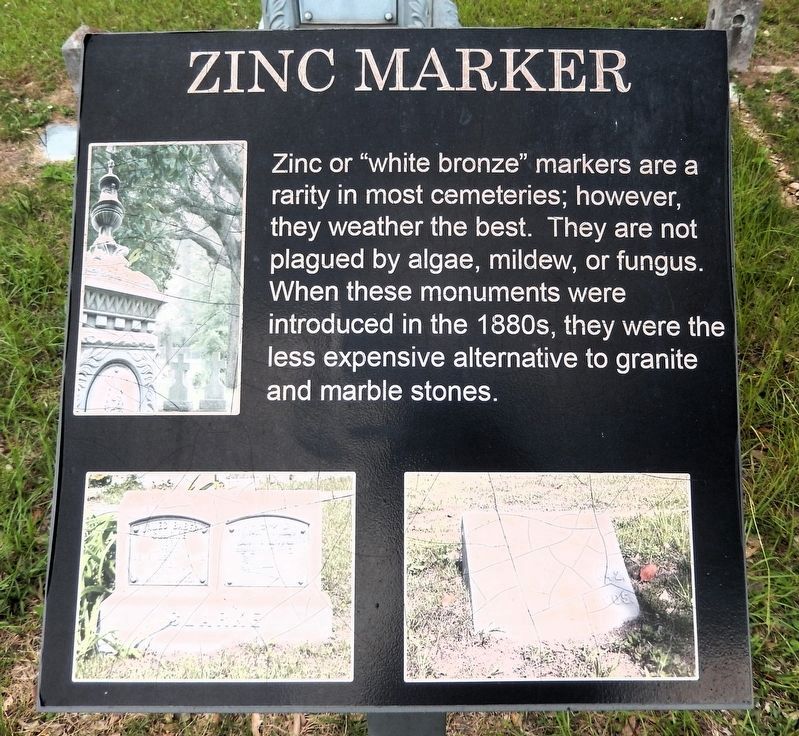
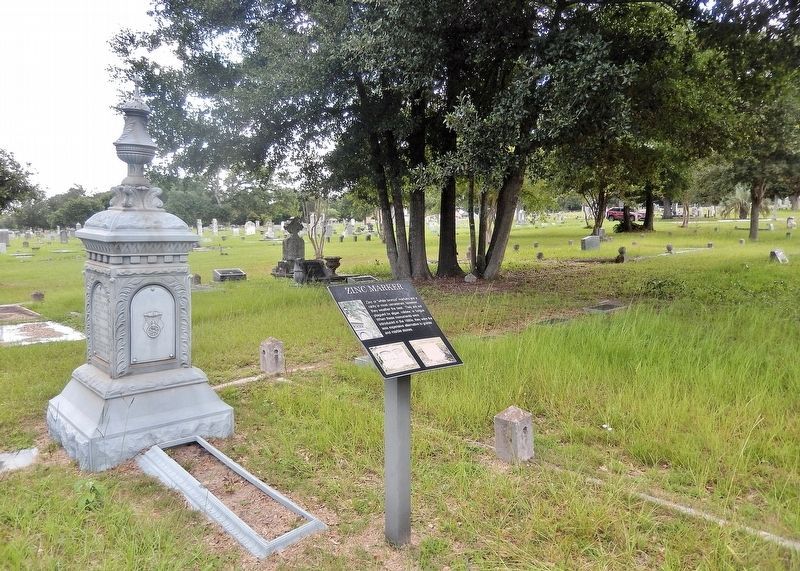
Zinc or “white bronze” markers are a rarity in most cemeteries; however, they weather the best. They are not plagued by algae, mildew, or fungus. When these monuments were introduced in the 1880s, they were the less expensive alternative to granite and marble stones.
Erected 2018 by Pensacola Bay Area Impact 100 and St. John's Cemetery Foundation.
Topics. This historical marker is listed in this topic list: Cemeteries & Burial Sites.
Location. 30° 24.947′ N, 87° 14.011′ W. Marker is in Pensacola, Florida, in Escambia County. It is in St. John's Coalition. It can be reached from the intersection of North G Street and West Belmont Street, on the left when traveling north. The marker is near the southeast corner of the St. John's Cemetery grounds, in Section 12. Touch for map. Marker is at or near this postal address: 301 North G Street, Pensacola FL 32501, United States of America. Touch for directions.

Regionally, this marker is on the Florida Panhandle. It is also in the American South, specifically in the Deep South, and on the Gulf Coast. Globally, it is
this page online
Other nearby markers. At least 8 other markers are within walking distance of this marker: First Interment (within shouting distance of this marker); Baby Section (within shouting distance of this marker); Mollie McCoy (within shouting distance of this marker); Inventor of FSU Tomahawk Chop (within shouting distance of this marker); Historic North Side (about 300 feet away, measured in a direct line); Monument Sculpting (about 300 feet away); More to Discover... A Secret Language (about 300 feet away); Welcome to St. John's Cemetery (about 300 feet away). Touch for a list and map of all markers in Pensacola.
Related markers. Click here for a list of markers that are related to this marker. St. John's Cemetery
Also see . . .
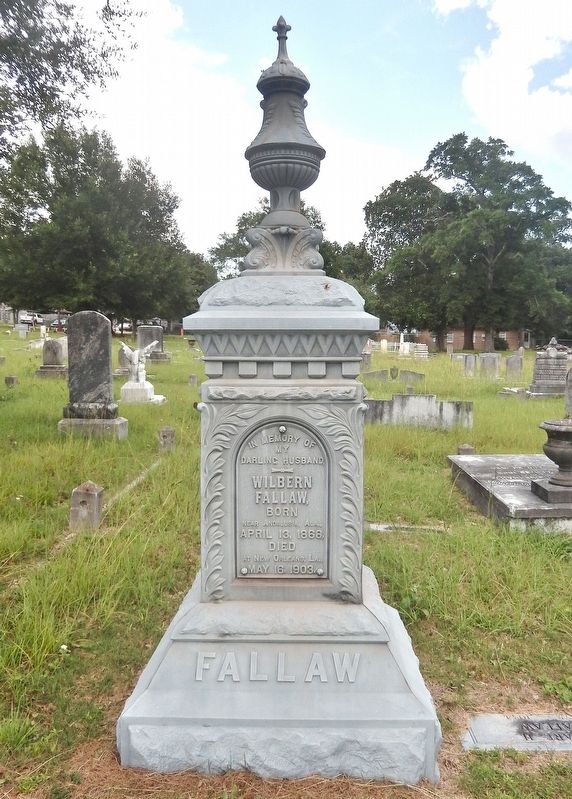
1. Wilbern Fallaw (1868-1903) (Find A Grave).
Saint John's Cemetery, Pensacola, Escambia(Submitted on May 3, 2026, by Cosmos Mariner of Cape Canaveral, Florida.)County, Florida, USA, Section 12, Lot 19, Space 1Photographed by Cosmos Mariner, June 19, 20252. Zinc MarkerLooking northwest through St. John's Cemetery from Section 12.
2. Zinc Headstones: The Legacy of Zinkers (Rock & Gem).
Excerpt: Zinc headstones, also known as “zinkers,” may look like stone at first glance, but their bluish-grey shimmer gives away their secret—they’re made of 99% pure zinc. These 19th-century monuments, popular after the Civil War and prized for their durability, were marketed as “white bronze” and sold by traveling agents across the country. Today, they stand as haunting relics of American cemetery history—metal monuments that outlasted marble rock, granite, and time itself.(Submitted on May 3, 2026, by Cosmos Mariner of Cape Canaveral, Florida.)Zinkers were made from about 1870 to 1914, with production peaking in the late 1880s. The Monumental Bronze Company of Bridgeport, Connecticut, was responsible for nearly all 99% pure zinc (White Bronze) monuments found in U.S. cemeteries; its subsidiaries also had names for their cast zinc: American Bronze in Chicago, and Western White Bronze in Des Moines.
You won’t find the same color headstones now that traveling salesmen pitched in 19th-century catalogs. When exposed
to air, zinkers develop zinc carbonate, turning white monuments a bluish-grey. But what really sets zinkers apart from other headstones in older U.S. cemeteries is that they are hollow, which (fun fact) provided a clever and expedient place to hide booze during Prohibition.Photographed by Cosmos Mariner, June 19, 20253. Wilbern Fallaw — Zinc Marker
Photographed by Cosmos Mariner, June 19, 2025
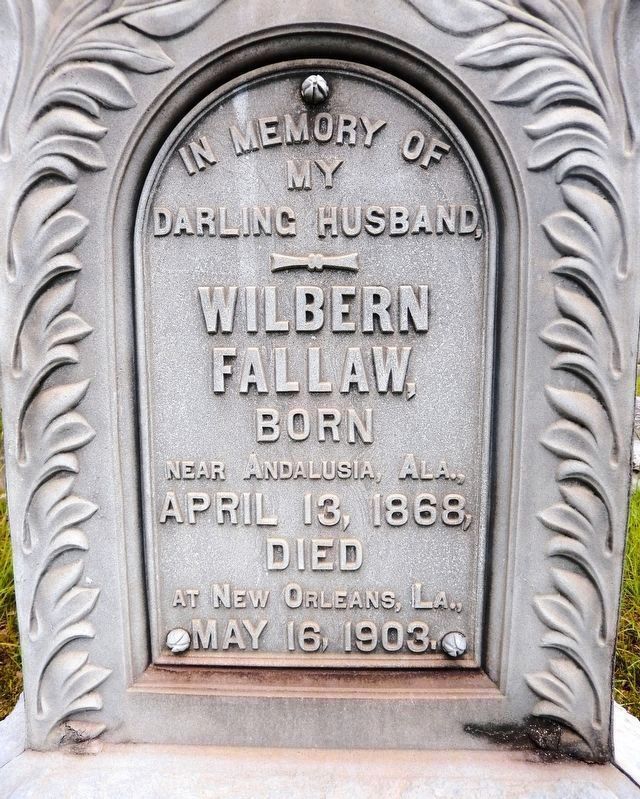
4. Wilbern Fallaw — Marker Inscription
Wilbern Fallaw,
Born near Andalusia, Ala., April 13, 1868,
Died at New Orleans, La., May 16, 1903.
Credits. This page was last revised on May 3, 2026. It was originally submitted on May 1, 2026, by Cosmos Mariner of Cape Canaveral, Florida. This page has been viewed 17 times since then. Photos: 1, 2, 3, 4. submitted on May 3, 2026, by Cosmos Mariner of Cape Canaveral, Florida.
