Near Fort Hunter in Montgomery County, New York — The American Northeast (Mid-Atlantic)
The Schoharie Creek Bypass
Schoharie Crossing State Historic Site
Photographed by Steve Stoessel, May 2, 2026
1. The Schoharie Creek Bypass Marker
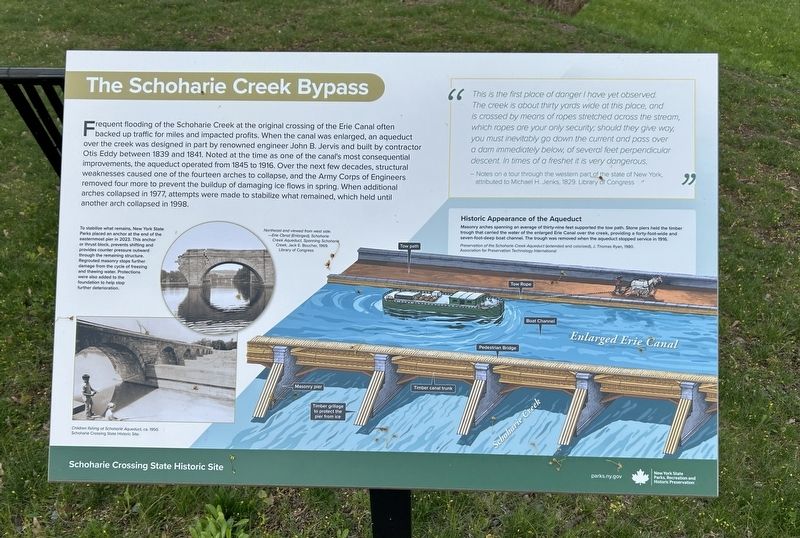
“This is the first place of danger I have yet observed. The creek is about thirty yards wide at this place, and is crossed by means of ropes stretched across the stream, which ropes are your only security; should they give way, you must inevitably go down the current and pass over a dam immediately below, of several feet perpendicular descent. In times of a freshet it
this page online
Historic Appearance of the Aqueduct
Masonry arches spanning an average of thirty-nine feet supported the tow path. Stone piers held the timber trough that carried the water of the enlarged Erie Canal over the creek, providing a forty-foot-wide and seven-foot-deep boat channel. The trough was removed when the aqueduct stopped service in 1916.
Preservation of the Schoharie Creek Aqueduct (extended and colorized), J. Thomas Ryan, 1980. Association for Preservation Technology International
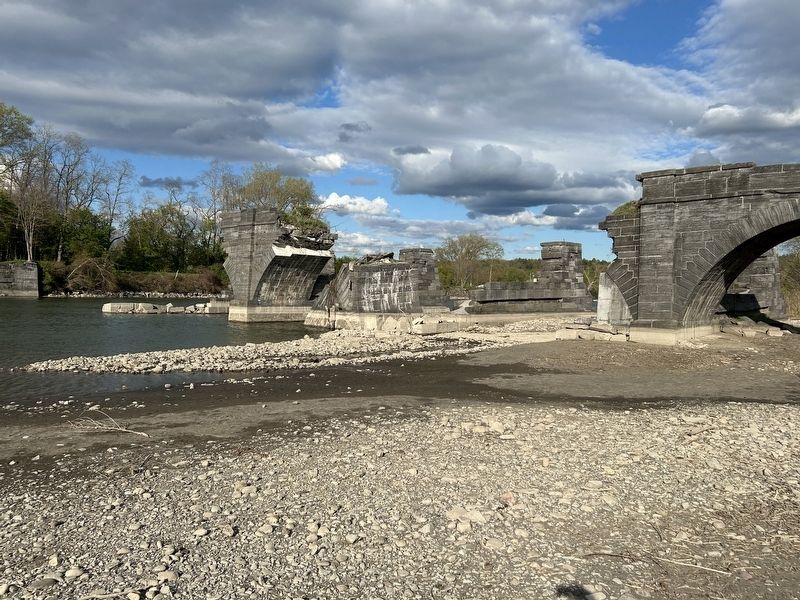
To stabilize what remains, New York State Parks placed an anchor at the end of the easternmost pier in 2023. This anchor or thrust block, prevents shifting and provides counter pressure outward through the remaining structure. Regrouted masonry stops further damage from the cycle of freezing and thawing water. Protections were also added to the foundation to help stop further deterioration.
[ Photo Captions ]
Top: Northeast end viewed from west side.
Bottom: Children fishing at Schoharie Aqueduct, ca. 1950.
Erected by New
Photographed by Steve Stoessel, May 2, 2026
2. The Schoharie Creek Bypass Marker
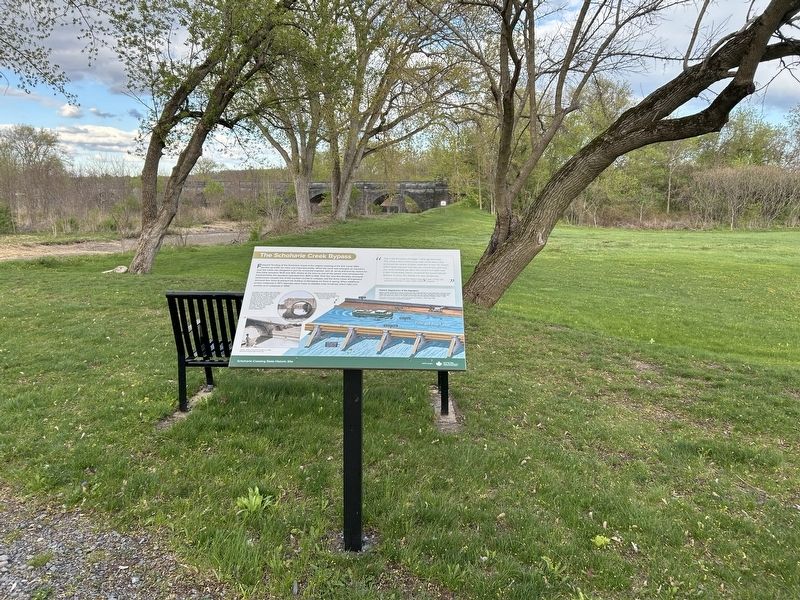
Note the western end of the aqueduct in the background.
Topics. This historical marker is listed in these topic lists: Bridges & Viaducts • Waterways & Vessels. A significant historical year for this entry is 1839.
Location. 42° 56.333′ N, 74° 17.294′ W. Marker is near Fort Hunter, New York, in Montgomery County. It is on Aqueduct Picnic Area 0.4 miles north of Dufel Road, on the right. Touch for map. Marker is at or near this postal address: Hartley Lane, Amsterdam NY 12010, United States of America. Touch for directions.

Regionally, this marker is in Upstate New York and in the Mohawk Valley. It is also in the American Northeast and in the Mid-Atlantic. Globally, it is in North America, the Western Hemisphere, the Western World, and the Anglosphere. Historically, it finds itself in what was once the Haudenosaunee (Iroquois) Confederacy, New Netherland, and one of the original Thirteen Colonies.
Other nearby markers. At least 8 other markers are within walking distance of this marker: Welcome to Schoharie Crossing (about 400 feet away, measured in a direct line); a different marker also named The Schoharie Aqueduct
Photographed by Steve Stoessel, May 2, 2026
3. Aqueduct Remains
Another marker is no longer nearby. The Schoharie Aqueduct (was about 400 feet away).
Photographed by Steve Stoessel, May 2, 2026
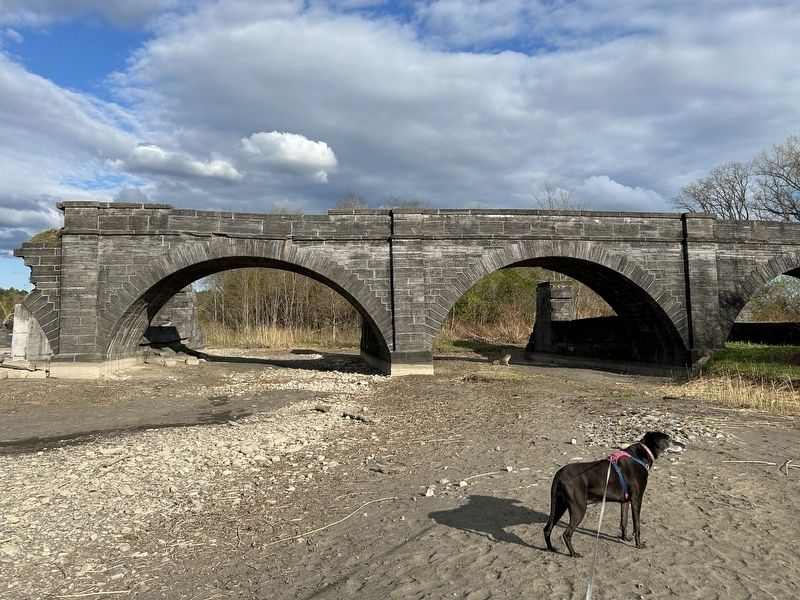
4. Western End of the Aqueduct
Credits. This page was last revised on May 4, 2026. It was originally submitted on May 3, 2026, by Steve Stoessel of Niskayuna, New York. This page has been viewed 16 times since then. Photos: 1. submitted on May 3, 2026, by Steve Stoessel of Niskayuna, New York. 2, 3, 4. submitted on May 4, 2026, by Steve Stoessel of Niskayuna, New York.
