Shady Side in Anne Arundel County, Maryland — The American Northeast (Mid-Atlantic)
Transformation of the Avery House and over a Century of Expansion
Photographed by Devry Becker Jones (CC0), February 16, 2019
1. Transformation of the Avery House and over a Century of Expansion Marker
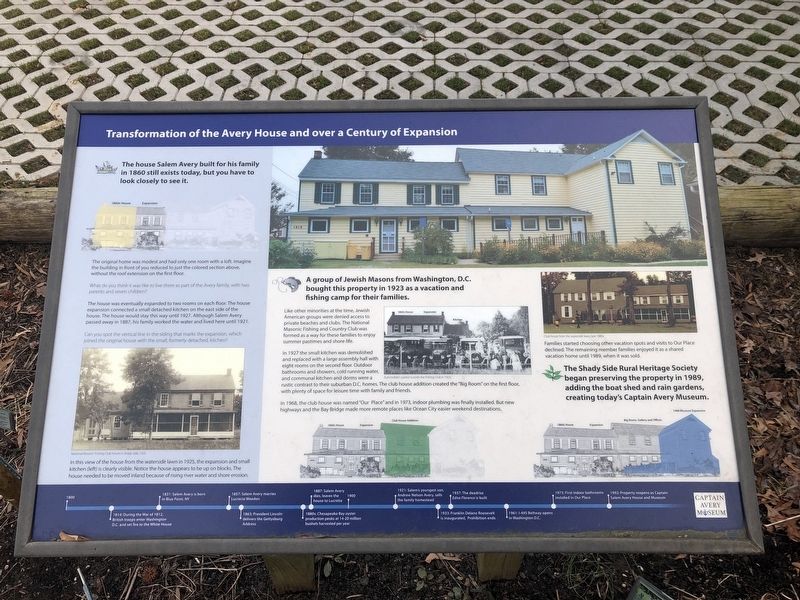
The house Salem Avery built for his family in 1860 still exists today, but you have to look closely to see it.
The original home was modest and had only one room with a loft. Imagine the building in front of you reduced to just the colored section above without the roof extension on the first floor.
What do you think it was like to live there as part of the Avery family, with two parents and seven children?
The house was eventually expanded to two rooms on each floor. The house expansion connected a small detached kitchen on the east side of the house. The house would stay this way until 1927. Although Salem Avery passed away in 1887, his family worked the water and lived here until 1921.
Can you spot the vertical line in the siding that marks the expansion, which joined the original house with the small, formerly detached, kitchen?
In this view of the house from the waterside lawn in 1925, the expansion and small kitchen (left) is clearly visible. Notice the house appears to be up on blocks. The house needed to be moved inland because of the rising river water and shore erosion.
A group of Jewish Masons from Washington, D.C. bought this property in 1923 as a vacation and fishing camp for their families.
Like
this page online
In 1927, the small kitchen was demolished and replaced with a large assembly hall with eight rooms on the second floor. Outdoor bathrooms and showers, cold running water, and communal kitchen and dorms were a rustic contrast to their suburban D.C. homes. The club house addition created the "Big Room" on the first floor, with plenty of space for leisure time with family and friends.
In 1968, the club house was named "Our Place" and in 1973, indoor plumbing was finally installed. But new highways and the Bay Bridge made more remote places like Ocean City easier weekend destinations.
Families started choosing other vacation spots and visits to Our Place declined. The remaining member families enjoyed it as a shared vacation home until 1989, when it was sold.
The Shady Side Rural Heritage Society began preserving the property in 1989, adding the boat shed and rain gardens, creating today's Captain Avery Museum.
[Timeline:]
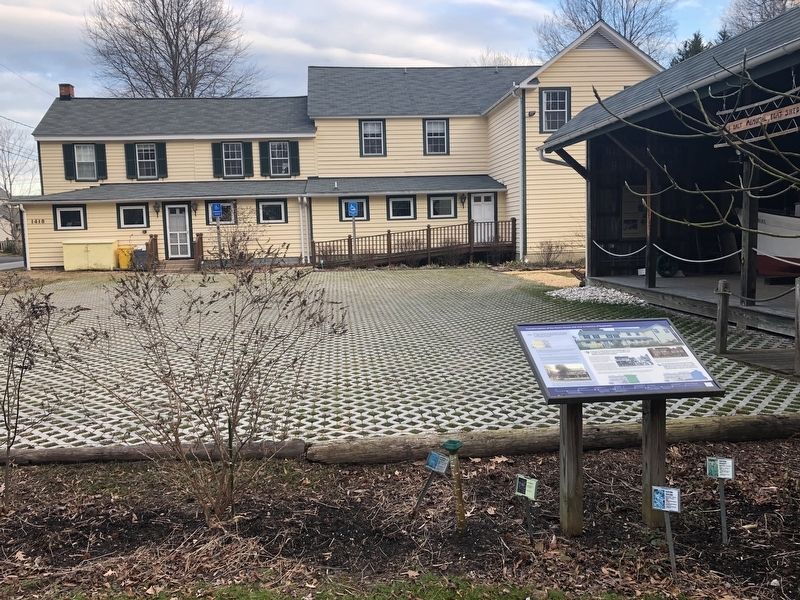
1814:During the War of 1812, British troops enter Washington D.C. and set fire to the White HousePhotographed by Devry Becker Jones (CC0), February 16, 20192. Transformation of the Avery House and over a Century of Expansion MarkerThe house is in the background.
1831: Salem Avery is born in Blue Point, NY
1857: Salem Avery marries Lucrecia Weedon
1863: President Lincoln delivers the Gettysburg Address
1880s: Chesapeake Bay oyster production peaks at 14-20 million bushels harvested per year
1887: Salem Avery dies, leaves the house to Lucretia
1921: Salem's youngest son, Andrew Nelson Avery, sells the family homestead.
1933: Franklin Delano Roosevelt is inaugurated, Prohibition ends
1937: The deadrise Edna Florence is built
1961: I-495 Beltway opens in Washington D.C.
1973: First indoor bathrooms installed in Our Place
1992: Property reopens as Captain Salem Avery House and Museum
Erected by Captain Avery Museum.
Topics and series. This historical marker is listed in these topic lists: Industry & Commerce • Parks & Recreational Areas • Religion & Religious Structures. In addition, it is included in the Former U.S. Presidents: #16 Abraham Lincoln, and the National Register of Historic Places (NRHP) series lists. A significant historical year for this entry is 1860.
Location. 38° 50.959′ N,
Photographed by Devry Becker Jones (CC0), February 16, 2019
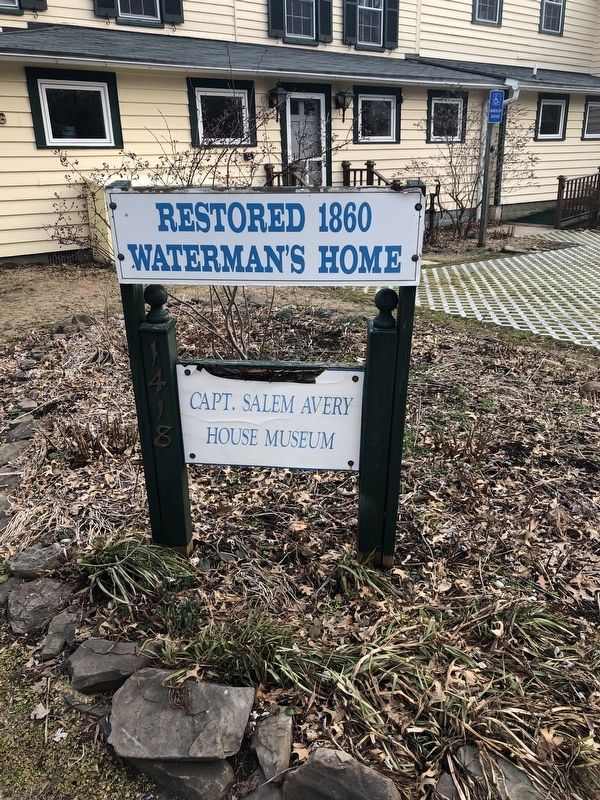
3. Restored 1860 Waterman's Home
Capt. Salem Avery House Museum

Regionally, this marker is in Central Maryland. It is also in the American Mid-Atlantic, in the Chesapeake Bay Region, and on the Eastern Seaboard. Globally, it is in the North Atlantic Region, North America, the Western Hemisphere, the Western World, and the Anglosphere. Historically, it finds itself in what was once one of the original Thirteen Colonies and also the Antebellum South.
Other nearby markers. At least 8 other markers are within walking distance of this marker: Going to Market (a few steps from this marker); Edna Florence (a few steps from this marker); Fishing (a few steps from this marker); Crabbing (a few steps from this marker); Seasons of the Waterman (a few steps from this marker); Welcome to the Captain Avery Museum (a few steps from this marker); Oystering (a few steps from this marker); Boatbuilding in Shady Side (a few steps from this marker). Touch for a list and map of all markers in Shady Side.
Also see . . . Capt. Salem Avery House - National Register of Historic Places Nomination Form.
The Captain Salem Avery House is significant under National Register Criterion A for its association with the maritime history and recreational development of the Chesapeake Bay region. The property is associated with the small-scale, water-based industries which typified rural communities on the Western Shore of the Chesapeake Bay in the latter half of the nineteenth century, and its subsequent transition to recreational use represents a trend which began to affect the region in the early 20th century.(Submitted on May 6, 2026, by Pete Skillman of Wilmington, Delaware.)
Credits. This page was last revised on May 7, 2026. It was originally submitted on February 16, 2019, by Devry Becker Jones of Washington, District of Columbia. This page has been viewed 433 times since then and 43 times this year. Last updated on May 6, 2026, by Liam Williams of Irvine, California. Photos: 1, 2, 3. submitted on February 16, 2019, by Devry Becker Jones of Washington, District of Columbia.
