Morro Bay in San Luis Obispo County, California — The American West (Pacific Coastal)
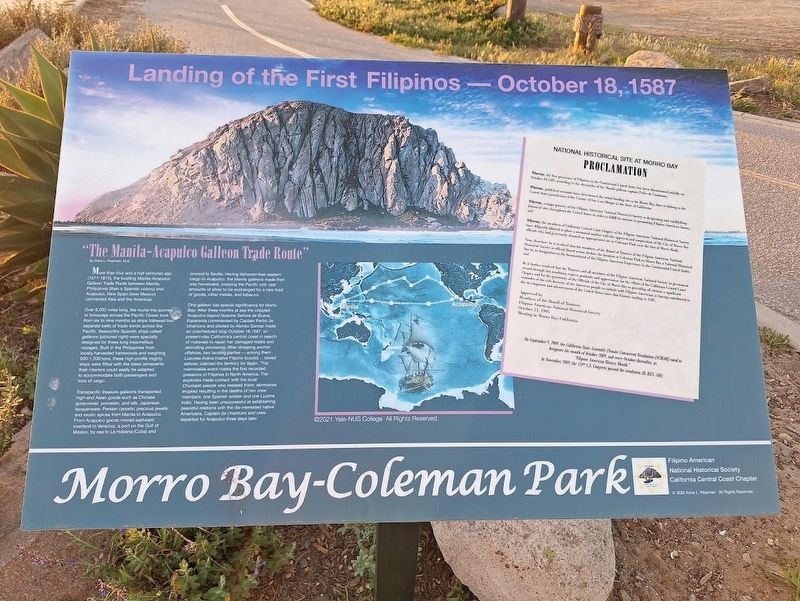
Landing of the First Filipinos - October 18, 1587
Morro Bay - Coleman Park
Photographed by Jason Voigt, March 25, 2026
1. Landing of the First Filipinos - October 18, 1587 Marker
"The Manila-Acapulco Galleon Trade Route"
By Anna L. Pearman, M.A.
More than four and a half centuries ago (1571-1815), the bustling Manila-Acapulco Galleon Trade Route between Manila, Philippines (then a Spanish colony) and Acapulco, New Spain (now Mexico) connected Asia and the Americas.
Over 6,000 miles long, the round-trip journey or tomaviaje across the Pacific Ocean took from six to nine months as ships followed two separate belts of trade winds across the Pacific. Seaworthy Spanish ships called galleons were specially designed for these long treacherous voyages. Built in the Philippines from locally harvested hardwoods and weighing 500-1,200 tons, these high-profile mighty ships were fitted with the latest armaments their interiors could easily be adapted to accommodate both passengers and tons of cargo.
Transpacific treasure galleons transported high-end Asian goods such as Chinese gunpowder, porcelain, and silk; Japanese lacquerware; Persian carpets; precious jewels; and exotic spices from Manila to Acapulco. From Acapulco goods moved eastward overland to Veracruz, a port on the Gulf of Mexico, by sea
this page online
One galleon has special significance for Morro Bay: After three months at sea the crippled Acapulco-bound Nuestra Senora de Buena Esperanza commanded by Captain Pedro de Unamuno and piloted by Alonso Gomez made an unscheduled stop October 18, 1587, on present-day California's central coast in search of materials to repair her damaged masts and dwindling provisions. After dropping anchor offshore, two landing parties - among them Luzones Indios (native Filipino scouts) -- rowed ashore, claimed the territory for Spain. This memorable event marks the first recorded presence of Filipinos in North America. The explorers made contact with the local Chumash people who resisted them; skirmishes erupted resulting in the deaths of two crew members: one Spanish soldier and one Luzone Indio. Having been unsuccessful at establishing peaceful relations with the dis-interested native Americans,
Photographed by Jason Voigt, March 25, 2026
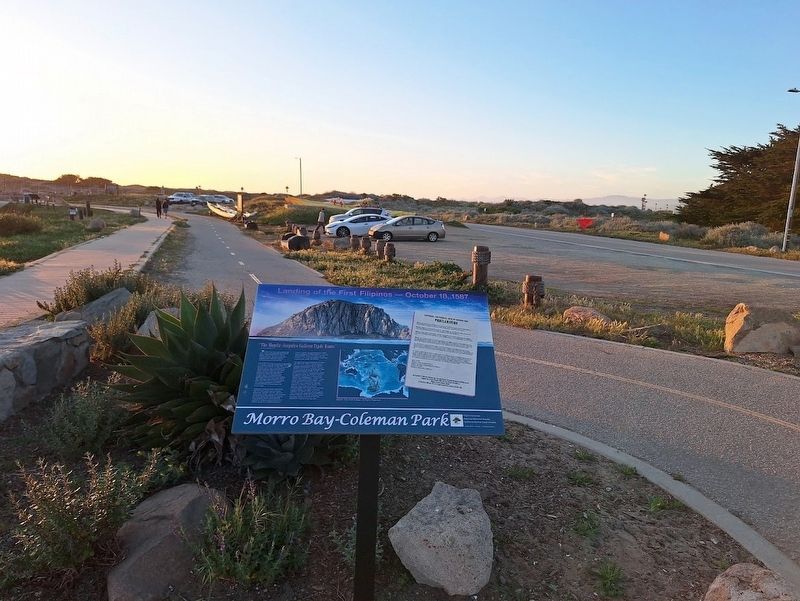
2. Landing of the First Filipinos - October 18, 1587 Marker
Erected 2022 by Filipino American National Historical Society (California Central Coast Chapter).
Topics. This historical marker is listed in these topic lists: Asian Americans • Immigration. A significant historical date for this entry is October 18, 1587.
Location. 35° 22.334′ N, 120° 51.571′ W. Marker is in Morro Bay, California, in San Luis Obispo County. It is on Embarcadero south of Coleman Drive, on the left when traveling north. Touch for map. Marker is at or near this postal address: 101 Coleman Dr, Morro Bay CA 93442, United States of America. Touch for directions.

Regionally, this marker is on the Central Coast and specifically on the Coast Ranges. It is also on the American Pacific Coast. Globally, it is in North America, on the Ring of Fire, on the Pacific Rim, in the Western Hemisphere, in the Western World, and in the Anglosphere. Historically, it finds itself in what was once New Spain and also Mexico’s Alta California.
Other nearby markers. At least 8 other markers are within walking distance of this marker: Gifts From The Sea (about 300
Photographed by Jason Voigt, March 25, 2026
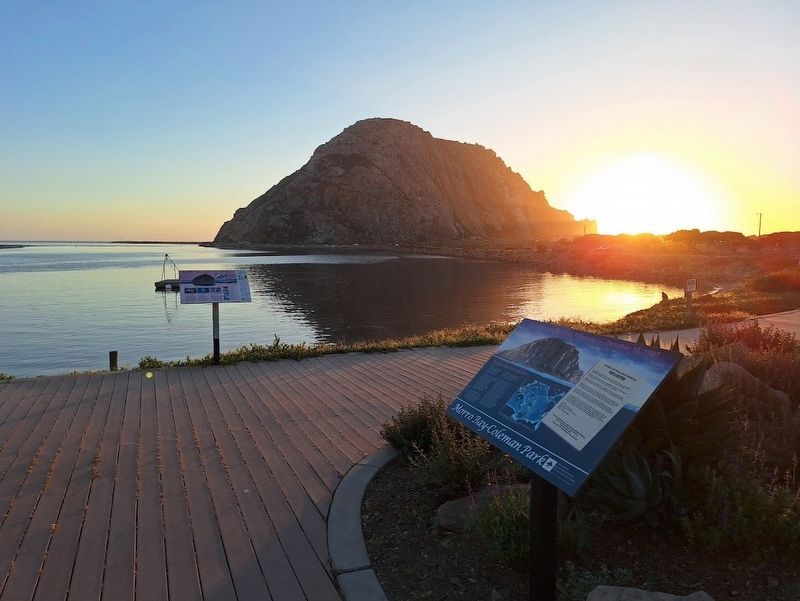
3. Landing of the First Filipinos - October 18, 1587 Marker
Morro Rock is in the background
Credits. This page was last revised on May 8, 2026. It was originally submitted on May 7, 2026, by Jason Voigt of Glen Carbon, Illinois. This page has been viewed 78 times since then. Photos: 1, 2, 3. submitted on May 7, 2026, by Jason Voigt of Glen Carbon, Illinois.
