East Melbourne in Melbourne, Victoria, Australia — Oceania
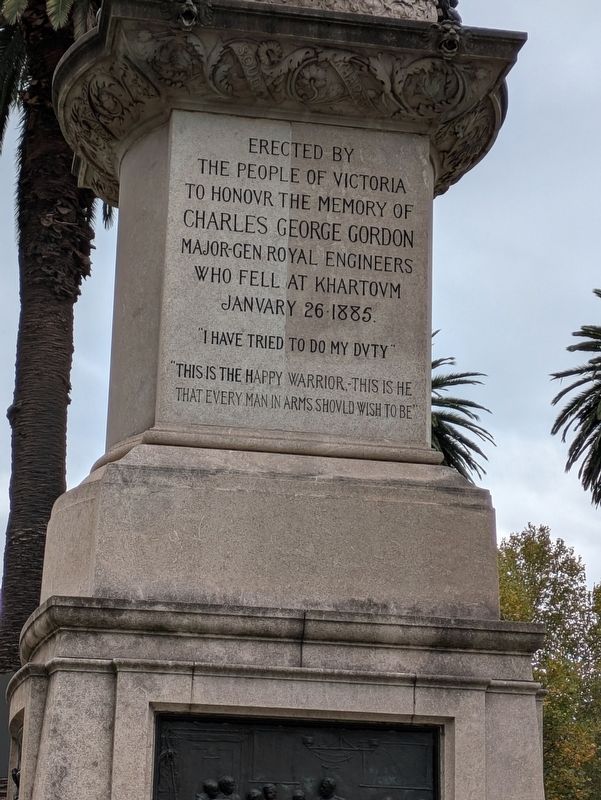
Charles George Gordon
Photographed by Dean Barton-Ancliffe, May 5, 2026
1. Charles George Gordon Marker
Charles George Gordon
who fell at Khartoum
January 26 1885
"I have tried to do my duty"
"This is the happy warrior. This is he that every man in arms should wish to be"
Topics. This memorial is listed in this topic list: Wars, Non-US.
Location. 37° 48.766′ S, 144° 58.435′ E. Memorial is in East Melbourne, Victoria, in Melbourne. It is at the intersection of Spring Street and Macarthur Street, on the left when traveling south on Spring Street. Touch for map. Memorial is in this post office area: East Melbourne VIC 3004, Australia. Touch for directions.

Regionally, it is in Oceania, in Australasia, in the Pacific Ocean, in South Pacific, on the Pacific Rim, in the Western World, and in the Anglosphere. Historically, it finds itself in what was once a British colony.
Other nearby markers. At least 8 other markers are within walking distance of this marker: Stanford Fountain (within shouting distance of this marker); Alcaston House (within shouting distance of this marker); Scotch College (within
this page online
Also see . . . Charles George Gordon. Britannica
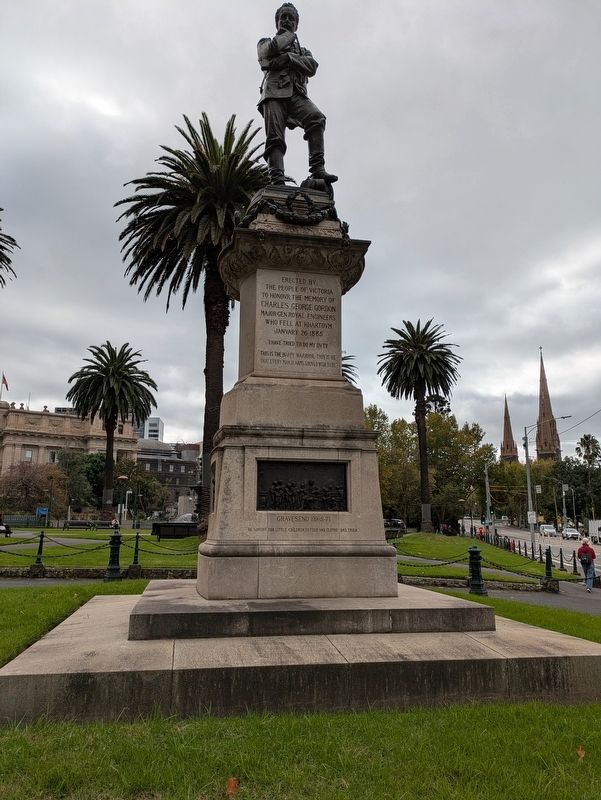
Gordon, the son of an artillery officer, was commissioned a second lieutenant in the Royal Engineers in 1852. During the Crimean War (1853–56) he distinguished himself by his reckless bravery in the siege trenches outside Sevastopol. He was promoted to captain in 1859 and volunteered the following year to join the British forces that were fighting the Chinese in the “Arrow” War. He was present at the occupation of Beijing (October 1860) and personally directed the burning of the Chinese emperor’s summer palace. In May 1862 Gordon’s corps of engineers was assigned to strengthen the bulwarks of the European trading centre of Shanghai, which was threatened by the insurgents of(Submitted on May 8, 2026, by Dean Barton-Ancliffe of Rowville, Victoria.)the Taiping Rebellion. A year later he became commander of the 3,500-man peasant force, known as the “Ever-Victorious Army,” raised to defend the city. During the next 18 months Gordon’s troops played an important, though not a crucial, role in suppressing the Taiping uprising. He returned in January 1865 to England, where an enthusiastic public had already dubbed him “Chinese Gordon.” For the next five years he was commander of the Royal Engineers at Gravesend, Kent; he spent his spare time developing his own unorthodox, mystical brand of Christianity and engaging in philanthropic activity among poor youths.Photographed by Dean Barton-Ancliffe, May 5, 20262. Charles George Gordon Monument
Photographed by Dean Barton-Ancliffe, May 5, 2026
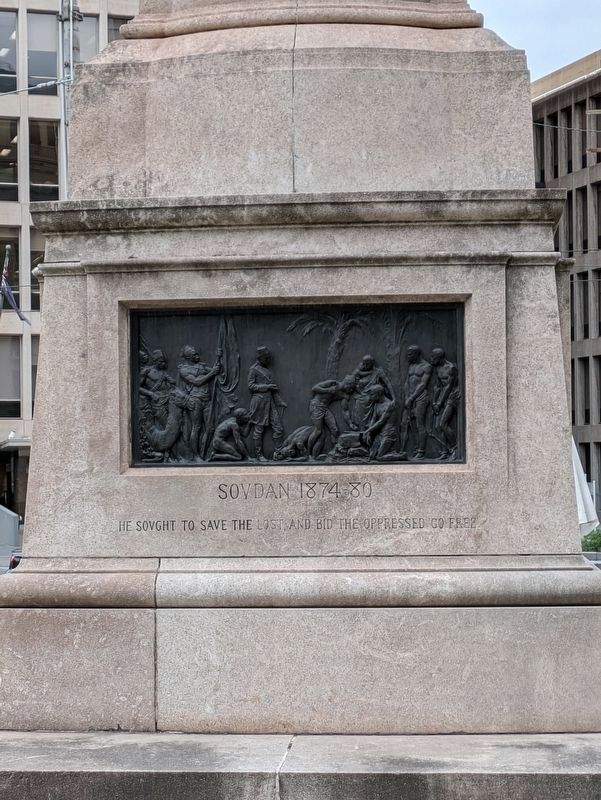
3. Soudan 1874-80
Photographed by Dean Barton-Ancliffe, May 5, 2026
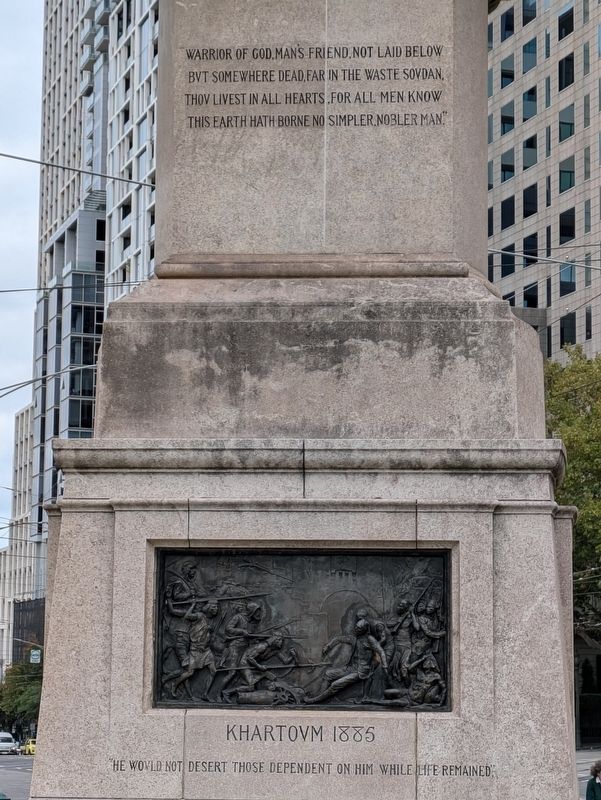
4. Khartoum 1885
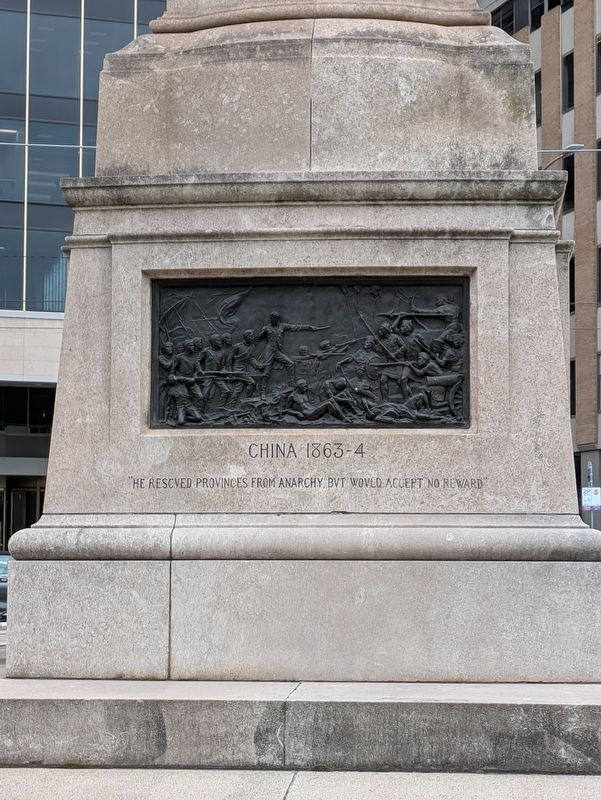
Photographed by Dean Barton-Ancliffe, May 5, 2026
5. China 1863-4
Credits. This page was last revised on May 10, 2026. It was originally submitted on May 8, 2026, by Dean Barton-Ancliffe of Rowville, Victoria. This page has been viewed 23 times since then. Last updated on May 10, 2026, by Dean Barton-Ancliffe of Rowville, Victoria. Photos: 1, 2, 3, 4, 5. submitted on May 8, 2026, by Dean Barton-Ancliffe of Rowville, Victoria. • Devry Becker Jones was the editor who published this page.
