
Roskilde in Roskilde Kommune, Zealand, Denmark — Northen Europe (a Nordic Country in Scandinavia)
Roskilde Domkirke
⎯⎯⎯
Roskilde Cathedral
Photographed by Col. James F. Jamison, USMC (Ret), May 12, 2026
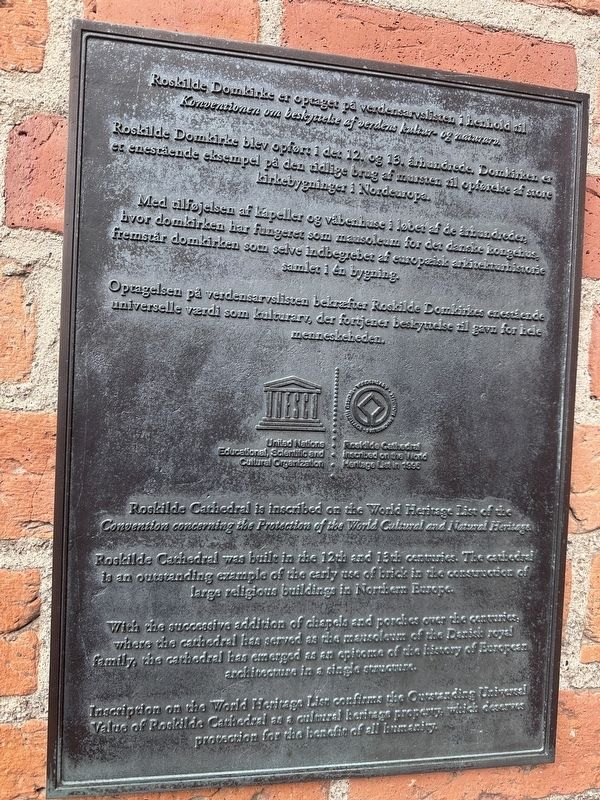
1. Roskilde Cathedral Marker

Roskilde Domkirke er optaget på verdensarvslisten i henhold til Konventionen om beskyttelse af verdens kultur- og naturarv.
Roskilde Domkirke blev opført i det 12. og 13. århundrede. Domkirken eret enestående eksempel på den tidlige brug af mursten til opførelse af storekirkebygninger i Nordeuropa.
Med tilføjelsen af kapeller og våbenhuse i løbet af de århundreder,hvor domkirken har fungeret som mausoleum for det danske kongehus,fremstår domkirken som selve indbegrebet af europæisk arkitekturhistoriesamlet i én bygning.
Optagelsen på verdensarvslisten bekræfter Roskilde Domkirkes eneståendeuniverselle værdi som kulturarv, der fortjener beskyttelse til gavn for helemenneskeheden.
Roskilde Cathedral is inscribed on the World Heritage List of the Convention concerning the Protection of the World Cultural and Natural Heritage.
Roskilde Cathedral was built in the 12th and 18th centuries. The cathedral is an outstanding example of the early use of brick in the construction of large religious buildings in Northern Europe.
With the
this page online
Inscription on the World Heritage List confirms the Outstanding Universal Value of Rosidide Cathedral as a cultural heritage property, which deserves protection for the benefic of all humanity.
Topics and series. This historical marker is listed in these topic lists: Architecture • Cemeteries & Burial Sites • Religion & Religious Structures. In addition, it is included in the UNESCO World Heritage Sites series list. A significant historical year for this entry is 1995.
Location. 55° 38.549′ N, 12° 4.793′ E. Marker is in Roskilde, Sjælland (Zealand), in Roskilde Kommune. It is on Domkirkepladsen. Touch for map. Marker is at or near this postal address: Domkirkepladsen 3, Roskilde, Sjælland 4000, Denmark. Touch for directions.

Regionally, it is in the North Atlantic Region, Europe, the European Union, Scandinavia, the Nordic Countries, the Schengen Area, and the Western World.
Photographed by Col. James F. Jamison, USMC (Ret), May 12, 2026
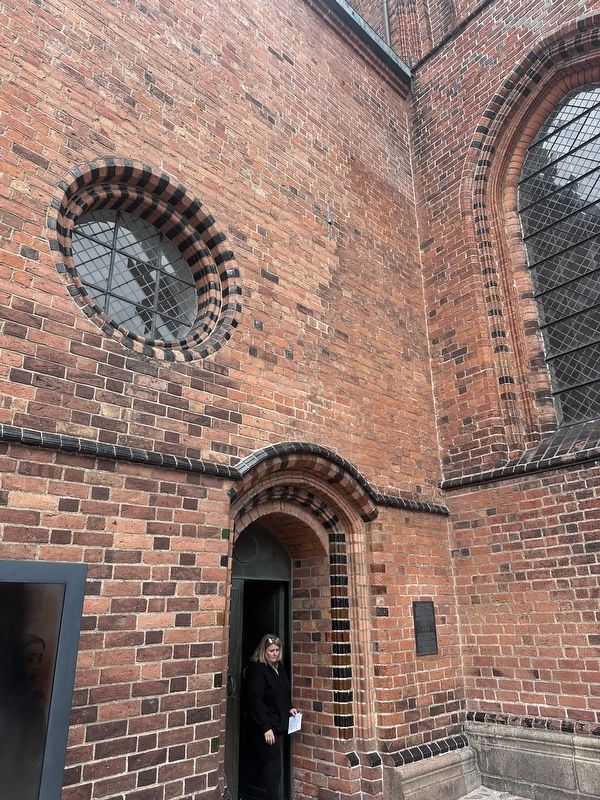
2. Roskilde Cathedral Marker wider view
Other nearby markers. At least one other marker is within walking distance of this marker: Maglekilde (about 210 meters away, measured in a direct line).
Also see . . .
1. Roskilde Cathedral (Wikipedia). Excerpt:
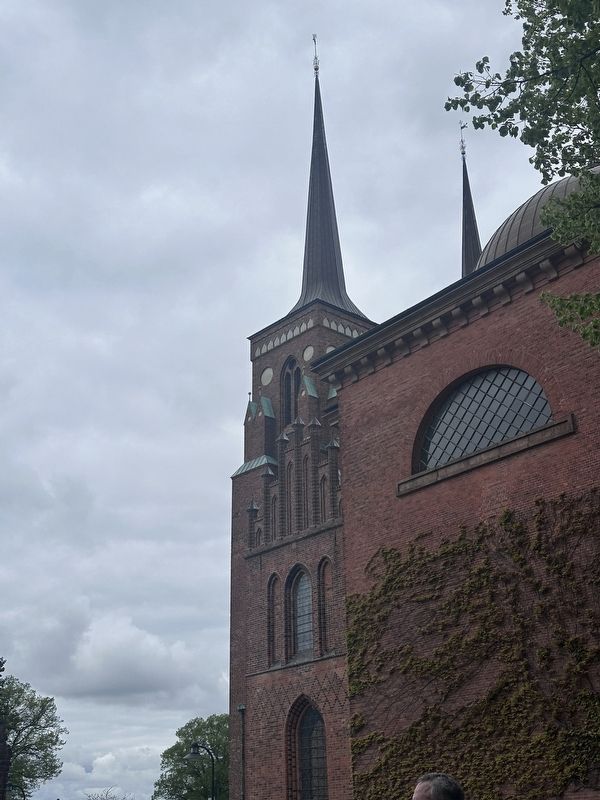
The cathedral is one of the most important churches in Denmark, and the official royal burial church of the Danish monarchs. It is also a UNESCO World Heritage Site. This is due to two criteria: the architecture of the cathedral shows 800 years of European architectural styles, and it is one of the earliest examples in Scandinavia of a Gothic cathedral to be built in brick; it encouraged the spread of the Brick Gothic style throughout Northern Europe. Constructed during the 12th and 13th centuries, the cathedral incorporates both Gothic and Romanesque architectural features in its design. The cathedral has been the main burial site for Danish monarchs since the 15th century. As such, it has been significantly extended and altered over the centuries to accommodate a considerable number of burial chapels and the many added chapels show different architectural styles.(Submitted on May 14, 2026.)
The cathedral is a major tourist attraction,bringing in over 165,000 visitors annually. Since 1995, it has been listed as a UNESCO World Heritage Site due to its unique architecture. A working church, it also hosts concerts throughout the year.Photographed by Col. James F. Jamison, USMC (Ret), May 12, 20263. Roskilde Cathedral
2. Roskilde Cathedral (Google Arts and Culture). (Submitted on May 14, 2026.)
Photographed by Alex Vincents Kunstforlag, circa 1910
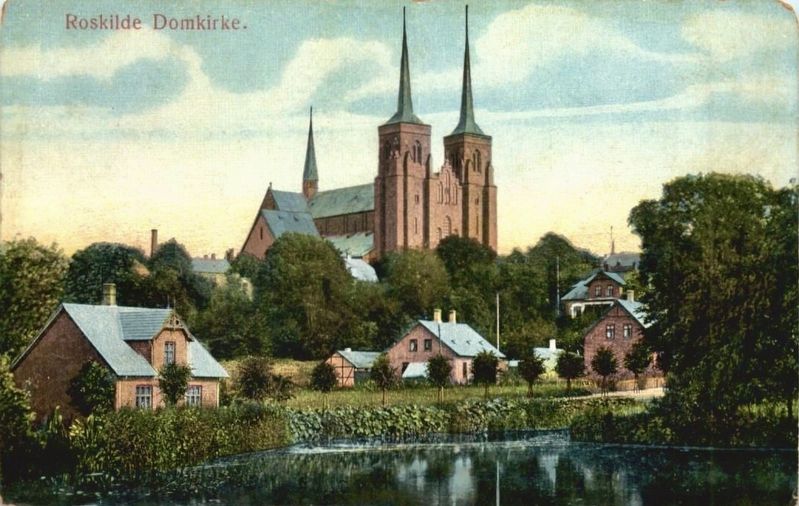
4. Roskilde Cathedral
Credits. This page was last revised on May 15, 2026. It was originally submitted on May 12, 2026, by Col. James F. Jamison, USMC (Ret) of Coronado, California. This page has been viewed 30 times since then. Photos: 1, 2, 3. submitted on May 12, 2026, by Col. James F. Jamison, USMC (Ret) of Coronado, California. 4. submitted on May 14, 2026. • Andrew Ruppenstein was the editor who published this page.
