Whistler in Prichard in Mobile County, Alabama — The American South (East South Central)
Lynching in America ⎯⎯⎯ The Lynching of Zacharia Graham
Community Remembrance Project Mobile
Photographed by Georgeann Ellis, May 23, 2026
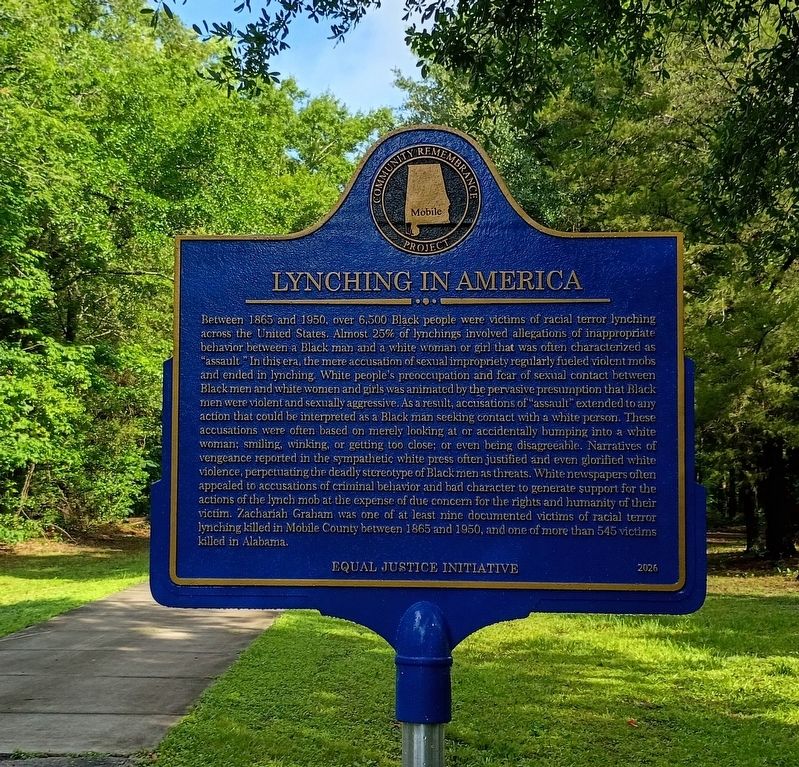
1. Lynching in America side is facing southeast, view of marker from the bike trail start direction
Inscription.
Lynching in America, also, The Lynching of Zacharia Graham. Community Remembrance Project Mobile.
Lynching in America. Between 1865 and 1950, over 6,500 Black people were victims of racial terror lynching across the United States. Almost 25% of lynchings involved allegations of inappropriate behavior between a Black man and a white woman or girl that was often characterized as "assault". In this era, the mere accusation of sexual impropriety regularly fueled violent mobs and ended in lynching. White people's preoccupation and fear of sexual contact between Black men and white women and girls was animated by the pervasive presumption that Black men were violent and sexually aggressive. As a result, accusations of "assault" extended to any action that could be interpreted as a Black man seeking contact with a white person. These accusations were often based on merely looking at or accidentally bumping into a white woman; smiling, winking, or getting too close; or even being disagreeable. Narratives of vengeance reported in the sympathetic white press often justified and even glorified white violence, perpetuating the deadly stereotype of Black men as threats. White newspapers often appealed to accusations of criminal behavior and bad character to generate support for the actions of the lynch mob at the expense of due concern for the rights and humanity of their victim. Zachariah Graham was one of at least nine documented victims of racial terror lynching killed in Mobile County between 1865 and 1950, and one of more than 545 victims killed in Alabama. ,
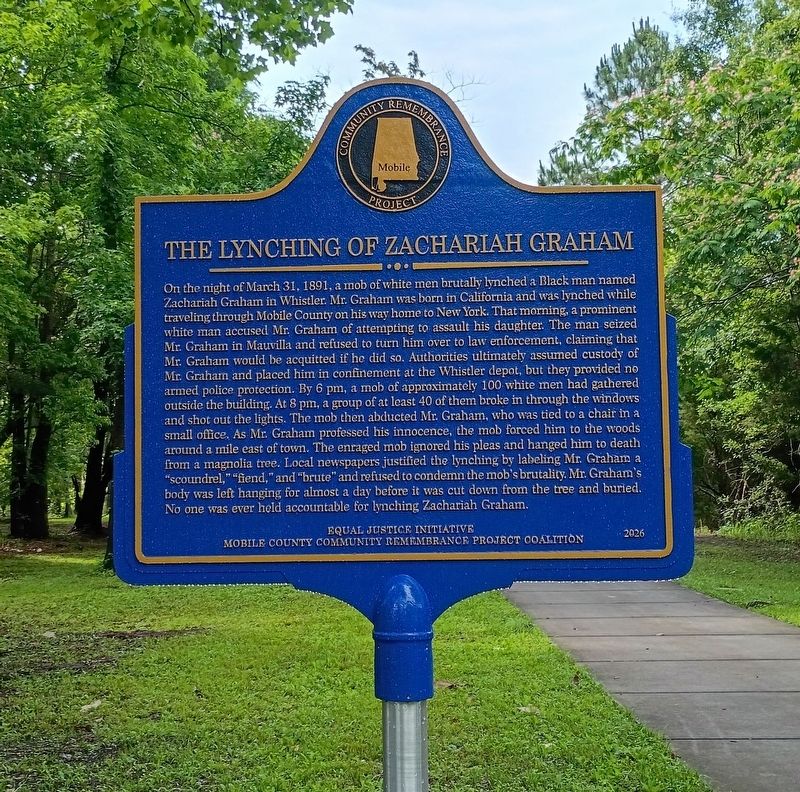
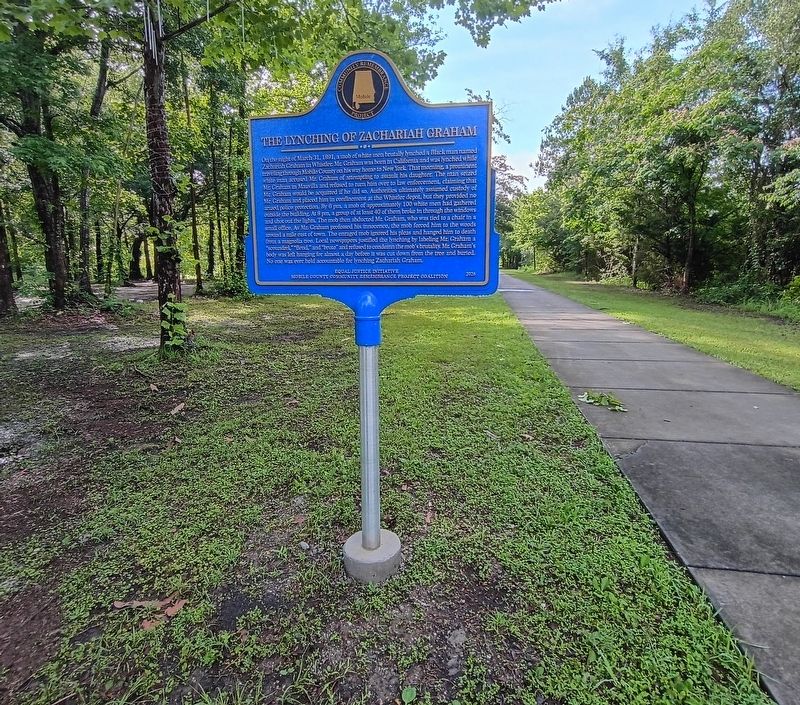
The Lynching of Zacharia Graham. On the night of March 31, 1891, a mob of white men brutally lynched a Black man named Zachariah Graham in Whistler. Mr. Graham was born in California and was lynched while traveling through Mobile County on his way home to New York. That morning, a prominent white man accused Mr. Graham of attempting to assault his daughter. The man seized Mr. Graham in Mauvilla and refused to turn him over to law enforcement, claiming that Mr. Graham would be acquitted if he did so. Authorities ultimately assumed custody of Mr. Graham and placed him in confinement at the Whistler depot, but they provided no armed police protection. By 6 pm, a mob of approximately 100 white men had gathered outside the building. At 8 pm, a group of at least 40 of them broke in through the windows and shot out the lights. The mob then abducted Mr. Graham, who was tied to a chair in a small office. As Mr. Graham professed his innocence, the mob forced him to the woods around a mile east of town. The enraged mob ignored his pleas and hanged him to death from a magnolia tree. Local newspapers justified the lynching by labeling Mr. Graham a "scoundrel," "fiend," and "brute" and refused to condemn the mob's brutality. Mr. Graham's body was left hanging for almost a day before it was cut down from the tree and buried. No one was ever held accountable for lynching Zachariah Graham.
Lynching in America
Between 1865 and 1950, over 6,500 Black people were victims of racial terror lynching across the United States. Almost 25% of lynchings involved allegations of inappropriate behavior between a Black man and a white woman or girl that was often characterized as "assault". In this era, the mere accusation of sexual impropriety regularly fueled violent mobs and ended in lynching. White people's preoccupation and fear of sexual contact between Black men and white women and girls was animated by the pervasive presumption that Black men were violent and sexually aggressive. As a result, accusations of "assault" extended to any action that could be interpreted as a Black man seeking contact with a white person. These accusations were often based on merely looking at or accidentally bumping into a white woman; smiling, winking, or getting too close; or even being disagreeable. Narratives of vengeance reported in the sympathetic white press often justified and even glorified white violence, perpetuating the deadly stereotype of Black men as threats. White newspapers often appealed to accusations of criminal behavior and bad character to generate support for the actions of the lynch mob at the expense of due concern for the rights and humanity of their victim. Zachariah Graham was one of at least nine documented victims of racial terror lynching killed in Mobile County between 1865 and 1950, and one of more than 545 victims killed in Alabama.
The Lynching of Zacharia Graham
On the night of March 31, 1891, a mob of white men brutally lynched a Black man named Zachariah Graham in Whistler.
Click or scan to see this page online
Mr. Graham was born in California and was lynched while traveling through Mobile County on his way home to New York. That morning, a prominent white man accused Mr. Graham of attempting to assault his daughter. The man seized Mr. Graham in Mauvilla and refused to turn him over to law enforcement, claiming that Mr. Graham would be acquitted if he did so. Authorities ultimately assumed custody of Mr. Graham and placed him in confinement at the Whistler depot, but they provided no armed police protection. By 6 pm, a mob of approximately 100 white men had gathered outside the building. At 8 pm, a group of at least 40 of them broke in through the windows and shot out the lights. The mob then abducted Mr. Graham, who was tied to a chair in a small office. As Mr. Graham professed his innocence, the mob forced him to the woods around a mile east of town. The enraged mob ignored his pleas and hanged him to death from a magnolia tree. Local newspapers justified the lynching by labeling Mr. Graham a "scoundrel," "fiend," and "brute" and refused to condemn the mob's brutality. Mr. Graham's body was left hanging for almost a day before it was cut down from the tree and buried. No one was ever held accountable for lynching Zachariah Graham.
Erected 2026 by Equal Justice Initiative & Mobile County Community Remembrance Coalition.
Topics and series. This historical marker is listed in these topic lists: African Americans • Civil Rights. In addition, it is included in the Lynching in America series list. A significant historical date for this entry is March 31, 1891.
Location. 30° 45.315′ N, 88° 6.408′ W. Marker is in Prichard, Alabama, in Mobile
Photographed by Georgeann Ellis, May 23, 2026
2. The Lynching of Zacharia Graham Marker side, as seen when approaching from the parking area.

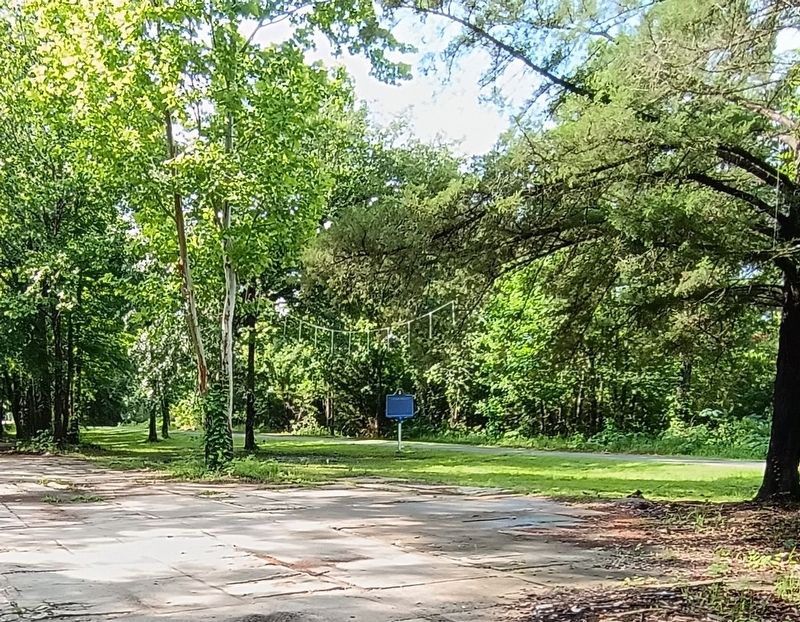
County. It is in Whistler. It can be reached from West Turner Road north of N Wasson Ave, on the left when traveling north. This marker cannot be easily seen from the road as it sits towards the back of the Old Whistler Railroad Depot property. When travelling on W Turner Road turn left into the park at the intersection of W Turner Road with Whatley Ave. Once in the park the marker should be visible ahead to the left when facing into the unpaved parking area and it is then a short walk to it. The parking area has no amenities. Touch for map. Marker is at or near this postal address: 3152 W Turner Rd, Mobile AL 36612, United States of America. Touch for directions.
Regionally, this marker is on Alabama’s Gulf Coast, in the Mobile Bay area, and specifically in the Mobile Metropolitan Area. It is also in the American South, specifically in the Deep South, and on the Gulf Coast. Globally, it is in North America, a Gulf of Mexico state, the Western Hemisphere, the Western World, and the Anglosphere. Historically, it finds itself in what was once New Spain, the Viceroyalty of New France, the territory of the Mississippian Culture, one of the Confederate States of America, and the Antebellum South.
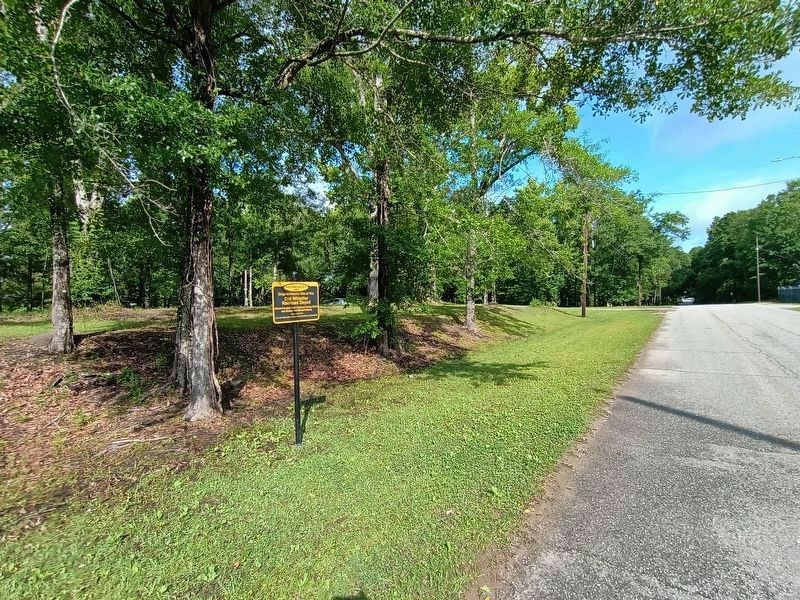
3. Old Whistler Railroad Station marker on approach to the park. Entry to the left side at intersection
When arriving by car the Lynching in America marker is in the rear of the park and not immediately visible until one drives up slope on entering the parking area.
More about this marker. This marker sits on the Whistler Historic Bike Trail that runs through the west side of the Old Whistler Railroad Depot property/park. This marker is approximately 0.7 miles to the north of the start of the Whistler Historic Bike Trail where the Lynching in America/The Lynching of James Lewis historical marker is located.
Regarding Lynching in America / The Lynching of Zacharia Graham. This site is also part of the Prichard Legacy Trail which also marks more than a dozen historical sites that are a part of the City of Prichard's early history. This site is where the Old Whistler Railroad Depot on the Mobile & Ohio rail line that once ran from Mobile to Ohio was located. All that remains today are the foundations of the old railroad buildings that included a roundhouse, a machine shop and the station that served the height of the railroad period upon which Prichard, Mobile and region thrived.
Photographed by Jim Ellis, May 23, 2026
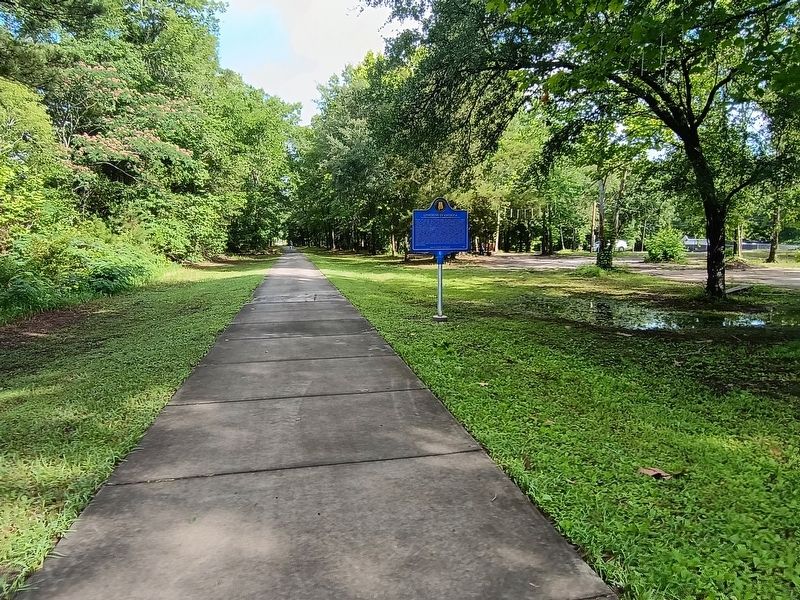
4. Lynching in America marker as seen when approaching from the bike trail from the southeast.
Photographed by Jim Ellis, May 23, 2026
5. The Lynching of Zacharia Graham side - view to bike trail and marker from the parking area approach
Photographed by Jim Ellis, May 23, 2026
6. The Lynching of Zacharia Graham Marker side as approached from parking & bike trail headed south
Credits. This page was last revised on May 26, 2026. It was originally submitted on May 24, 2026, by Jim Ellis of Theodore, Alabama. This page has been viewed 19 times since then. Photos:1, 2, 3, 4, 5, 6. submitted on May 24, 2026, by Jim Ellis of Theodore, Alabama. • James Hulse was the editor who published this page.