Galesville in Anne Arundel County, Maryland — The American Northeast (Mid-Atlantic)
Let's Play Ball!
Galesville Hot Sox (est. 1915)

Photographed by Pete Skillman, May 29, 2026
1. Let's Play Ball! Marker
In the early 20th century, the American craze for baseball swept through communities large and small. The Black community, segregated from white teams, formed their own independent sandlot baseball teams that traveled and competed regionally.
In Galesville, many Hot Sox players worked as shuckers and oyster men at local businesses like Woodfield Oyster and Fish Company, Ball games were a popular pastime that brought the entire community together for good old fashioned fun and fellowship. As many as 1,200 spectators paid 25 cents at the gate to root for the Hot Sox against other sandlot teams, like the Drury Glants, Davidsonville Clowns and the Parole Cubs.
Games often wrapped up at the
this page online
For generations, the baseball season formed a proud community tradition and weekly ritual. As part of the Bayside Independent League, the Hot Sox played games on Wednesdays, Saturdays, and Sunday afternoons after church. Thanks to their smart "head game" style, the Hot Sox had widespread success and went undefeated for several seasons. The last game was in 1986.
Today, the Hot Sox Field at Wilson Park is one of only a few surviving sandlot fields in Maryland. It is owned by Anne Arundel County Recreation and Parks.
Several Hot Sox players were sent up to the Negro Leagues, and some earned tryouts with the newly integrated major leagues. In 1955, John Maker baseman and shortstop, signed with the Baltimore Orioles Pitcher Edward "Tommy" Sesker tried out for the Baltimore Orioles in the 1950s, and in 1958, Chester Turner, a first baseman and center fielder, tried out for the Brooklyn Dodgers.
[Captions]:
Newspapers like the Baltimore Afro-American regularly reported
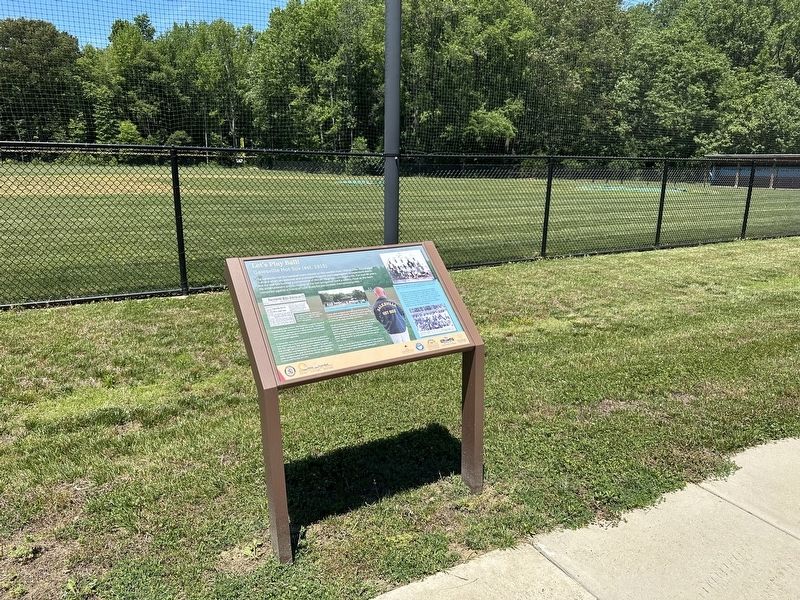
Photographed by Pete Skillman, May 29, 2026
2. Let's Play Ball! Marker - wide view
Hot Sox players' reunion at the grand reopening of Hot Sox Field in 2022.
Photo courtesy of Galesville Community Center Organization, Inc.
Hot Sox team lineups from ca. 1940's (top) and 1970's (bottom) show generations of Galesville families playing for their hometown team.
Photos top and bottom courtesy of Galesville Community Center Organization, Inc.
Erected by Anne Arundel County Recreation and Parks.
Topics. This historical marker is listed in these topic lists: African Americans • Parks & Recreational Areas • Sports. A significant historical year for this entry is 1915.
Location. 38° 50.907′ N, 76° 33.15′ W. Marker is in Galesville, Maryland, in Anne Arundel County. It is on Galesville Road, on the right when traveling west. Touch for map. Marker is at or near this postal address: 874 Galesville Rd, Galesville MD 20765, United States of America. Touch for directions.

Regionally, this marker is in Central Maryland. It is also in the American Mid-Atlantic, in the Chesapeake Bay Region, and on the Eastern Seaboard. Globally, it is in the North Atlantic Region,
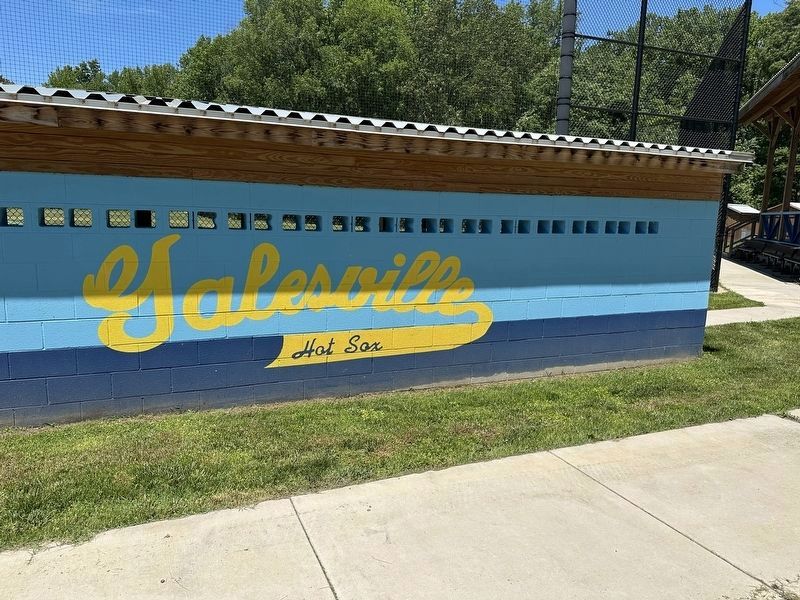
Photographed by Pete Skillman, May 29, 2026
3. Let's Play Ball! Marker
Dugout at the restored Hot Sox Field.
Other nearby markers. At least 8 other markers are within walking distance of this marker: Property-Owning Pioneers (within shouting distance of this marker); The Heart of Galesville's Black Community (about 700 feet away, measured in a direct line); West Benning Road Historic District (about 800 feet away); Farming in Galesville: Montell Farm (about 800 feet away); Site of First Quaker Regional Gathering (approx. ¼ mile away); Old Quaker Burying Ground (approx. ¼ mile away); Cedar Park • Tulip Hill (approx. ¼ mile away); Maritime Industry on Tenthouse Creek (approx. half a mile away). Touch for a list and map of all markers in Galesville.
Credits. This page was last revised on June 2, 2026. It was originally submitted on May 29, 2026, by Pete Skillman of Wilmington, Delaware. This page has been viewed 28 times since then. Photos: 1, 2, 3. submitted on May 29, 2026, by Pete Skillman of Wilmington, Delaware.
