Burnley in Yarra, Victoria, Australia — Oceania
Victoria Bridge
Photographed by Dean Barton-Ancliffe, May 19, 2026
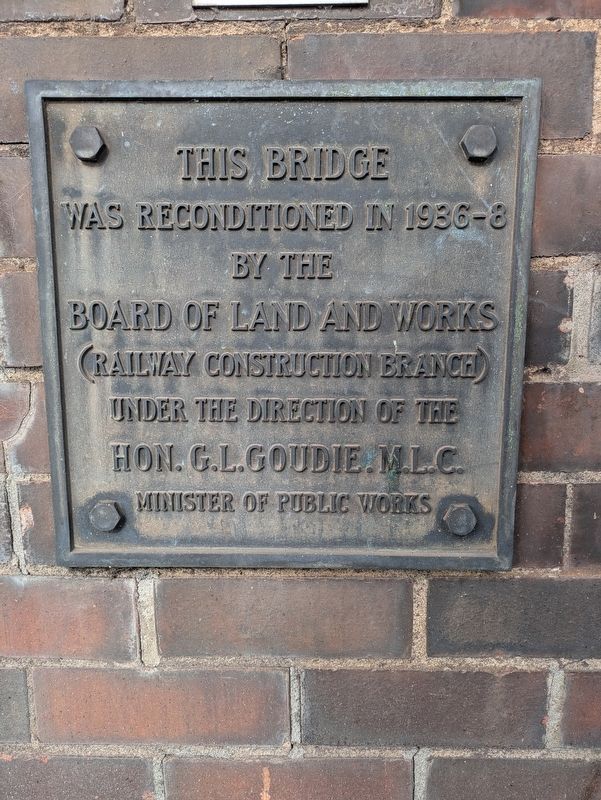
1. Victoria Bridge Marker
was reconditioned in 1936-8
by the Board of Land and Works
(Railway Construction Branch)
under the direction of Hon. G.L. Goudie. M.L.C.
Minister of Public Works
Topics. This historical marker is listed in these topic lists: Bridges & Viaducts • Roads & Vehicles. A significant historical year for this entry is 1938.
Location. 37° 49.595′ S, 145° 1.321′ E. Marker is in Burnley, Victoria, in Yarra. It is on Barkers Road (Victoria Route 32) 0.1 kilometers west of Harison Crescent, on the left when traveling west. Touch for map. Marker is at or near this postal address: Barkers Road, Burnley VIC 3121, Australia. Touch for directions.

Regionally, it is in Oceania, Australasia, the Pacific Ocean, South Pacific, the Pacific Rim, the Western World, and the Anglosphere. Historically, it finds itself in what was once a British colony.
Other nearby markers. At least 8 other markers are within 3 kilometers of this marker, measured as the crow flies: 4 Glan Avon Road (about 120 meters away, measured in a direct line); WW1 Field Gun, Barkly Gardens Richmond (approx. 1.8 kilometers away); Silencing War (approx.
this page online
Also see . . .
1. Victoria Bridge, Melbourne. Wikipedia
The bridge is riveted and welded steel Warren truss bridge. It was completed in 1884. The bridge was widened in 1890 by the addition of a third line of truss on new piers on the upstream side to carry horse trams. In 1915 the bridge was further strengthened to accommodate the extra weight of electric trams and widened to accommodate two cantilever footpaths. Further widening and reconditioning of the bridge took place in 1933, including the addition of four new welded trusses.(Submitted on May 29, 2026, by Dean Barton-Ancliffe of Rowville, Victoria.)
The bridge is listed on the Victorian Heritage Register. The bridge initiated travel and trade between the industrial inner suburbs and the eastern suburbs of Melbourne and stands testimony to the development of the tramway in the city. It comprises two Ornamental Tramway Overhead Gantries which were installedin 1916. They hold an aesthetic significance because of their early 20th century ornamental design which is hard to find these days.Photographed by Dean Barton-Ancliffe, May 19, 20262. Victoria Bridge Marker on the Bridge
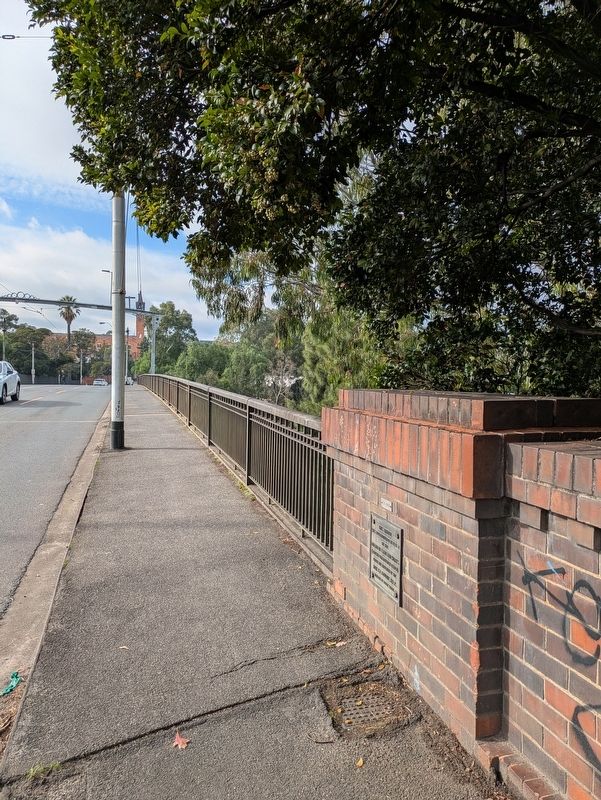
2. Victoria Bridge. Victorian Heritage Database
How is it significant?(Submitted on May 29, 2026, by Dean Barton-Ancliffe of Rowville, Victoria.)
Victoria Bridge is of historical, scientific (technical) and aesthetic significance to the State of Victoria.
Why is it significant?
Victoria Bridge is of historical significance as an important link in Melbourne's transport routes, its construction making Victoria Street/Barkers Road one of the principal east west routes in Melbourne. The bridge is of historical significance as a rare example of a joint facility initiated by four councils and reflects the importance of the bridge in facilitating travel and commerce between the industrial inner suburbs and the more affluent eastern suburbs.
The utilitarian design and use of materials reflects budgetary constraints and the involvement of diverse councils.
Victoria Bridge is of historical significance for its association with the early history of the tramway system in Melbourne. The1890 and 1915 modifications of the bridge and the ornamental overhead tramway gantries reflect the development of the tramway system. The gantries are of historical significance for their association with the formative decades of electric tramway development in Melbourne. They have an association with the Prahran & Malvern Tramways Trust, which grew to be the largest of such municipal trusts in Melbourne initially comprising Prahran and Malvern councils and later enlarged to include St Kilda, Caulfield, Kew and Hawthorn before its absorption by the Melbourne and Metropolitan Tramway Board in 1920.Photographed by Dean Barton-Ancliffe, May 19, 20263. Victoria Bridge from the East
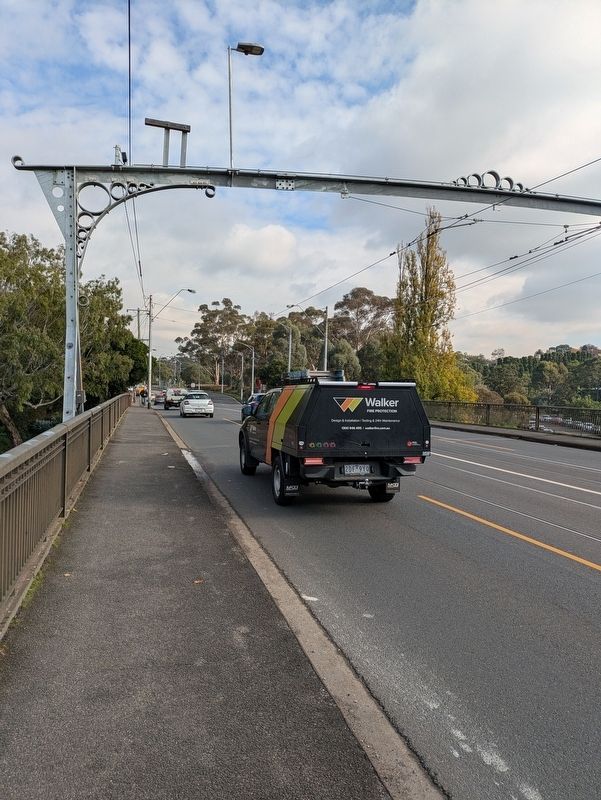

Photographed by Dean Barton-Ancliffe, May 19, 2026
4. The Yarra River from Victoria Bridge
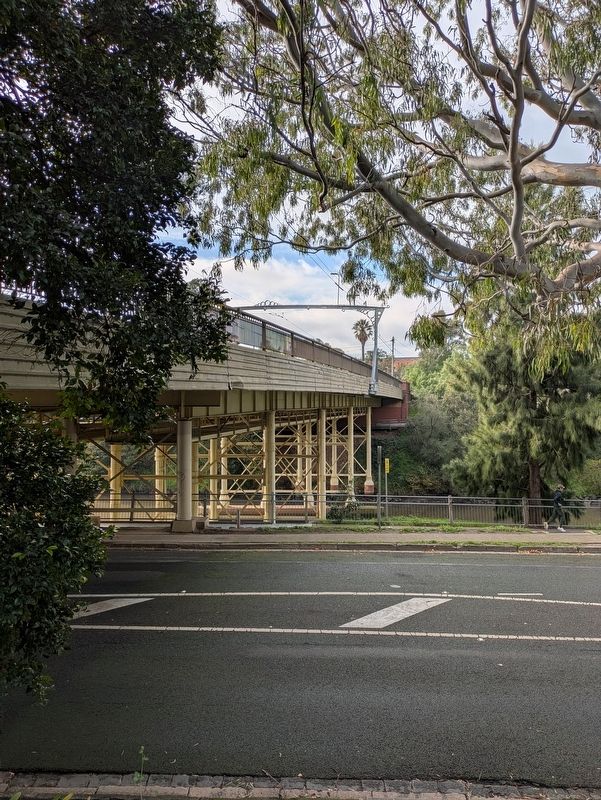
Photographed by Dean Barton-Ancliffe, May 19, 2026
5. Victoria Bridge (underside)
Credits. This page was last revised on August 26, 2026. It was originally submitted on May 29, 2026, by Dean Barton-Ancliffe of Rowville, Victoria. This page has been viewed 27 times since then. Photos: 1, 2, 3, 4, 5. submitted on May 29, 2026, by Dean Barton-Ancliffe of Rowville, Victoria. • J. J. Prats was the editor who published this page.
