Kankakee in Kankakee County, Illinois — The American Midwest (Great Lakes)
Memorial Day Order

Photographed by Sean P. Flynn, May 30, 2026
1. Memorial Day Order Marker
Headquarters Grand Army of the Republic, Washington, D.C., May 5, 1868.
General Orders No. 11
1. The 30th day of May, 1868 is designated for the purpose of strewing with flowers or otherwise decorating the graves of comrades who died in defense of their country during the late rebellion, and whose bodies now lie in almost every city, village, and hamlet churchyard in the land. In this observance no form or ceremony is prescribed, but posts and comrades will in their own way arrange such fitting services and testimonials of respect as circumstances may permit.
We are organized, comrades, as our regulations tell us, for the purpose, among other things, of preserving and strengthening those kind and fraternal feelings which have bound together the soldiers, sailors and marines who united to suppress the late rebellion. What can aid more to assure this result than by cherishing tenderly the memory of our heroic dead who made their breasts a barricade between our country and its foes? Their soldier lives were the reveille of freedom to a race in chains and their deaths the tattoo of rebellious tyranny in arms. We should
this page online
If other eyes grow dull and other hands slack, and other hearts cold in the solemn trust, ours shall keep it well as long as the light and warmth of life remains in us.
Let us, then, at the time appointed, gather around their sacred remains and garland the passionless mounds above them with choicest flowers of springtime; let us raise above them the dear old flag they saved from dishonor; let us in this solemn presence renew our pledges to aid and assist those whom they have left among us as sacred charges upon the nation's gratitude—the soldier's and sailor's widow and orphan.
2. It is the purpose
Photographed by Sean P. Flynn, May 30, 2026
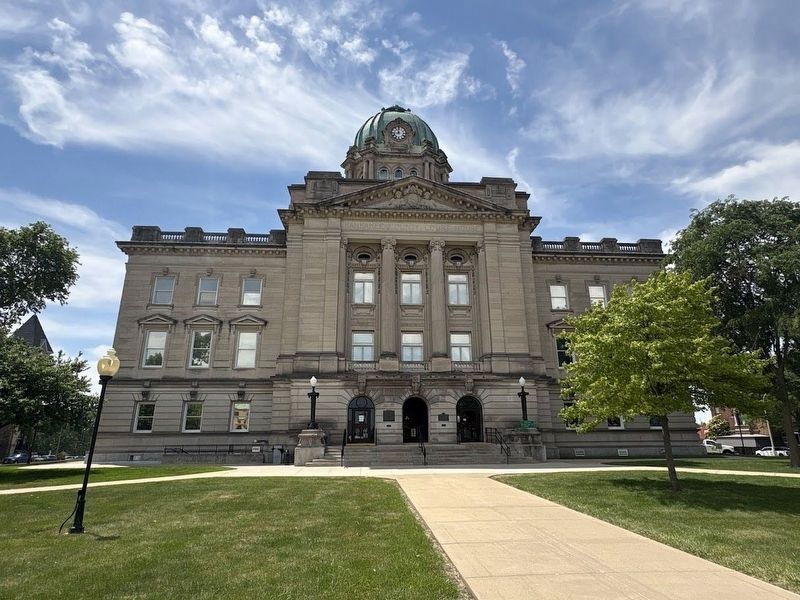
2. Kankakee County Courthouse
To the right of the arched entryway is the plaque with the text of the Gettysburg Address. To the right of the door is a plaque with the text of the 1868 order that created Memorial Day.
3. Department commanders will use every effort to make this order effective.
By command of—
John A. Logan, Commander-in-Chief.
N.P. Chipman, Adjutant General.
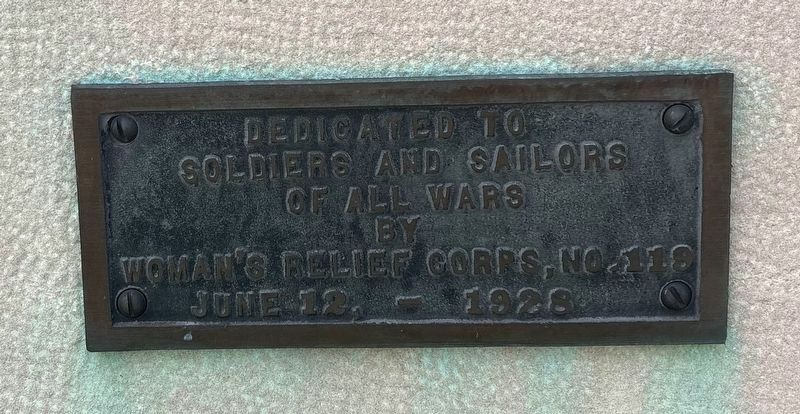
Erected 1928 by Woman's Relief Corps No. 119.
Topics and series. This historical marker is listed in these topic lists: Horticulture & Forestry • Military • Patriots & Patriotism • War, US Civil. In addition, it is included in the The Grand Army of the Republic series list. A significant historical date for this entry is May 5, 1868.
Location. 41° 7.165′ N, 87° 51.63′ W. Marker is in Kankakee, Illinois, in Kankakee County. It is on Court Street (Illinois Route 17) near Indiana Avenue ( Route 50), on the right when traveling east. The marker is affixed to the
Photographed by Sean P. Flynn, May 30, 2026
3. Dedication plaque beneath the Memorial Day Order Marker
The text says: "Dedicated to soldiers and sailors of all wars by Woman's Relief Corps, No. 119, June 12, 1928."

Regionally, this marker is in Central Illinois. It is also in the American Midwest and in the Corn Belt. Globally, it is in North America, on the Great Lakes, in the Western Hemisphere, in the Western World, and in the Anglosphere. Historically, it finds itself in what was once the territory of the Mississippian Culture and also the Northwest Territory.
Other nearby markers. At least 8 other markers are within walking distance of this marker: Gettysburg Address (here, next to this marker); Kankakee County Civil War Memorial (within shouting distance of this marker); Kankakee County Veterans Memorial (within shouting distance of this marker); Last Camping Ground of the Potawatomie Indians (within shouting distance of this marker); Veterans Memorial Flag (within shouting distance of this marker); George Ryan (within shouting distance of this marker); Samuel Shapiro (within shouting distance of this marker); Lennington Small
Photographed by Dewitt C. Pratt; Congressional Portrait Collection, Library of Congress, circa 1886
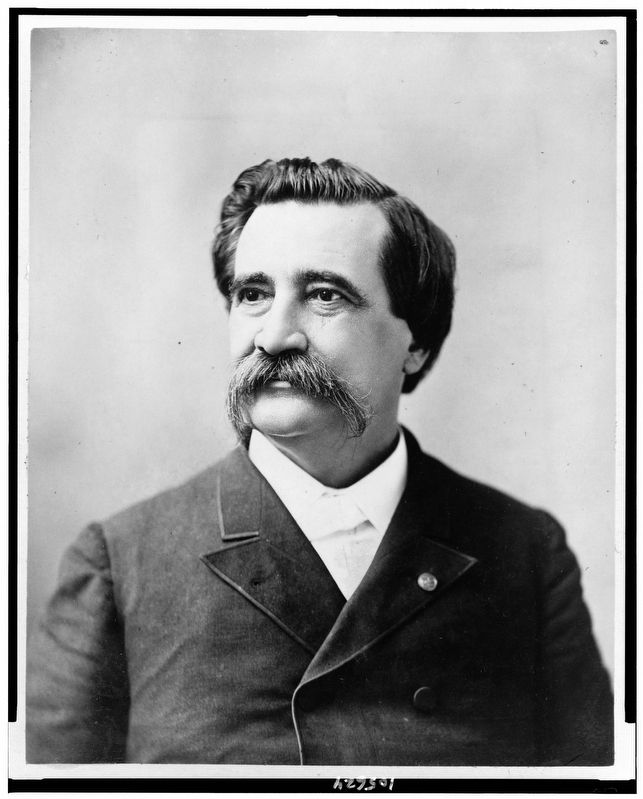
4. John Alexander Logan (1826-1886)
More about this marker. An identical plaque can be found on the site of the Kankakee County Museum, in the Let Freedom Ring Garden. It is not known if that plaque was erected at the same time as this one, where it was originally located, or if the Woman's Relief Corps was involved in its creation.
Regarding Memorial Day Order. John Logan was a native Illinoisan who was serving as a U.S. representative when war broke out in 1861 and resigned less than a year later to join the war effort. Logan was a successful general during the war, prominent in the Vicksburg and Atlanta campaigns. After the war, he served two more terms as a representative before being selected as a U.S. senator. He was later the vice-presidential running mate for James Blaine's unsuccessful campaign for president in 1884. Logan died in 1886.
He is probably best remembered today as the driving force for officially creating Memorial Day (originally Decoration Day). While informal efforts to remember the dead of the Civil War began almost immediately after the
Courtesy of Brady-Handy Photograph Collection, Library of Congress, circa 1865
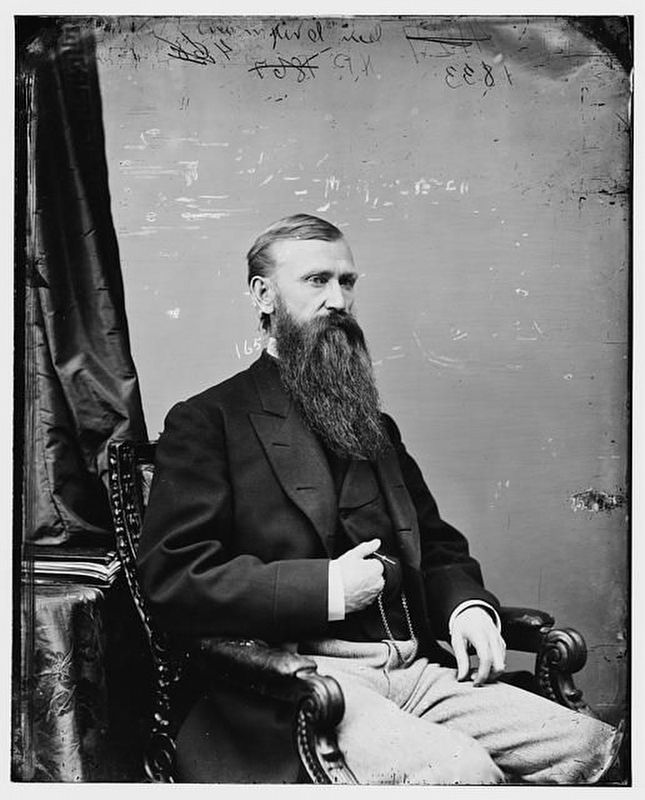
5. Norton P. Chipman (1834-1924)
Norton P. Chipman, the GAR's adjutant general listed with Logan, served in the Civil War and served valiantly at Fort Donelson, where he was severely wounded, before later serving as a staff member for several generals. His most notable role was after the war, when he was the Army prosecutor in the trial of Capt. Henry Wirz, the commander of Andersonville prison in Georgia, who was convicted and hanged. For four years in the 1870s, Chipman served as the District of Columbia's non-voting delegate to the U.S. Congress. Chipman is among those who, through the years, have been identified as the "true" impetus behind the creation of Memorial Day (perhaps in part because his name is on this order), although most historians do not believe that to be the case.
Also see . . . History of Memorial Day. (Submitted on June 3, 2026, by Sean P. Flynn of Oak Park, Illinois.)
Credits. This page was last revised on June 3, 2026. It was originally submitted on June 3, 2026, by Sean P. Flynn of Oak Park, Illinois. This page has been viewed 12 times since then. Photos: 1, 2, 3. submitted on June 3, 2026, by Sean P. Flynn of Oak Park, Illinois. 4, 5. submitted on June 1, 2026, by Sean P. Flynn of Oak Park, Illinois.
