Near Johnsondale in Tulare County, California — The American West (Pacific Coastal)
Giant Sequoia National Monument
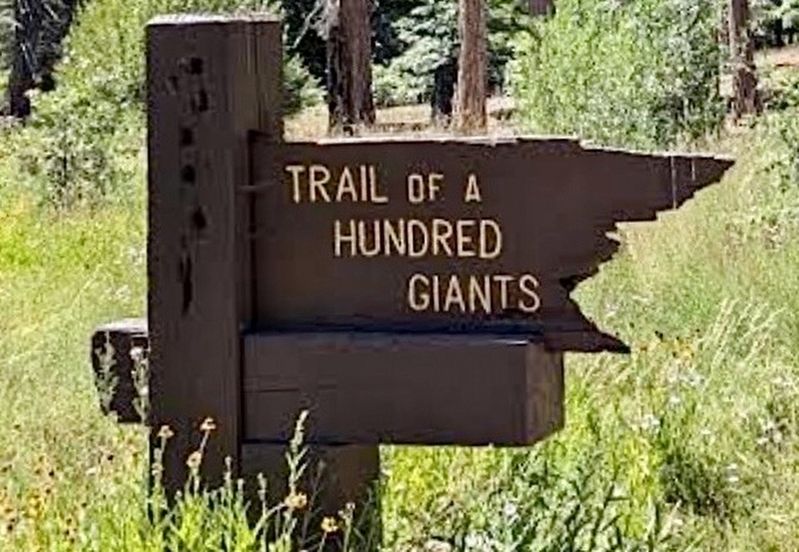
Trail of 100 Giants

Photographed by Craig Baker, June 7, 2026
1. Giant Sequoia National Monument Marker
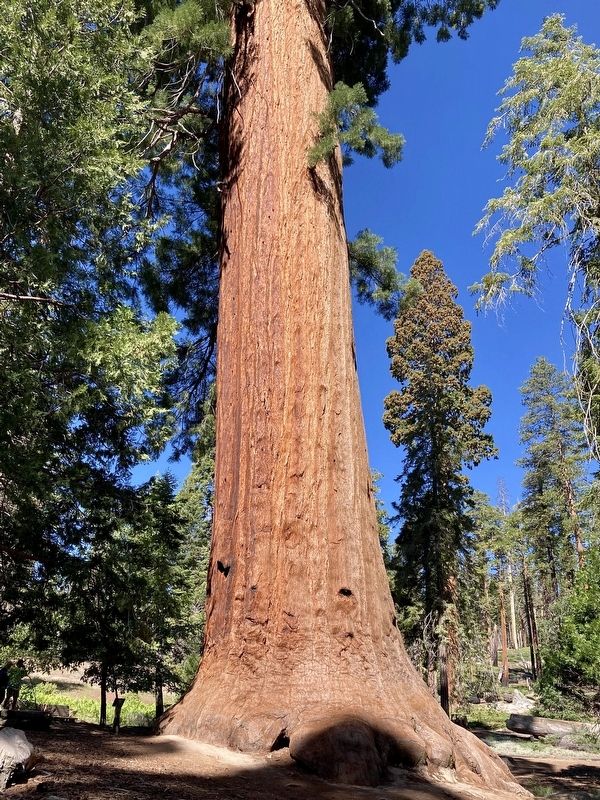
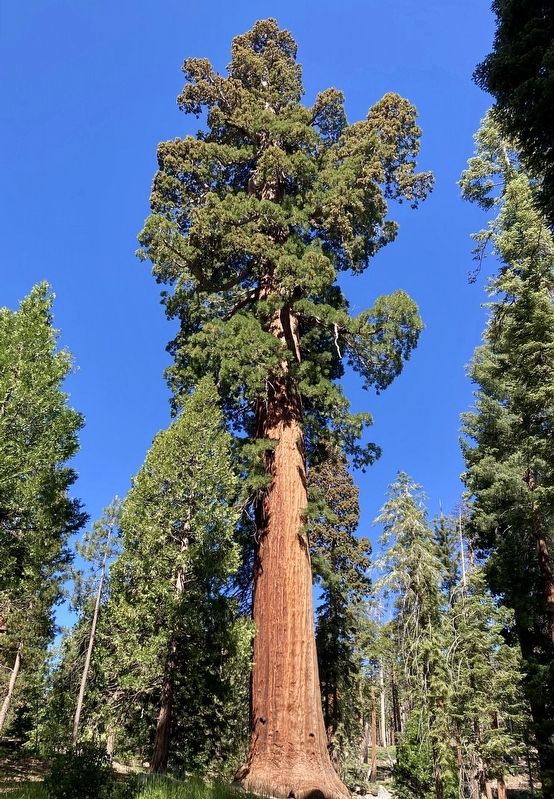
On April 15, 2000, at the base of this giant sequoia (Sequoiadendron giganteum) President Bill Clinton invoked the Antiquities Act of 1906 and created the Giant Sequoia National Monument within the Sequoia National Forest. Thirty-three of the sequoia groves are within the monument boundaries. This giant sequoia is about 2,000 years old, 245 feet tall, 62 feet around and 18 feet in diameter. Wildfires caused the burn scars hundreds of years ago.
The word Sequoia is the only word containing all 5 vowels, A-E-I-O-U.
Topics and series. This historical marker and monument is listed in these topic lists: Horticulture & Forestry • Parks & Recreational Areas. In addition, it is included in the Former U.S. Presidents: #42 William Jefferson "Bill" Clinton series list. A significant historical date for this entry is April 15, 2000.
Location. 35° 58.641′ N, 118° 35.791′ W. Marker is near Johnsondale, California, in Tulare County. It can be reached from Great Western Divide Highway. Located at Trail of 100 Giants. Touch for map. Marker is in this post office area: Porterville CA 93257, United States of America. Touch for directions.

Regionally,
this page online
Other nearby markers. At least 3 other markers are within 12 miles of this marker, measured as the crow flies: Road’s End (approx. 6.9 miles away); California Hot Springs (approx. 7.8 miles away); Camp Nelson (approx. 11.3 miles away).
Regarding Giant Sequoia National Monument. The name Sequoia honors Sequoyah, a Native American of the Cherokee Nation. In 1821, he created the Cherokee syllabary, making reading and writing in Cherokee possible. This allowed the Cherokee nation to be one of the first North American Indigenous groups to have a written language.

Photographed by Craig Baker, June 7, 2026
2. Giant Sequoia National Monument Marker
Photographed by Craig Baker, June 7, 2026
3. Giant Sequoia and Marker
The marker is next to the tree, at left.
Photographed by Craig Baker, June 7, 2026
4. Giant Sequoia
Photographed by Craig Baker, June 8, 2026
5. Trail of 100 Giants

Photographed by Craig Baker
6. Sequoia National Forest
Credits. This page was last revised on June 8, 2026. It was originally submitted on June 8, 2026, by Craig Baker of Sylmar, California. This page has been viewed 22 times since then. Photos: 1, 2, 3, 4, 5, 6. submitted on June 8, 2026, by Craig Baker of Sylmar, California.
