Near Menomonie in Dunn County, Wisconsin — The American Midwest (Great Lakes)
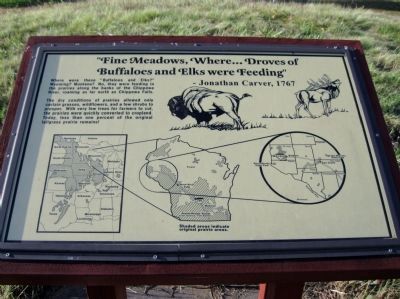
"Fine Meadows Where… Droves of Buffaloes and Elks were Feeding"
Jonathan Carver, 1767
Photographed by Keith L, October 28, 2010
1. "Fine Meadows Where… Droves of Buffaloes and Elks were Feeding" Marker
Where were these "Buffaloes and Elks?" Wyoming? Montana? No, they were feeding in the prairies along the banks of the Chippewa River, roaming as far north as Chippewa Falls.
The dry conditions of prairies allowed only certain grasses, wildflowers, and a few shrubs to prosper. With very few trees for farmers to cut, the prairies were quickly converted to cropland. Today, less than one percent of the original tallgrass prairie remains!
[Map]
Shaded areas indicate original prairie areas.
Erected 1988 by the Wisconsin Departments of Transportation and Natural Resources.
Topics. This historical marker is listed in these topic lists: Animals • Environment.
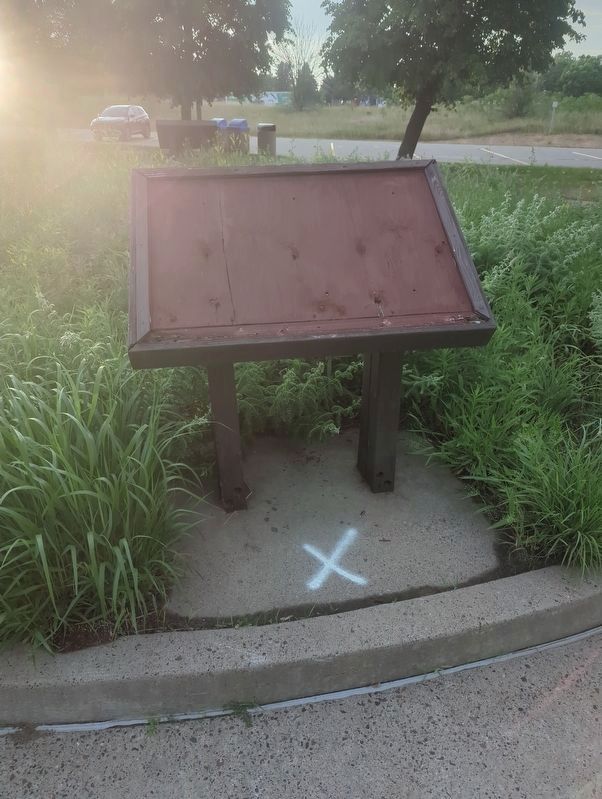
Location. Marker is missing. It was located near 44° 54.419′ N, 91° 54.424′ W. Marker was near Menomonie, Wisconsin, in Dunn County. It could be reached from Interstate 94 at milepost 43, 1.1 miles east of County Highway J, on the right when traveling east. The marker stands at Rest Area 61. Touch for map. Marker was in this post office area: Menomonie WI 54751, United States of America. Touch for directions.

Regionally,
this page online
Other nearby markers. At least 8 other markers are within 3 miles of this location, measured as the crow flies: Dunn County Veterans Memorial (a few steps from this marker); Chippewa Valley White Pine (a few steps from this marker); World War I (about 600 feet away, measured in a direct line); Fine Meadows (about 600 feet away); Evergreen Cemetery / Earliest Evergreen Burials (approx. 1.3 miles away); Dr. Stephen Tainter (approx. 1.3 miles away); Stori House (approx. 2.3 miles away); In Honor of Company H (approx. 2.3 miles away). Touch for a list and map of all markers in Menomonie.
Another marker is no longer nearby. Wisconsin's Oak Savanna (was a few steps from this marker but has been confirmed missing).
Also see . . . Prairie. Wikipedia entry. (Submitted on April 22, 2011.)
Photographed by Keith L, October 28, 2010
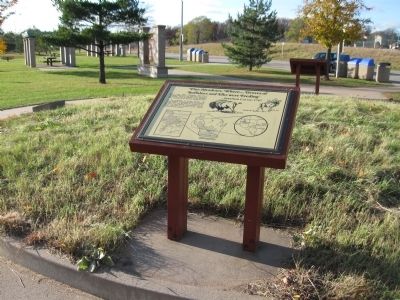
2. "Fine Meadows Where… Droves of Buffaloes and Elks were Feeding" Marker
Photographed by Jess Draws, June 8, 2026
3. Fine Meadows Marker Location
Photographed by Keith L, October 28, 2010
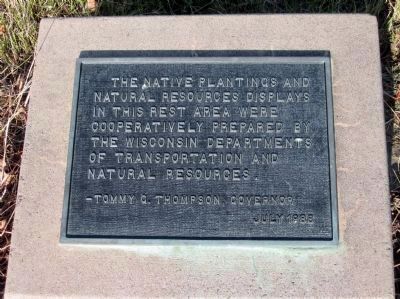
4. Nearby Plaque
The native plantings and natural resources displays in this rest area were cooperatively prepared by the Wisconsin Departments of Transportation and Natural Resources.
–Tommy G. Thompson, Governor
July 1988
–Tommy G. Thompson, Governor
July 1988
Photographed by Keith L, October 28, 2010
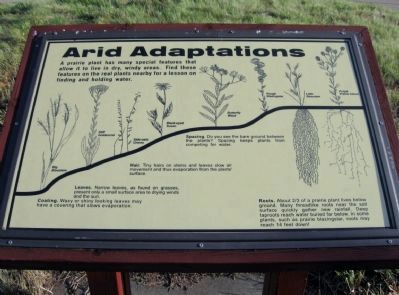
5. Arid Adaptations
A prairie plant has many special features that allow it to live in dry, windy areas. Find these features on the real plants nearby for a lesson on finding and holding water.
Big Bluestem · Stiff Goldenrod · Side-oats Grama · Black-eyed Susan · Butterfly Weed · Rough Blazingstar · Little Bluestem · Purple Prairie Clover
Coating. Waxy or shiny looking leaves may have a covering that slows evaporation.
Leaves. Narrow leaves, as found on grasses, present only a small surface area to drying winds and the sun.
Hair. Tiny hairs on stems and leaves slow air movement and thus evaporation from the plants' surface.
Spacing. Do you see the bare ground between the plants? Spacing keeps plants from competing for water.
Roots. About 2/3 of a prairie plant lives below ground. Many threadlike roots near the soil surface quickly gather new rainfall. Deep taproots reach water buried far below. In some plants, such as prairie blazingstar, roots may reach 14 feet down!
Big Bluestem · Stiff Goldenrod · Side-oats Grama · Black-eyed Susan · Butterfly Weed · Rough Blazingstar · Little Bluestem · Purple Prairie Clover
Coating. Waxy or shiny looking leaves may have a covering that slows evaporation.
Leaves. Narrow leaves, as found on grasses, present only a small surface area to drying winds and the sun.
Hair. Tiny hairs on stems and leaves slow air movement and thus evaporation from the plants' surface.
Spacing. Do you see the bare ground between the plants? Spacing keeps plants from competing for water.
Roots. About 2/3 of a prairie plant lives below ground. Many threadlike roots near the soil surface quickly gather new rainfall. Deep taproots reach water buried far below. In some plants, such as prairie blazingstar, roots may reach 14 feet down!
Credits. This page was last revised on June 9, 2026. It was originally submitted on April 22, 2011, by Keith L of Wisconsin Rapids, Wisconsin. This page has been viewed 671 times since then and 31 times this year. Last updated on June 8, 2026, by Jess Draws of Madison, Wisconsin. Photos: 1, 2. submitted on April 22, 2011, by Keith L of Wisconsin Rapids, Wisconsin. 3. submitted on June 8, 2026, by Jess Draws of Madison, Wisconsin. 4, 5. submitted on April 22, 2011, by Keith L of Wisconsin Rapids, Wisconsin. • Devry Becker Jones was the editor who published this page.
