Fort Monroe in Hampton, Virginia — The American South (Mid-Atlantic)
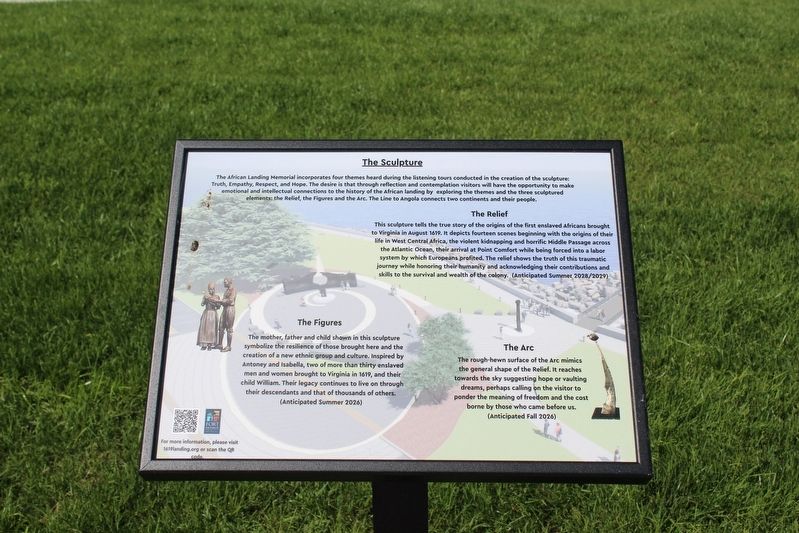
The Sculpture
Photographed by Evan Dwyer, April 21, 2026
1. The Sculpture Marker
The Relief
This sculpture tells the true story of the origins of the first enslaved Africans brought to Virginia in August 1619. It depicts fourteen scenes beginning with the origins of their life in West Central Africa, the violent kidnapping and horrific Middle Passage across the Atlantic Ocean, their arrival at Point Comfort while being forced into a labor system by which Europeans profited. The relief shows the truth of this traumatic journey while honoring their humanity and acknowledging their contributions and skills to the survival and wealth of the colony. (Anticipated Summer 2028/2029)
The Figures
The mother, father
this page online
The Arc
The rough-hewn surface of the arc mimics the general shape of the relief. It reaches towards the sky suggesting hope or vaulting dreams, perhaps colling on the visitor to ponder the meaning of freedom and the cost borne by those who came before us. (Anticipated Fall 2026)
For more information, please visit 1619landing.org or scan the QR code.
Erected 2026 by Fort Monroe Foundation.
Topics. This historical marker is listed in these topic lists: African Americans • Arts, Letters, Music • Colonial Era • Settlements & Settlers. A significant historical month for this entry is August 1619.
Location. 37° 0.065′ N, 76° 18.42′ W. Marker is in Hampton, Virginia. It is in Fort Monroe. It is on Fenwick Road east of Engineer Lane, on the right
Photographed by Evan Dwyer, April 21, 2026
2. The Sculpture Marker
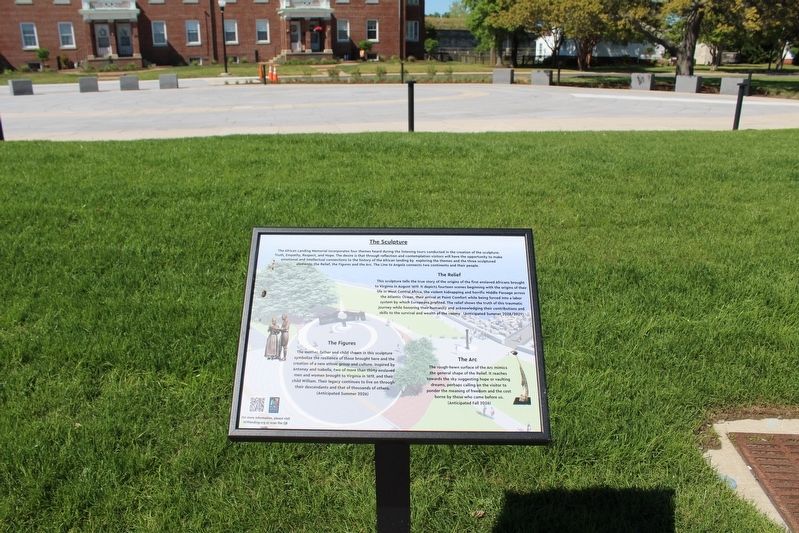
When completed, the sculpture will stand on the plaza immediately north of the marker.

Regionally, this marker is on Virginia’s Peninsula and in Coastal Virginia. It is also in the American South, specifically in the Upper South, in the Tidewater, and on the Eastern Seaboard. Globally, it is in the North Atlantic Region, North America, the Western Hemisphere, the Western World, and the Anglosphere. Historically, it finds itself in what was once the territory of the Mississippian Culture, one of the original Thirteen Colonies, one of the Confederate States of America, and the Antebellum South.
Other nearby markers. At least 8 other markers are within walking distance of this marker: The Cultural Connections (a few steps from this marker); The Movement of a Legacy (a few steps from this marker); Fort Monroe History (within shouting distance of this marker); Old Point Comfort Light (within shouting distance of this marker); a different marker also named First Africans in Virginia (about
Photographed by Evan Dwyer, April 21, 2026
3. African Landing Memorial
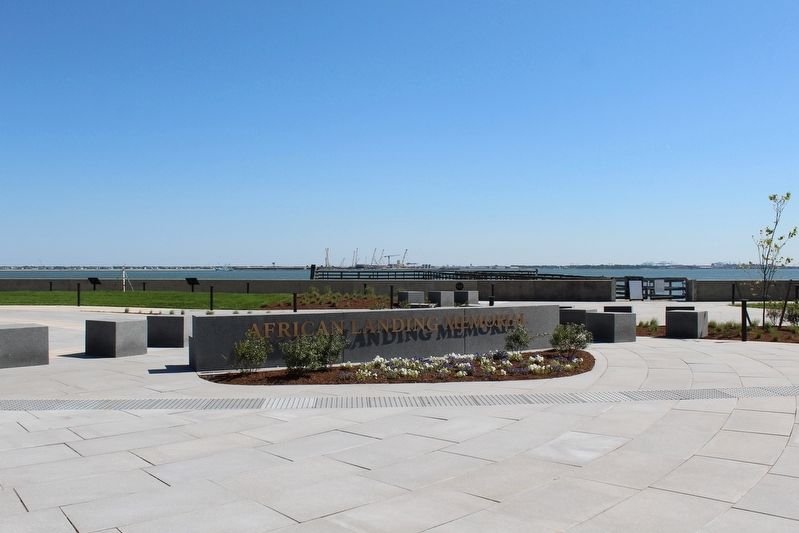
Dedicated in April 2026, the memorial's sculptures will be installed in stages between 2026-29. The initial install includes landscaping, ground inlays, and granite blocks. The Sculpture interpretive panel is at distant left by the seawall.
Other markers no longer nearby. Fort Monroe Seawall History (was a few steps from this marker but has been confirmed missing); Engineer Wharf (was a few steps from this marker but has been confirmed missing); a different marker also named Fort Monroe Seawall History (was within shouting distance of this marker but has been confirmed missing); First Africans in Virginia (was about 300 feet away, measured in a direct line but has been replaced with another marker now near it).
Credits. This page was last revised on June 10, 2026. It was originally submitted on June 9, 2026, by Evan Dwyer of Richmond, Virginia. This page has been viewed 12 times since then. Photos: 1, 2, 3. submitted on June 9, 2026, by Evan Dwyer of Richmond, Virginia. • Bernard Fisher was the editor who published this page.
